

BYD Humanoid Robot Specifications Revealed as Auto Giant Advances Xiao Di Concept
New details emerge on BYD's Xiao Di humanoid robot concept, featuring a 5-foot-3 frame, 129-pound mass, and 31 degrees of freedom with a dexterous hand.
By The Global Wire Newsroom · Reported from Bojan Stojkovski
Link preview · horizonglobalnews.com
BYD Humanoid Robot Specifications Revealed as Auto Giant Advances Xiao Di Concept
New details emerge on BYD's Xiao Di humanoid robot concept, featuring a 5-foot-3 frame, 129-pound mass, and 31 degrees of freedom with a dexterous hand.
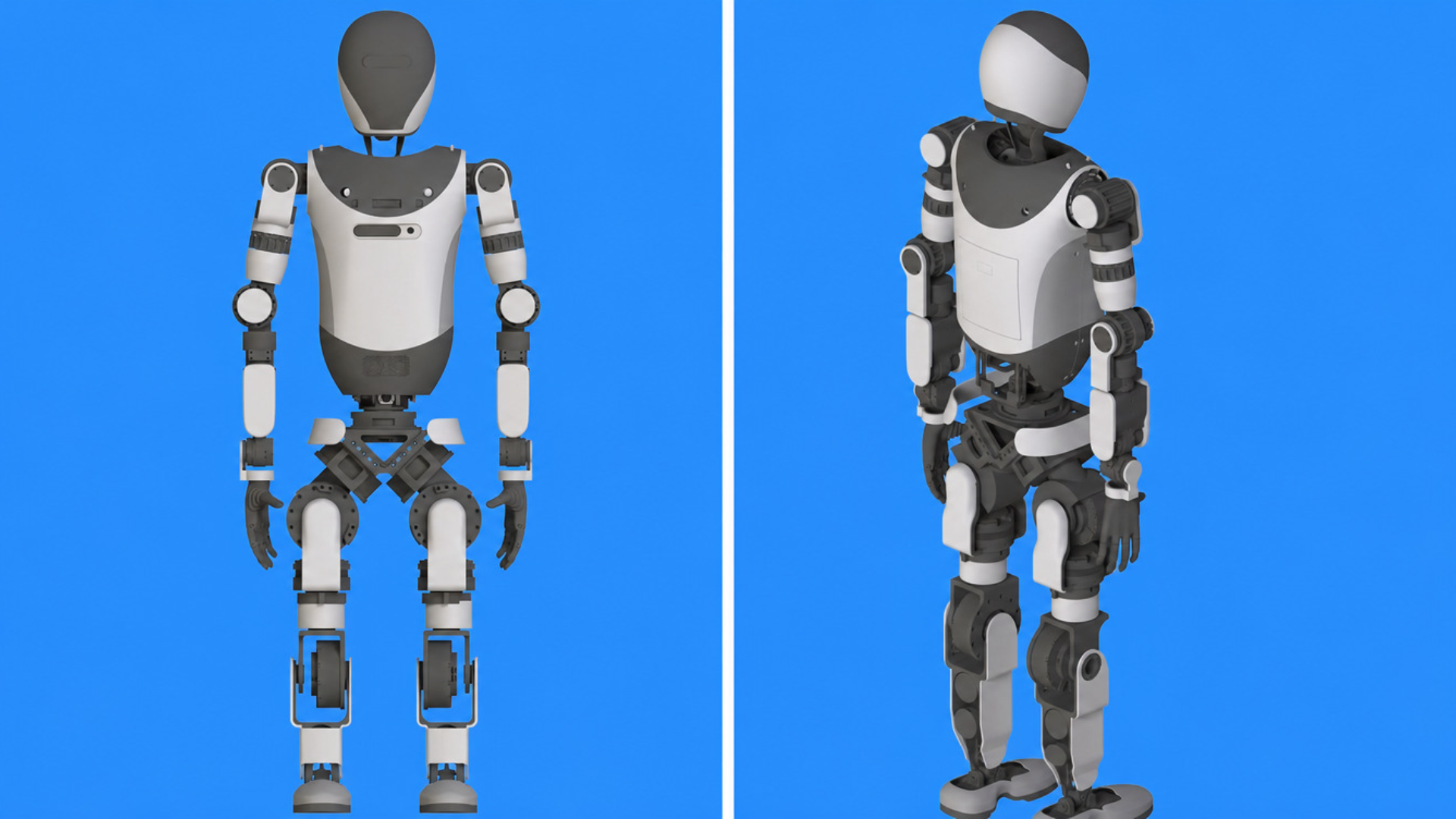
Electric vehicle automaker BYD has detailed physical parameters for its humanoid robot platform, designated as the Xiao Di concept, according to reporting published by Bojan Stojkovski on October 11, 2026. The robot stands approximately 5 feet 3 inches tall, weighs around 129 pounds, and incorporates 31 degrees of freedom across its mechanical framework alongside a dexterous multi-fingered hand assembly. The platform reflects a broader movement among automotive original equipment manufacturers to pivot battery technology, sensor architecture, and automated manufacturing expertise toward general-purpose bipedal robotics.
Key facts
What happened
Detailed specifications for BYD's humanoid robot concept, known as Xiao Di, have emerged, offering a clearer picture of the physical dimensions and mechanical capability of the Chinese automotive giant's robotic development initiative. According to reporting by Bojan Stojkovski, the robot features a form factor measuring 5 feet 3 inches in height and a total mass of 129 pounds.
Central to the mechanical engineering of the Xiao Di platform is its structural articulation. The machine is configured with 31 degrees of freedom distributed across its body frame, allowing for complex multi-axis positioning of its limbs, torso, and actuators. In robotics engineering, degrees of freedom measure the individual independent joint rotations or linear movements a mechanism can execute simultaneously. A count of 31 places the Xiao Di concept in a physical capability bracket designed to mirror basic human mobility and physical reaching radii.
In addition to its structural joints, the platform is equipped with a dexterous hand designed for fine motor tasks and object handling. The integration of end-effectors capable of multi-point articulation suggests that the development team at BYD is aiming for applications requiring delicate tactile handling, tool operation, or precise component assembly rather than simple heavy lifting. While BYD had previously disclosed the existence of the Xiao Di concept, the confirmation of these precise physical metrics provides concrete indicators of its intended utility within factory floors or laboratory environments.
Why it matters
The emergence of technical metrics for BYD's Xiao Di concept carries significant implications for industrial automation, automotive manufacturing, and global competition in general-purpose artificial intelligence hardware.
For automotive manufacturing, the transition toward humanoid robotics represents a natural evolution of factory automation. Automotive production lines already rely heavily on stationary robotic arms for welding, stamping, and painting. However, standard industrial robots are fixed in place and programmed for single, repetitive tasks. A bipedal humanoid platform boasting 31 degrees of freedom and human-like height and weight can potentially navigate existing facility layouts designed for human workers. Such machines can operate tools, transfer materials between assembly stations, and perform quality control checks without requiring carmakers to retool their multi-billion-dollar assembly plants.
From an economic perspective, BYD's entry into physical humanoid hardware intensifies rivalry with major international automotive and technology firms. Companies that master bipedal robotics stand to capture market share in advanced manufacturing logistics, eldercare support, and hazardous environment operations. For readers and industry analysts, BYD's platform illustrates how electric vehicle supply chains—specifically advanced lithium-ion battery packs, compact electric drive motors, and edge computing chips—are being repurposed directly into robotic systems.
Furthermore, China's broader industrial ecosystem benefits from BYD's hardware development. The Chinese government has prioritized humanoid robotics as a key emerging technology sector. As the world's largest EV manufacturer by volume, BYD possesses immense supply chain leverage, component sourcing networks, and internal testing environments across its extensive network of vehicle assembly facilities in Shenzhen, Changsha, Zhengzhou, and international locations.
The background
To understand the significance of BYD's Xiao Di concept, it is necessary to examine both the corporate trajectory of BYD Co. Ltd. and the overall growth of the global humanoid robotics sector.
Founded in February 1995 in Shenzhen, China, by chemist Wang Chuanfu, BYD initially operated as a rechargeable battery manufacturer competing against Japanese electronics suppliers. Over three decades, the company expanded into mobile phone components, energy storage systems, rail transit, and ultimate automotive production. BYD launched its automotive subsidiary, BYD Auto, in 2003 after acquiring Beijing Xi'an Qinchuan Automobile. Through heavy vertical integration, BYD developed proprietary battery chemistry—most notably its Blade Battery technology introduced in 2020—as well as in-house semiconductor production. By late 2023 and into 2024, BYD surpassed global competitors in total electric vehicle sales volume, highlighting its manufacturing capacity and rapid technological deployment.
Concurrently, the global robotics industry experienced a major shift toward bipedal, humanoid architectures during the early 2020s. Automakers have been at the forefront of this movement:
First, Tesla Inc. unveiled its humanoid robot project, Optimus (also known as Tesla Bot), in August 2021, with subsequent prototypes showing walking capabilities, tactile hands, and custom linear actuators. Tesla chief executive Elon Musk has repeatedly stated that Optimus could eventually exceed the car business in long-term corporate valuation.
Second, Hyundai Motor Group acquired a controlling stake in Boston Dynamics in June 2021 for $1.1 billion, acquiring advanced dynamic balancing and hydraulic/electric bipedal platforms such as Atlas and Spot.
Third, Chinese consumer electronics firm Xiaomi introduced its CyberOne humanoid robot in August 2022, measuring 177 centimeters tall and weighing 52 kilograms, equipped with custom curved OLED displays and real-time environment mapping.
Fourth, startup firms like Figure AI partnered with BMW in early 2024 to deploy humanoid robots at the German carmaker's Spartanburg, South Carolina production facility for sheet metal manipulation and logistics support.
In late 2023, China's Ministry of Industry and Information Technology (MIIT) published policy directives calling for China to establish a preliminary innovation system for humanoid robots by 2025 and achieve mass production of high-end models by 2027. The development of Xiao Di reflects these national policy priorities, utilizing internal automotive engineering talent to establish domestic technological sovereignty in intelligent robotics.
Reaction
Neither BYD nor external regulatory bodies have issued formal public statements containing formal executive commentary following the dissemination of these physical specifications, according to reporting by Bojan Stojkovski. However, market analysts and industrial engineering specialists closely monitor these disclosures to evaluate competitive positioning against rival platforms.
Automotive trade groups and industrial robotics researchers generally anticipate that BYD will face scrutiny regarding the practical deployment timelines and safety certifications for Xiao Di. When carmakers introduce humanoid concepts, industry standard reactions typically center on whether the machines are capable of autonomous execution using on-board neural networks or whether they rely on teleoperation (remote human control) during demonstration phases.
Workplace safety organizations, such as the International Federation of Robotics (IFR) and national occupational safety administrations, are expected to evaluate how human-robot collaboration (cobotics) standards will apply to 129-pound bipedal machinery operating in shared spaces alongside human factory workers. As BYD demonstrates further functional milestones, responses from automotive union representatives and manufacturing labor groups regarding job displacement vs. task assistance are expected to follow.
What we don't know yet
Despite the physical specifications detailed in reporting by Bojan Stojkovski, critical technological and commercial details surrounding BYD's Xiao Di robot remain undisclosed.
First, the exact sensor suite and computational architecture powering Xiao Di are not detailed in the available report. It remains unknown whether the platform relies on light detection and ranging (LiDAR), stereo vision cameras, ultrasonic sensors, or a hybrid multi-sensor array for spatial navigation and collision avoidance.
Second, the artificial intelligence architecture driving the robot's decision-making has not been specified. It is unclear whether BYD utilizes an end-to-end vision-language-action (VLA) AI model, deep reinforcement learning, or traditional deterministic control algorithms for gait stability and object manipulation.
Third, performance metrics regarding battery life, continuous operational runtime, payload capacity, and maximum walking speed remain unconfirmed. A robot weighing 129 pounds requires substantial onboard energy density to operate actuators continuously during standard work shifts.
Fourth, BYD has not publicly released target commercial pricing, production volumes, or a definitive timeline for mass deployment within its own manufacturing facilities or for commercial sale to third-party clients.
What to watch
In the coming months, several key development milestones and industry events will determine the commercial viability of BYD's Xiao Di platform:
1. Operational Demonstrations: Observers will be looking for video or live hardware demonstrations showcasing unassisted bipedal locomotion, dynamic obstacle navigation, and complex hand manipulation tasks without physical safety tethers or remote operator control.
2. Factory Integration Pilots: Reports or official filings indicating whether BYD is testing Xiao Di prototypes in real-world manufacturing roles across its automotive production lines in Shenzhen or Zhengzhou will provide concrete evidence of commercial readiness.
3. Industry Trade Expositions: Future major robotics and automotive conferences—such as the World Robotics Conference in Beijing or annual industrial technology expos—serve as common venues for live hardware demonstrations and executive briefings.
4. Regulatory and Patent Filings: Intellectual property disclosures filed with China's National Intellectual Property Administration (CNIPA) regarding actuator design, hand kinematics, or robotic battery management systems will offer deeper insight into BYD's proprietary hardware patents.
5. Competitor Benchmarks: Parallel announcements from competitors, including Tesla's Optimus program updates and Boston Dynamics' commercial deployments, will establish performance benchmarks against which Xiao Di's 31 degrees of freedom and physical metrics will be judged.
This report is based on original news reporting by Bojan Stojkovski detailing the physical dimensions and mechanical specifications of BYD's Xiao Di humanoid robot concept.
How this story was produced
This report was written by The Global Wire newsroom from reporting first published by Bojan Stojkovski. We verify the core facts against the original report, write our own account, and add the background and consequences a short wire item leaves out. Drafting is AI-assisted inside an editor-supervised pipeline, and every story is checked for accuracy of attribution, structure and duplication before it appears — full detail in our AI and funding disclosure.
Spotted an error? Tell us at corrections@horizonglobalnews.com and read our corrections policy or editorial standards.



Reader comments
Loading comments…