

California’s Ancient Bennett Juniper Harbors Centuries of Unsolved Botanical History
The Bennett Juniper in California's Stanislaus National Forest is estimated at 3,000 to 4,000 years old, but its hollow trunk masks its exact age, presenting challenges for scientists.
By The Global Wire Newsroom · Reported from TOI Science Desk
Link preview · horizonglobalnews.com
California’s Ancient Bennett Juniper Harbors Centuries of Unsolved Botanical History
The Bennett Juniper in California's Stanislaus National Forest is estimated at 3,000 to 4,000 years old, but its hollow trunk masks its exact age, presenting challenges for scientists.
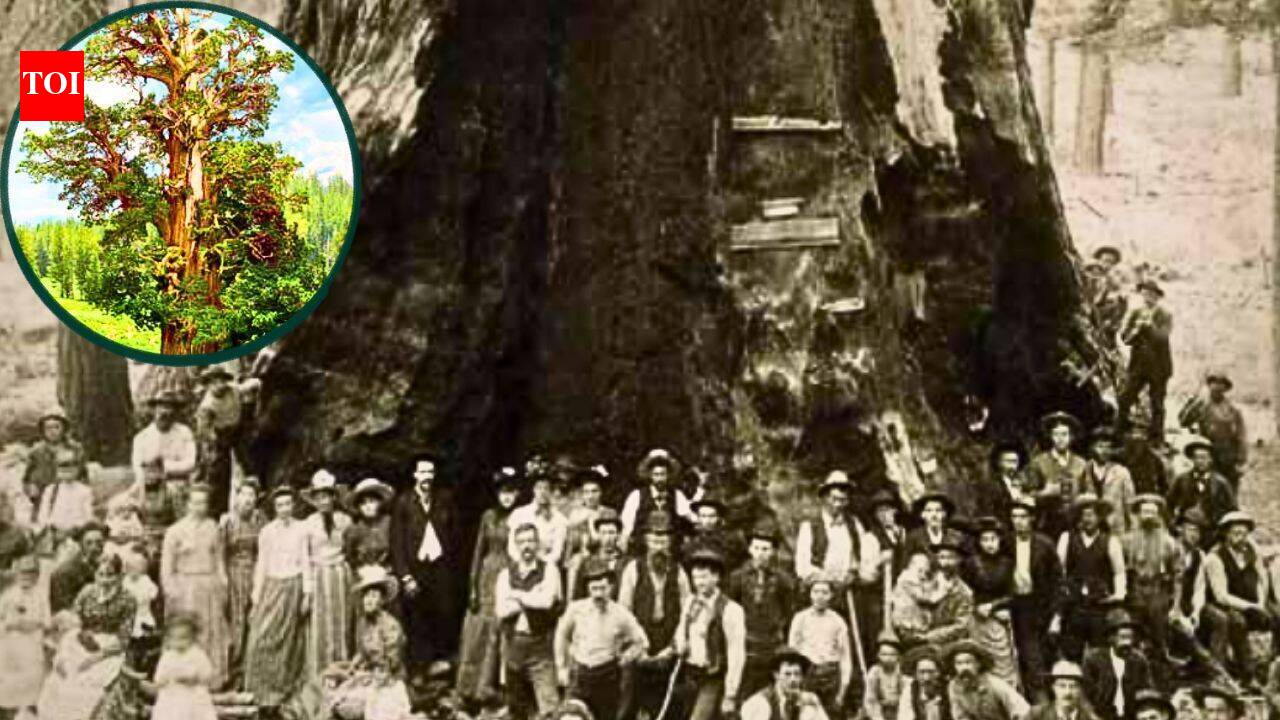
Located high in California's Sierra Nevada mountain range within the Stanislaus National Forest, the Bennett Juniper—widely recognized as the largest individual specimen of the Sierra juniper—continues to draw scientific and ecological interest for its extreme longevity and massive physical size. According to reporting by the TOI Science Desk, the ancient conifer is estimated to be between 3,000 and 4,000 years old, placing its origin in the distant past alongside some of the oldest known living organisms on Earth. Standing as the prime example of the Sierra juniper, described as the largest species within the juniper genus, the tree features an extraordinarily thick trunk whose hollow interior presents a unique challenge to botanists and dendrochronologists seeking to establish its exact calendar age. Situated within a high-altitude alpine ecosystem vulnerable to intensifying droughts and changing fire dynamics, the specimen remains a landmark of North American natural history and a focal point for long-term forest stewardship.
Key facts
What happened
According to reporting published by the TOI Science Desk on October 12, 2026, scientific focus on the Bennett Juniper highlights its status as the world’s largest known example of the Sierra juniper, bringing renewed attention to the physical attributes and analytical hurdles associated with ancient trees. Researchers studying the tree have long noted that while its overall volume and trunk circumference make it the preeminent giant among junipers, its internal structural decay has left a large void at the center of the main stem.
This hollow core directly affects the application of dendrochronology, the science of analyzing tree ring patterns to date wooden specimens and reconstruct historical climate records. In solid ancient conifers, such as the Great Basin bristlecone pine, researchers use specialized increment borers to extract thin cylindrical wood samples from the outer bark straight to the tree's center. By systematically counting each annual growth ring back to the core pith, scientists can determine the precise year the seed germinated.
Because the interior heartwood of the Bennett Juniper has decayed over thousands of years, standard core sampling only retrieves rings from the surviving outer shell of the trunk. Consequently, dendrochronologists must rely on indirect estimation methods to calculate its total age. Scientists combine partial ring counts from the intact outer wood with mathematical growth models based on trunk circumference, bark thickness, and comparative growth rates of neighboring, intact junipers growing under similar environmental conditions. As reported by the TOI Science Desk, this structural condition leaves an unresolved margin of several centuries in its precise age, even as consensus confirms its standing as one of the oldest living trees on the planet.
Why it matters
The preservation and scientific analysis of ancient conifers like the Bennett Juniper carry significant implications for environmental science, paleoclimatology, and natural resource management. Ancient trees function as natural historical archives, recording atmospheric conditions, annual precipitation levels, and localized climate variations within their growth rings across millennia. Even with a hollow interior, the centuries of growth preserved in the outer living wood of the Bennett Juniper provide critical empirical data for researchers reconstructing long-term climate patterns in the western United States.
From an ecological perspective, the survival of a 3,000- to 4,000-year-old tree illustrates the extreme durability of high-altitude mountain flora, while simultaneously underscoring their sensitivity to modern environmental pressures. Sierra junipers typically grow in harsh, rocky subalpine terrain where thin soils, freezing winters, and brief growing seasons limit radial growth to fractions of a millimeter per year. This slow metabolic rate allows trees to achieve multi-millennial lifespans, but it also means that recovery from physical damage, pest infestation, or high-intensity fire can take centuries.
As climate shifts alter weather patterns across California, high-altitude ecosystems face expanding risks. Prolonged heat waves and multi-year droughts weaken trees' natural defenses, increasing susceptibility to wood-boring insects and fungal pathogens. Furthermore, historic fuel accumulation combined with drier summer conditions has heightened the threat of high-severity wildfires capable of destroying old-growth timber stands. Losing an ancient specimen like the Bennett Juniper would represent the permanent loss of an irreplaceable biological landmark and a unique living record of historical climate data.
The background
The Sierra juniper (*Juniperus grandis*), previously categorized by some taxonomists as a subspecies of the western juniper (*Juniperus occidentalis*), is native to the high-elevation slopes of California's Sierra Nevada and adjacent mountain ranges. The species is characterized by its gnarled, weathered form, reddish-brown shredding bark, and ability to anchor root systems directly into granite fissures at elevations ranging between 7,000 and 10,500 feet above sea level.
The Bennett Juniper itself is located at an elevation of approximately 8,400 feet within Tuolumne County inside the boundaries of the Stanislaus National Forest. The tree is named after Clarence Bennett, an early 20th-century nature enthusiast and collector who spent years surveying ancient trees across the Western United States and brought widespread attention to this specific specimen. Measurements recorded by forestry experts list the tree at approximately 80 feet in height, with a trunk diameter exceeding 12 feet and a crown spread of more than 50 feet across.
The land surrounding the Bennett Juniper carries a distinct history of private and public conservation efforts. In the mid-20th century, the private parcel containing the tree was acquired by environmentalists to ensure its protection from commercial logging, mining, and uncontrolled recreational access. The site was subsequently placed under the management of land trusts, including the Save the Redwoods League, which maintains the small natural sanctuary nestled within the larger expanse of federal forest land.
The surrounding Stanislaus National Forest was created by executive order under President Theodore Roosevelt in 1897 and encompasses over 890,000 acres of federal land in eastern California. Over its history, the national forest has experienced major wildfire events, including the 2013 Rim Fire, which burned more than 257,000 acres of mixed conifer forest and watershed terrain in the central Sierra Nevada. High-elevation juniper stands often benefit from natural fire protection offered by barren granite outcrops, but changing wildfire behavior presents ongoing challenges for regional land managers.
Reaction
Although government authorities and private land trusts issued no official new press statements alongside the recent reporting, forestry experts and conservationists consistently emphasize the necessity of active management around ancient tree reserves. Organizations responsible for overseeing natural sanctuaries highlight the importance of low-impact visitor policies, fuel-reduction efforts, and routine health assessments to shield ancient specimens from human disturbance and fire damage.
Environmental organizations and academic researchers frequently monitor ancient tree populations across California's public lands. Scientists associated with institutions such as the University of California and the Laboratory of Tree-Ring Research at the University of Arizona maintain that protecting old-growth conifers is essential for maintaining accurate paleoclimate baseline models. Regional conservation groups and forestry advocates continue to call for sustained federal and state funding for forest management programs that mitigate wildfire risks near ecologically sensitive old-growth groves.
What we don't know yet
Several key details regarding the Bennett Juniper and its long-term health remain uncertain in current reporting and established scientific literature:
What to watch
To track developments regarding the Bennett Juniper and high-elevation Sierra conifer populations, key factors to monitor include:
This report is based on reporting published by the TOI Science Desk.
How this story was produced
This report was written by The Global Wire newsroom from reporting first published by TOI Science Desk. We verify the core facts against the original report, write our own account, and add the background and consequences a short wire item leaves out. Drafting is AI-assisted inside an editor-supervised pipeline, and every story is checked for accuracy of attribution, structure and duplication before it appears — full detail in our AI and funding disclosure.
Spotted an error? Tell us at corrections@horizonglobalnews.com and read our corrections policy or editorial standards.




Reader comments
Loading comments…