

Trump Administration Misleads on Grid Reliability in Power Plant Rule Rollback
Energy experts reject claims by federal officials that Biden-era carbon limits threatened electrical grid stability following partial repeal of power plant regulations.
By The Global Wire Newsroom · Reported from Kate Yandell
Link preview · horizonglobalnews.com
Trump Administration Misleads on Grid Reliability in Power Plant Rule Rollback
Energy experts reject claims by federal officials that Biden-era carbon limits threatened electrical grid stability following partial repeal of power plant regulations.
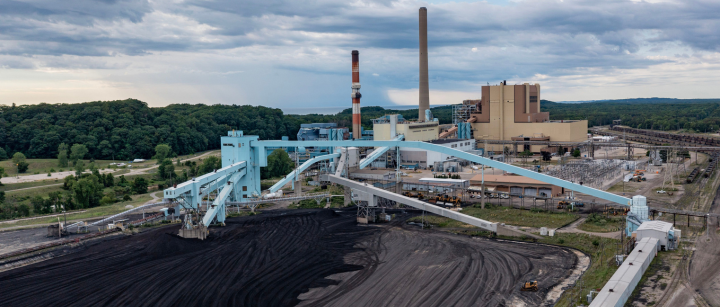
WASHINGTON — Executive branch officials in the Trump administration have partially rescinded federal regulations limiting carbon dioxide emissions from power plants, asserting that the rules placed the nation’s electrical grid at severe risk of blackouts. However, energy analysts, power market experts, and grid operators have rejected those assertions, characterizing the administration's claims of systemic grid instability as misleading and unsupported by operational data, according to an analysis published by FactCheck.org on Oct. 13, 2026. The disputed regulatory action targets rules originally established under the Biden administration requiring fossil fuel power plants to adopt advanced pollution control technologies or reduce operational carbon intensity over the coming decade.
Key facts
What happened
The policy conflict centers on executive action taken to roll back environmental performance standards for power plants, accompanied by public statements from administration leadership asserting that Biden-era rules threatened to force sudden, premature retirements of baseload power capacity. According to reporting by FactCheck.org, executive officials argued that enforcing carbon limits on existing coal generating stations and new natural gas turbines would starve the electric transmission system of reliable power, particularly during extreme weather and peak demand.
In evaluating these statements, FactCheck.org examined grid operational metrics, published planning documents, and technical assessments from energy market experts. The analysis concluded that the administration’s characterization of the prior policy omitted key structural mechanics of electric grid management and misrepresented how compliance timelines function under federal clean air regulations.
Under the framework established during the Biden administration, power plant operators were granted multi-year compliance schedules extending into the 2030s to implement carbon capture technology, transition to low-carbon fuel blends, or plan orderly retirements. Grid management organizations—including independent system operators and regional transmission organizations—are legally required and operationally equipped to evaluate plant retirements years in advance. When a generator signals an intent to deactivate a facility, grid operators conduct formal reliability reviews. If a retirement threatens local voltage stability or regional reserve capacity, system operators possess regulatory mechanisms to keep the plant online under reliability support agreements while transmission upgrades or replacement capacity are built.
Experts cited by FactCheck.org emphasized that primary drivers of recent grid stress stem from extreme weather events, supply chain delays, and surging electricity demand from data centers and industrial manufacturing—not federal carbon limits that had yet to take full technical effect.
Why it matters
The debate over power plant regulation sits at the intersection of national energy security, public health, macroeconomics, and federal environmental law. Power generation accounts for roughly one-quarter of U.S. greenhouse gas emissions, making the utility sector a primary focal point for federal climate policy. Dismantling carbon performance standards alters regulatory signals sent to electric utilities, institutional investors, and equipment manufacturers.
For utility companies, regulatory volatility creates substantial planning challenges. Electric utilities operate capital-intensive assets designed to function for 30 to 50 years. When federal regulations shift dramatically between presidential administrations, power companies face difficulty determining whether to invest billions in carbon capture, transition toward renewable energy and storage, or extend the lifespans of aging fossil fuel facilities.
For ratepayers, the policy reversal influences long-term energy pricing and reliability. While administration officials argue that repealing carbon rules prevents cost increases from compliance technology, energy economists note that delaying investments in grid modernization and flexible capacity can expose consumers to volatile fossil fuel commodity prices and higher maintenance costs for legacy plants.
Furthermore, altering finalized regulations under Section 111 of the Clean Air Act shapes the administrative state. Under federal law, agency decisions must show a rational connection between facts found and choices made. If courts determine executive officials relied on unsupported claims of grid failure to justify rollbacks, the actions risk being vacated by federal judges under the Administrative Procedure Act.
The background
Federal regulation of greenhouse gas emissions from power facilities has endured a turbulent legal history across three presidential administrations. The statutory authority originates in Section 111 of the Clean Air Act, directing the Environmental Protection Agency (EPA) to establish performance standards for stationary sources contributing significantly to air pollution.
In 2015, the Obama administration promulgated the Clean Power Plan, seeking to reduce sector carbon emissions by setting state targets that encouraged shifting from coal to natural gas and renewables. That rule was stayed by the U.S. Supreme Court in 2016 before taking effect.
During the first Trump administration, the EPA repealed the Clean Power Plan and issued the 2019 Affordable Clean Energy (ACE) rule. The ACE rule narrowed federal oversight to heat-rate efficiency improvements at individual coal plants. In January 2021, the U.S. Court of Appeals for the D.C. Circuit vacated the ACE rule, ruling the EPA misconstrued its statutory limits.
The legal landscape shifted further in June 2022 when the Supreme Court issued its ruling in West Virginia v. EPA. Invoking the major questions doctrine, the court ruled 6–3 that the EPA lacked express congressional authorization under Section 111(d) to force system-wide generation shifting. The ruling mandated that future carbon rules focus on technology-based standards applied directly at individual sources.
In response, the Biden administration’s EPA finalized new carbon standards in April 2024. Designed to conform strictly to West Virginia v. EPA, the 2024 rules required site-specific reductions based on the best system of emission reduction (BSER). For long-running coal plants and baseload natural gas plants, the EPA identified carbon capture and sequestration achieving 90% capture as the benchmark technology, with deadlines phased in between 2032 and 2035.
Grid reliability concerns have emerged as a central policy theme due to surging demand. The North American Electric Reliability Corporation (NERC) has warned that rapid thermal retirements without adequate dispatchable capacity or storage could heighten reliability risks during extreme weather. However, NERC assessments emphasize that orderly transitions and proactive planning mitigate these risks without abandoning environmental standards.
Reaction
The administration's partial repeal and reliability claims drawn commentary from legal scholars, energy trade groups, and environmental organizations.
Environmental advocates expressed opposition to the rollback, arguing that misrepresenting grid data undermines clean air protections. Representatives from clean energy groups noted that advanced renewables and battery storage increasingly provide competitive capacity, reinforcing grid resilience.
Within the utility sector, responses have been complex. Trade groups representing investor-owned utilities historically sought flexible compliance timelines to handle supply chain bottlenecks for carbon capture hardware. However, several utility executives noted that corporate long-term resource plans are driven primarily by economics, customer demand, and state clean energy mandates rather than federal administrative shifts alone.
Legal experts anticipate immediate litigation from state attorneys general and environmental groups. Under the Administrative Procedure Act, agencies reversing established regulations must present a reasoned explanation supported by an administrative record. Opponents are expected to cite expert analyses highlighted by FactCheck.org to argue in court that the administration’s grid reliability justifications were arbitrary and unsupported by empirical evidence.
What we don't know yet
Critical details remain unresolved regarding the impact of the partial repeal:
What to watch
Key indicators in the coming months will reveal the trajectory of this regulatory battle:
This report is based on original reporting and fact-checking analysis conducted by FactCheck.org.
How this story was produced
This report was written by The Global Wire newsroom from reporting first published by Kate Yandell. We verify the core facts against the original report, write our own account, and add the background and consequences a short wire item leaves out. Drafting is AI-assisted inside an editor-supervised pipeline, and every story is checked for accuracy of attribution, structure and duplication before it appears — full detail in our AI and funding disclosure.
Spotted an error? Tell us at corrections@horizonglobalnews.com and read our corrections policy or editorial standards.





Reader comments
Loading comments…