

AI Workforce Displacement Threatens Sovereign Tax Base, Economic Analysis Warns
As artificial intelligence replaces human workers, governments face shrinking income tax revenues and must fundamentally rethink public finance models.
By The Global Wire Newsroom · Reported from Le Monde; Marie Charrel
Link preview · horizonglobalnews.com
AI Workforce Displacement Threatens Sovereign Tax Base, Economic Analysis Warns
As artificial intelligence replaces human workers, governments face shrinking income tax revenues and must fundamentally rethink public finance models.
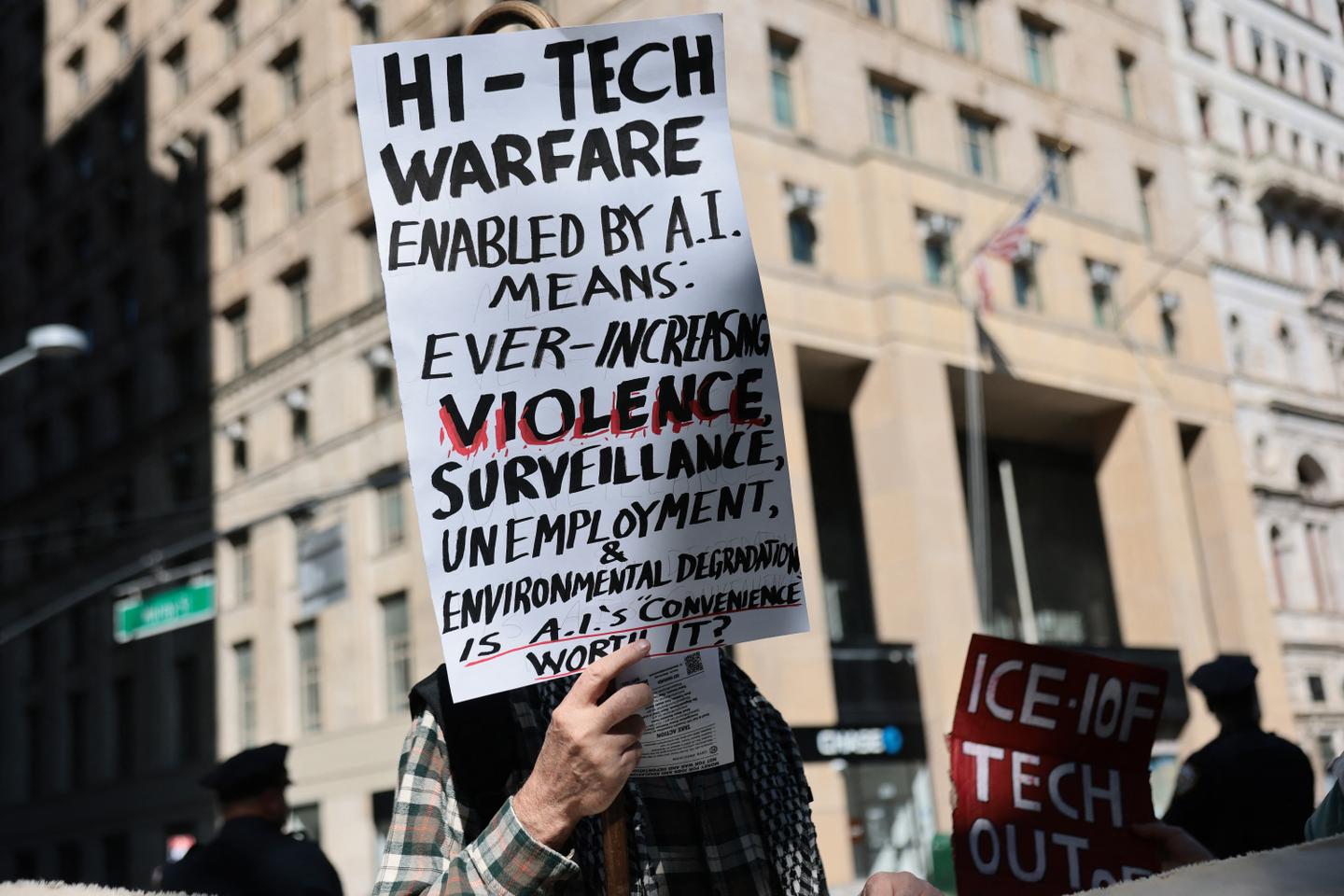
PARIS — In an economic analysis published on October 15, 2026, Le Monde highlighted a structural threat facing global public finances: the rapid integration of artificial intelligence into the enterprise workforce risks eroding the core tax base of sovereign states. Writing in the French daily, economic columnist Marie Charrel argued that medium-term adoption of advanced automated systems across service, technology, and knowledge sectors threatens to diminish personal income tax and payroll revenue streams that form the foundation of modern public spending. As enterprise software replaces human labor, sovereign governments face an unsustainable imbalance between falling labor tax receipts and rising public expenditures, requiring a fundamental redesign of global fiscal architectures.
Key facts
What happened
Marie Charrel’s analysis in Le Monde centers on the medium-term structural vulnerability of public tax systems when exposed to broad-scale artificial intelligence deployment. Most developed nations rely on a revenue pyramid in which personal income taxes, social safety net contributions, and payroll-based levies generate the clear majority of state receipts. When corporations replace human employees with AI algorithms, large language models, or automated software agents, the taxable labor base contracts.
According to the reporting in Le Monde, this transition creates a dual fiscal pressure on public treasuries. First, the direct loss of personal income tax revenues and payroll contributions reduces the immediate cash flow entering public accounts. Second, displaced workers who lose employment or experience depressed wages may require state assistance, unemployment benefits, or publicly funded retraining programs, simultaneously increasing demand on state expenditures.
While enterprises implementing AI systems may experience increased productivity and expanded operational margins, current tax frameworks do not automatically translate corporate efficiency gains into proportional public revenue. Corporate profits are subject to corporate income taxes, which across most jurisdictions carry significantly lower effective tax rates than the combined marginal taxes levied on labor income. Furthermore, multinational technology firms and enterprises utilizing AI solutions often benefit from tax deductions for research and development, accelerated capital asset depreciation, and cross-border profit-allocation strategies. Consequently, as the balance of economic value creation shifts from human labor to algorithmic capital, national budgets face a systemic revenue drain unless tax structures are fundamentally altered.
Why it matters
The structural shift outlined in Le Monde carries profound consequences for sovereign fiscal stability, public service provision, and social welfare management. In developed market economies, including member states of the Organisation for Economic Co-operation and Development (OECD), tax revenues finance public health systems, state pensions, public education, and physical infrastructure.
Because state budgets depend heavily on labor-derived receipts, any secular decline in aggregate payrolls threatens the solvency of public programs. For instance, social security systems in many Western nations operate on pay-as-you-go models, where active workers' payroll taxes directly fund current retirees' pensions. If AI adoption permanently reduces total wage volume or depresses median wage growth, these entitlement systems face widening structural deficits.
Furthermore, if governments attempt to compensate for falling labor tax revenues by raising tax rates on remaining human workers, they risk exacerbating wealth inequality and dampening private consumer spending, which accounts for approximately two-thirds of gross domestic product in major Western economies. Alternatively, failure to replace lost revenue would force sovereign governments to either expand public borrowing—increasing national debt burdens during periods of elevated interest rates—or implement spending cuts to essential public services. Rebalancing national tax models from labor-focused taxation to capital, enterprise wealth, or digital automation levies is therefore emerging as a critical requirement for long-term fiscal stability.
The background
The modern architecture of sovereign taxation was largely established during the mid-20th century, designed around an industrial economy where human labor served as the primary factor of production. Throughout the late 20th and early 21st centuries, tax policy in advanced economies embedded a structural asymmetry: labor income was taxed relatively heavily through direct personal income levies and mandatory social security contributions, while capital investment was taxed at lower rates to encourage business expansion and capital formation.
Across OECD member nations, labor taxes and payroll contributions historically account for approximately 50 percent of total government tax receipts, whereas corporate income taxes account for less than 10 percent of total revenues on average. As digital automation expanded during the late 2010s and early 2020s, economists and international institutions began highlighting the potential fiscal risks of this imbalance.
The concept of a "robot tax"—proposed by public figures such as Microsoft co-founder Bill Gates in 2017 and subsequently analyzed by the European Parliament and the International Monetary Fund (IMF)—suggested imposing a specific levy on companies replacing human workers with automated systems. Advocates argued that such a mechanism would equalize fiscal incentives between human labor and capital equipment while providing revenue to fund worker retraining. However, opponents, including tech industry groups and market economists, argued that taxing technology would stifle innovation, reduce national economic competitiveness, and prove difficult to administer due to challenges in defining what constitutes an automated technology.
In 2021, international tax negotiations led by the OECD and G20 culminated in a landmark agreement establishing a 15 percent global minimum corporate tax rate, intended to prevent multinational enterprises from shifting profits to low-tax jurisdictions. However, that framework focused primarily on geographic profit allocation rather than addressing the erosion of national labor tax bases caused by advanced artificial intelligence. As generative AI models advance from basic routine automation to high-skill cognitive role replacement, the economic questions raised by Le Monde mark a critical escalation in the policy debate surrounding technology, labor markets, and state finance.
Reaction
Following the publication of the analysis in Le Monde, fiscal policy experts, international finance officials, and labor leaders are expected to evaluate potential policy responses in international forums.
Economic policy institutions such as the International Monetary Fund, the World Bank, and the OECD are continuously monitoring labor market shifts associated with artificial intelligence to assess public revenue vulnerabilities. Policy researchers have proposed several structural responses, including raising value-added tax (VAT) rates, expanding capital gains taxes, restructuring tax deductions for corporate technology investment, or introducing specialized levies on automated digital services.
Business advocacy groups and technology industry associations consistently oppose direct taxes on artificial intelligence infrastructure, arguing that levies on automated software penalize business efficiency, discourage domestic research spending, and place adopting countries at a competitive disadvantage in global markets. Conversely, labor unions and social advocacy organizations argue that without broad capital tax reform or corporate automation assessments, human workers will bear a disproportionate burden of state revenue generation while experiencing employment disruption.
What we don't know yet
Several empirical and political uncertainties remain regarding how AI-driven labor changes will affect national tax systems. First, the exact pace and net volume of labor displacement caused by artificial intelligence across diverse economic sectors remain uncertain. While initial adoption impacts specific cognitive and operational tasks, the degree to which job losses will be offset by new employment creation in emerging technology sectors is not yet known.
Second, it remains unproven whether elevated corporate profits generated through AI productivity gains will yield sufficient revenue under current corporate tax rates to offset losses from individual income taxes. Third, international consensus has not been reached on standardized definitions for AI productivity gains, leaving open questions about how governments could enforce automation taxes without creating regulatory loopholes or triggering international trade disputes.
What to watch
Key developments and policy markers will indicate how governments respond to the fiscal challenges outlined by Le Monde:
This news report is based on an economic analysis column published by Le Monde and authored by columnist Marie Charrel on October 15, 2026.
How this story was produced
This report was written by The Global Wire newsroom from reporting first published by Le Monde; Marie Charrel. We verify the core facts against the original report, write our own account, and add the background and consequences a short wire item leaves out. Drafting is AI-assisted inside an editor-supervised pipeline, and every story is checked for accuracy of attribution, structure and duplication before it appears — full detail in our AI and funding disclosure.
Spotted an error? Tell us at corrections@horizonglobalnews.com and read our corrections policy or editorial standards.






Reader comments
Loading comments…