

Senate Budget Panel Examines Medicaid Oversight, Improper Payments and Financing Rules
The U.S. Senate Committee on the Budget held a hearing on Medicaid program integrity, examining state funding practices and federal oversight loopholes detailed by expert witnesses.
By The Global Wire Newsroom · Reported from ET Online
Link preview · horizonglobalnews.com
Senate Budget Panel Examines Medicaid Oversight, Improper Payments and Financing Rules
The U.S. Senate Committee on the Budget held a hearing on Medicaid program integrity, examining state funding practices and federal oversight loopholes detailed by expert witnesses.
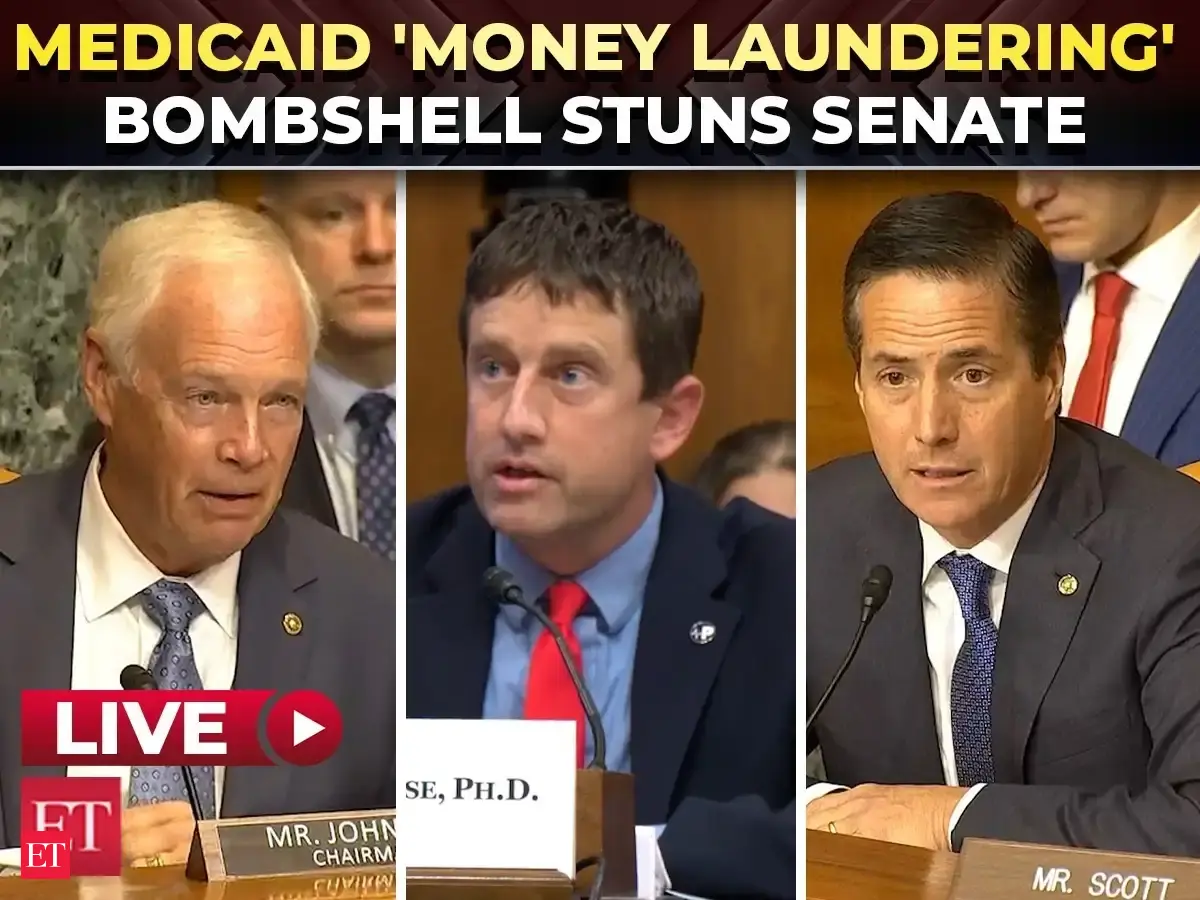
WASHINGTON — The U.S. Senate Committee on the Budget held a public hearing titled "Medicaid: The Reality" to examine systemic vulnerabilities, administrative waste, and program integrity challenges in federal healthcare spending, according to reporting by ET Online. Chaired by Senator Ron Johnson, Republican of Wisconsin, the session focused on how improper payment mechanisms and financial accounting practices allow federal funds to be diverted from direct patient care. Among the primary witnesses was Brian Blase, president of the Paragon Health Institute, who presented evidence regarding operational practices used by states and healthcare entities to inflate federal matching reimbursements.
Key facts
What happened
During the Senate Committee on the Budget hearing, lawmakers and expert witnesses evaluated operational weaknesses in federal oversight of Medicaid expenditures. Chairman Ron Johnson initiated the proceedings by raising concerns over rising federal deficits and questioning whether existing statutory controls adequately protect federal funds allocated under the joint program.
Witness Brian Blase detailed specific methods through which entities exploit statutory and regulatory rules governing Medicaid reimbursements. Blase testified on how healthcare providers and state administration agencies utilize complex accounting practices to secure enhanced federal matching funds. A central focus of the testimony was the usage of provider taxes and intergovernmental transfers. Under these arrangements, states place assessments on healthcare institutions or shift funds between public agencies to artificially raise reported state expenditure levels. Because the federal government matches state outlays based on statutory percentages, these actions enable states to draw down larger federal reimbursements while returning funds to providers through supplemental payment channels or transferring funds into state general revenue accounts.
Senators pressed witnesses on cases where funds intended for direct medical treatment were instead absorbed by administrative overhead, state budget priorities, or unauthorized operational costs. Witnesses testified that complex billing architecture and inconsistent eligibility audits allow improper payments to continue at high volumes nationwide.
Committee members also reviewed the administrative oversight performed by the Centers for Medicare & Medicaid Services (CMS). Witness testimony highlighted structural constraints in federal auditing, noting that reliance on state self-reported data and prolonged auditing timelines delay the detection of financial misstatements and improper claims.
Why it matters
The vulnerabilities examined during the hearing carry substantial fiscal and operational consequences for federal taxpayers, state budgets, and millions of Medicaid recipients. Medicaid represents one of the largest single spending programs in the United States, consuming over $800 billion in public funding annually. When federal matching funds are drawn down through circular accounting practices or improper claims, overall national budget deficits increase, placing additional pressure on federal mandatory spending.
For the more than 80 million low-income citizens, elderly residents in nursing facilities, and disabled individuals who rely on Medicaid, administrative waste risks compromising program stability. If matching funds are absorbed by general state funds or improper administrative payments, fewer resources remain available to support adequate provider payment rates, expand clinical networks, and ensure timely patient access to medical services.
The testimony also underscores fundamental challenges within the federal-state financial matching system. Under statutory law, the federal government reimburses states based on reported expenditures. When individual states utilize financing mechanisms to maximize federal drawdowns without increasing genuine state-level fiscal contributions, it creates inequities among states and conflicts with statutory intent. Addressing these financing rules is central to ongoing congressional debates regarding entitlement sustainability, federal budget resolutions, and national fiscal policy.
The background
Medicaid was created in 1965 under Title XIX of the Social Security Act as a cooperative federal-state entitlement program to supply medical coverage to low-income populations. Individual states manage their own Medicaid programs, establishing coverage parameters, benefit structures, and clinical reimbursement models within broad statutory guidelines overseen by the Centers for Medicare & Medicaid Services (CMS).
The program's financial framework relies on the Federal Medical Assistance Percentage (FMAP), a formula established by federal law that determines the portion of Medicaid expenditures reimbursed by the federal government. By statutory default, the FMAP ranges from 50 percent to over 70 percent depending on a state's per capita income relative to the national average. Under specific statutory provisions, such as the Affordable Care Act's Medicaid expansion, federal matching rates reach 90 percent for specific eligibility groups.
To supply the required non-federal matching share, states originally relied on general state tax revenues. Over recent decades, however, states increasingly implemented provider taxes and Intergovernmental Transfers (IGTs). Through provider taxes, states assess fees on hospitals or long-term care facilities, use the collected revenue as the state share to draw down federal matching funds, and then repay the providers through inflated reimbursement rates.
Federal oversight bodies, including the Government Accountability Office (GAO) and the Department of Health and Human Services Office of Inspector General (HHS-OIG), have repeatedly designated Medicaid management as high-risk. The Payment Error Rate Measurement (PERM) system operated by CMS routinely reports tens of billions of dollars annually in improper payments driven by eligibility determination errors, lack of supporting documentation, and fraudulent billing practices.
Reaction
Political responses during and after the hearing reflected ongoing congressional debates over entitlement oversight and federal funding. Republican members of the Senate Budget Committee, in agreement with Chairman Ron Johnson, advocated for stricter federal oversight, statutory caps on state-directed financing arrangements, and enhanced eligibility verification mandates to prevent improper federal draws.
Democratic lawmakers and healthcare advocacy groups underscored the imperative of protecting beneficiary coverage, cautioning that overly restrictive changes to funding rules or complex compliance demands could disrupt service delivery or restrict coverage for low-income families.
Meanwhile, healthcare provider organizations and state administrative associations defended supplemental payment arrangements as necessary mechanisms to maintain financial stability for safety-net hospitals, noting that base Medicaid reimbursement rates often fall below the actual costs of care.
What we don't know yet
Significant operational and empirical details remain unconfirmed. The total monetary loss resulting nationwide from complex provider-tax recycling and state reimbursement mechanisms is not definitively calculated, as state accounting methodologies vary considerably and federal tracking data experiences reporting lags.
Furthermore, it remains unclear whether CMS will issue formal administrative rules to restrict state provider taxes or if legislative amendment of Title XIX by Congress will be required. The extent to which oversight findings from this hearing will lead to formal inspector general audits or legal enforcement actions against specific institutions also remains unstated in the available reporting.
What to watch
Key developments to monitor following the hearing include:
This report is based on original reporting conducted by ET Online.
How this story was produced
This report was written by The Global Wire newsroom from reporting first published by ET Online. We verify the core facts against the original report, write our own account, and add the background and consequences a short wire item leaves out. Drafting is AI-assisted inside an editor-supervised pipeline, and every story is checked for accuracy of attribution, structure and duplication before it appears — full detail in our AI and funding disclosure.
Spotted an error? Tell us at corrections@horizonglobalnews.com and read our corrections policy or editorial standards.





Reader comments
Loading comments…