

Female Basketball Players in Somaliland Push for Sports Recognition Amid Sovereign Hurdles
Female athletes in the self-declared republic of Somaliland are building local basketball leagues while confronting diplomatic exclusion and conservative social pressures.
By The Global Wire Newsroom · Reported from The Christian Science Monitor; Sophie Neiman; Mahbub Abdillahi
Link preview · horizonglobalnews.com
Female Basketball Players in Somaliland Push for Sports Recognition Amid Sovereign Hurdles
Female athletes in the self-declared republic of Somaliland are building local basketball leagues while confronting diplomatic exclusion and conservative social pressures.
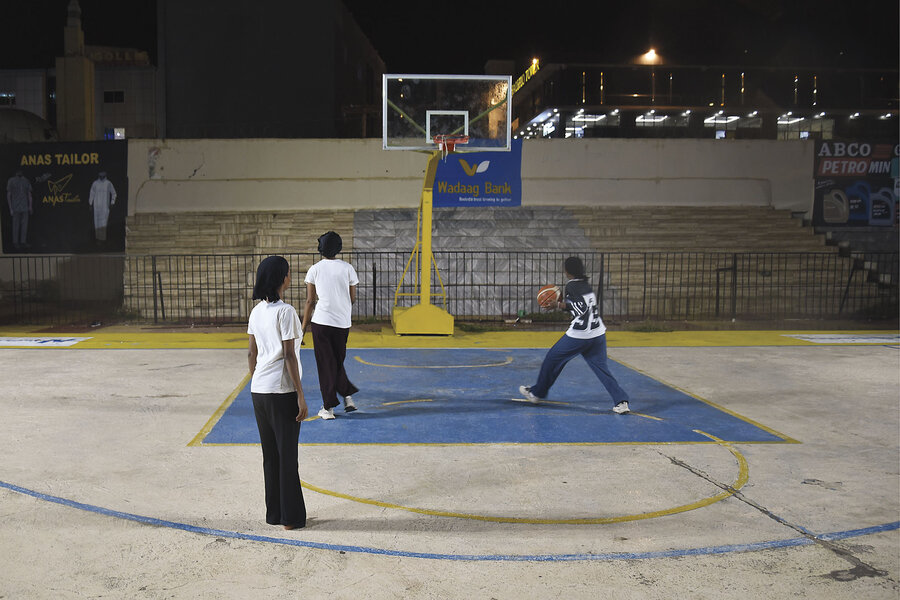
Female basketball players in Somaliland are building local athletics networks and demanding institutional support to represent their self-declared republic on the international stage, despite living in a breakaway territory that lacks formal recognition from the United Nations and global sports governing bodies. According to reporting published on September 18, 2026, by The Christian Science Monitor, female athletes in the Horn of Africa enclave are organizing training sessions, establishing local teams, and seeking competitive opportunities while navigating political isolation and conservative cultural expectations. Their campaign highlights how sport intersects with statehood, gender rights, and regional politics in one of Africa's most complex geopolitical landscapes.
Key facts
What happened
Female basketball players across Somaliland have intensified efforts to create structured basketball competitions, build player rosters, and lobby local athletic administrators for institutional support. As detailed by The Christian Science Monitor, these athletes train in local venues, coordinate matches within urban centers such as Hargeisa, and work to maintain active rosters despite limited access to professional equipment and modern indoor facilities.
The players' primary goal is to form representative teams capable of competing against international opponents. However, their efforts encounter immediate legal and structural obstacles at the international level. Under current international sports regulations, athletic governing bodies do not permit teams from unapproved or diplomatically unrecognized entities to register for official continental or international tournaments. To compete in sanctioned events such as the FIBA Women's AfroBasket or qualifying rounds for the Olympic Games, an athletic delegation must be recognized by its corresponding international federation—in this case, the International Basketball Federation (FIBA)—and possess an approved National Olympic Committee.
In Somaliland, local organizers operate without an internationally affiliated national basketball governing body. Consequently, female players are restricted to local exhibition games, informal regional invitationals, or internal university and community matches. Beyond institutional barriers, the players also handle everyday logistics independently, often self-funding their equipment, uniforms, and transportation. They must also negotiate space with public facility managers and address safety concerns and social disapproval from conservative community members who view female participation in public athletic games as contrary to traditional religious and cultural customs.
Why it matters
The struggle of Somaliland's female basketball players illustrates the real-world consequences of unrecognized statehood on civil society, youth development, and gender equality. While diplomatic analysis of unrecognized territories typically focuses on military security, trade, and border control, the lack of sovereign status directly restricts citizens from participating in international educational, cultural, and sports institutions.
For female athletes in the Horn of Africa, sports access is linked to broader movements for women's rights and social inclusion. In a region where female representation in public life faces structural limitations, organized sports offer women physical agency, leadership training, and community solidarity. When international regulatory frameworks exclude athletes due to geopolitical status, these players are denied the economic opportunities, university scholarships, and athletic careers available to peers in recognized nations.
Furthermore, sports diplomacy has historically served as a critical mechanism for unrecognized or partially recognized entities—such as Taiwan, Kosovo, and Palestine—to assert national identity and foster cultural ties on the global stage. For Somaliland, building functional women's sports programs represents both an internal push for social development and an external signal of institutional maturity to the international community.
The background
Somaliland, located in the northwestern Horn of Africa along the Gulf of Aden, declared its independence from Somalia on May 18, 1991, following the collapse of the central government of President Siad Barre in Mogadishu and the escalation of the Somali Civil War. The territory previously operated as the British Somaliland protectorate, which gained independence from Great Britain on June 26, 1960, before voluntarily joining five days later with the former Italian Somaliland to establish the Somali Republic.
Since 1991, Somaliland has maintained a stable political system distinct from southern Somalia. It conducts regular multi-party democratic elections, issues its own currency (the Somaliland shilling), maintains a national police force and military, collects taxes, and issues passports. The capital, Hargeisa, functions as the administrative center. However, despite decades of political stability and functional self-governance, no United Nations member state has formally extended de jure diplomatic recognition to Somaliland, leaving its international legal status in limbo.
The territory's geopolitical position gained renewed international attention on January 1, 2024, when Somaliland signed a Memorandum of Understanding with neighboring landlocked Ethiopia. The agreement proposed granting Ethiopia commercial and military sea access to the port of Berbera on the Gulf of Aden in exchange for a formal assessment of Somaliland's diplomatic recognition, a move that drew sharp condemnation from the federal government of Somalia in Mogadishu.
In athletics, international governing bodies strictly enforce sovereign requirements. The International Olympic Committee (IOC) updated its charter in 1996 to require that new National Olympic Committees represent an independent state recognized by the international community, closing a path previously used by semi-autonomous territories. The International Basketball Federation (FIBA), founded in 1932, similarly restricts full membership to recognized national federations. While Somalia retains official membership in FIBA through the Somali Basketball Federation based in Mogadishu, Somaliland operates completely outside this framework. Historical precedents exist in non-mainstream sports—such as Somaliland's participation in the Confederation of Independent Football Associations (CONIFA) for non-FIFA entities—but mainstream Olympic federations offer no clear pathway for unrecognized states.
Reaction
Reaction to the development of female basketball in Somaliland remains divided among local institutions, religious leaders, and international bodies. Within Somaliland, female players and sports advocates have urged the Ministry of Youth and Sports to increase funding, construct dedicated and secure training facilities, and formally integrate women's programs into national athletic development plans. Local female organizers emphasize that sports participation aligns with personal empowerment and physical health within an Islamic framework.
Community reactions in Hargeisa reflect broader social debate. While younger urban residents and progressive civil society groups express support for female athletic programs, conservative religious leaders and traditional elders have periodically voiced objections. These critics express concern that public athletic events, mixed-gender sports environments, or non-traditional attire conflict with local interpretations of Islamic modesty standards. In response, sports organizers frequently design training schedules and attire—including long sleeves, full-length trousers, and athletic headscarves—to comply with local religious expectations.
At the international level, sports federations such as FIBA have not officially commented on individual petitions from Somaliland basketball advocates. Historically, international sports organizations maintain neutrality by deferring to United Nations diplomatic status, meaning any formal official reaction from global bodies would require prior political recognition or authorization from the recognized Somali sports entities in Mogadishu.
What we don't know yet
Several critical details regarding the future of female basketball in Somaliland remain unconfirmed. The exact number of active female players, formal clubs, and organized leagues currently operating across Somaliland's major regions—such as Maroodi Jeex, Togdheer, and Sahil—is not fully documented in official public registries.
It also remains unclear whether Somaliland's Ministry of Youth and Sports intends to submit formal applications for regional athletic body observership, or whether local sports leaders are actively negotiating agreements with the Somali Basketball Federation in Mogadishu to permit Somaliland-based players to participate in sanctioned national tryouts or regional tournaments.
Additionally, the extent of private financial sponsorship or support from foreign non-governmental organizations dedicated to female sports development in Somaliland remains unspecified. Whether international basketball organizations will consider creating non-member showcase pathways for athletes from unrecognized territories also remains an open legal and administrative question.
What to watch
Key developments to monitor in the coming months include potential budgetary announcements from Somaliland's Ministry of Youth and Sports regarding dedicated investments in women's athletic infrastructure, particularly secure indoor sports facilities in Hargeisa.
Observers will also monitor whether Somaliland athletic bodies attempt to host unsanctioned regional invitationals featuring teams from neighboring Horn of Africa nations, such as Djibouti or Ethiopia, to test international willingness to participate in non-FIBA events.
Furthermore, broader political developments—such as the legal implementation of the January 2024 Ethiopia-Somaliland Memorandum of Understanding and Somaliland's upcoming presidential and parliamentary election cycles—will directly impact the territory's diplomatic strategy and its capacity to use athletic diplomacy as an instrument of sovereign recognition.
This report is based on original reporting published by The Christian Science Monitor.
How this story was produced
This report was written by The Global Wire newsroom from reporting first published by The Christian Science Monitor; Sophie Neiman; Mahbub Abdillahi. We verify the core facts against the original report, write our own account, and add the background and consequences a short wire item leaves out. Drafting is AI-assisted inside an editor-supervised pipeline, and every story is checked for accuracy of attribution, structure and duplication before it appears — full detail in our AI and funding disclosure.
Spotted an error? Tell us at corrections@horizonglobalnews.com and read our corrections policy or editorial standards.




Reader comments
Loading comments…