

Justice Department Seeks Sanctions Over Disclosure of California Voter Data Findings
Federal prosecutors want an immigrant rights group penalized for publishing an analysis showing over 40% of alleged noncitizen voters were not registered in California.
By The Global Wire Newsroom · Reported from ABC News
Link preview · horizonglobalnews.com
Justice Department Seeks Sanctions Over Disclosure of California Voter Data Findings
Federal prosecutors want an immigrant rights group penalized for publishing an analysis showing over 40% of alleged noncitizen voters were not registered in California.
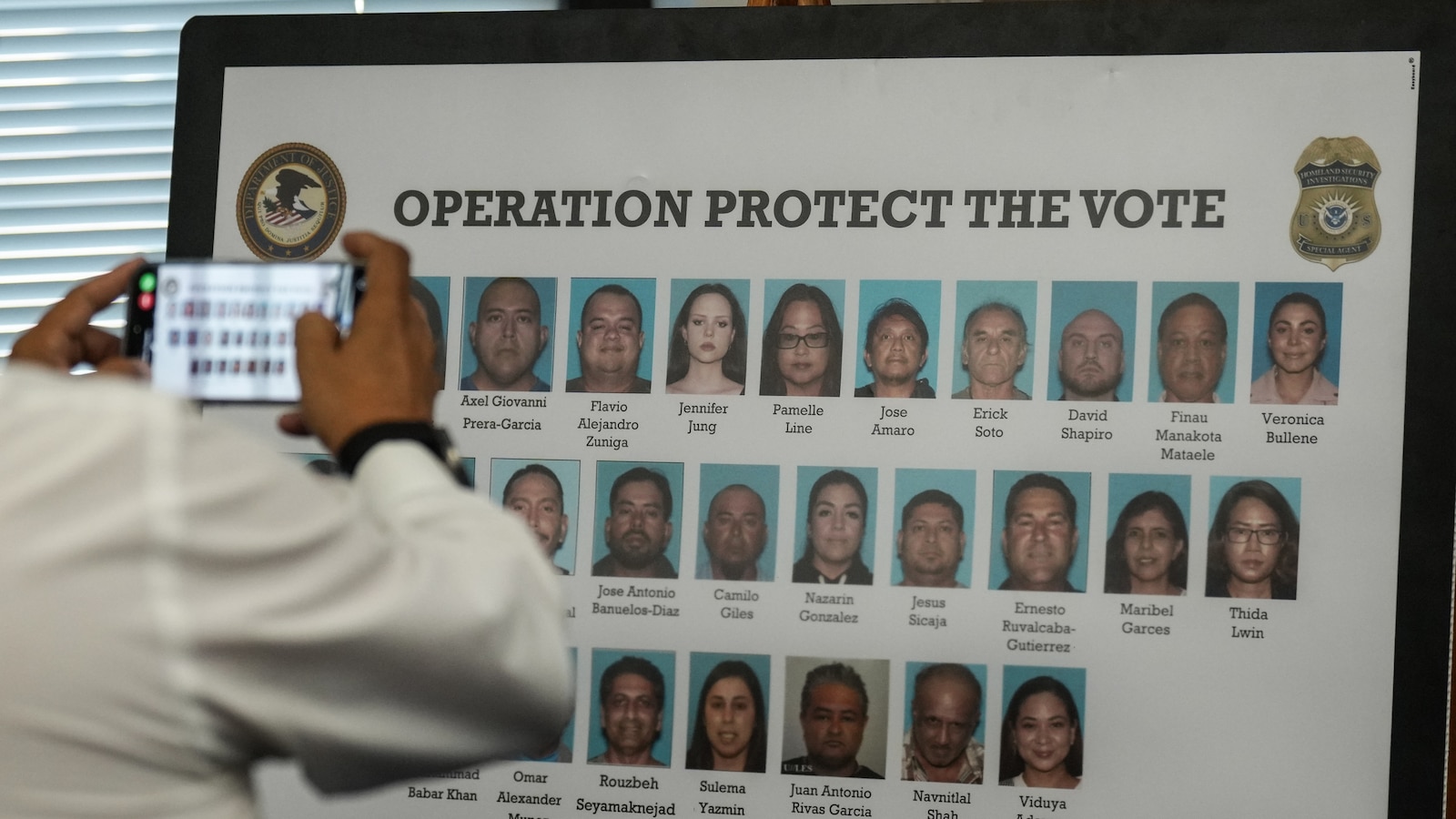
The United States Department of Justice has asked a federal judge to impose sanctions and weigh civil contempt proceedings against an immigrant advocacy organization after the group publicly revealed findings from a disputed voter registration dataset. The controversy arose after legal representatives for the organization submitted court documents detailing an audit of federal records that purported to identify noncitizens participating in California elections. According to the advocacy group's court submissions, more than 40 percent of the individuals listed by federal authorities as noncitizen registrants do not exist on the state's official voter rolls, directly challenging government assertions regarding the scale of unlawful registration.
Key facts
What happened
According to reporting by ABC News and PBS, the conflict escalated following a Saturday legal filing in federal court in which attorneys representing an immigrant rights organization presented a technical breakdown of a sensitive state-level dataset. Federal officials had compiled the roster as part of broader inquiries into potential voting irregularities, alleging that the records documented foreign nationals who had unlawfully registered to cast ballots in California.
Upon gaining access to the government's data through discovery procedures, researchers working alongside the advocacy group conducted an exhaustive cross-reference against the California Secretary of State's current voter file. The review yielded a stark discrepancy: more than 40 percent of the names assembled by federal authorities did not appear anywhere on the state's active or inactive voter rolls, undermining the premise that these individuals were poised or registered to vote.
Rather than engaging solely with the statistical merits of the rebuttal, the Department of Justice swiftly approached the presiding judge, arguing that the immigrant rights organization violated procedural boundaries by publicizing the outcome of its examination. As reported by ABC News, the Justice Department urged the court to evaluate whether the disclosure constituted contempt of court and whether financial or evidentiary sanctions should be levied against the group and its legal counsel for making the findings part of the public domain without prior judicial authorization.
Why it matters
This legal clash highlights deep structural tensions between federal enforcement priorities and the mechanics of state-administered elections. Across the United States, debates over the accuracy of voter registration files have become central to broader disputes over ballot access and election administration. Claims that significant numbers of noncitizens are registered to vote frequently trigger aggressive voter list maintenance operations, but empirical evidence often demonstrates that raw matching processes yield substantial rates of error.
When federal authorities rely on datasets that produce high rates of false positives—such as identifying individuals as registered voters when four in ten do not appear on state registries—the consequences for administrative governance are substantial. Inaccurate purging or flawed federal referrals risk infringing upon the voting rights of eligible, naturalized citizens who share similar names or demographic markers with noncitizens. Conversely, government departments argue that the uncontrolled public release of unverified or disputed analytical findings during active litigation can compromise ongoing investigative procedures, breach privacy safeguards, and prematurely shape public opinion before the court can adjudicate the reliability of the evidence. Furthermore, the threat of judicial sanctions against advocacy groups introduces legal friction, potentially discouraging civil rights organizations from aggressively scrutinizing state-level voter purges and federal evidentiary claims.
The background
Federal statute strictly governs voter eligibility and the integrity of federal elections. Under the Illegal Immigration Reform and Immigrant Responsibility Act of 1996, codified at 18 U.S.C. § 611, it is a federal crime for any noncitizen to vote in presidential or congressional contests, punishable by up to one year of imprisonment, civil fines, and severe immigration consequences, including removal and permanent inadmissibility. Independent academic researchers, state election audits, and the Government Accountability Office have repeatedly found that voting by noncitizens remains exceedingly rare, largely due to the severe deterrents embedded in the immigration system.
To detect ineligible registrants, state and federal agencies frequently attempt to reconcile voter rolls against immigration databases, such as the Department of Homeland Security's Systematic Alien Verification for Entitlements (SAVE) program. However, election administrators have long acknowledged that matching disparate databases presents formidable technical hurdles. State voter registries are continually updated as individuals move, register, or change names, whereas federal immigration repositories often lag significantly behind naturalization timelines. A person who lawfully naturalizes as a U.S. citizen and subsequently registers to vote may still appear as a legal permanent resident or visa holder in older federal immigration databases for months or even years.
Historical precedents illustrate the recurring pitfalls of these matching exercises. In 2019, the Texas Secretary of State's office flagged roughly 95,000 individuals as noncitizens who were allegedly registered to vote, sending the roster to county election officials and the state attorney general for criminal review. Within weeks, local county registrars and civil rights litigators discovered that tens of thousands of those identified were fully naturalized citizens whose updated status had not synced between the Texas Department of Public Safety and federal databases. The state settled resulting federal lawsuits, agreed to overhaul its matching methodology, and withdrew the flawed lists. Similar inaccuracies emerged in Florida in 2012, where an initial state list of 180,000 suspected noncitizens was ultimately whittled down to a fraction of a percent of verified ineligible voters.
In the current California matter, the dispute is unfolding against the framework of the National Voter Registration Act of 1993 (NVRA), which regulates how states maintain their registries and prohibits systematic purges within 90 days of a federal election to prevent disenfranchisement caused by administrative data errors.
Reaction
The Department of Justice's formal application for sanctions signals a confrontational posture toward legal advocacy organizations participating in election-related litigation. While federal prosecutors have not publicly elaborated beyond their formal court motions, their filing asserts that procedural safeguards designed to protect confidential discovery materials were deliberately or negligently breached.
The immigrant rights organization has defended its analytical filing as an essential contribution to the public record and a necessary defense against unfounded allegations of systemic voter fraud. Counsel for advocacy organizations in parallel election disputes routinely emphasize that publicizing fundamental flaws in state and federal lists is essential to protecting lawful voters from disenfranchisement and safeguarding public confidence in electoral institutions.
The federal district judge assigned to the case has not yet issued a definitive finding regarding civil contempt. Typically, federal courts handle such petitions by directing the responding party to show cause why they should not be sanctioned, followed by a formal hearing where both sides present legal arguments regarding the scope of any existing protective orders and the legal justification for the disclosure.
What we don't know yet
Several substantive details remain unresolved in the public record. Neither the specific federal judicial district nor the identity of the presiding federal judge was explicitly detailed in initial wire reports, leaving the precise procedural status of the motion unclear. Furthermore, the public filings do not reveal the exact parameters of the original protective order that governed the federal dataset, making it impossible to determine independently whether the immigrant rights group violated an absolute seal on data conclusions or whether the restriction applied solely to personally identifiable information (PII) such as Social Security numbers, dates of birth, and residential addresses.
Additionally, the origin of the underlying government database remains undisclosed. It is not yet clear whether the Justice Department generated the list using Department of Homeland Security records, commercial data-broker matching, or specific federal law enforcement databases. The precise mathematical and technical methodology used by the immigrant rights organization to perform the cross-referencing against the California voter registry also has not been detailed publicly, leaving open questions regarding how close name matches, transpositions, and inactive voter sub-files were evaluated.
What to watch
The immediate development to monitor is the district court's forthcoming order regarding the government's contempt application. The court must decide whether to issue an order to show cause, schedule an evidentiary hearing, or dismiss the government's request for sanctions. If the court initiates formal contempt proceedings, legal counsel for the advocacy group will be required to provide a line-by-line legal justification for filing the 40 percent discrepancy statistic in open court.
Observers should also watch whether California election authorities, led by the California Secretary of State's office, choose to intervene or submit an amicus brief. State election officials possess the authoritative voter roll data and could clarify why thousands of federal names did not register as matching entries on the state file. Beyond the courtroom, the resolution of this matter could set a critical legal benchmark for how statistical audits of voter data are handled during active discovery, influencing how civil rights litigants across the country analyze and contest state-level voter purge initiatives.
Reporting from ABC News and PBS provided the factual basis for this account, detailing the Justice Department's court filing and the immigrant advocacy group's underlying statistical findings.
How this story was produced
This report was written by The Global Wire newsroom from reporting first published by ABC News. We verify the core facts against the original report, write our own account, and add the background and consequences a short wire item leaves out. Drafting is AI-assisted inside an editor-supervised pipeline, and every story is checked for accuracy of attribution, structure and duplication before it appears — full detail in our AI and funding disclosure.
Spotted an error? Tell us at corrections@horizonglobalnews.com and read our corrections policy or editorial standards.




Reader comments
Loading comments…