

DOJ Noncitizen Voter List Riddled With Errors in California, Outside Review Finds
An independent review found over 40% of names on a federal noncitizen list were not registered in California, while thousands of citizens were misflagged.
By The Global Wire Newsroom · Reported from pbs.org
Link preview · horizonglobalnews.com
DOJ Noncitizen Voter List Riddled With Errors in California, Outside Review Finds
An independent review found over 40% of names on a federal noncitizen list were not registered in California, while thousands of citizens were misflagged.
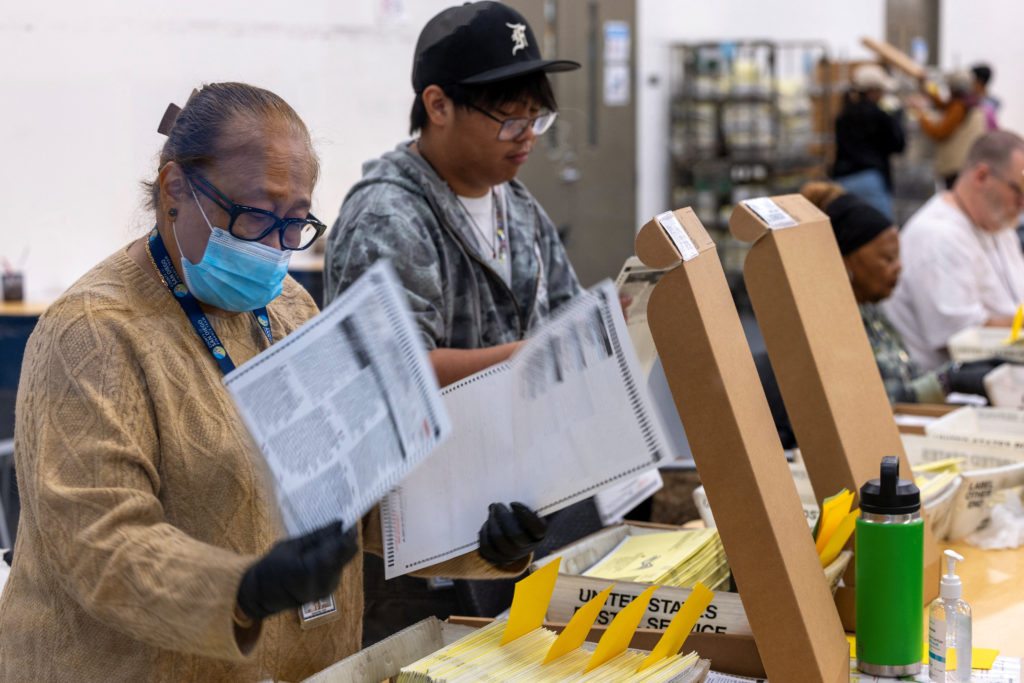
WASHINGTON — More than 40 percent of the individuals included on a federal Department of Justice list of alleged noncitizens are not registered on California's voter rolls, and thousands of eligible American citizens appear to have been mistakenly flagged as ineligible, according to an independent analysis reported by PBS News on Oct. 31, 2026. The findings represent the first outside evaluation of the federal dataset, which the Department of Justice has cited in formal communications warning state and municipal election administrators of potential criminal prosecution if ineligible names are not purged from official registration databases ahead of upcoming elections.
Key facts
What happened
According to reporting by PBS News, an outside analysis of records disseminated by the U.S. Department of Justice revealed severe discrepancies between federal assertions and the state of California's actual voter rolls. The federal government had compiled a roster of individuals it claimed were noncitizens unlawfully registered to participate in elections, using the documentation to put state election directors and county registrars on notice regarding potential legal liability.
When researchers and external analysts cross-referenced the Department of Justice's list against California's statewide voter file—the centralized database managed by the California Secretary of State—they discovered that more than four in ten individuals flagged by the federal government were not registered to vote in the state at all. These individuals had no active or inactive registration records within the jurisdiction, indicating that federal compilers had assembled names without first verifying whether the individuals had ever attempted to enter the electorate.
Furthermore, the independent examination revealed that among the individuals on the federal list who did match registered voters in California, thousands were fully naturalized or native-born U.S. citizens. These eligible electors had been misidentified by federal authorities as noncitizens, exposing them to potential disenfranchisement and subjecting election workers to allegations of noncompliance based on inaccurate administrative data.
This marks the first time an external entity has subjected the Department of Justice's enforcement data to systematic outside scrutiny. Until this review, federal authorities had maintained the integrity of their data without publicly detailing the algorithms, data-matching thresholds, or source registries used to compile the rosters sent to state capitals.
Why it matters
The revelation that over 40 percent of names on a federal enforcement roster are absent from state voter rolls, alongside the misclassification of thousands of legitimate citizens, strikes at the heart of election administration integrity in the United States. When the nation's chief law enforcement agency issues warnings of criminal prosecution to local election directors, such communications carry immense institutional weight. State and local administrators, operating under threat of federal sanction, face pressure to conduct rapid purges of their registration databases. If those administrative actions rely on fundamentally flawed data, eligible citizens are stripped of their constitutional right to cast a ballot, often without adequate time or procedural mechanism to seek reinstatement before polling locations open.
Beyond individual voter disenfranchisement, flawed federal enforcement actions undermine public confidence in election infrastructure. When federal claims regarding thousands of alleged noncitizen registrations disintegrate under independent data matching, it exposes election systems to contradictory pressures: election officials are caught between federal threats of criminal investigation on one side and statutory mandates protecting eligible voters on the other. For municipal clerks and county registrars, resolving conflicting mandates demands substantial time, technical resources, and taxpayer-funded labor to manually audit individual files, diverting critical administrative capacity away from logistics, poll worker training, and ballot security during critical pre-election periods.
The background
Under federal statute, specifically Title 18, Section 611 of the United States Code, it is a federal crime for noncitizens to vote in federal elections, punishable by fines, imprisonment, and deportation under immigration law. Despite ongoing political contention surrounding the issue, documented instances of noncitizens registering or voting remain exceptionally rare across historical academic and government reviews, largely because the penalties—including permanent bar from citizenship and immediate removal from the country—vastly outweigh any perceived benefit of casting a ballot.
Historically, attempts by both federal and state authorities to construct noncitizen voter lists have encountered persistent methodological failures. In 2019, the Texas Secretary of State's office announced that it had identified approximately 95,000 registered voters who were suspected noncitizens, based on driver's license records maintained by the Texas Department of Public Safety. Within weeks, civil rights litigation and state reviews demonstrated that tens of thousands of those individuals were naturalized citizens who had legally registered to vote after obtaining their citizenship. A federal judge subsequently halted the purge, and state officials agreed to end the program and pay legal fees.
Similar data-matching problems arose in Florida in 2012, when state officials cross-referenced voter registration lists against the federal Systematic Alien Verification for Entitlements (SAVE) database, which is operated by the Department of Homeland Security. The SAVE program, designed primarily to determine eligibility for federal public benefits, does not maintain real-time updates on individuals who undergo naturalization. Consequently, naturalized citizens frequently appear in immigration registries under their prior lawful permanent resident status.
In addition to technical limitations, federal legislation strictly governs the timing and execution of voter list maintenance. The National Voter Registration Act of 1993 (NVRA) established what is commonly referred to as the 90-day "quiet period." Under Section 8 of the NVRA, states and federal entities are prohibited from conducting systematic programs aimed at removing ineligible voters from the rolls within 90 days of any primary or general election for federal office. The statutory restriction exists precisely to prevent the disenfranchisement of eligible voters on the eve of elections due to bureaucratic or technological errors, ensuring individuals have adequate due process to contest erroneous removals.
California manages its voter registration through a centralized statewide database known as VoteCal, which connects all 58 county registrar offices. California has implemented automatic voter registration at Department of Motor Vehicles offices pursuant to its state Motor Voter statutes, with built-in electronic safeguards intended to verify citizenship prior to transmitting voter information to election offices. When discrepancies occur between state databases and federal records, state law requires individual notice and verification before an elector's voting privileges can be revoked.
Reaction
Neither the Department of Justice nor federal officials had immediately published a formal public statement addressing the specific statistical discrepancies highlighted by the independent review reported by PBS News. Election law experts and civil rights advocates are expected to utilize the findings to challenge any ongoing federal inquiries or potential enforcement litigation in federal district court.
State voting officials in California and across other jurisdictions targeted by federal inquiries have historically resisted abrupt list-clearing demands, noting that their statutory duties under both state law and the NVRA prohibit indiscriminate removals without individualized verification. Legal organizations specializing in voting rights are anticipated to seek formal administrative disclosures or file Freedom of Information Act actions to compel the Justice Department to release the complete criteria and underlying data sources utilized in generating the noncitizen registry.
Congressional committees with jurisdictional oversight over the Department of Justice, including the House and Senate Committees on the Judiciary, are also expected to face calls from lawmakers to examine whether federal resources and criminal enforcement authorities were leveraged appropriately or if administrative procedures deviated from federal statutory safeguards.
What we don't know yet
Critical questions remain regarding the precise origins and administrative handling of the federal government's list. PBS News did not publish the exact total number of names contained on the Department of Justice's roster, nor did the reporting clarify whether identical lists were transmitted to election officials in other states beyond California. It remains unknown which specific federal database was consulted to compile the names—whether the Justice Department drew from Department of Homeland Security naturalization databases, customs records, commercial data aggregators, or Social Security Administration records.
Additionally, it is not yet established whether any registered California voters identified on the federal list were actually removed from county rolls prior to the completion of the outside analysis, or whether any state or local election officials remain under active federal criminal grand jury investigation. The legal reasoning and evidentiary threshold that Department of Justice attorneys relied upon to formulate threats of prosecution against election workers also remain undisclosed to the public.
What to watch
The immediate development to monitor is whether the Department of Justice responds to the outside analysis by amending its dataset, rescinding its threat letters to local election officials, or releasing its underlying methodology. Observers will also track whether civil rights groups, voting rights organizations, or the California Attorney General initiate litigation against the Department of Justice seeking emergency injunctive relief to halt federal enforcement based on the contested list.
Further checkpoints include formal communications from California's Secretary of State to county election directors advising them on how to handle any federal matching requests. In the long term, court dockets in related federal challenges across the country will determine whether the 90-day quiet period under the National Voter Registration Act applies to federal directives targeting noncitizen voting allegations. Any formal oversight hearings or inquiries initiated by members of Congress will provide additional clarity on how federal inter-agency data sharing operated in this inquiry.
This report is based on original reporting published by PBS News.
How this story was produced
This report was written by The Global Wire newsroom from reporting first published by pbs.org. We verify the core facts against the original report, write our own account, and add the background and consequences a short wire item leaves out. Drafting is AI-assisted inside an editor-supervised pipeline, and every story is checked for accuracy of attribution, structure and duplication before it appears — full detail in our AI and funding disclosure.
Spotted an error? Tell us at corrections@horizonglobalnews.com and read our corrections policy or editorial standards.





Reader comments
Loading comments…