

French Student Groups Threaten Renewed High School Blockades Over Government Plans
Student leaders in France have called for fresh high school blockades starting Monday after declaring the government's latest measures inadequate.
By The Global Wire Newsroom · Reported from Malay Mail
Link preview · horizonglobalnews.com
French Student Groups Threaten Renewed High School Blockades Over Government Plans
Student leaders in France have called for fresh high school blockades starting Monday after declaring the government's latest measures inadequate.
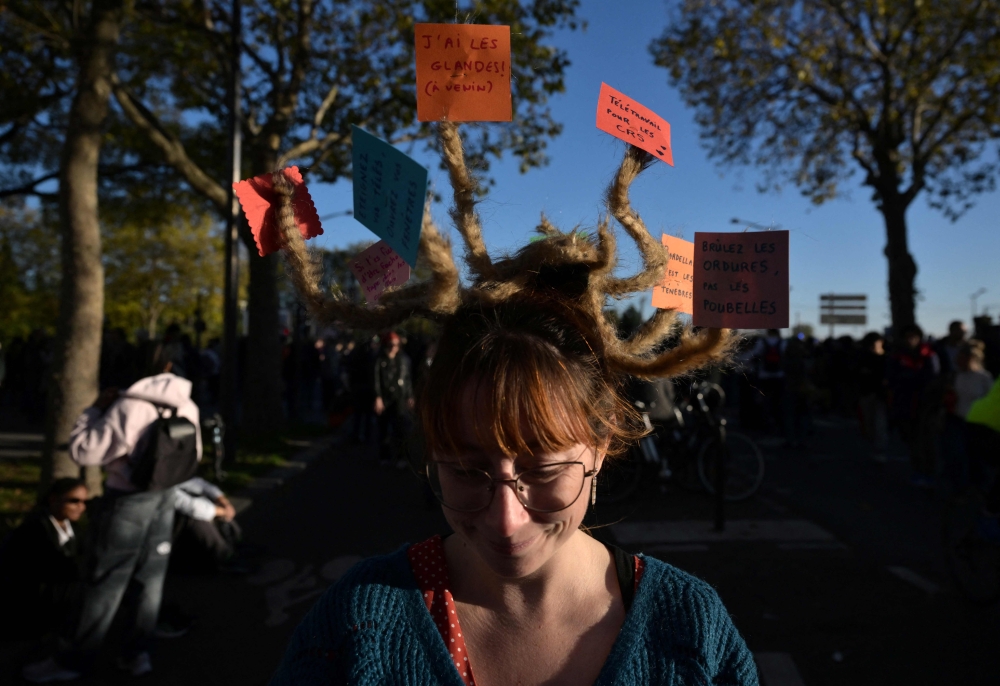
PARIS — High school student organizations across France are preparing to resume coordinated blockades of secondary campuses from Monday, rejecting the government's latest slate of proposals as fundamentally inadequate, according to reporting by the Malay Mail. The announcement signals an immediate escalation in tensions between secondary school activists and national authorities, raising the prospect of widespread operational disruption across municipal campuses, disrupted examination schedules, and increased friction outside school gates as pupils return from weekend breaks.
Key facts
What happened
Student representatives announced over the weekend that secondary school pupils would re-establish barricades outside school facilities beginning Monday morning, according to the Malay Mail. The decision follows a formal evaluation of administrative proposals submitted by state officials to stem rising youth dissatisfaction across urban educational districts.
Under French school blockade protocols, known locally as "blocages de lycées," mobilized students gather before the start of morning instructional periods—typically around 7:30 a.m. to 8:00 a.m. local time—to restrict entry into municipal school complexes. Activists typically assemble makeshift barriers using public refuse containers, municipal metal barricades, bicycle racks, and timber pallets. These barricades prevent administrative staff, instructional faculty, and non-participating pupils from entering the premises.
Government interlocutors had earlier attempted to forestall renewed campus unrest by formulating a package of measures intended to satisfy student demands. However, the student leadership determined that the concessions failed to alter the structural conditions or educational policies at the center of the dispute. By scheduling the resumption of blockades for the immediate beginning of the work week, youth organizers aim to maximize pressure on ministerial negotiators and compel higher-level interventions from central government ministries.
Why it matters
Secondary school protests carry disproportionate political and logistical weight in the French governance system. Unlike isolated localized strikes, student blockades immediately affect hundreds of thousands of households by upending daily childcare routines, disrupting school transportation networks, and preventing teaching staff from completing statutory curricula mandated by the Ministry of National Education. When blockades become widespread, entire academic calendars face slippage, jeopardizing continuous assessment marks, mock examinations, and laboratory practicums required for the national baccalaureate diploma.
Beyond educational administration, the resumption of youth blockades presents an acute political liability for the government. In French political history, student demonstrations serve as an unpredictable multiplier for broader industrial unrest. Secondary school mobilizations often act as an operational vanguard, rapidly drawing sympathy walkouts from higher education universities, public sector labor confederations, and civil transport unions. If street mobilizations expand beyond high school perimeters, executive policymakers face compounded crises involving transport disruptions, civic assemblies, and heightened urban policing requirements.
Furthermore, the physical dynamics of high school barricades present severe public order and child welfare challenges. Because participants are overwhelmingly minors under the age of 18, law enforcement agencies face severe statutory and operational restrictions regarding crowd dispersal techniques, physical containment, and the deployment of non-lethal crowd-control munitions outside educational institutions. Clashes outside school gates risk physical injuries to youths, vandalism of surrounding public infrastructure, and intense political fallout over the conduct of municipal and national police forces.
The background
High school activism occupies an institutionalized, highly structured role within the landscape of French civic engagement. The French secondary system encompasses general, technological, and vocational lycées, governed nationally from the Ministry of National Education on the Rue de Grenelle in Paris. Unlike educational structures in federal republics, the French system is heavily centralized, meaning that pedagogical curricula, resource allocations, staffing ratios, and evaluation frameworks are identical nationwide. This institutional centralization means local school grievances rapidly coalesce into national political movements aimed squarely at the cabinet of the Prime Minister and the Minister of National Education.
French high school pupils have maintained recognized national syndicates—such as the Fédération Indépendante et Démocratique Lycéenne (FIDL), the Union Nationale Lycéenne (UNL), the Mouvement National Lycéen (MNL), and La Voix Lycéenne—for decades. These syndicates operate through high school delegations, student councils (Conseils de la vie lycéenne), and weekly general assemblies. While union memberships fluctuate rapidly due to the natural three-year cycle of high school cohorts, these organizations possess deep operational knowledge regarding strike mobilization, press coordination, and national liaison networks.
Historically, youth-led street movements have repeatedly derailed government policy initiatives in France. In 1986, weeks of sustained student and lycéen demonstrations forced the government of Prime Minister Jacques Chirac to withdraw the Devaquet bill on university reform. In 2005, nationwide high school walkouts challenged education minister François Fillon’s secondary reforms, culminating a year later in the historic 2006 mass mobilizations that forced the complete repeal of the First Employment Contract (Contrat Première Embauche, or CPE). More recently, lycéens staged extensive blockades in late 2018 during demonstrations against the Parcoursup university admissions portal and the comprehensive restructuring of the baccalaureate examination, as well as in late 2020 over pandemic-era health protocols. The threat of renewed disruptions carries a potent historical resonance that national policy administrators cannot easily dismiss.
Reaction
Student organizers have voiced clear discontent with the government's approach, asserting that ministerial representatives have treated structural grievances with cosmetic administrative adjustments rather than substantive reforms. According to reporting by the Malay Mail, union leaders maintained that the administration's compromise fell far short of what high school communities require, leaving them with no alternative but to re-engage direct disruptive actions.
While central ministries had not published an updated rebuttal at the moment of the weekend announcement, public education authorities historically adopt a rigid stance against physical blockades. The Ministry of National Education, local regional academies (rectorats), and school headteachers' associations—notably the Syndicat National des Personnels de Direction de l'Éducation Nationale (SNPDEN-UNSA)—routinely condemn entrance blockades as unlawful infringements on the freedom to learn (atteinte à la liberté d'apprendre) and significant safety hazards that expose minor pupils to perimeter violence. Administrative leaders typically call on organizers to pursue grievance resolution through statutory student councils rather than through physical disruption.
National parent associations, including the Fédération des Conseils de Parents d'Élèves (FCPE) and the rival Protection de l'Enfant et Enseignement Public (PEEP), typically occupy diverging viewpoints during such standoffs. While left-leaning parent groups often support the underlying demands regarding instructional resources or student well-being while appealing for police restraint, conservative parent organizations regularly demand immediate municipal intervention to secure campus entrances and preserve uninterrupted classroom instruction.
What we don't know yet
Substantial details regarding the precise operational reach and immediate legal context of the impending blockades remain unconfirmed in available reports. The concise initial reporting does not identify the specific student syndicate whose leadership issued the call to restart blockades, nor does it detail the granular specifics of the government proposals that the organization rejected.
Additionally, the geographical scope of the mobilization remains undefined. It is unclear whether the planned Monday blockades represent a coordinated national shutdown across key metropolitan academies—such as Paris, Créteil, Versailles, Lyon, Marseille, and Toulouse—or a localized escalation focused on specific suburban districts. The scale of participation will determine the level of municipal disruption. Independent observers also cannot yet ascertain whether national teacher unions, such as the FSU or UNSA-Éducation, intend to align with the students' call by issuing accompanying strike notices to validate class cancellations.
What to watch
Observers of French educational and municipal governance should monitor several key milestones over the coming days to gauge the trajectory of this confrontation:
This report incorporates independent analysis based on initial operational dispatches reported by the Malay Mail.
How this story was produced
This report was written by The Global Wire newsroom from reporting first published by Malay Mail. We verify the core facts against the original report, write our own account, and add the background and consequences a short wire item leaves out. Drafting is AI-assisted inside an editor-supervised pipeline, and every story is checked for accuracy of attribution, structure and duplication before it appears — full detail in our AI and funding disclosure.
Spotted an error? Tell us at corrections@horizonglobalnews.com and read our corrections policy or editorial standards.



Reader comments
Loading comments…