

Haley Stevens Backs Trump-Supported Republican in Michigan Senate Contest
Representative Haley Stevens has crossed party lines in Michigan to back Donald Trump's chosen Senate candidate after a bitter primary loss to Abdul El-Sayed.
By The Global Wire Newsroom · Reported from Joey Cappeleti; Corey Williams; Mike Householder
Link preview · horizonglobalnews.com
Haley Stevens Backs Trump-Supported Republican in Michigan Senate Contest
Representative Haley Stevens has crossed party lines in Michigan to back Donald Trump's chosen Senate candidate after a bitter primary loss to Abdul El-Sayed.
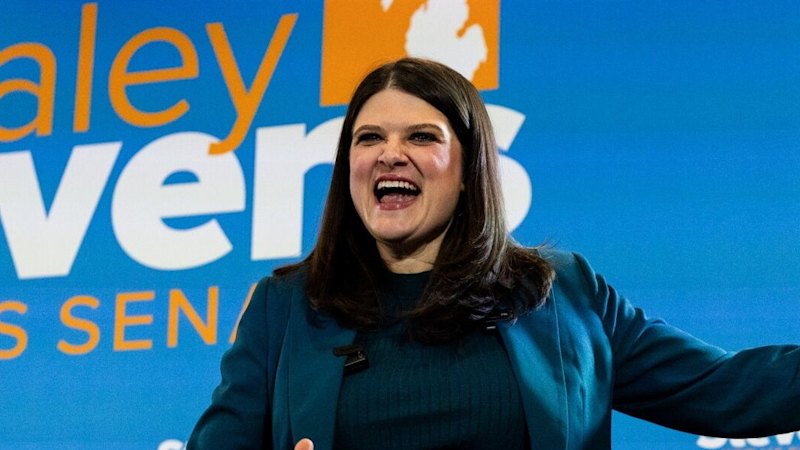
DETROIT — A sharp fissure opened within the Michigan Democratic Party in the final stretch of the midterm election campaign as Representative Haley Stevens crossed party lines to endorse the Republican candidate endorsed by former President Donald Trump in the state's tightly contested U.S. Senate race. The move, reported on November 1, 2026, by Joey Cappeleti, Corey Williams, and Mike Householder, represents an extraordinary intraparty defection following a contentious Democratic primary campaign in which Stevens was defeated by Abdul El-Sayed. By backing the Trump-aligned candidate over her former primary rival, Stevens has disrupted a battleground contest that could determine the balance of power in the upper chamber of Congress.
Key facts
What happened
According to reporting by Joey Cappeleti, Corey Williams, and Mike Householder, the intraparty tension that simmered throughout the Democratic primary campaign culminated in an open rupture days ahead of the general election. Stevens, who has represented suburban Detroit districts in the U.S. House of Representatives, had faced off against El-Sayed in the primary contest to secure the party's Senate nomination. El-Sayed, an epidemiologist and former director of the Detroit Health Department who ran for governor in 2018, secured the nomination after an ideological battle that pitted his progressive platform against Stevens' centrist profile.
Rather than uniting behind the party's nominee in the general election, Stevens chose to endorse the Republican nominee who holds the backing of Donald Trump. While political friction between opposing factions within a party often manifests in muted support or withheld endorsements, direct endorsements across party lines remain exceptional among incumbent members of the House. The reporting confirms Stevens backed the Trump-supported Republican outright, turning the final days of the Michigan campaign into a referendum on Democratic party cohesion.
The public backing injects fresh turbulence into a race that was already commanding intense scrutiny. Stevens had built her political brand as a pragmatic, pro-business centrist representing Oakland County and adjacent suburban communities, while El-Sayed campaigned on universal healthcare, structural economic change, and progressive environmental policies. The endorsement signals that the personal and ideological divisions from the primary contest never healed, spilling over into the general election environment where independent and suburban swing voters will prove decisive.
Why it matters
Michigan functions as one of the quintessential purple battlegrounds in American federal politics, where statewide outcomes are routinely decided by narrow margins across suburban counties like Oakland, Macomb, and Kent. In a federal Senate election, the defection of a prominent sitting House Democrat is not merely a symbolic rupture; it presents tangible risks to voter turnout, campaign organizing, and down-ballot coordination.
First, the endorsement complicates El-Sayed's ability to consolidate traditional Democratic voters, particularly moderate suburbanites who have anchored Democratic victories in the state since 2018. If moderate voters interpret Stevens' endorsement as permission to defect to the Republican ticket, El-Sayed's path to victory narrows substantially. High turnout among working-class suburban voters who split their tickets has historically been essential for federal candidates in Michigan.
Second, the move creates national repercussions for the control of the U.S. Senate. With the chamber's balance resting on a handful of competitive states, national party committees and independent expenditure groups invest hundreds of millions of dollars into key battlegrounds. A party that must defend its own standard-bearer against attacks from a sitting colleague is forced to redirect resources from offense to defense, spending time and capital to reassure wavering loyalists rather than prosecuting an unvarnished case against the opposition.
Finally, the decision carries institutional consequences within Congress and the party hierarchy. Sitting members of the House of Representatives who endorse against their own party's nominees typically face severe institutional isolation, including the loss of committee assignments, caucus leadership posts, and access to collective campaign funding apparatuses like the Democratic Congressional Campaign Committee. Stevens' step marks an unusual gamble on the political trajectory of Michigan and the national party system.
The background
Michigan's political landscape has been defined for decades by intense regional and ideological crosscurrents. The state's electorate comprises a complex mix of union households, urban communities in Detroit and Flint, growing Arab American populations in Wayne County, expanding professional suburban corridors in Oakland County, and rural, conservative expanses in northern and western regions of the state. Winning statewide requires stitching together a broad, diverse coalition that balances working-class populism with affluent suburban moderatism.
Stevens first entered national politics during the Obama administration, serving as chief of staff to the Presidential Task Force on the Auto Industry, which managed the restructuring of General Motors and Chrysler during the 2008–2009 financial crisis. In 2018, she flipped a long-held Republican congressional district in Oakland County, campaigning as a pragmatic problem-solver focused on manufacturing, supply chains, and economic stability. Over successive election cycles, she established herself as an influential voice within the moderate wing of the House Democratic caucus.
El-Sayed gained prominence in Michigan as an academic physician and public health leader who revitalized the Detroit Health Department following the city's municipal bankruptcy. In 2018, he ran a spirited grassroots campaign for the Democratic gubernatorial nomination, championing single-payer healthcare, environmental justice, and corporate campaign finance limits before finishing second to Gretchen Whitmer. Since then, he maintained an energetic public profile across the state, working in public policy and community health advocacy, and drawing robust support from labor activists, young progressives, and the state's substantial Arab American electorate.
When the primary brought these two figures into direct competition for the U.S. Senate nomination, it mirrored the broader national struggle between the Democratic Party's establishment center and its left-leaning insurgent wing. Across the country, similar primaries have produced bitter recriminations over campaign finance, foreign policy, and economic regulation. However, standard political convention almost universally sees defeated primary contenders issue standard, if tepid, unifications behind the nominee to preserve party power. A primary loser backing a Republican endorsed by Trump shatters that standard precedent.
Reaction
While the original dispatch from Joey Cappeleti, Corey Williams, and Mike Householder did not include on-the-record statements from the candidates, cross-party endorsements of this scale invariably trigger immediate and fierce responses across the political spectrum.
The national and state Democratic leadership are expected to issue strong condemnations, emphasizing party discipline and characterizing the endorsement as an act of personal grievance that undermines core party goals on judicial appointments, civil rights, and healthcare policy. Progressive groups, who mobilized extensively to secure El-Sayed's nomination, are anticipated to call for disciplinary measures against Stevens within the House Democratic Caucus, including demands that she be stripped of committee assignments or expelled from caucus meetings.
Conversely, the Republican campaign and Donald Trump are positioned to seize upon the endorsement as proof of an irreconcilable divide among Democrats, using Stevens' credentials as a former Obama administration official to appeal directly to undecided suburban moderates. In conservative media and campaign advertising, the cross-party backing serves as a potent validator to argue that the Democratic nominee sits outside the mainstream of Michigan voters.
Local party organizations throughout Michigan are also set to face internal reckonings. County-level Democratic committees, especially in Oakland County where Stevens holds deep ties, will have to navigate conflicting loyalties among local activists, precinct delegates, and volunteer networks whose cohesion is vital on election day.
What we don't know yet
Several critical elements of the situation remain unclarified by the available reporting. Most fundamentally, the specific policy arguments or triggering events that led Stevens to endorse the Trump-backed candidate rather than simply withholding support from El-Sayed are not detailed in the dispatch. Whether the endorsement was accompanied by explicit conditions, joint campaign appearances, or advertising agreements with the Republican candidate remains unknown.
Additionally, the reporting does not state the official response from House Democratic leadership in Washington, including whether Minority Leader Hakeem Jeffries or the broader caucus intends to pursue formal sanctions against Stevens. The exact stance of other prominent Michigan Democrats—including Governor Gretchen Whitmer, Senator Gary Peters, and Senator Elissa Slotkin—remains unstated, leaving it unclear whether they will attempt an eleventh-hour mediation or directly repudiate Stevens' action.
Finally, the empirical impact of the endorsement on Michigan voters cannot yet be determined. Polling data measuring voter sentiment in the immediate wake of the endorsement has not been published, leaving open the question of whether the defection will peel away moderate suburban voters or instead backfire by energizing El-Sayed's progressive base to turn out in higher numbers out of defiance.
What to watch
The most immediate checkable developments will occur in the coming days as the campaign reaches its conclusion:
This account is based on original reporting published by Joey Cappeleti, Corey Williams, and Mike Householder.
How this story was produced
This report was written by The Global Wire newsroom from reporting first published by Joey Cappeleti; Corey Williams; Mike Householder. We verify the core facts against the original report, write our own account, and add the background and consequences a short wire item leaves out. Drafting is AI-assisted inside an editor-supervised pipeline, and every story is checked for accuracy of attribution, structure and duplication before it appears — full detail in our AI and funding disclosure.
Spotted an error? Tell us at corrections@horizonglobalnews.com and read our corrections policy or editorial standards.




Reader comments
Loading comments…