

FBI Director Patel Faces Heated Senate Hearing Over Travel Expenses and Aircraft Use
Senate Democrats questioned FBI Director Kash Patel over private jet usage and travel expenditures during a contentious hearing that led Chairman Chuck Grassley to intervene.
By The Global Wire Newsroom · Reported from ET Online
Link preview · horizonglobalnews.com
FBI Director Patel Faces Heated Senate Hearing Over Travel Expenses and Aircraft Use
Senate Democrats questioned FBI Director Kash Patel over private jet usage and travel expenditures during a contentious hearing that led Chairman Chuck Grassley to intervene.
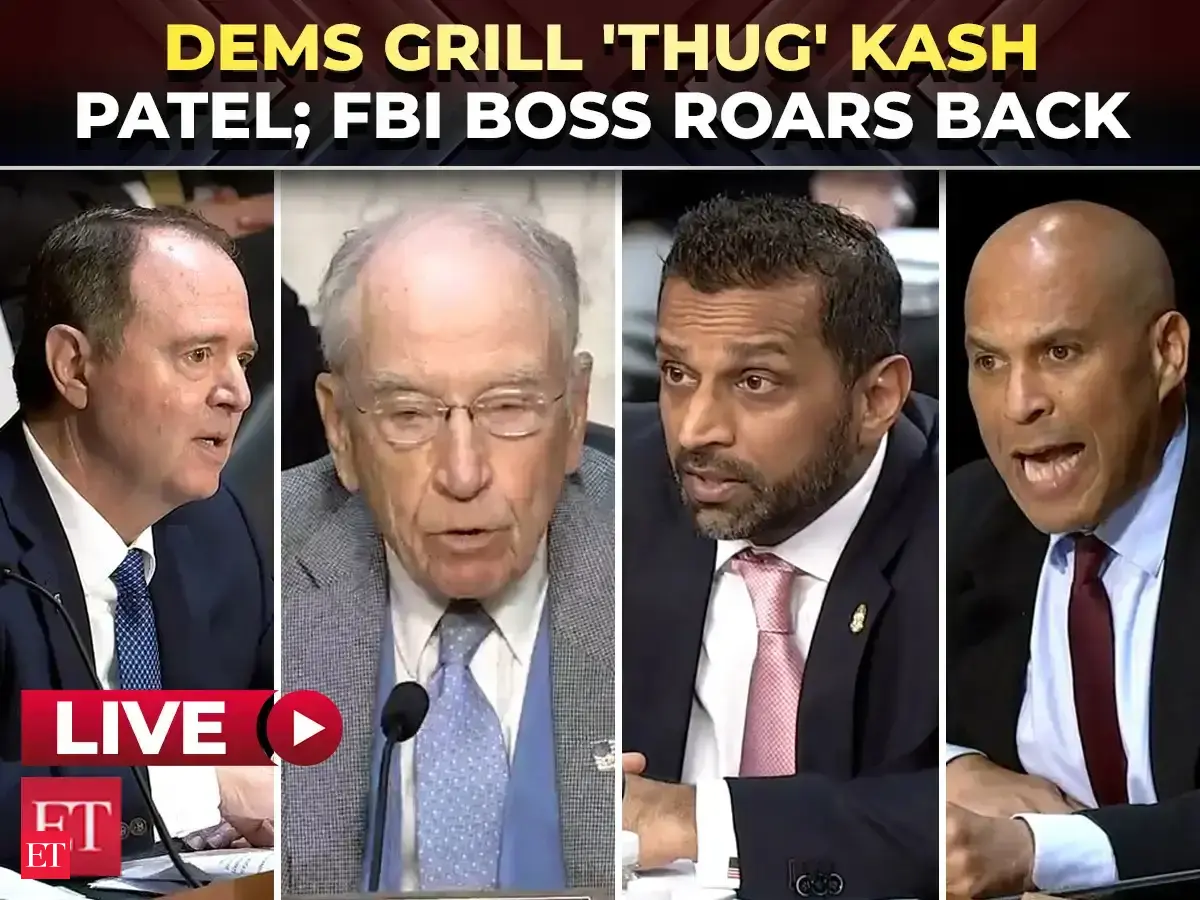
WASHINGTON — Federal Bureau of Investigation Director Kash Patel engaged in a sharp verbal dispute with Democratic lawmakers on Thursday, September 18, 2026, during a Senate Judiciary Committee hearing. Democratic senators questioned Patel over his travel expenses, including the use of government-funded private aircraft, alongside broader administrative priorities at the law enforcement agency. The exchanges escalated to the point where Senate Judiciary Committee Chairman Chuck Grassley, Republican of Iowa, intervened to maintain decorum after lawmakers accused the director of disrespecting the panel.
Key facts
What happened
The Senate Judiciary Committee session was convened to perform oversight on the Federal Bureau of Investigation, but quickly focused on Director Kash Patel’s administrative practices and executive travel choices. According to reporting by ET Online, Democratic lawmakers directly confronted Patel regarding his reliance on private aircraft and government jets, raising concerns about the burden placed on taxpayers.
The questioning grew tense as Democratic senators accused Patel of offering dismissive responses to inquiries about travel schedules, destination logs, and total expenditures. As arguments over Patel’s tone escalated, a Democratic senator appealed directly to Committee Chairman Chuck Grassley, stating that the witness was insulting members of the panel while the chair allowed the conduct to proceed.
Grassley intervened to regain control of the hearing room, instructing both lawmakers and the witness to refrain from interruptions and maintain professional decorum. Grassley raised his voice to restore order as cross-talk persisted between the witness table and committee members. Patel defended his travel record, maintaining that his travel conformed strictly to official security requirements designed to ensure uninterrupted communications and executive protection for the head of the nation's principal domestic intelligence and security service.
Throughout the session, Democratic members pressed for comprehensive financial disclosures regarding flight costs, while Republican committee members attempted to redirect focus toward national security priorities, violent crime trends, and agency operations.
Why it matters
The confrontation between the Senate Judiciary Committee and the FBI director highlights the ongoing friction between congressional oversight bodies and executive branch leaders regarding official spending. Congressional oversight serves as a core constitutional check on executive authority, ensuring that funds appropriated by Congress are utilized strictly in accordance with statutory guidelines and ethical standards.
The dispute carries significant institutional weight for both the Department of Justice and Congress. The FBI operates with a multi-billion-dollar annual budget, employing thousands of special agents and support staff nationwide. Public trust in federal law enforcement depends heavily on perceptions of fiscal responsibility, political independence, and leadership accountability. Controversies over high-cost travel arrangements risk drawing focus away from the bureau’s core operational missions, including counter-terrorism, cyber defense, and federal crime investigations.
Additionally, strained relations during oversight hearings can influence upcoming legislative decisions. Congress retains sole authority over federal appropriations. Persistent disputes between agency heads and congressional panels frequently lead to statutory restrictions, such as legislative riders limiting executive travel budgets or requiring mandatory quarterly reports on government aircraft utilization. Should lawmakers decide to pursue administrative remedies, the Department of Justice's forthcoming budget request could face heightened legislative conditions and increased scrutiny from appropriations subcommittees.
The background
Travel regulations governing top executive branch officials were significantly altered following the September 11, 2001, terrorist attacks. Under federal continuity-of-government directives, the Attorney General and the FBI Director are designated as continuous-command officials. This mandate requires them to travel aboard secure, government-provided aircraft equipped with specialized communications systems at all times, including during personal or non-official travel, to ensure constant contact with national security leadership.
When continuous-command officials utilize government aircraft for non-official transit, federal ethics rules mandate that they reimburse the government for the non-official portion of the trip. Historically, reimbursement rates are set at equivalent commercial coach airfares rather than the full hourly operating cost of military or executive transport jets. This pricing model has historically generated political friction across multiple presidential administrations, as congressional critics frequently argue that commercial coach rates understate the actual cost to taxpayers.
Senate Judiciary Committee Chairman Chuck Grassley, who was first elected to the U.S. Senate in 1980, has built a long record centered on federal agency oversight, whistleblower protection, and waste reduction. Throughout his decades in public office, Grassley has conducted investigations into spending practices across Democratic and Republican administrations alike.
Kash Patel took office as FBI Director after serving in several prominent federal roles, including as a senior counsel to the House Permanent Select Committee on Intelligence under Representative Devin Nunes, a senior official on the National Security Council, and chief of staff to the Acting Secretary of Defense. His leadership has frequently drawn intense focus from congressional Democrats. Travel expenditures by federal cabinet members and agency heads have triggered previous high-profile congressional investigations, including probes into former Health and Human Services Secretary Tom Price in 2017 and former EPA Administrator Scott Pruitt in 2018.
Reaction
Following the hearing, responses divided along party lines. Democratic committee members maintained that executive officials owe full transparency to Congress and argued that evasive testimony undermines legislative oversight authority. Democratic lawmakers signaled plans to submit formal follow-up inquiries demanding complete flight logs, destination records, and reimbursement documentation for all government aircraft flights taken during Patel's tenure.
Republican members of the committee framed the line of questioning as politically driven, arguing that executive travel arrangements are dictated by established federal security protocols rather than personal preference. Republican lawmakers emphasized that focusing on travel logistics diverts attention from pressing law enforcement priorities, such as border security and counter-intelligence threats.
Non-partisan government watchdog organizations are expected to file Freedom of Information Act requests to examine official travel manifests and audit reimbursement filings. Public interest groups regularly scrutinize executive travel records to verify compliance with federal ethics laws and assess whether public resources were appropriately managed.
What we don't know yet
Several key facts remain unverified based on the current reporting by ET Online. The specific financial figures, flight itineraries, and reimbursement totals referenced during the hearing were not fully detailed during public testimony. It remains unclear whether the flights in question involved standard FBI fleet aircraft or third-party private charters.
Additionally, it is not yet known whether the Department of Justice Office of the Inspector General, headed by Inspector General Michael Horowitz, will open a formal investigation into the bureau’s travel expenditures. It also remains to be seen whether Director Patel will submit written answers to the committee's outstanding questions or be called back for additional testimony before the Senate Judiciary Committee.
What to watch
Key upcoming developments will indicate how this dispute progresses:
This report is based on original reporting by ET Online.
How this story was produced
This report was written by The Global Wire newsroom from reporting first published by ET Online. We verify the core facts against the original report, write our own account, and add the background and consequences a short wire item leaves out. Drafting is AI-assisted inside an editor-supervised pipeline, and every story is checked for accuracy of attribution, structure and duplication before it appears — full detail in our AI and funding disclosure.
Spotted an error? Tell us at corrections@horizonglobalnews.com and read our corrections policy or editorial standards.




Reader comments
Loading comments…