

Reintroduced Digging Mammals Reshape Underground Insect Habitats in Australian Sanctuary
An eight-year study at Scotia Sanctuary reveals that restoring native burrowing mammals alters soil structure and underground insect communities across thousands of hectares.
By The Global Wire Newsroom · Reported from TOI Science Desk
Link preview · horizonglobalnews.com
Reintroduced Digging Mammals Reshape Underground Insect Habitats in Australian Sanctuary
An eight-year study at Scotia Sanctuary reveals that restoring native burrowing mammals alters soil structure and underground insect communities across thousands of hectares.
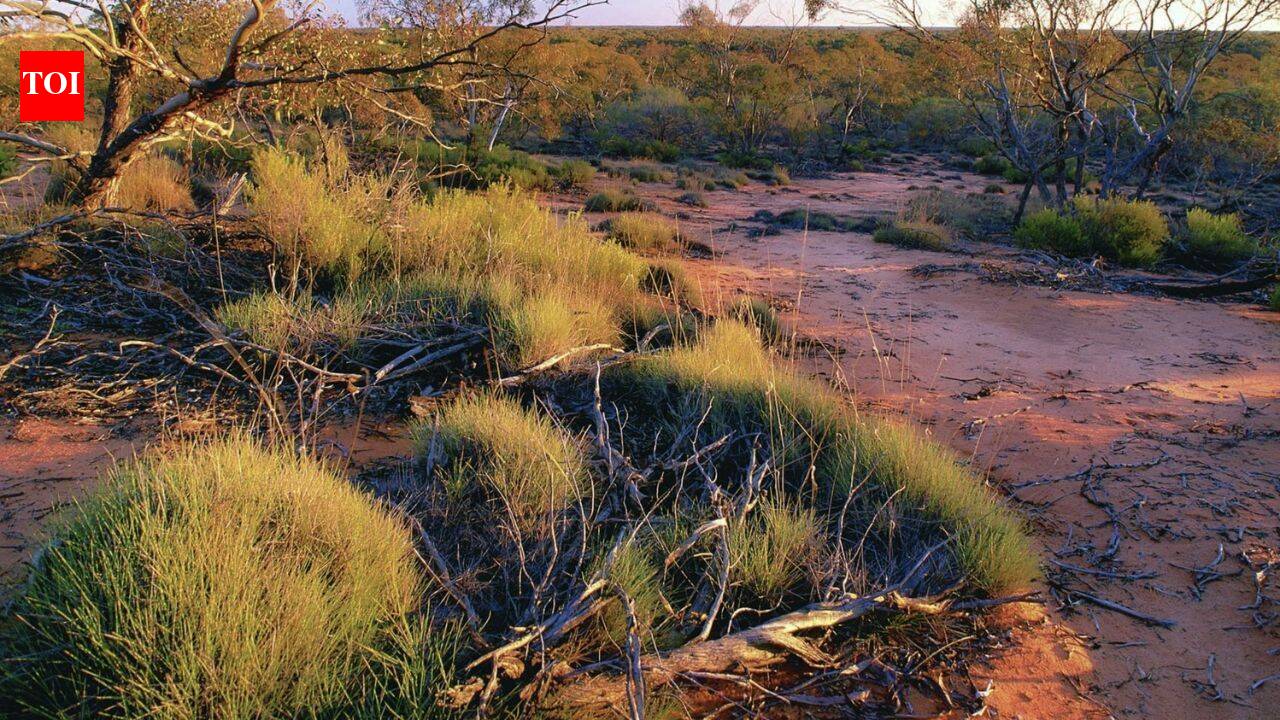
Eight years after wildlife conservationists restored digging mammals to an 8,000-hectare protected reserve in south-eastern Australia, researchers have documented a major ecological transformation taking place beneath the soil surface. A scientific study examining Scotia Sanctuary revealed that reintroduced burrowing mammals have fundamentally altered subterranean insect communities, demonstrating how top-of-soil wildlife reintroductions cascade into hidden underground ecosystems. The findings, reported by TOI Science Desk, offer critical empirical evidence regarding the long-term restoration capacity of digging marsupials, whose historical extirpation across vast swaths of the Australian continent disrupted key soil processes and altered native invertebrate populations.
Key facts
What happened
The study evaluated the ecological legacy of reintroducing specialized digging mammals into fenced, invasive-predator-free habitats within Scotia Sanctuary, located in Western New South Wales near the border of South Australia. Over an eight-year observation period, scientists tracked shifts in soil physical properties and monitored insect species emerging from beneath the surface in areas inhabited by restored mammal populations, comparing them with adjacent excluded control plots.
As reintroduced species such as bilbies, bettongs, and bandicoots settled into the sanctuary, their daily foraging habits caused substantial physical disturbance to the ground plane. These animals dig thousands of small pits daily while searching for fungi, tubers, roots, and subterranean invertebrates. Over eight years, this continuous biopedturbation—the biological disturbance of soil and sediment—accumulated to alter the compaction, moisture retention, and nutrient distribution of the topsoil.
Researchers deployed emergence traps and soil sampling protocols to measure how insect communities responded to these structural soil changes. The data revealed marked shifts in both the abundance and diversity of emerging insects. Areas exposed to digging mammals exhibited distinct subterranean invertebrate assemblages compared to areas where mammals remained absent. By turning over soil crusts and creating localized micro-environments rich in organic matter, the animals altered habitat suitability for larval stages of various beetle, ant, termite, and fly species, reshuffling the insect communities that mature underground before emerging into the broader terrestrial environment.
Why it matters
The findings carry significant implications for global restoration ecology, demonstrating that the reintroduction of extirpated mammals triggers cascading effects far beyond visible plant growth and large-animal populations. Soil invertebrates represent a foundational tier of terrestrial ecosystems, serving as key drivers of nutrient cycling, plant pollination, organic matter decomposition, and prey bases for higher trophic levels. When invasive predators eliminated digging mammals from over 90 percent of their historical ranges across mainland Australia, soil systems lost their primary biological turning mechanism, resulting in compacted ground, reduced water infiltration, and altered insect hatch cycles.
By establishing that underground insect communities require nearly a decade of mammalian soil turnover to meaningfully restructure, the research emphasizes that full ecological recovery cannot be measured in brief timelines. For land managers, wildlife conservation agencies, and climate resiliency strategists, these results indicate that rewilding projects must factor in soil invertebrate dynamics when assessing ecosystem health. Restoring burrowing species offers a natural mechanism to revitalize degraded soil food webs without human mechanical intervention, providing a cost-effective, self-sustaining pathway toward restoring functional biodiversity in semi-arid landscapes.
The background
Australia’s native mammal fauna has suffered unprecedented declines since European settlement in the late 18th century. The continent accounts for approximately 30 percent of all global mammalian extinctions since 1500, with 34 native mammal species driven to extinction and dozens more reduced to isolated island populations or small relictual mainland pockets. The primary drivers of this crisis are introduced mammalian carnivores—specifically the feral cat (Felis catus) and the European red fox (Vulpes vulpes)—alongside land clearing and altered fire regimes.
Digging mammals, including species like the Greater Bilby (Macrotis lagotis), Burrowing Bettong (Bettongia lesueur), Southern Brown Bandicoot (Isoodon obesulus), and Woylie (Bettongia penicillata), once inhabited vast areas of arid and semi-arid Australia. Ecologists classify these species as ecosystem engineers or biopedturbators due to their intensive excavation behavior. A single individual can move several tonnes of soil per year through daily foraging pits, breaking through hardened biological soil crusts. These depressions capture windblown seed, leaf litter, and moisture, creating fertile micro-sites that foster plant germination and subterranean biodiversity.
To combat ongoing extinctions, Australian conservation organizations and government agencies pioneered fenced reserve networks. Scotia Sanctuary, established and managed by the Australian Wildlife Conservancy (AWC) in the Murray-Darling depression, encompasses more than 64,000 hectares, with thousands of hectares enclosed by high-tech, multi-strand electric fencing designed to keep out cats and foxes. Within these safe havens, threatened mammal populations have bounced back, enabling researchers to study ecosystem processes that had been absent across the continent for more than a century.
Reaction
While formal policy responses from state and federal environmental departments remain pending, conservation scientists and rewilding advocates have welcomed the findings as crucial empirical proof of functional ecosystem recovery. Scientists working in arid zone ecology note that soil health indicators are frequently overlooked in standard fauna monitoring protocols, which historically prioritized counting mammal individuals or mapping vegetation cover.
Ecologists specializing in invertebrate biology emphasize that insect community shifts demonstrate how complex food webs naturally repair themselves once key native mammals are returned. Research institutions and non-governmental land trusts across Australia are expected to integrate subterranean insect sampling into standard monitoring frameworks for existing and proposed predator-free exclosures. International conservation bodies studying rewilding initiatives in Europe and North America are also taking interest, as similar soil-engineering species, such as badgers, prairie dogs, and tortoises, face habitat fragmentation in their respective native ranges.
What we don't know yet
Despite the eight-year duration of the study, several operational and ecological variables remain unmapped. The precise species-specific contributions of different digging mammals are not yet fully disentangled; it remains uncertain whether specific marsupials—such as bilbies versus bettongs—drive distinct insect responses, or if the soil alterations result strictly from collective physical turning.
Additionally, the long-term food web effects remain to be quantified. It is unclear how the reshaped insect emergence patterns influence higher-order native predators, such as insectivorous bats, nocturnal birds, and small reptiles. Scientists have also yet to establish whether these underground insect community shifts reach a stable equilibrium after eight years or continue to evolve over multi-decadal timelines. Finally, the extent to which these subterranean benefits can persist outside fenced reserves—where low levels of invasive feral predators remain present—remains an open research question.
What to watch
Key indicators will signal how these research insights shape broader land management practices over the coming years:
This report is based on scientific reporting by TOI Science Desk detailing the eight-year ecological research project on reintroduced digging mammals and subterranean insect communities at Scotia Sanctuary in south-eastern Australia.
How this story was produced
This report was written by The Global Wire newsroom from reporting first published by TOI Science Desk. We verify the core facts against the original report, write our own account, and add the background and consequences a short wire item leaves out. Drafting is AI-assisted inside an editor-supervised pipeline, and every story is checked for accuracy of attribution, structure and duplication before it appears — full detail in our AI and funding disclosure.
Spotted an error? Tell us at corrections@horizonglobalnews.com and read our corrections policy or editorial standards.


Reader comments
Loading comments…