

Night Schools in Lesotho Offer Basic Education to Mountain Herders Working in Remote Pastures
Low-budget evening classes are opening basic literacy and numeracy to thousands of Basotho herders who miss formal schooling to tend livestock in mountain grazing posts.
By The Global Wire Newsroom · Reported from Julie Bourdin
Link preview · horizonglobalnews.com
Night Schools in Lesotho Offer Basic Education to Mountain Herders Working in Remote Pastures
Low-budget evening classes are opening basic literacy and numeracy to thousands of Basotho herders who miss formal schooling to tend livestock in mountain grazing posts.
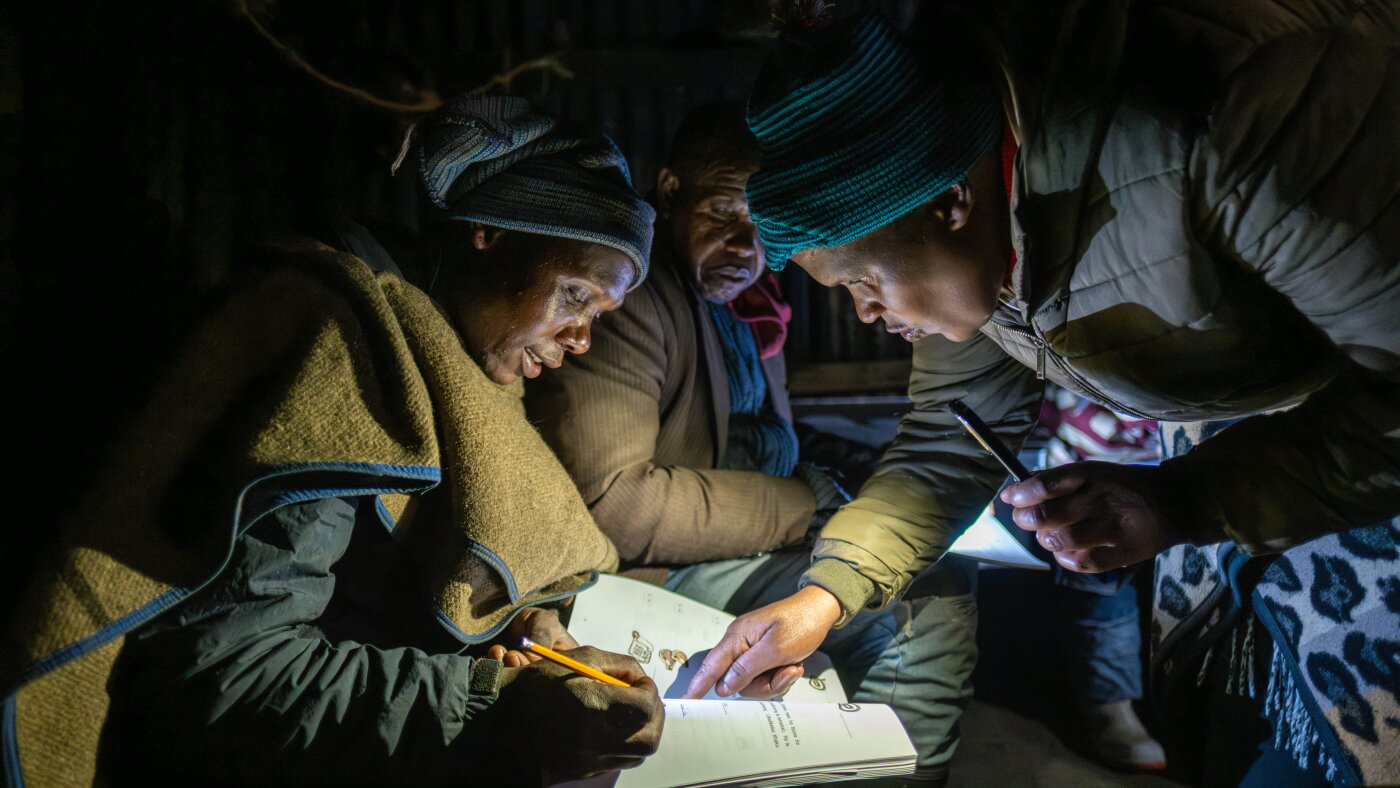
In the mountain highlands of Lesotho, a decentralized network of low-budget night schools is delivering essential literacy and numeracy lessons to young male livestock herders who were previously cut off from formal education. As reported by journalist Julie Bourdin on September 27, 2026, thousands of boys and young men who spend their daytime hours tending cattle, sheep, and goats across rugged, high-altitude terrain trek down mountain slopes after dusk to attend evening classes. Operating on minimal operational budgets, these specialized educational centers aim to reduce a persistent literacy gap among rural Basotho pastoralists who remain isolated from the national classroom infrastructure.
Key facts
What happened
Every day across the high plateaus and steep valleys of Lesotho, thousands of boys and young men manage livestock that sustain rural household economies. Because traditional primary and secondary schools operate during daytime hours, young herders cannot participate in conventional classroom education without neglecting their livestock duties. To address this persistent educational exclusion, community members, local instructors, and grassroots organizations have established evening learning spaces situated near mountain villages bordering livestock grazing zones.
According to reporting by Julie Bourdin, herdsmen descend from elevated grazing posts along mountain paths each evening after finishing their daily responsibilities. The night schools focus on foundational educational building blocks, including the alphabet, basic sentence construction, and elementary arithmetic. Instruction takes place in modest locations, such as unused daytime classrooms, religious buildings, or community structures, relying on basic supplies such as handheld slate boards, chalk, and printed primers.
The physical journey to these evening classes represents an additional workload after grueling ten-to-twelve-hour days in high pastures. Herders often travel several kilometers on foot down unpaved mountain tracks, navigating steep slopes and declining temperature conditions as night falls. Instructors at the night schools contend with severe infrastructure limitations, including a lack of electrical grid connections in remote settlements, forcing many classrooms to rely on kerosene lamps, candles, or basic battery-powered torches to illuminate learning materials.
Despite operating with severely constrained financial resources and limited teaching materials, these evening programs allow pastoral workers to acquire functional literacy without sacrificing their livelihoods or abandoning traditional domestic roles. For many participants, the night classes offer a first opportunity to learn basic reading and mathematical concepts while maintaining full-time employment in remote pastoral environments.
Why it matters
The development and maintenance of night schools tailored to pastoral workers tackle critical economic, social, and developmental issues in rural Lesotho. In traditional agrarian societies, standard educational frameworks rely on rigid daytime schedules, forcing families to choose between immediate economic survival and long-term educational investment. By adapting teaching schedules to the daily rhythms of mountain pastoralism, these night schools offer a pragmatic model that integrates essential learning into active working lives.
Acquiring functional literacy and basic arithmetic carries immediate practical benefits for livestock herders operating in competitive rural markets. Basic mathematical ability allows herders to track livestock counts, manage veterinary medication dosages, verify market valuations, and avoid exploitation when trading live animals or selling raw wool and mohair to commercial brokers. Beyond economic utility, basic literacy fosters broader social equity. Historically, young men who grew up illiterate in remote mountain outposts faced severe restrictions if they later sought alternative employment, legal representation, or financial services. By establishing night schools in high-altitude zones, educators are providing marginalized pastoral workers with foundational skills that enhance personal autonomy, civic participation, and long-term economic mobility.
The background
Lesotho is a landlocked, high-altitude enclave nation entirely surrounded by the Republic of South Africa. Geographically dominated by the Maloti and Drakensberg mountain ranges, the country is often referred to as the "Kingdom in the Sky," with its lowest geographic point standing over 1,400 meters above sea level. In this mountainous landscape, pastoral agriculture forms the economic and cultural foundation of rural community life. Livestock—particularly cattle, sheep, and Angora goats—serves as a primary store of household wealth and drives key national agricultural exports, most notably high-grade raw wool and mohair.
To maintain livestock across vast mountain pastures, Basotho tradition relies heavily on young males, known locally as *balisa* (herdboys). These herders spend months at a time at isolated, high-altitude cattle posts called *motebo*, located far above permanent village settlements and public infrastructure. This division of labor generated a distinct educational demographic pattern in Lesotho. Unlike the majority of Sub-Saharan African nations, where female primary school enrollment historically trailed male enrollment, Lesotho recorded higher literacy rates among women than men in rural areas. While young girls were sent to local village schools, young boys were routinely dispatched to remote mountain outposts to tend livestock from an early age.
Although the government of Lesotho introduced free primary education in 2000 and subsequently enacted legal mandates for compulsory schooling, enforcing attendance in remote mountain regions has proven extremely challenging. Deeply entrenched economic realities, terrain barriers, and distance from physical infrastructure have kept thousands of young herders outside the formal school system. As a result, non-formal adult and youth literacy initiatives, operating through community volunteers, religious institutions, and non-governmental organizations, have stepped in to fill the structural gap in rural education.
Reaction
Responses from local communities in rural Lesotho reflect widespread gratitude for evening literacy programs, which alleviate the historical conflict between livestock management and basic education. Pastoral families and village leaders have largely embraced night schools as a sensible solution that permits young men to fulfill vital economic duties while acquiring basic functional skills.
However, educational rights advocates and non-governmental organizations point out that reliance on shoestring budgets exposes these programs to severe vulnerabilities. Advocates stress that while grassroots night schools perform essential work, they should not replace formal state investment in educational accessibility. Educational experts in the region have urged the Ministry of Education and Training to integrate non-formal pastoral schooling into the national educational framework. Proposed improvements include dedicated government funding, standardized teaching materials, solar-powered lighting equipment for evening classrooms, and certified mobile teaching units capable of traveling alongside seasonal migratory herds.
International development partners and educational agencies, including United Nations bodies focused on child welfare and literacy, have routinely highlighted non-formal education as a vital mechanism for reaching marginalized agricultural workers in Sub-Saharan Africa. However, human rights monitoring groups caution that informal night classes must operate as a stepping stone rather than a permanent substitute for fully funded, state-backed compulsory education.
What we don't know yet
Several critical operational details regarding the night school network remain unconfirmed in available reports. Official data is lacking on the exact number of active night schools currently operating across Lesotho's ten administrative districts, as well as total student enrollment numbers and attendance consistency throughout the year.
Furthermore, current reporting does not detail the exact funding mechanisms sustaining these low-budget operations, including the proportion of support coming from local community donations, religious institutions, or external non-governmental organizations. It is also unclear whether completed coursework in these night schools provides recognized academic certification, or if formal bridges exist to enable herders to transition into conventional primary school completion exams or vocational training programs.
What to watch
Key indicators in the coming months will determine the future trajectory and stability of night schools for Lesotho's mountain herders. Observers will closely monitor whether the Ministry of Education and Training allocates formal state budget funds or develops standardized curricula specifically designed for non-formal rural education.
Additionally, seasonal weather patterns in the Maloti Mountains present a major variable. Heavy winter snowfalls, freezing temperatures, and daylight variations significantly affect the safety and feasibility of nocturnal mountain travel for students and teachers. On the economic front, international market prices for wool and mohair will be critical to track, as agricultural market fluctuations influence household pastoral strategies and the demand for herd labor in remote grazing regions.
Reporting for this account is based on field coverage and photographs published by journalist Julie Bourdin on September 27, 2026.
How this story was produced
This report was written by The Global Wire newsroom from reporting first published by Julie Bourdin. We verify the core facts against the original report, write our own account, and add the background and consequences a short wire item leaves out. Drafting is AI-assisted inside an editor-supervised pipeline, and every story is checked for accuracy of attribution, structure and duplication before it appears — full detail in our AI and funding disclosure.
Spotted an error? Tell us at corrections@horizonglobalnews.com and read our corrections policy or editorial standards.






Reader comments
Loading comments…