

Loophole in China's Overseas Coal Ban Allows Private Financing to Expand in Southeast Asia
While Beijing halted public bank financing for foreign coal power in 2021, private capital and off-grid industrial plants continue to expand coal use in Indonesia and Vietnam.
By The Global Wire Newsroom · Reported from SECTIONS China has kept its promise; But Loopholes Are Helping Coal Expand Ap
Link preview · horizonglobalnews.com
Loophole in China's Overseas Coal Ban Allows Private Financing to Expand in Southeast Asia
While Beijing halted public bank financing for foreign coal power in 2021, private capital and off-grid industrial plants continue to expand coal use in Indonesia and Vietnam.
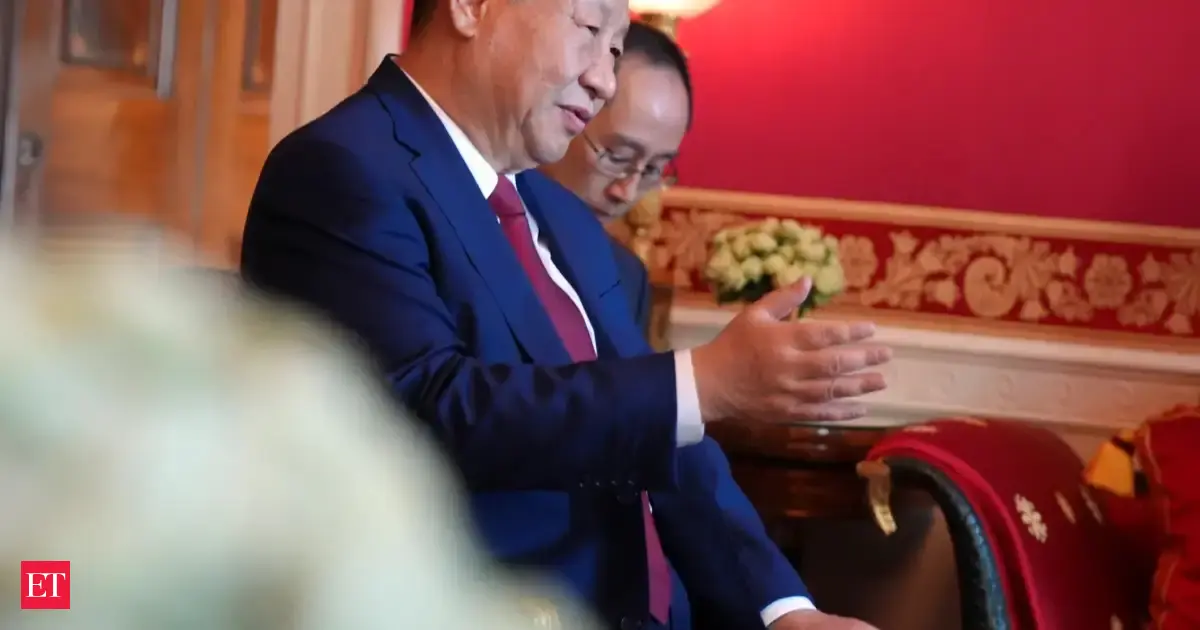
Five years after Chinese President Xi Jinping pledged before the United Nations General Assembly to end the construction of new overseas coal-fired power plants, China has largely honored the commitment regarding state-directed development assistance and public bank financing. However, regulatory loopholes, private capital flows, and self-built industrial power facilities continue to drive coal expansion across Southeast Asia, according to reporting by SECTIONS and the Associated Press. While major public policy banks have withdrawn funding from state-to-state utility projects, private Chinese enterprises and joint ventures are financing off-grid coal plants to power heavy industry, particularly nickel processing hubs in Indonesia and manufacturing complexes in Vietnam. The persistence of these developments highlights the challenge of decoupling regional industrial growth from fossil fuels, even as sovereign governments pledge to transition toward renewable energy sources.
Key facts
What happened
Following President Xi Jinping's 2021 announcement at the United Nations General Assembly, China implemented immediate curbs on state-directed financing for foreign coal power generation. Policy banks and state-owned power enterprises halted new loan guarantees and equity commitments for conventional grid-connected coal plants across Asia, Africa, and Eastern Europe. Dozens of proposed utility-scale power stations that were in preliminary planning phases were officially cancelled or converted into solar and wind proposals under the umbrella of China's Belt and Road Initiative.
However, detailed field reports and financial tracking by SECTIONS reveal that the diplomatic pledge left critical structural exemptions unaddressed. The most significant gap involves "captive" power plants—facilities constructed by private corporations or specialized industrial ventures to supply electricity directly to specific industrial operations rather than feeding national electrical grids. In resource-rich nations like Indonesia, Chinese mining firms and metals processors have invested heavily in coal-fired generators to power energy-intensive nickel, aluminum, and stainless steel smelters located in remote industrial parks. Because these developments are classified as industrial capital expenditures rather than public utility infrastructure, they frequently circumvent the state restrictions governing public development finance.
Furthermore, private Chinese engineering companies, equipment manufacturers, and equity funds have continued to supply hardware, subcontracts, and private capital to power projects in countries such as Vietnam and Indonesia. In some instances, financial structures were reconfigured to route capital through private intermediaries or offshore subsidiaries, allowing developers to maintain construction schedules for facilities whose contracts were executed prior to the late-2021 policy threshold. As a result, while Chinese public bilateral funding for overseas coal projects has effectively ceased, Chinese corporate involvement and equipment supply continue to sustain fossil-fuel expansion in high-demand Southeast Asian markets.
Why it matters
The persistent expansion of captive coal power in Southeast Asia exposes a fundamental friction between global climate mitigation targets and the industrial supply chains underpinning the clean energy transition. Indonesia has emerged as the global center for nickel mining and refining, a vital component in the production of lithium-ion batteries for electric vehicles and renewable energy storage systems. When processing facilities rely on dedicated coal-fired power plants to convert raw ore into battery-grade nickel, the carbon intensity of the resulting electric vehicle supply chain increases substantially. This dynamic creates an environmental paradox where the infrastructure required to support decarbonization in developed economies is powered by high-emission energy sources in developing nations.
From a market and regulatory perspective, the continuation of off-grid coal capacity threatens to undermine broader international efforts to finance energy transitions in emerging economies. International funding frameworks, such as the Just Energy Transition Partnerships (JETP) established by Western donors for Indonesia and Vietnam, aim to provide tens of billions of dollars in loans and grants to accelerate the phase-out of coal-fired electricity. However, JETP agreements predominantly target grid-connected utility plants managed by state power companies. By operating outside grid governance, private captive power stations risk offsetting the carbon reductions achieved through public utility retirements, complicating regional emissions accounting and delaying national net-zero targets.
The background
For more than a decade prior to 2021, China was the world's largest public funder of overseas coal-fired power generation. Through state-backed policy lenders including the China Development Bank and the Export-Import Bank of China, as well as state-owned enterprises involved in the Belt and Road Initiative launched in 2013, Chinese capital supported hundreds of power plant developments across Asia, Africa, and South America. These infrastructure projects provided expanding economies with affordable, baseload electricity but drew growing international criticism from environmental organizations and climate negotiators due to their long-term locked-in greenhouse gas emissions.
The policy landscape shifted in September 2021, when President Xi Jinping announced during his virtual address to the 76th Session of the United Nations General Assembly that China would step up support for green and low-carbon energy in developing countries and would not build new coal-fired power projects abroad. The directive marked a major milestone in global climate diplomacy, bringing China into alignment with major G7 economies that had previously committed to ending public export finance for unabated coal power.
In the aftermath of the announcement, Chinese ministries and state regulatory agencies issued implementation guidelines directing financial institutions to refrain from entering into new loan contracts for foreign coal-fired electricity generation. State-owned engineering giants began shifting their international portfolios toward utility-scale photovoltaic solar, onshore wind, and hydropower installations. Despite these executive orders, the regulatory definitions used by Beijing primarily focused on public utility infrastructure funded by state-directed policy lending. The framework did not explicitly prohibit private commercial equity investments, off-grid industrial power installations, or hardware export contracts executed by independent Chinese manufacturers.
At the same time, national energy policies in recipient countries created strong incentives for continued coal reliance. Indonesia, holding the world's largest nickel reserves, enacted mineral export bans in 2020 to force foreign mining companies to construct domestic processing facilities. To rapidly power these energy-intensive processing hubs in regions without established electrical grid infrastructure, developers built captive coal power stations as the most cost-effective and dependable energy source available. Similarly, Vietnam experienced rapid industrial manufacturing growth that strained national grid capacity, leading to continued dependence on existing thermal power assets to prevent supply disruptions.
Reaction
Environmental advocacy groups and energy analysts have acknowledged China's success in curtailing public bank financing for foreign power grids while emphasizing the urgent need to address private and off-grid loopholes. Climate research organizations have pointed out that while official green policy frameworks have reshaped the activities of major state-owned banks, the lack of binding regulations on private off-grid industrial plants threatens to undermine China's international climate leadership.
Regional government officials in Southeast Asia have expressed complex responses, balancing national economic development imperatives against international decarbonization commitments. Officials in Jakarta and Hanoi have defended the necessity of maintaining reliable energy supplies to power heavy industry and preserve economic stability, arguing that rapid industrialization requires low-cost baseload power until affordable, utility-scale renewable alternatives and grid interconnections are fully operational. Meanwhile, international climate diplomats involved in negotiating Multilateral Just Energy Transition Partnerships have urged both Chinese authorities and recipient nations to extend phase-out mandates and transparency requirements to off-grid industrial energy producers.
What we don't know yet
Significant operational and regulatory uncertainties remain regarding the total capacity and future trajectory of off-grid coal facilities across Southeast Asia. Public reporting on captive industrial power plants is often limited by proprietary corporate data, making it difficult for independent analysts to determine the exact megawatt capacity currently operating or under construction in remote industrial corridors. It remains unclear whether Chinese regulatory bodies will issue updated, stricter administrative rules that explicitly extend the 2021 overseas ban to cover private commercial equity investments and off-grid industrial assets.
Furthermore, the precise mechanisms by which recipient nations will reconcile captive power plants with their national carbon-neutrality pledges remain undefined. Questions persist regarding whether international climate finance programs, such as the Just Energy Transition Partnerships, will eventually allocate capital to compensate private operators for early retirement of captive coal capacity, or if regional governments will enforce mandatory phase-out timelines on heavy industrial processing hubs without external financial assistance.
What to watch
Several key policy indicators and international forums will determine how the issue of overseas coal financing evolves. Analysts will closely monitor upcoming United Nations Climate Change Conferences (COP summits) for updated bilateral commitments and potential policy clarifications from Chinese diplomatic delegations regarding foreign industrial emissions.
Domestically, watchers will look for prospective administrative notices from China's National Development and Reform Commission (NDRC) and the Ministry of Commerce (MOFCOM) that could restrict domestic corporations from supplying machinery or private capital to foreign captive fossil-fuel facilities. In Southeast Asia, key developments to track include the release of updated national energy master plans in Indonesia and Vietnam, which will indicate whether host governments intend to integrate off-grid industrial power into national emissions cap systems or mandate the conversion of captive coal facilities to green hydrogen, biomass, or renewable power sources in the coming years.
This report is based on coverage and investigations conducted by SECTIONS and the Associated Press.
How this story was produced
This report was written by The Global Wire newsroom from reporting first published by SECTIONS China has kept its promise; But Loopholes Are Helping Coal Expand Ap. We verify the core facts against the original report, write our own account, and add the background and consequences a short wire item leaves out. Drafting is AI-assisted inside an editor-supervised pipeline, and every story is checked for accuracy of attribution, structure and duplication before it appears — full detail in our AI and funding disclosure.
Spotted an error? Tell us at corrections@horizonglobalnews.com and read our corrections policy or editorial standards.



Reader comments
Loading comments…