

Trump and Xi Address Middle East Crisis as Iran Pushes Seven-Day Strait of Hormuz Plan
A high-stakes bilateral summit focused on Iranian efforts to secure a week-long regional truce and restore critical Persian Gulf shipping routes.
By The Global Wire Newsroom · Reported from thestar.com.my
Link preview · horizonglobalnews.com
Trump and Xi Address Middle East Crisis as Iran Pushes Seven-Day Strait of Hormuz Plan
A high-stakes bilateral summit focused on Iranian efforts to secure a week-long regional truce and restore critical Persian Gulf shipping routes.
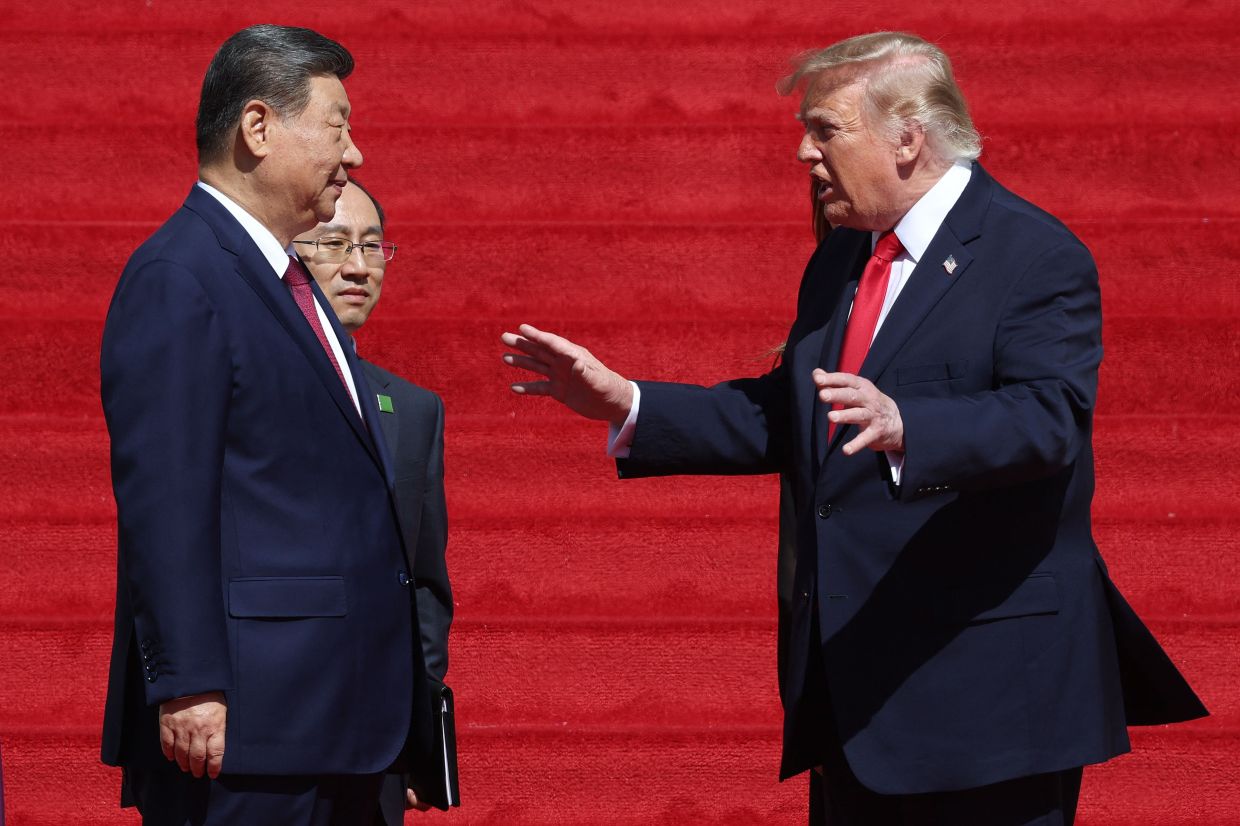
WASHINGTON — United States President Donald Trump and Chinese President Xi Jinping turned their attention to the escalating war in the Middle East during a summit on Friday, Sept. 25, 2026, as Iranian leadership launched a diplomatic initiative aimed at securing a week-long regional truce. The Iranian proposal, presented to Washington amid broader discussions at the United Nations, offers a seven-day framework to halt active fighting across the region in exchange for reopening the Strait of Hormuz, the primary maritime artery for global energy transport.
Key facts
What happened
During their summit on Friday, President Trump and President Xi held detailed discussions on the expanding military conflict in the Middle East, according to reporting by Reuters published in The Star. The meeting between the leaders of the world's two largest economies coincided with a concerted diplomatic push from Tehran, which has put forward a seven-day plan designed to pause regional hostilities and re-establish commercial maritime transit through the Strait of Hormuz.
Iran's proposal comes at a moment of severe tension across the Persian Gulf, where military exchanges and maritime blockades have disrupted international shipping lanes. Tehran’s seven-day outline presents a conditional framework: a coordinated cease in military operations across active regional fronts, matched by measures to permit merchant vessels, particularly oil tankers, to navigate the narrow waterway separating Iran from the Arabian Peninsula without threat of attack or seizure.
While details of the direct exchanges between Trump and Xi remain limited, the intersection of top-level U.S.-China diplomacy with Iranian peace proposals highlights the global economic risks posed by the maritime standoff. Washington has faced growing international pressure to negotiate terms that would de-escalate hostilities, while Beijing has sought to protect its economic interests in the region without becoming directly embroiled in military operations.
Why it matters
The security of the Strait of Hormuz is directly tied to global macroeconomic stability. The narrow waterway, measuring just 21 miles wide at its narrowest point, handles approximately 20 million barrels of crude oil and petroleum products per day, alongside substantial volumes of liquefied natural gas (LNG) originating from Qatar. Any prolonged closure or severe disruption to transit through this corridor triggers immediate spikes in worldwide energy prices, escalating transport costs and fueling inflationary pressures across major consumer economies.
For China, the stakes in the Persian Gulf are acutely high. As the world's leading importer of crude oil, Beijing relies on the Persian Gulf for a substantial portion of its daily energy intake. Sustained blockades or strikes on tanker shipping directly jeopardize Chinese industrial output and domestic energy security. President Xi’s participation in talks concerning the conflict reflects Beijing's urgent requirement for stable, open trade routes.
For the United States, the crisis tests the administration's ability to project power, protect international shipping lanes, and manage complex security alliances while avoiding a costly, multi-front military confrontation. A successful seven-day truce could establish a blueprint for broader political negotiations, whereas a rejection of the Iranian offer risks further militarization of the Persian Gulf, rising insurance premiums for commercial vessels, and prolonged economic instability across global financial markets.
The background
The Strait of Hormuz has long functioned as a geographic and geopolitical flashpoint in international affairs. Situated between Iran to the north and Oman and the United Arab Emirates to the south, the passage provides the sole sea exit from the Persian Gulf into the Indian Ocean. Historically, the waterway has been subject to repeated security crises, most notably during the "Tanker War" phase of the Iran-Iraq War in the 1980s, when both belligerents targeted commercial shipping, prompting international naval escorts.
In recent years, security within the strait has frequently deteriorated alongside fluctuations in U.S.-Iranian diplomatic relations. Following the U.S. withdrawal from the Joint Comprehensive Plan of Action (JCPOA) in 2018 and the subsequent reimposition of economic sanctions on Iranian oil exports, maritime incidents—including tanker seizures, mine attacks, and drone strikes—increased significantly. Tehran has routinely utilized its strategic position along the northern coastline of the strait as leverage against Western economic sanctions.
China has progressively expanded its diplomatic footprint in the Middle East over the past decade, driven primarily by its economic dependency on regional hydrocarbons. In March 2023, Beijing brokered a historic diplomatic reconciliation between Saudi Arabia and Iran, signaling its ambition to act as a major political power broker in the region. However, Beijing's foreign policy has traditionally favored non-intervention and economic cooperation over direct military alliance building.
The Trump administration's approach to Middle East diplomacy has historically relied on intense economic pressure coupled with selective military deterrence, alongside close coordination with regional partners. The proposal of a short-term, seven-day truce represents a classic diplomatic mechanism used in high-intensity conflicts to test the compliance of opposing parties and create a brief window for detailed negotiations without requiring immediate, permanent concessions from either side.
Reaction
While formal public statements outlining the exact parameters of the summit agreements have not been fully released, the strategic positioning of key global players indicates the high sensitivity of the negotiations. The United States government has maintained a stance focused on ensuring the absolute freedom of navigation in international waters, with defense officials repeatedly emphasizing that the unprovoked blockade of strategic waterways is unacceptable under international maritime law.
Beijing has consistently called for immediate restraint from all parties involved, urging a peaceful resolution through multilateral dialogue and emphasizing the necessity of keeping international energy channels open. Chinese foreign ministry representatives have previously stressed that global energy supply chains must not become targets of military action or unilateral political leverage.
Regional stakeholders, including members of the Gulf Cooperation Council (GCC), are following the summit developments closely. Gulf oil exporters depend entirely on maritime stability to meet commercial delivery contracts with Asian and European buyers. Diplomatic observers at the United Nations expect further reactions from key regional actors, including Israel and neighboring Arab states, as the specific terms and verification mechanisms of the Iranian seven-day proposal are subjected to closer scrutiny.
What we don't know yet
Several critical elements of the Iranian initiative and the U.S.-China discussions remain unverified. It is currently unclear what specific verification mechanisms Tehran has proposed to guarantee the safe passage of commercial vessels during the proposed seven-day window, or whether the plan requires an immediate, simultaneous rollback of U.S. sanctions or naval positions in the region.
Furthermore, the exact degree of consensus reached between President Trump and President Xi during their Friday meeting has not been publicly detailed. It remains unknown whether Beijing offered concrete political guarantees or leverage to ensure Iranian compliance, or if Washington views the seven-day timeline as a viable starting point for comprehensive cease-fire negotiations.
The stance of regional allies, particularly Israel, regarding a short-term pause in military operations also remains uncertain. Without explicit agreement from all combatants operating in the broader Middle Eastern theater, a localized pause in the Strait of Hormuz may prove difficult to enforce or sustain.
What to watch
Key developments over the coming days will determine whether the seven-day proposal translates into an operational pause in hostilities:
This report is based on original news coverage published by Reuters and reported in The Star.
How this story was produced
This report was written by The Global Wire newsroom from reporting first published by thestar.com.my. We verify the core facts against the original report, write our own account, and add the background and consequences a short wire item leaves out. Drafting is AI-assisted inside an editor-supervised pipeline, and every story is checked for accuracy of attribution, structure and duplication before it appears — full detail in our AI and funding disclosure.
Spotted an error? Tell us at corrections@horizonglobalnews.com and read our corrections policy or editorial standards.


Reader comments
Loading comments…