

Taiwan Celebrates as High-Stakes US-China Summit Yields No Concessions on Island's Status
Chinese President Xi Jinping urged US President Donald Trump to handle Taiwan with prudence, but departed Washington without securing formal policy commitments.
By The Global Wire Newsroom · Reported from Alisha Rahaman Sarkar
Link preview · horizonglobalnews.com
Taiwan Celebrates as High-Stakes US-China Summit Yields No Concessions on Island's Status
Chinese President Xi Jinping urged US President Donald Trump to handle Taiwan with prudence, but departed Washington without securing formal policy commitments.

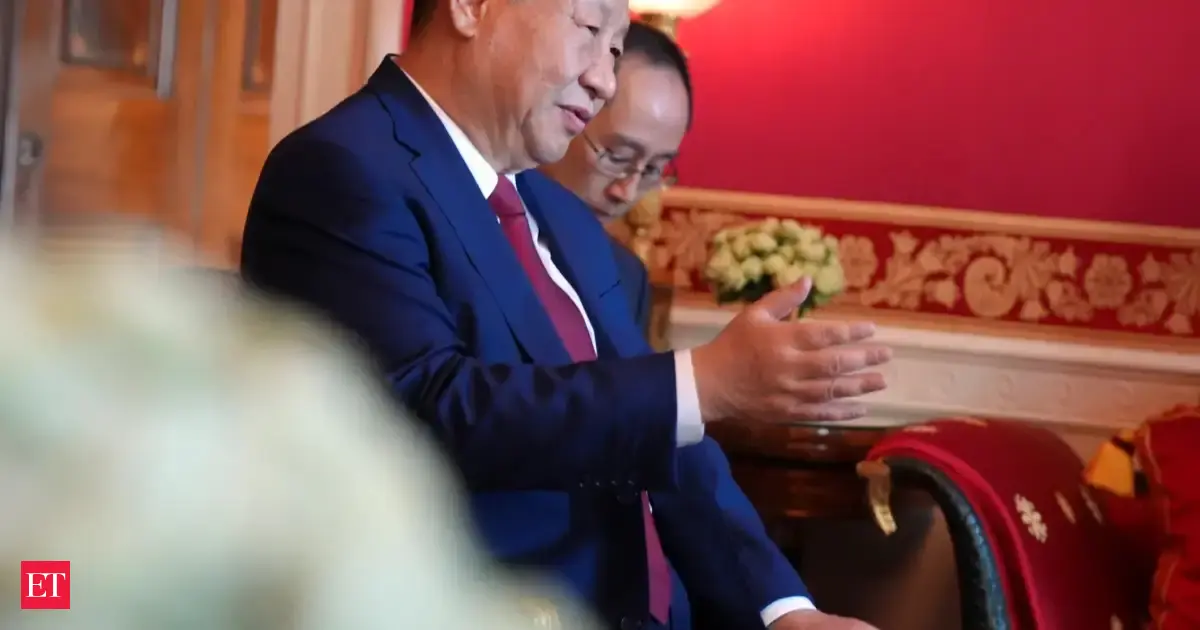
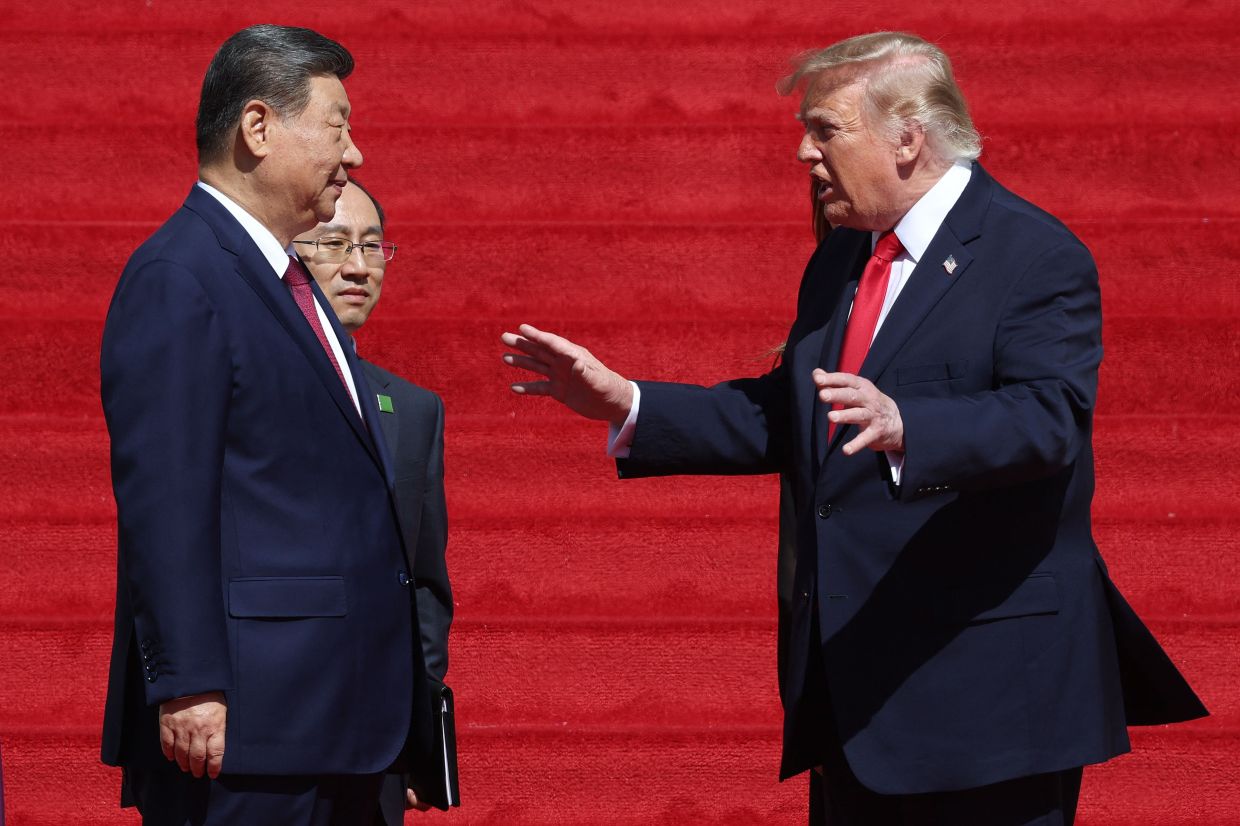
TAIPEI — Political leaders and observers in Taiwan expressed relief and satisfaction following high-level diplomatic talks between US President Donald Trump and Chinese President Xi Jinping, during which Beijing failed to extract formal concessions or commitments regarding the governance and security of the self-ruled island. During the summit, Xi explicitly urged the White House to approach the Taiwan issue with heightened prudence, seeking to curb US security support and official exchanges with Taipei. However, the diplomatic summit concluded without the US administration offering binding policy changes, altering military support agreements, or compromising on its long-standing posture in the Indo-Pacific region.
Key facts
What happened
According to reporting by Alisha Rahaman Sarkar, the meeting between the American and Chinese leaders included intense discussions regarding the geopolitical status of Taiwan, a self-governed democracy of 23.5 million people that Beijing claims as its sovereign territory. During the closed-door discussions, President Xi pressed President Trump directly, framing the Taiwan question as the most critical and sensitive issue in US-China bilateral relations. Xi emphasized that Washington must handle Taiwan-related matters with extreme care and prudence to prevent severe disruptions to broader strategic cooperation.
Despite Beijing's concerted effort to extract tangible assurances—such as a commitment to scale back arms transfers or curb official visits by American representatives—the White House made no formal promises or structural alterations to its Asia policy. Trump declined to offer concessions on Taiwan in exchange for potential progress on trade, tariffs, or economic issues.
When the summit concluded without any joint declarations altering the status of Taiwan, regional markets and political figures in Taipei interpreted the outcome as a firm rejection of Beijing’s demands. Taiwanese news media and government representatives celebrated the development, viewing the lack of US concessions as proof that Washington's defense posture toward Taipei remains intact despite intense pressure from China's leadership.
Why it matters
The outcome of the summit carries profound implications for global security, international trade, and the stability of high-tech supply chains. Taiwan occupies a central position in the global economy, serving as the world's primary manufacturing hub for advanced microelectronics. Taiwan Semiconductor Manufacturing Company alone accounts for the vast majority of global foundry revenue for high-end chips that power everything from consumer smartphones and artificial intelligence systems to advanced military hardware. Any political or military disruption in the Taiwan Strait would threaten to destabilize global supply chains and trigger an immediate international economic downturn.
From a military perspective, the Taiwan Strait represents one of the world's most critical maritime choke points. Nearly half of the global container ship fleet passes through the body of water separating Taiwan from continental Asia. A change in US policy that signalled weakening support for Taiwan could invite bolder military maneuvers by the People's Liberation Army, escalating the risk of accidental collision or conflict.
Furthermore, America's posture on Taiwan is viewed by regional allies—including Japan, South Korea, Australia, and the Philippines—as a litmus test for US security commitments across the Indo-Pacific. By refusing to leverage Taiwan’s security in exchange for economic trade-offs, Washington signals to its regional partners that its defense alliances and strategic commitments remain firm, maintaining the balance of power across East Asia.
The background
The cross-strait rift dates back to 1949, when the Chinese Nationalist forces led by Chiang Kai-shek retreated to Taiwan following their defeat by Mao Zedong’s Communist forces in the Chinese Civil War. For decades, both governments claimed to represent the sole legitimate government of all China. However, Taiwan underwent a peaceful democratization process in the late 1980s and 1990s, developing a distinct political identity, vibrant democratic institutions, and a thriving market economy.
In 1979, the United States formally recognized the People's Republic of China in Beijing, severing official diplomatic ties with the Republic of China in Taipei. To govern non-official relations, the US Congress enacted the Taiwan Relations Act of 1979. This federal statute requires Washington to provide Taiwan with arms of a defensive character and to maintain the capacity of the US to resist any resort to force or other forms of coercion that would jeopardize the security of the island.
US policy is further guided by three US-China Joint Communiqués (issued in 1972, 1979, and 1982) and the Six Assurances communicated to Taipei by President Ronald Reagan in 1982. Together, these framework documents establish Washington's "One China" policy. Under this doctrine, the US acknowledges Beijing's claim over Taiwan without formally endorsing it, while insisting that any resolution of cross-strait differences must be peaceful and acceptable to the people of Taiwan. This framework is characterized as "strategic ambiguity," designed to deter Beijing from using force while dissuading Taipei from declaring formal independence.
In recent years, Beijing has intensified diplomatic, economic, and military pressure against Taiwan, particularly since the election of President Tsai Ing-wen in 2016 and her successor Lai Ching-te in 2024. The People's Liberation Army has regularly crossed the median line of the Taiwan Strait and conducted continuous air defense identification zone incursions. Following the August 2022 visit to Taipei by then-US House Speaker Nancy Pelosi, China launched unprecedented live-fire military exercises surrounding the island, raising global alarms over potential blockade scenarios.
Reaction
In Taipei, political leaders across the spectrum expressed satisfaction with the outcome of the Washington summit. Officials noted that Taiwan's security remains a key pillar of Indo-Pacific stability and commended the US administration for maintaining a steady posture despite diplomatic pressure from Beijing.
Beijing’s state-run media outlets adopted a controlled narrative, focusing on President Xi's statements emphasizing national sovereignty and the necessity of US prudence. While official statements reiterated that Taiwan remains an internal affair of China, diplomatic commentators noted that Chinese officials refrained from declaring victory on the issue, reflecting the absence of new commitments from the White House.
In Washington, foreign policy analysts and congressional lawmakers across party lines welcomed the preservation of existing commitments. Members of Congress emphasized that any unilateral concessions regarding arms sales or security cooperation with Taiwan would have met fierce opposition on Capitol Hill, where bipartisan support for Taipei remains strong.
What we don't know yet
While the primary diplomatic hurdle has passed without concessions, several crucial operational details remain unconfirmed:
What to watch
This report contains information originally reported by Alisha Rahaman Sarkar.
How this story was produced
This report was written by The Global Wire newsroom from reporting first published by Alisha Rahaman Sarkar. We verify the core facts against the original report, write our own account, and add the background and consequences a short wire item leaves out. Drafting is AI-assisted inside an editor-supervised pipeline, and every story is checked for accuracy of attribution, structure and duplication before it appears — full detail in our AI and funding disclosure.
Spotted an error? Tell us at corrections@horizonglobalnews.com and read our corrections policy or editorial standards.

Reader comments
Loading comments…