

Ireland Squad Votes to Play Israel Fixtures as FAI Faces Criticism Over Leadership
Former international Eamon Dunphy accuses the Football Association of Ireland of abandoning players, while the Israeli FA celebrates the decision to fulfill international matches.
By The Global Wire Newsroom · Reported from Daniel McDonnell; Niamh Horan; Mary Regan
Link preview · horizonglobalnews.com
Ireland Squad Votes to Play Israel Fixtures as FAI Faces Criticism Over Leadership
Former international Eamon Dunphy accuses the Football Association of Ireland of abandoning players, while the Israeli FA celebrates the decision to fulfill international matches.
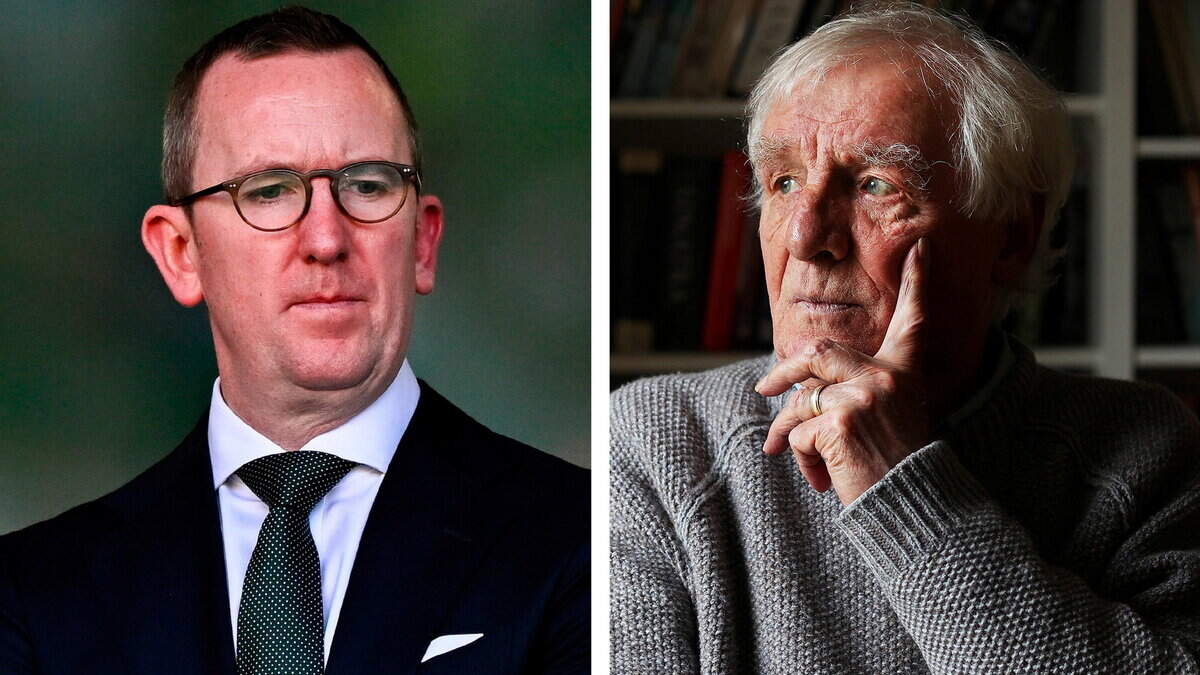
DUBLIN — Members of the Republic of Ireland men’s national football team have voted to fulfill their scheduled international fixtures against Israel, bringing an end to weeks of public speculation over whether the squad would boycott the matches. The squad's vote to proceed with the fixtures drew immediate criticism from prominent Irish football figures, including former national team player and veteran broadcaster Eamon Dunphy, who stated that the Football Association of Ireland (FAI) had abandoned its moral responsibilities and left squad members "left adrift" to handle a politically sensitive decision on their own. Conversely, the Israeli Football Association (IFA) welcomed the outcome, publicly declaring that "football has won" after confirmation that the games would go ahead as scheduled under European governing body rules.
Key facts
What happened
The decision by the Irish national team resolved weeks of growing tension within Irish sport concerning how the country should handle international athletic commitments against Israeli national teams. As the scheduled fixtures approached, pressure mounted from political activists, civil society organizations, and sections of the Irish fanbase calling for a boycott of the matches in protest of Israel's military campaign in Gaza and related civil rights concerns.
Rather than issuing an executive decision or taking an explicit corporate stance on the fixture, the executive leadership of the Football Association of Ireland placed the choice directly before the playing squad. Players held private discussions to weigh the professional, personal, and sporting ramifications of playing or refusing to play. Key considerations included potential disciplinary sanctions from European football's governing body, UEFA, which can enforce heavy financial penalties, automatic match forfeits, and long-term bans from European competitions that could jeopardize player careers and national team qualification pathways.
Following internal deliberations, the squad voted to fulfill the fixtures. The outcome ensured that Ireland will field a team for the scheduled matches, removing the immediate threat of formal UEFA sanctions or points deductions in official competition standings.
However, the decision immediately ignited sharp debate over sports governance and institutional accountability. In media commentary following the vote, Eamon Dunphy condemned the FAI for opting not to take a formal corporate position on the matter. Dunphy argued that by abdicating executive authority and allowing players to vote on a major geopolitical controversy, the governing body exposed young athletes to immense public pressure and potential backlash.
In contrast, sports administrators in Israel expressed satisfaction with the resolution. The Israeli Football Association framed the player vote as a victory for the integrity of international sports, issuing a statement asserting that geopolitical conflicts should not interfere with scheduled athletic competitions on the pitch.
Why it matters
The vote highlights an acute challenge confronting modern sports governing bodies: how to handle international fixtures involving countries engaged in high-profile geopolitical conflicts when public sentiment sharply diverges from official sports federation rules.
For the individual Irish players, the FAI’s decision to delegate the political burden to the squad exposed them to intense public scrutiny regardless of the outcome. A vote to boycott would have meant accepting severe disciplinary actions from UEFA, potentially forfeiting competitive standing, damaging player careers, and risking institutional suspensions for Irish football. Conversely, voting to proceed with the matches leaves players vulnerable to criticism from human rights advocacy groups and fans who advocated for an athletic boycott.
From an administrative perspective, the episode demonstrates the immense pressure national associations face when caught between domestic public opinion and international governing mandates. European football operates under strict binding regulations set by UEFA and global body FIFA. Both organizations defend fixture continuity and maintain strict rules against political interventions by national member associations or individual governments.
The decision also establishes a notable precedent for how sports federations manage ethically charged fixtures. By leaving the choice to a dressing room vote rather than establishing an executive corporate position, the FAI illustrated how administrative neutrality can be perceived internally as a lack of protection for personnel. The outcome underscores the ongoing tension between global sports regulations designed to ensure operational neutrality and domestic political environments that demand clear moral stances from publicly funded national institutions.
The background
Public debate surrounding sporting engagements with Israeli athletic teams has escalated across Europe, particularly within Ireland, which has historically maintained a distinct position within the European Union regarding Palestinian rights and Middle Eastern diplomacy. In Irish civil society, calls for boycotts of Israeli state institutions, including cultural and sporting bodies, have gained traction during periods of military escalation in Gaza.
This dynamic previously surfaced in early 2024, when the Ireland women's national basketball team played Israel in a EuroBasket qualifying match. That fixture generated intense political debate, public calls for a boycott, and internal distress among players. Several Irish basketball players chose not to participate, and pre-game ceremonies involved heightened tension after Irish players declined to shake hands with Israeli opponents following controversial pre-match comments by Israeli players. Basketball Ireland ultimately fulfilled the fixture after receiving explicit warnings from FIBA Europe that forfeiting would result in severe financial penalties and a multi-year ban from international competitions, which administrators warned would devastate the women's national basketball program.
In international football, UEFA and FIFA maintain strict statutes governing scheduled matches. Under existing regulations, if a national association refuses to participate in an official fixture without explicit authorization or a force majeure declaration from the governing body, the match is forfeited as a 3-0 loss. Further sanctions include substantial mandatory fines, loss of television rights revenue, and potential suspension from future tournament qualification cycles, such as the UEFA European Championship or FIFA World Cup.
While FIFA and UEFA suspended Russian national teams and clubs from international competitions in February 2022 following Russia's invasion of Ukraine, global football authorities have consistently resisted calls to apply similar suspensions to the Israeli Football Association. Governing officials have maintained that Israel's situation differs legally under international sports law, leaving member associations like the FAI obligated to fulfill scheduled fixtures against Israeli teams or face direct regulatory punishment.
Reaction
The outcome of the player vote has produced polarized reactions across Ireland and the international football community.
Eamon Dunphy’s public intervention captured widespread frustration among sports commentators and activist groups who feel the FAI failed to provide leadership. Dunphy emphasized that professional athletes are employed to play football and should not be required to serve as moral arbiters or political decision-makers for a national governing body. Critics of the FAI argued that executive directors should have either formally petitioned UEFA for an official deferral or taken institutional responsibility for whatever path was chosen, rather than insulating executive leadership behind a player ballot.
Within Israel, football officials welcomed the news as a validation of athletic continuity. The Israeli Football Association’s statement that "football has won" reflected the perspective that sporting events should remain isolated from political boycotts and political sanctions, aligning with UEFA’s foundational policy of preserving operational neutrality across all member associations.
Irish political figures and civil society organizations, such as the Ireland-Palestine Solidarity Campaign, are expected to continue addressing the issue, with debates likely extending to parliamentary committees examining sports governance, public funding for the FAI, and national guidelines for competing against foreign states subject to international scrutiny.
What we don't know yet
Several critical operational and political questions remain unanswered following the squad's vote.
First, the specific tally and margin of the team vote have not been publicly disclosed. It remains unknown whether the squad reached a near-unanimous consensus or whether the vote revealed deep internal divisions among players. The degree to which individual team members may still elect to opt out of selection on personal grounds remains unconfirmed.
Second, the venue and security logistics for the fixtures remain subject to ongoing assessment. UEFA has mandated that Israeli home matches be played at neutral venues outside the region due to safety concerns surrounding the regional conflict. The exact neutral location, stadium arrangements, and security protocols for the upcoming matches have yet to be fully finalized and announced by European football's governing authorities.
Finally, the long-term impact on fan engagement and attendance figures in Ireland remains uncertain. It is unclear whether supporter groups will organize venue demonstrations, stage boycotts of match tickets, or register formal protests during home fixtures, creating ongoing operational challenges for stadium management and the FAI.
What to watch
In the coming weeks, attention will focus on official match announcements from UEFA regarding confirmed dates, neutral venues, and refereeing assignments for the Republic of Ireland’s games against Israel.
Observers will also watch for public statements or press conferences from senior FAI executive leadership and national team coaching staff, who will face continued questioning regarding institutional policy, player welfare, and administrative responsibility.
At the legislative level, observers should monitor potential parliamentary debates within Dáil Éireann, where lawmakers may question sports administrators regarding how government-subfunded sporting bodies approach political and ethical challenges in international competitions.
Furthermore, upcoming fan demonstrations and public responses surrounding domestic league matches and future national team gatherings will serve as a key measure of whether public debate subsides or intensifies as match day approaches.
This report relies on original news coverage detailed by Daniel McDonnell, Niamh Horan, and Mary Regan.
How this story was produced
This report was written by The Global Wire newsroom from reporting first published by Daniel McDonnell; Niamh Horan; Mary Regan. We verify the core facts against the original report, write our own account, and add the background and consequences a short wire item leaves out. Drafting is AI-assisted inside an editor-supervised pipeline, and every story is checked for accuracy of attribution, structure and duplication before it appears — full detail in our AI and funding disclosure.
Spotted an error? Tell us at corrections@horizonglobalnews.com and read our corrections policy or editorial standards.



Reader comments
Loading comments…