

Meta Leverages Reagan-Era R&D Tax Credit for Multibillion-Dollar AI Data Center Buildout
Meta Platforms is using a Reagan-era tax provision to classify massive AI data centers as experimental pilot models, shielding billions of dollars from corporate tax liability.
By The Global Wire Newsroom · Reported from Victor Tangermann
Link preview · horizonglobalnews.com
Meta Leverages Reagan-Era R&D Tax Credit for Multibillion-Dollar AI Data Center Buildout
Meta Platforms is using a Reagan-era tax provision to classify massive AI data centers as experimental pilot models, shielding billions of dollars from corporate tax liability.
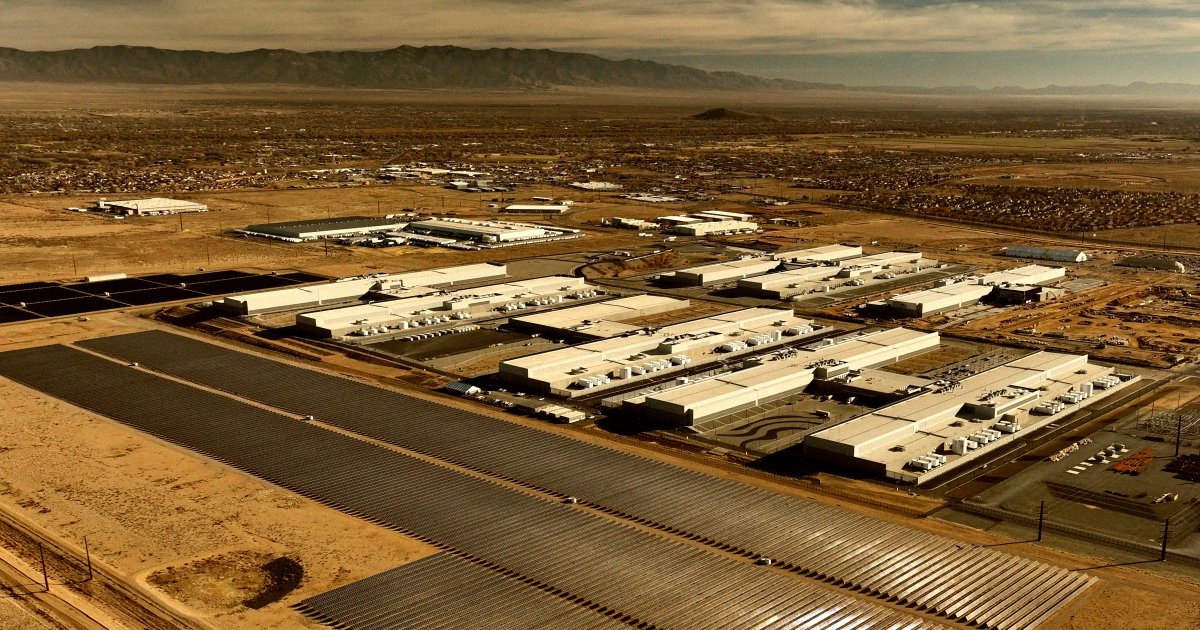
Meta Platforms is utilizing a tax classification strategy originating in the Reagan era to shield billions of dollars from federal tax liability as it expands its artificial intelligence computing infrastructure. According to reporting by Victor Tangermann, the technology conglomerate is writing off its multibillion-dollar data center construction projects by categorizing the facilities as "pilot models" under federal research and development tax credit provisions. The accounting mechanism allows the company to treat massive physical facilities—built to house thousands of advanced graphics processing units and power complex machine learning algorithms—as experimental prototypes rather than conventional long-term capital assets. The approach comes as Meta and its chief executive, Mark Zuckerberg, commit scores of billions of dollars to an aggressive buildout of global data center capacity, raising immediate questions regarding tax policy, corporate compliance, and the legal boundaries of federal incentives intended to spur scientific innovation.
Key facts
What happened
The rapid expansion of artificial intelligence requires an unprecedented scale of physical computing power. Meta Platforms, the parent company of Facebook, Instagram, and WhatsApp, has embarked on one of the largest corporate infrastructure investments in modern history, constructing sprawling data center campuses designed to house hundreds of thousands of specialized microprocessors. However, financial mechanics behind this buildout have drawn sharp scrutiny following disclosures reported by Victor Tangermann detailing how Meta classifies these structural assets on its balance sheets.
Rather than treating new data center developments as standard real estate and equipment investments—which traditional corporate accounting mandates must be capitalized and depreciated slowly over a period of 15 to 39 years—Meta is reportedly utilizing federal tax code provisions that allow for immediate tax deductions and research credits. Under Internal Revenue Service regulations governing research and experimental expenditures, companies can claim tax benefits for "pilot models," defined as physical models or processes constructed to test technological concepts or resolve technical uncertainties.
By designating entire data center facilities—costing billions of dollars apiece—as experimental pilot models, Meta can write off vast construction, engineering, and equipment expenses almost immediately against its overall corporate taxable income. Because Meta generates tens of billions of dollars in annual profits primarily from its core digital advertising operations, these massive research and development write-offs effectively wipe out substantial portions of its federal tax bill. The strategy shifts the burden of proof onto tax authorities to demonstrate that a multi-gigawatt facility filled with commercial server racks is not an experimental testbed, but rather an operational business asset.
Why it matters
The implications of Meta’s tax strategy extend far beyond corporate accounting adjustments, directly impacting federal revenue collection and public finance. As generative artificial intelligence models grow exponentially larger, the capital expenditures required to train and run them have reached historic highs. The technology sector's leading companies—including Meta, Microsoft, Alphabet, and Amazon—collectively spend over $100 billion annually on data centers and specialized computing chips. If tech giants successfully establish that entire server facilities can be categorized as tax-deductible research prototypes, the U.S. Treasury could lose tens of billions of dollars in expected corporate tax receipts over the coming decade.
Furthermore, the strategy accentuates an economic asymmetry between digital technology monopolies and physical industrial sectors. Conventional manufacturing, energy, and logistics enterprises must construct factories, power plants, and distribution hubs under standard tax depreciation schedules, paying corporate taxes on their net income while writing down capital assets over decades. By reinterpreting industrial-scale computational facilities as experimental pilot models, Meta gains a significant financial advantage, effectively using taxpayer-subsidized tax savings to fund its competitive moat in artificial intelligence.
The mechanism also places renewed spotlight on the environmental and infrastructural strain created by massive data center complexes. Data centers consume immense volumes of electricity and municipal water to power and cool dense clusters of high-performance microprocessors. Critics point out that while local communities absorb the ecological footprint and energy grid strains associated with these facilities, corporate owners leveraging pilot-model tax classifications may simultaneously minimize their tax contributions to federal and municipal coffers.
The background
The legal basis for Meta’s tax position rests on federal policy enacted over four decades ago. In 1981, U.S. President Ronald Reagan signed the Economic Recovery Tax Act, which introduced the Research and Development Tax Credit under Section 41 of the Internal Revenue Code. Designed during an era of high inflation and industrial decline, the tax credit aimed to incentivize American corporations to invest aggressively in domestic scientific research, technological innovation, and manufacturing prototypes to compete against rising foreign industrial rivals.
Under Treasury Regulation Section 1.174-2, the Internal Revenue Service defined allowable research and experimental costs, specifically recognizing the expenses associated with constructing "pilot models." A pilot model is historically defined as any representation, model, or process produced to evaluate technological capabilities or eliminate technical uncertainty regarding a product or design. Historically, this tax provision was utilized by aerospace firms testing prototype aircraft, automotive manufacturers engineering experimental engines, or pharmaceutical companies constructing small-scale pilot chemical production lines.
However, the evolution of software development and computing infrastructure has repeatedly tested the boundaries of the federal research tax code. In 2015, the Internal Revenue Service issued finalized regulations clarifying the application of research credits to internal-use software and technological systems. While those rules were intended to provide clear guidelines for software development, the advent of hyperscale artificial intelligence data centers has introduced a far more complex structural dynamic. Modern artificial intelligence facilities require custom power distribution systems, novel liquid cooling architecture, and custom micro-chip interconnections to manage unprecedented thermal and computational loads. Meta’s legal argument hinges on claiming that these novel engineering challenges render the entire data facility an experimental prototype subject to full research and development tax relief.
Reaction
The revelation of Meta’s pilot-model tax write-offs is expected to trigger swift pushback from congressional tax writers, policy advocacy organizations, and tax compliance experts. Lawmakers on both sides of the aisle in the U.S. Senate Finance Committee and House Ways and Means Committee have historically expressed skepticism toward broad corporate tax shelters, particularly when leveraged by highly profitable tech monopolies. Reform advocates are likely to urge the Treasury Department and the Internal Revenue Service to issue formal revenue rulings or technical advice memorandums restricting the definition of pilot models to prevent commercial data centers from qualifying.
Within the legal and financial advisory sectors, corporate tax attorneys are closely evaluating whether Meta's position will withstand audit scrutiny. While tax practitioners acknowledge that novel data center cooling designs contain elements of technical uncertainty, standard tax doctrine typically requires that once a facility becomes commercially operational, capital expenditures must be segregated from research expenses. Meta has not publicly conceded that its tax positions breach legal boundaries, maintaining that its investments in cutting-edge computing architecture represent legitimate frontier technological research.
What we don't know yet
Significant details regarding Meta’s specific tax filings and total financial impact remain undisclosed. The public reporting by Victor Tangermann does not detail the precise dollar amount Meta has written off under the pilot-model designation, nor does it identify which specific geographic data center construction sites—such as Meta's sprawling complexes in Iowa, Oregon, Texas, or overseas—were claimed under this provision.
It is also currently unknown whether the Internal Revenue Service has formally initiated an audit or issued a notice of deficiency challenging Meta's pilot-model tax deductions. Tax audits of multinational corporations typically remain confidential for years until resolved in federal administrative proceedings or the U.S. Tax Court. Additionally, it remains unclear whether competing hyperscale operators, such as Microsoft, Alphabet, or Amazon Web Services, are utilizing identical accounting structures to deduct their own multibillion-dollar artificial intelligence infrastructure investments.
What to watch
Key indicators over the coming fiscal quarters will signal how this tax controversy unfolds. First, analysts and investors will monitor Meta’s upcoming Securities and Exchange Commission Form 10-Q and 10-K quarterly and annual financial filings for disclosures regarding unrecognized tax benefits, tax audit reserves, or ongoing disputes with federal tax authorities. Any sharp increase in Meta's tax contingency reserves would indicate heightened scrutiny of its research credit claims by federal auditors.
Second, tax policy watchers will look to the Internal Revenue Service and the U.S. Department of the Treasury for potential guidance updates or public revenue rulings regarding Internal Revenue Code applications to computational infrastructure. Third, federal legislative proposals surrounding corporate tax reform or research and development amortization rules could emerge in Congress, particularly as lawmakers seek revenue offsets for upcoming tax policy negotiations. Finally, potential legal filings in the U.S. Tax Court could ultimately establish binding judicial precedents regarding whether a multi-gigawatt artificial intelligence server hub can legally qualify as an experimental prototype.
This report is based on original reporting published by Victor Tangermann.
How this story was produced
This report was written by The Global Wire newsroom from reporting first published by Victor Tangermann. We verify the core facts against the original report, write our own account, and add the background and consequences a short wire item leaves out. Drafting is AI-assisted inside an editor-supervised pipeline, and every story is checked for accuracy of attribution, structure and duplication before it appears — full detail in our AI and funding disclosure.
Spotted an error? Tell us at corrections@horizonglobalnews.com and read our corrections policy or editorial standards.




Reader comments
Loading comments…