

India Pursues Black Sea Shipping Protections in Talks With Moscow, Kyiv and Europe
External Affairs Minister S. Jaishankar engages warring parties and European capitals to safeguard maritime trade corridors and revive disrupted agricultural supply lines.
By The Global Wire Newsroom · Reported from SECTIONS EAM Jaishankar discusses Ukraine-Russia conflict solutions amid G
Link preview · horizonglobalnews.com
India Pursues Black Sea Shipping Protections in Talks With Moscow, Kyiv and Europe
External Affairs Minister S. Jaishankar engages warring parties and European capitals to safeguard maritime trade corridors and revive disrupted agricultural supply lines.
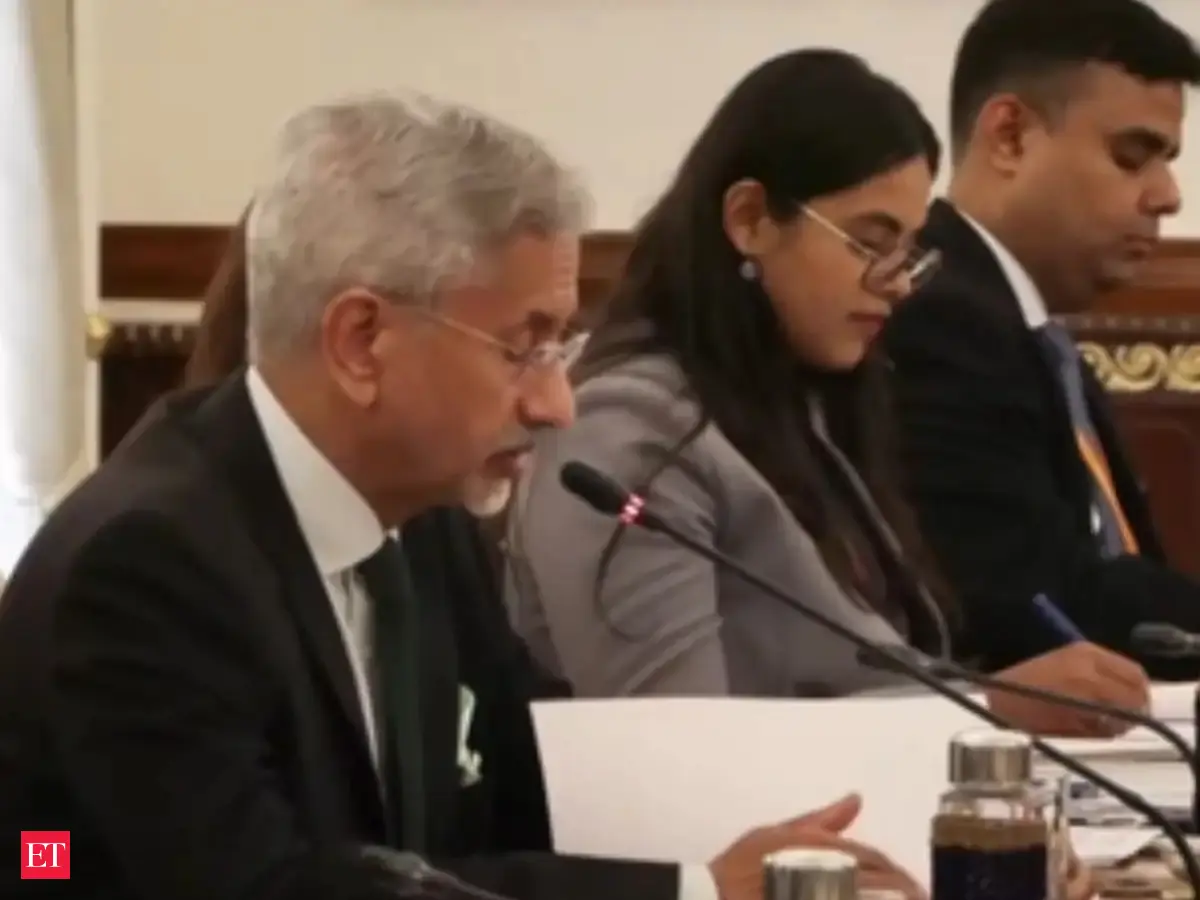
NEW DELHI — India has intensified quiet diplomatic engagements with the Russian Federation, Ukraine, and several European governments to address the fallout of the war in Eastern Europe, placing particular emphasis on maritime safety in the Black Sea and the stabilization of global grain exports. Speaking on the sidelines of high-level multilateral proceedings, Indian External Affairs Minister Subrahmanyam Jaishankar outlined New Delhi's conversations aimed at insulating civilian commercial navigation from military strikes and restoring reliable agricultural export routes that have remained severely degraded by ongoing hostilities. Jaishankar underscored the profound complexity of mediating between the warring sides, noting that while an immediate comprehensive settlement remains elusive, targeted interventions on functional issues like commercial maritime corridors offer an essential pathway to alleviate acute economic pressure on developing nations.
Key facts
What happened
During recent high-level diplomatic sessions convened around the Group of 20 framework, Indian External Affairs Minister S. Jaishankar detailed a series of concerted diplomatic exchanges that New Delhi has undertaken with officials from Moscow, Kyiv, and key European capitals. The discussions centered on mitigating the systemic disruptions caused by the prolonged war in Ukraine, with an immediate operational focus on commercial shipping corridors across the Black Sea.
According to reporting by SECTIONS, the core objective of India's current diplomatic push is to establish basic understandings that prevent armed strikes against merchant vessels traversing international waters. The targeting of port infrastructure and the mining of waterways have periodically paralyzed civilian shipping, stranding agricultural commodities and driving insurance premiums for cargo vessels to prohibitive levels. Jaishankar emphasized that resolving these maritime friction points requires direct, pragmatic engagement across all parties involved in the theater of conflict.
Rather than attempting to draft an all-encompassing political resolution to end the war outright, India's diplomats have narrowed their focus to actionable, technical confidence-building measures. Jaishankar described the overarching conflict as deeply intricate, characterized by entrenched geopolitical disputes and territorial contestation that cannot be solved through simplistic diplomatic formulas. In that context, New Delhi has sought to mobilize its unique bilateral channels to address the immediate downstream consequences of the war—specifically the volatile grain trade—where both combatants and third-party transit states share a functional interest in avoiding uncontrolled escalation.
Why it matters
The ongoing disruption of Black Sea maritime transport carries profound implications that extend far beyond Eastern Europe, directly threatening food security, maritime law, and economic stability across the Global South. The Black Sea basin historically accounts for a substantial share of the world's exported wheat, barley, maize, and sunflower oil, serving as a primary breadbasket for import-dependent economies across the Middle East, North Africa, and South Asia. When commercial vessels face the threat of missile strikes, naval drones, or floating naval mines, commercial maritime insurers either cancel war-risk coverage or raise rates exponentially, rendering shipping economically unviable even when agricultural yields are plentiful.
For major developing economies like India, the stability of international shipping lanes is critical to domestic price controls and macroeconomic management. Unstable grain markets trigger immediate volatility in global food commodity indexes, which translates directly into imported inflation for countries balancing tight fiscal budgets. Furthermore, disruptions to bulk fertilizer exports from the region jeopardize agricultural productivity in subsequent planting cycles across dozens of developing states. By focusing its diplomatic capital on protecting commercial vessels and agricultural trade, New Delhi is attempting to protect vulnerable economies from bearing the primary economic burden of a war fought thousands of kilometers away. If India can help broker even limited, informal protections for merchant navigation, it would establish an important precedent demonstrating that non-aligned powers can deliver tangible stabilization measures during major power conflicts.
The background
The current crisis in Black Sea navigation began in February 2022, when the escalation of the Russia-Ukraine conflict resulted in a de facto naval blockade of Ukrainian deep-water ports, trapping millions of metric tons of grain in silos and triggering historic spikes in global food commodity prices. In July 2022, the United Nations and the Republic of Turkey brokered the Black Sea Grain Initiative, an agreement that allowed safe navigation for designated merchant vessels carrying food and fertilizer from three primary Ukrainian ports through a verified humanitarian corridor.
Under that arrangement, which was monitored by a Joint Coordination Centre in Istanbul comprising Russian, Ukrainian, Turkish, and UN officials, more than 32 million metric tons of agricultural products were exported over a period of twelve months. However, the Russian Federation formally exited the pact in July 2023, citing unfulfilled commitments regarding the removal of secondary Western sanctions on Russian agricultural banking, logistics, and ammonia transport. Following Moscow's withdrawal, the conflict spilled directly into the maritime domain. Russian armed forces launched systematic drone and missile attacks against grain export terminals and storage silos in Odesa, Chornomorsk, and along the Danube River, while Ukrainian forces utilized uncrewed surface vessels and long-range missiles to target Russian naval assets in Sevastopol and the eastern Black Sea.
While Ukraine subsequently established an alternate unilateral coastal maritime corridor that hugs the territorial waters of NATO members Romania, Bulgaria, and Turkey, civilian ships using the route continue to face significant risks from floating naval mines and periodic aerial strikes. Throughout this period, India has maintained a carefully balanced diplomatic stance. New Delhi declined to join Western-led sanctions regimes against Moscow, significantly expanded its imports of discounted Russian seaborne crude oil, and repeatedly reiterated that modern conflicts cannot be resolved on the battlefield. Concurrently, Indian Prime Minister Narendra Modi and Minister Jaishankar have maintained direct dialogue with Ukrainian President Volodymyr Zelenskyy and European leaders, positioning India as a pragmatic interlocutor capable of passing messages between opposing camps without taking a partisan side.
Reaction
The international reaction to India's diplomatic messaging reflects the complex geopolitical dynamics governing negotiations over the Black Sea. Ukrainian officials have historically maintained that any diplomatic discussions concerning their sovereignty and territorial waters must center on the full restoration of Ukraine's territorial integrity and the cessation of Russian aggression. While Kyiv has welcomed international support for food security initiatives, it has insisted that its unilateral maritime export corridor has functioned primarily through domestic military deterrence against Russia's Black Sea Fleet rather than diplomatic concessions.
In Moscow, Russian officials have consistently stated that while they remain open to discussions regarding global agricultural security, any formal diplomatic framework must address Russian grievances regarding international payment mechanisms, such as reconnecting the Russian Agricultural Bank (Rosselkhozbank) to the SWIFT financial messaging network, and lifting restrictions on marine insurance and port access for Russian vessels. Western European governments and Washington have generally viewed third-party diplomatic overtures with cautious interest, recognizing the urgent necessity of stabilizing world food markets, but they remain wary of any diplomatic proposals that might inadvertently relieve economic pressure on the Russian defense sector. Developing nations in the African Union and Latin America have widely encouraged India's focus on grain flows, repeatedly urging both warring parties at the United Nations General Assembly to wall off essential agricultural and humanitarian trade from broader military hostilities.
What we don't know yet
Significant operational gaps remain regarding the exact structure and progress of India's diplomatic engagement. The reporting does not disclose whether New Delhi is working to draft a formal, multilateral treaty or if it is pursuing an informal, tacit understanding between the belligerents to halt strikes on commercial vessels. It also remains unclear whether India is coordinating this initiative jointly with Turkey, which controls maritime access through the Bosporus and Dardanelles straits under the 1936 Montreux Convention, or with United Nations specialized agencies that previously oversaw maritime verification procedures.
Furthermore, the precise concessions or guarantees demanded by Moscow and Kyiv during these conversations have not been publicly detailed. It is unknown whether Russia is conditioning its restraint in the Black Sea on the relaxation of specific financial restrictions, or whether Ukraine is demanding international naval escorts or expanded security guarantees for its port infrastructure. The degree to which European partners are willing to endorse or participate in an India-facilitated framework—especially given European commitments to stringent economic sanctions against Russia—remains an open question that will determine whether these talks can translate into operational agreements.
What to watch
Several concrete indicators over the coming months will reveal whether India's diplomatic intervention is producing tangible outcomes on the ground. First, international shipping observers will monitor commercial traffic volumes moving through the Danube River ports of Izmail and Reni, as well as the Greater Odesa port complex, alongside the corresponding war-risk insurance premiums quoted by Lloyd's of London and other major maritime underwriters. A downward trend in insurance costs or a significant increase in commercial vessel calls would signal growing confidence in tacit safety arrangements.
Second, diplomatic observers will watch upcoming high-level multilateral gatherings, including future Group of 20 working sessions and United Nations General Assembly debates, for joint statements or bilateral readouts mentioning Black Sea navigation. Any public synchronization between Indian diplomats, Turkish interlocutors, and UN officials would indicate that discussions have advanced from exploratory bilateral talks into a coordinated multilateral mediation effort. Finally, the operational posture of both militaries in the Black Sea theater will serve as the definitive benchmark: a verifiable cessation of drone and missile strikes against port silos, combined with an absence of naval drone attacks on commercial supply lanes, will confirm whether the diplomatic framework advocated by Jaishankar has taken hold.
This report is based on original news reporting published by SECTIONS.
How this story was produced
This report was written by The Global Wire newsroom from reporting first published by SECTIONS EAM Jaishankar discusses Ukraine-Russia conflict solutions amid G. We verify the core facts against the original report, write our own account, and add the background and consequences a short wire item leaves out. Drafting is AI-assisted inside an editor-supervised pipeline, and every story is checked for accuracy of attribution, structure and duplication before it appears — full detail in our AI and funding disclosure.
Spotted an error? Tell us at corrections@horizonglobalnews.com and read our corrections policy or editorial standards.



Reader comments
Loading comments…