

Canada Pivots Toward Higher Crude Output in Shift Shaped by U.S. Trade Pressure
Confronting tariffs and shifting cross-border dynamics under Donald Trump, Canada is recalibrating its energy strategy to maximize oil production and diversify export routes.
By The Global Wire Newsroom · Reported from Reuters
Link preview · horizonglobalnews.com
Canada Pivots Toward Higher Crude Output in Shift Shaped by U.S. Trade Pressure
Confronting tariffs and shifting cross-border dynamics under Donald Trump, Canada is recalibrating its energy strategy to maximize oil production and diversify export routes.
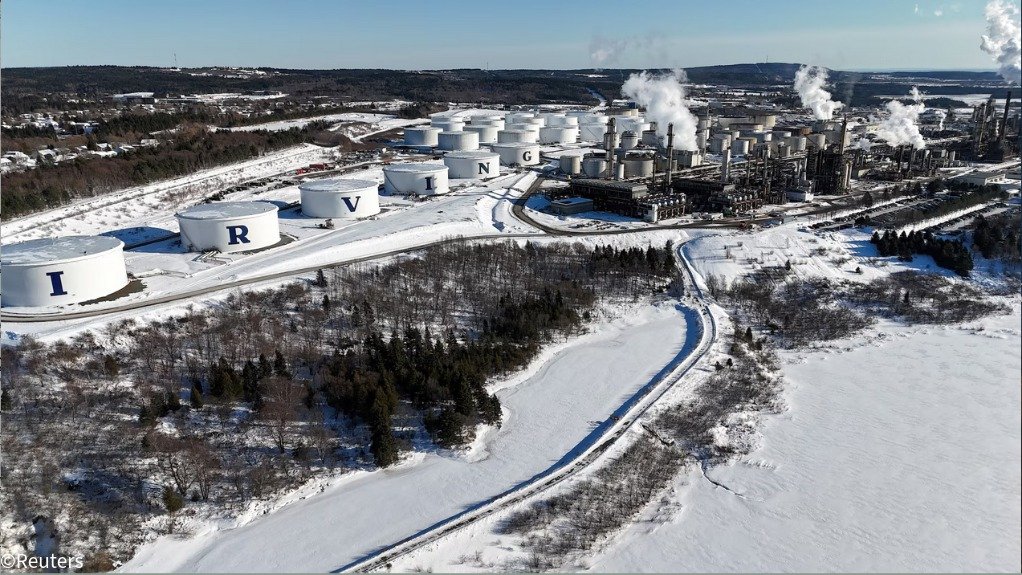
Canada is actively exploring strategies to increase its domestic crude oil production and expand overseas export channels, marking a decisive pivot from years of federal policy focused on curbing the country's dependence on fossil fuels. The policy reassessment follows acute external economic pressure triggered by two geopolitical developments linked to U.S. President Donald Trump, including a disruptive tariff offensive launched against trading partners, according to an analysis published by Reuters. The shift mirrors long-standing resource-monetization strategies employed by major petrostates such as Saudi Arabia, which prioritize maximizing the economic value of underground hydrocarbon reserves while high-demand windows remain open.
Key facts
What happened
For nearly a decade, Canadian federal policymakers maintained an official economic trajectory anchored on decarbonization, strict emissions reduction targets, and capping oil and gas sector pollution. However, the commercial reality facing Ottawa and provincial governments underwent a sudden transformation as geopolitical crosswinds from Washington destabilized traditional North American trade assumptions, according to reporting by Reuters.
At the center of this transition are two major policy shocks driven by U.S. President Donald Trump. Foremost among them was the sudden implementation of punitive import tariffs early in his term, which threatened to disrupt integrated North American supply chains and underscored Canada's dangerous economic vulnerability as a single-market supplier. Confronted with the threat of barriers on cross-border shipments, Canadian planners began looking for mechanisms to extract, process, and ship higher volumes of energy to alternative global markets, emulating elements of Saudi Arabia's state-backed petroleum policy.
In the traditional Saudi framework managed by state energy giant Saudi Aramco, the strategic objective is not to artificially suppress domestic resource exploitation in anticipation of a low-carbon future, but rather to extract maximum economic dividend from natural reserves while robust international demand persists. Canada's emerging posture reflects a similar realization: with domestic producers already operating vast reserves in Western Canada, preserving long-term resource optionality requires building market resilience through scale and diversified export logistics, rather than unilaterally capping extraction.
Why it matters
This strategic evolution carries sweeping ramifications for international energy markets, North American fiscal health, and global climate governance. As the supplier of roughly four million barrels of crude per day to U.S. refineries, Canada has long functioned as the foundational baseline of North American energy integration. If Canadian energy producers actively redirect larger tranches of output away from American pipelines toward maritime terminals on the Pacific coast, heavy crude refiners along the U.S. Gulf Coast and across the Midwest could face tighter feedstock supplies and increased pricing volatility.
For Canada itself, the shift represents an existential macroeconomic defense. Energy exports represent the nation's single largest source of foreign exchange and trade surplus value. Historically, approximately 95 percent of Canadian crude exports were locked into U.S.-bound pipelines, forcing Canadian producers to accept structural price discounts on Western Canadian Select crude relative to the West Texas Intermediate benchmark. By pursuing higher volumes paired with global export capability, Canada aims to insulate its broader economy from American protectionism and political unilateralism.
Furthermore, the pivot exposes a widening fissure in international climate diplomacy. Canada has historically sought to position itself as a progressive champion of climate pacts, including the 2015 Paris Agreement, aiming for net-zero greenhouse gas emissions by 2050. Embracing an export-maximization stance risks diluting federal climate credibility and demonstrates the degree to which national economic security and trade hostility can dismantle long-term environmental commitments under acute geopolitical stress.
The background
Canada holds the world's third-largest proven crude oil reserves, estimated at roughly 168 billion barrels, with the overwhelming balance trapped in the oil sands deposits of northern Alberta. Over the past decade, the country's energy sector operated under immense political and legal friction. Prime Minister Justin Trudeau's government introduced stringent federal climate initiatives, including the Greenhouse Gas Pollution Pricing Act, rigorous environmental impact assessment legislation under Bill C-69, and a proposed federal cap on oil and gas sector emissions.
These domestic regulatory hurdles, combined with intense international environmental advocacy, prompted several multinational oil corporations to divest their Canadian holdings between 2016 and 2020, leaving domestic operators such as Canadian Natural Resources Limited, Suncor Energy, and Cenovus Energy to consolidate ownership. Simultaneously, pipeline bottlenecks chronically depressed Western Canadian crude pricing. Projects aimed at reaching non-U.S. waters, such as Northern Gateway and Energy East, were canceled amid regulatory uncertainty and environmental opposition, while the Keystone XL project to the U.S. Gulf Coast was revoked by U.S. executive order in January 2021.
To prevent an economic disaster for the landlocked western provinces, the federal government took the extraordinary step in 2018 of nationalizing the Trans Mountain pipeline project for 4.5 billion Canadian dollars. After years of construction delays and cost overruns that swelled the final price tag past 34 billion Canadian dollars, the expanded pipeline system began commercial operation in mid-2024. The project expanded system throughput from 300,000 barrels per day to 890,000 barrels per day, terminating at the Westridge Marine Terminal in Burnaby, British Columbia. This infrastructure created the physical prerequisite for the shift described by Reuters, giving Canada the maritime capacity to treat petroleum as an internationally tradable instrument rather than a captive commodity bound exclusively for the United States.
Reaction
While formal government policy statements on the specific analytical comparisons with Saudi Arabia have not been released, political and industrial stakeholders across North America are positioned on opposing sides of the issue. Canadian provincial leaders, particularly Alberta Premier Danielle Smith, have consistently urged the federal government to discard federal emission caps and embrace unfettered export growth, arguing that Canadian energy security is essential to counter U.S. economic leverage.
In Ottawa, parliamentarians face intense scrutiny over the alignment between federal climate mandates and resource-driven revenue demands. Official reactions from the federal government are expected in parliamentary committee hearings on international trade and natural resources, where cabinet ministers must reconcile carbon reduction legislation with trade defense measures. South of the border, U.S. refiners and commercial trade organizations are watching cross-border flows closely, as any structural policy in Ottawa that actively incentivizes non-U.S. export channels directly challenges long-held American assumptions regarding captive Canadian energy supplies.
Environmental advocacy groups and Indigenous organizations across British Columbia and Alberta are expected to voice strong opposition in regulatory filings and judicial reviews, contending that mimicking the high-output strategies of conventional oil powers directly contradicts Canada's legal pledges to decrease absolute greenhouse gas emissions.
What we don't know yet
Significant gaps remain regarding the precise statutory and fiscal mechanisms Canada intends to use to execute this high-production strategy. The commentary published by Reuters highlights the directional shift prompted by Trump's tariffs and geopolitical posture, but it leaves several critical questions unanswered. Most notably, the second specific geopolitical shock alluded to in the commentary requires formal policy definition: it remains unverified whether this secondary shock refers to specific American export subsidies, sanctions enforcement shifts, or unilateral changes to the United States-Mexico-Canada Agreement (USMCA).
Additionally, it remains unclear whether the federal government will formally abandon or substantially soften its proposed greenhouse gas emissions cap on the upstream oil and gas sector to allow unconstrained volume expansion. There is also no verifiable confirmation of whether private capital operators are willing to commit significant capital expenditure toward long-cycle production expansions, given that institutional investors continue to emphasize free cash flow generation, debt reduction, and shareholder dividends over aggressive drilling campaigns.
What to watch
Several upcoming political and economic milestones will clarify how aggressively Canada pursues this revised playbook:
This report is based on analytical reporting and commentary from Reuters detailing Canada's shifting international energy posture in response to trade actions initiated by U.S. President Donald Trump.
How this story was produced
This report was written by The Global Wire newsroom from reporting first published by Reuters. We verify the core facts against the original report, write our own account, and add the background and consequences a short wire item leaves out. Drafting is AI-assisted inside an editor-supervised pipeline, and every story is checked for accuracy of attribution, structure and duplication before it appears — full detail in our AI and funding disclosure.
Spotted an error? Tell us at corrections@horizonglobalnews.com and read our corrections policy or editorial standards.





Reader comments
Loading comments…