

UK Launches Three-Year Emergency Preparedness Drive Urging 72-Hour Supply Kits
The British public is being urged to stockpile food, water, cash, and flashlights for three days of self-reliance amid rising threats from extreme weather and cyber disruptions.
By The Global Wire Newsroom · Reported from Trending Desk
Link preview · horizonglobalnews.com
UK Launches Three-Year Emergency Preparedness Drive Urging 72-Hour Supply Kits
The British public is being urged to stockpile food, water, cash, and flashlights for three days of self-reliance amid rising threats from extreme weather and cyber disruptions.
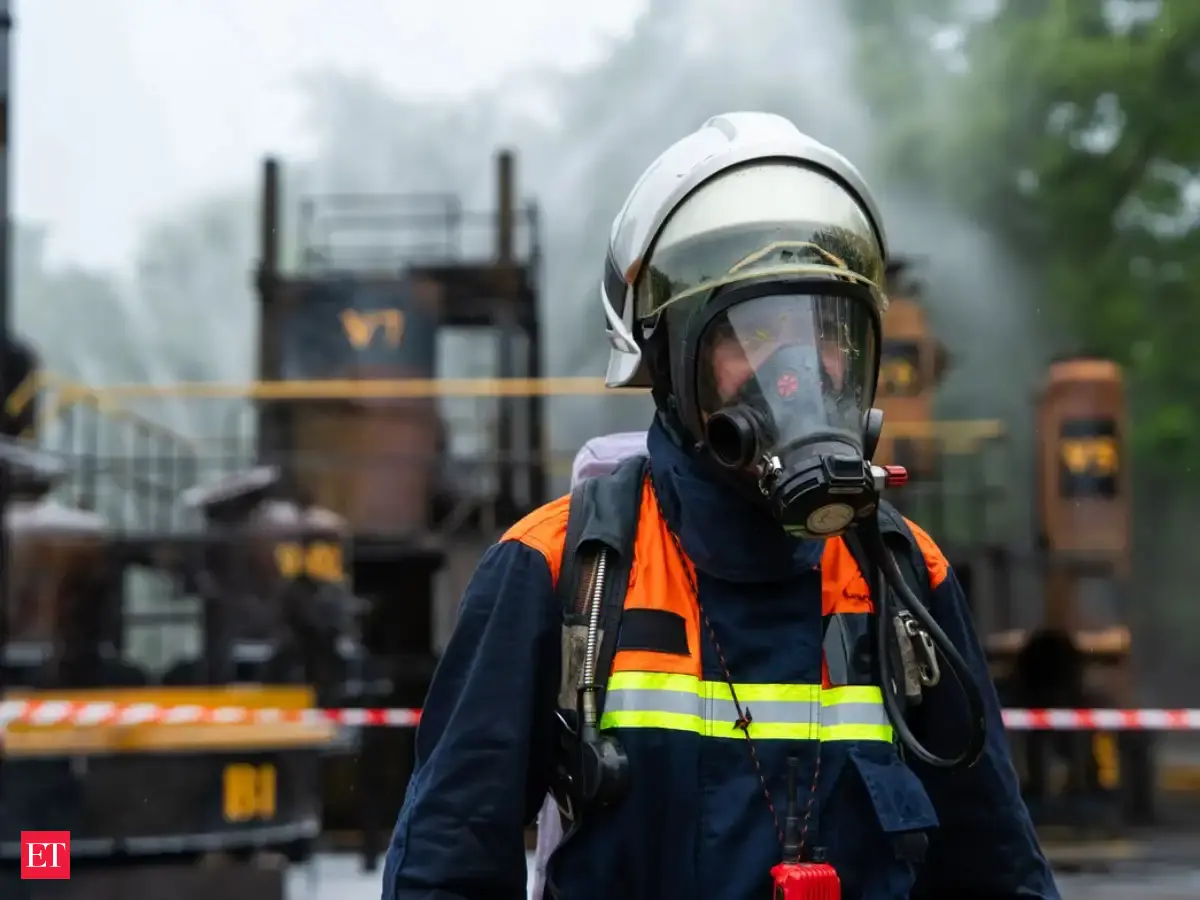
British authorities have formally initiated a nationwide, three-year emergency preparedness campaign instructing households across the United Kingdom to assemble survival kits and prepare for at least 72 hours without access to basic public utilities and commercial services. The public safety drive, titled "Be Ready," urges citizens to stockpile essential goods, including non-perishable food, bottled drinking water, battery-powered torches, and physical cash. The initiative comes in response to escalating domestic vulnerabilities driven by severe weather patterns, rural wildfires, critical infrastructure outages, and systemic cyberattacks that could sever municipal power networks, cellular communications, and digital banking platforms without warning.
Key facts
What happened
According to reporting by Trending Desk, British authorities introduced the three-year "Be Ready" campaign to prompt a structural shift in how families approach domestic security and civil protection. The framework outlines direct, actionable steps for members of the public to navigate the initial days of a major societal disruption before municipal response teams or national emergency services can establish relief corridors.
Central to the guidance is the recommendation that households secure enough resources to operate off-grid and without retail replenishment for three consecutive days. The baseline kit specified by officials includes non-perishable food that does not require active refrigeration or cooking, alongside sufficient reserves of bottled water for hydration and basic hygiene. In addition, the guidance advises citizens to retain modest amounts of cash inside their homes, addressing systemic vulnerabilities in an increasingly cashless society where prolonged power outages or telecommunications collapse can immediately disable automated teller machines (ATMs) and point-of-sale payment terminals.
Beyond food and finance, authorities emphasize basic physical survival equipment. Households are urged to store wind-up or battery-operated torches to mitigate the domestic hazards of blackouts, avoiding open flames that raise residential fire risks during municipal grid collapses. The campaign highlights a diverse spectrum of disruptions as catalysts for such interventions, spanning volatile climatic events like severe storms, unseasonal wildfires, and flash floods, as well as digital sabotages targeting national energy distribution or communications infrastructure.
Why it matters
For decades, public emergency policy in advanced Western economies operates on the unstated assumption that central utilities, supply chains, and digital services are virtually permanent. Modern retail distribution relies heavily on "just-in-time" inventory practices, in which supermarkets carry only two to four days of shelf inventory, while domestic banking increasingly relies on purely digital clearance. A multi-day disruption to telecommunications, the electrical grid, or logistics corridors quickly cascades through municipal life, overwhelming local emergency response networks within hours.
By formally requesting that households maintain independent survival capacity for three days, officials are addressing systemic capacity bottlenecks within national civil contingencies. During the opening phase of a major catastrophe—whether an atmospheric river inundating low-lying regions, a summer wildfire cutting rail and road connections, or an offensive cyber operation crippling national power switching stations—statutory first responders are routinely occupied with protecting critical national infrastructure and conducting acute rescue operations. Establishing widespread, independent civilian resilience for 72 hours relieves immediate pressure on emergency services, allowing police, fire, and health personnel to triage life-threatening situations rather than conducting routine food, water, or welfare distributions across intact suburban neighborhoods.
Furthermore, the explicit recommendation to hold physical paper currency reflects a policy acknowledgment of the fragility of modern payments architecture. While the United Kingdom ranks among the most cashless societies globally, payment terminals, mobile wallets, and digital interbank clearing cannot function during localized or regional blackouts. Households reliant exclusively on smartphone banking risk total economic paralysis during extended blackouts, unable to purchase remaining local necessities or secure transportation fuel.
The background
Civil contingency planning in the United Kingdom is governed primarily by the Civil Contingencies Act 2004, a foundational statute that established the modern architecture for local and national disaster management. Under this legal framework, statutory duties are divided between Category 1 responders—such as regional police forces, fire and rescue services, ambulance trusts, and local government authorities—and Category 2 responders, including commercial utility operators, transport networks, and telecommunications providers. Strategic coordination is maintained through Local Resilience Forums (LRFs), which bring these entities together within individual police force boundaries across England and Wales to audit threats and coordinate contingency responses.
At the national level, the Cabinet Office oversees the National Risk Register (NRR), a government document updated every two years that evaluates chronic and acute threats facing the British state. Historical iterations of the register focused heavily on pandemic disease, coastal flooding, and conventional terrorism. However, recent revisions have elevated threats from hostile foreign state cyber interference against undersea cables and energy interconnectors, alongside severe heat waves and flash flooding exacerbated by shifting climate baselines.
Historically, the British approach to civilian civil defence differed sharply from Nordic and Baltic models. Nations such as Sweden, Finland, and Norway have long practiced "Total Defence" doctrines, regularly issuing detailed crisis handbooks to every domestic household. Sweden's widely translated pamphlet, *If Crisis or War Comes*, specifically commands citizens to maintain at least a week of independent food, water, and heat reserves. In contrast, British authorities spent the post-Cold War decades phasing out public civil protection advisories, largely relying on institutional capacity rather than distributed civilian readiness. The launch of the three-year "Be Ready" campaign represents a deliberate movement toward continental European models of societal self-reliance.
Reaction
Public interest and civic response following emergency preparedness advisories typically center on the economic practicality of stockpiling for lower-income households. While consumer advocacy bodies and civil contingency professionals broadly welcome baseline readiness education, consumer groups frequently raise concerns that households facing elevated living costs may struggle to purchase and rotate emergency food reserves or set aside cash reserves.
Local authorities and regional resilience directors are expected to review how the campaign's guidance integrates with ongoing local community resilience strategies. Regional leaders, including metropolitan mayors across northern England and municipal leaders throughout the devolved administrations of Scotland, Wales, and Northern Ireland, will face operational scrutiny regarding how local utility providers and emergency services intend to communicate with the public should digital networks fail. Parliamentary select committees, particularly the Home Affairs Committee and the Defence Committee, regularly review government preparedness metrics and are anticipated to seek formal updates on public uptake and educational outreach as the campaign progresses over its three-year horizon.
What we don't know yet
Several substantive operational dimensions of the "Be Ready" rollout remain unspecified in the initial announcement reported by Trending Desk. It remains unclear whether the three-year initiative is supported by direct statutory funding allocations to Local Resilience Forums, or whether it functions primarily as an informational communications effort led by central civil service departments.
Additionally, the wire reporting attributes the directive broadly to British authorities while mentioning regional governance contexts, leaving open questions about the division of responsibilities between central UK government departments—such as the Cabinet Office—and devolved administrations in Edinburgh, Cardiff, and Belfast, which manage local civil contingency enforcement and health services independently. There is also no public detail yet regarding whether the campaign will incorporate direct postal distributions to households, school educational curricula, or subsidized emergency supply distribution for vulnerable and low-income demographics who cannot afford to lock up personal liquidity in reserve kits.
What to watch
Key indicators over the coming months will demonstrate how the "Be Ready" campaign develops from public guidance into operational resilience. The primary milestone to track will be the formal publication of departmental performance indicators, showing whether the Cabinet Office or Home Office tracks measurable improvements in household preparedness metrics across urban and rural demographics.
Observers should also monitor whether commercial retailers, supermarkets, and consumer banking institutions alter their supply and cash distribution policies in response to the initiative. Specifically, watch whether major banks maintain minimum access to physical currency infrastructure in rural and suburban communities that have experienced widespread branch closures over the past decade. Finally, the response of local councils during the upcoming winter and spring seasons—particularly during regional storm warnings and flooding alerts—will provide an early real-world test of whether the three-day civilian self-sufficiency framework alters localized public service demands during acute crises.
According to reporting by Trending Desk, the "Be Ready" campaign represents an ongoing three-year government commitment to fundamentally alter British civilian preparedness amid mounting physical and digital vulnerabilities.
How this story was produced
This report was written by The Global Wire newsroom from reporting first published by Trending Desk. We verify the core facts against the original report, write our own account, and add the background and consequences a short wire item leaves out. Drafting is AI-assisted inside an editor-supervised pipeline, and every story is checked for accuracy of attribution, structure and duplication before it appears — full detail in our AI and funding disclosure.
Spotted an error? Tell us at corrections@horizonglobalnews.com and read our corrections policy or editorial standards.






Reader comments
Loading comments…