

Brookfield Establishes Doha Base as Global Asset Managers Expand in Gulf
Brookfield Asset Management is launching an office in Qatar, cementing ties with sovereign investors and deepening its operational footprint across the Gulf region.
By The Global Wire Newsroom · Reported from Bloomberg News
Link preview · horizonglobalnews.com
Brookfield Establishes Doha Base as Global Asset Managers Expand in Gulf
Brookfield Asset Management is launching an office in Qatar, cementing ties with sovereign investors and deepening its operational footprint across the Gulf region.
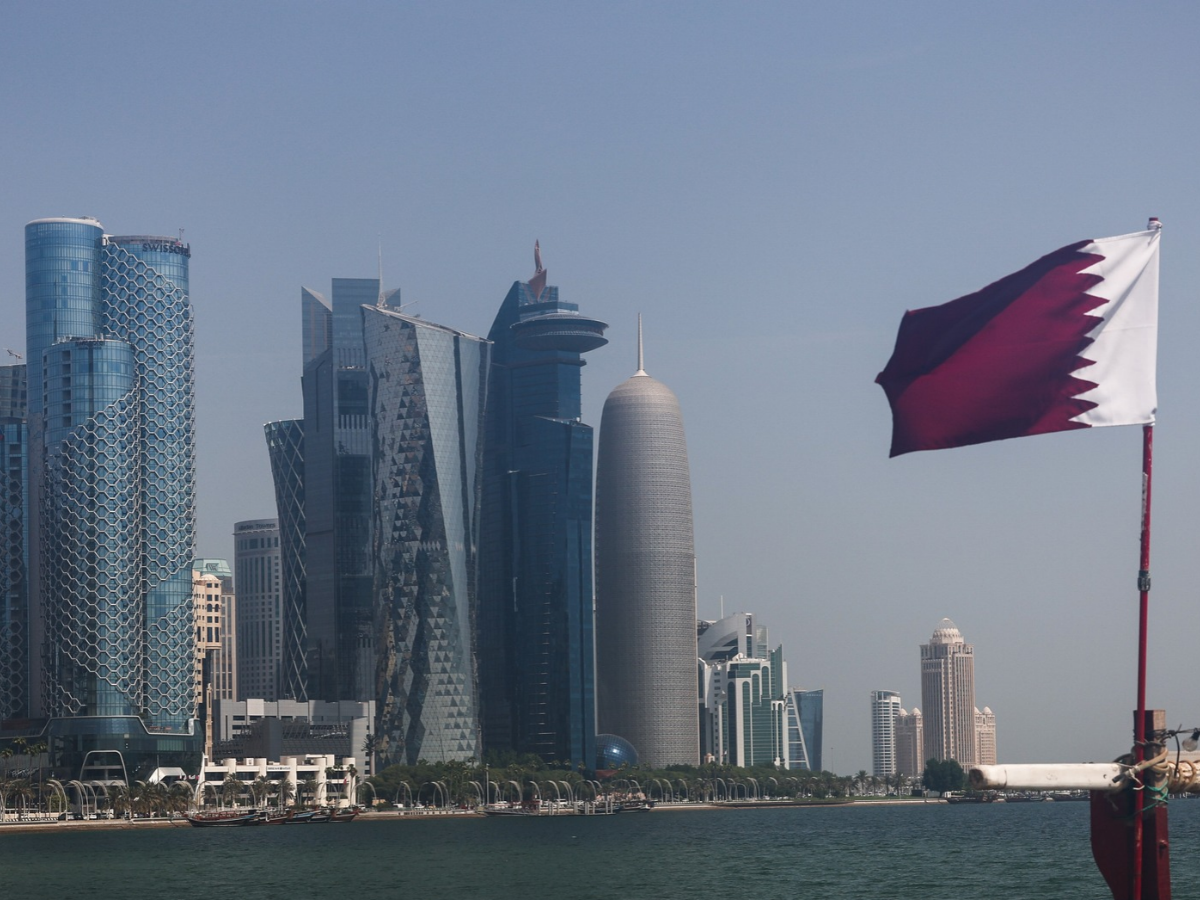
Brookfield Asset Management Ltd. is establishing a permanent office in Doha, Qatar, marking a further expansion of the Canadian alternative investment firm's physical footprint across the Middle East. The move, reported by Bloomberg News on Oct. 26, 2026, positions one of the world's largest managers of infrastructure, real estate, private equity, and renewable power directly within the borders of one of the planet's wealthiest capital exporters. By setting up formal operations in the Qatari capital, Toronto-based Brookfield joins an accelerating migration of international financial institutions seeking proximity to regional sovereign wealth funds that have become indispensable liquidity providers in global private markets.
Key facts
What happened
Brookfield Asset Management has initiated plans to establish a corporate office in Doha, according to reporting by Bloomberg News. The Toronto-headquartered firm, which manages institutional capital across real assets, decarbonization infrastructure, and private debt, is expanding its geographic presence in the Gulf Cooperation Council to engage more closely with Qatari institutions and pursue regional dealmaking.
While Brookfield has long transacted with Middle Eastern limited partners and co-investors, the creation of a physical presence in Doha represents an evolution from fly-in coverage to resident representation. The firm has historically operated in the region primarily through hubs in the United Arab Emirates, maintaining offices in the Dubai International Financial Centre and Abu Dhabi. Opening an outpost in Qatar reflects the growing bilateral importance of Qatari institutional relationships, led by the Qatar Investment Authority (QIA), one of the world's most active institutional allocators.
International investment managers opening offices in Doha typically register through the Qatar Financial Centre (QFC), an onshore business and financial platform operating under English common law principles, independent tax structures, and 100 percent foreign ownership allowances. The establishment of Brookfield's office signals an operational buildout that will facilitate direct client servicing, fund distribution, and on-the-ground evaluation of regional investment opportunities.
Why it matters
The move by Brookfield reflects a structural transformation in the relationship between Western private capital managers and Gulf institutional capital. Over the past four years, rising interest rates, subdued mergers and acquisitions, and a stagnant global market for initial public offerings have severely crimped distributions back to institutional limited partners in North America and Europe. Western pension funds, endowments, and university systems have pulled back on new fund commitments, creating what private equity executives describe as one of the most challenging fundraising environments in decades.
In contrast, the Gulf Cooperation Council states—buoyed by sustained revenue from liquefied natural gas and oil exports alongside long-term economic diversification programs—have maintained strong liquidity. Sovereign entities such as the Qatar Investment Authority, the Abu Dhabi Investment Authority, Mubadala Investment Company, and Saudi Arabia's Public Investment Fund have emerged as the primary capital backstops for global private market managers seeking to close multi-billion-dollar vintages.
However, access to Gulf sovereign wealth is no longer granted through periodic fundraising visits from New York or London. Sovereign allocators across the region have increasingly conditioned large fund allocations on "localization"—requiring global managers to plant flags locally, base senior professionals in their cities, hire domestic talent, and co-invest in local infrastructure, logistics, and industrial assets. By planting its flag in Doha, Brookfield is formalizing its commitment to Qatar, ensuring it remains positioned at the front of the queue for QIA's anchor commitments across mega-funds dedicated to energy transition, artificial intelligence digital infrastructure, and global private credit.
Furthermore, the presence of Brookfield in Doha intensifies competition among the Gulf capitals themselves. While Dubai has long served as the default commercial hub for regional finance, and Riyadh has leveraged state mandates like Regional Headquarters regulations to draw global firms, Doha has pursued targeted financial institutional growth by leveraging its massive sovereign balance sheet and targeted co-investment vehicles.
The background
Brookfield Asset Management, spun off as a publicly traded asset management business from parent Brookfield Corporation in late 2022, is an alternative asset titan with historical roots spanning more than 125 years. With more than $900 billion in total assets under management, the firm specializes in real assets—owning and operating toll roads, telecommunications towers, utility networks, ports, prime commercial office buildings, and clean energy generating facilities. Its major divisions include Infrastructure, Renewable Power & Transition, Real Estate, Private Equity, and Credit, the latter operating in close partnership with Oaktree Capital Management, which Brookfield acquired a majority stake in during 2019.
Qatar, meanwhile, commands immense global financial influence despite its modest geographic footprint, deriving its wealth from the North Field, the world's largest non-associated natural gas reservoir. Through state-owned QatarEnergy, the country is executing a massive multi-phase expansion of its liquefied natural gas export infrastructure, aiming to raise production capacity from 77 million tonnes per annum to 142 million tonnes by 2030. These energy export revenues flow directly into the sovereign coffers of the Qatar Investment Authority, established in 2005 to diversify state assets away from pure hydrocarbons.
QIA has historically ranked among the world's most prolific real estate and infrastructure investors. Its global portfolio includes landmark holdings such as London's Canary Wharf financial district—held in a long-standing joint venture partnership with Brookfield itself—as well as the Shard tower, stakes in Heathrow Airport, luxury hospitality assets, and extensive blue-chip equity holdings across Europe and North America. Over the past decade, QIA has shifted greater proportions of its annual allocation toward alternative private assets, technology infrastructure, health care, and the clean energy transition, frequently co-investing alongside blue-chip private market managers.
In recent years, the alternative asset management industry has undertaken a rapid operational buildup throughout the Middle East. Competitors such as Blackstone, BlackRock, Apollo Global Management, KKR, TPG, and General Atlantic have expanded their resident headcount across Doha, Abu Dhabi, and Riyadh. BlackRock secured significant mandates from Saudi Arabia and the UAE, while Apollo and Blackstone have expanded physical footprints in Doha and Abu Dhabi. Brookfield's physical establishment in Doha deepens a decades-long relationship into an operational partnership on Qatari soil.
Reaction
Official corporate commentary regarding specific executive appointments, hiring targets, or target launch dates was not detailed in the initial disclosure by Bloomberg News. Brookfield Asset Management has historically refrained from broad public fanfare when establishing secondary regional offices, preferring to announce regulatory authorizations through local licensing registries.
Within regional business and financial circles, the move is viewed as a clear endorsement of Qatar's financial ecosystem. Regulatory bodies such as the Qatar Financial Centre Authority are expected to formally log the firm's entry once regulatory approvals are completed. Market observers in Doha have anticipated such entries as Qatar continues rolling out its Third National Development Strategy (2024–2030), which emphasizes expanding high-value financial services, wealth management, and private capital activity within the domestic market.
Institutional peer firms are monitoring whether Brookfield's entry will precipitate a larger wave of dedicated real asset managers establishing standalone Doha branches, rather than relying exclusively on regional hubs in the United Arab Emirates.
What we don't know yet
The initial reporting leaves several operational and strategic parameters unconfirmed. It remains undisclosed which senior executives will relocate to Doha to lead the office, what the ultimate local headcount will be, and whether the office will report directly to Brookfield's regional leadership in Dubai or operate as an autonomous country unit reporting directly to Brookfield's global asset management headquarters.
It is also unclear whether the establishment of the Doha office is tethered to a specific, newly negotiated multi-billion-dollar fund commitment, co-investment platform, or managed account with the Qatar Investment Authority. While large asset managers frequently time office inaugurations alongside cornerstone institutional mandates, neither Brookfield nor QIA has publicly confirmed any reciprocal capital pledge.
Additionally, the reporting does not specify the precise regulatory vehicle being utilized—whether Brookfield has obtained a commercial license through the Qatar Financial Centre Regulatory Authority (QFCRA) to conduct fully regulated activities like asset management and arrangement, or whether the office will initially function as a representative liaison and corporate marketing hub.
What to watch
In the coming months, several key milestones will clarify the scope and scale of Brookfield's Qatari footprint:
This report is based on original reporting by Bloomberg News.
How this story was produced
This report was written by The Global Wire newsroom from reporting first published by Bloomberg News. We verify the core facts against the original report, write our own account, and add the background and consequences a short wire item leaves out. Drafting is AI-assisted inside an editor-supervised pipeline, and every story is checked for accuracy of attribution, structure and duplication before it appears — full detail in our AI and funding disclosure.
Spotted an error? Tell us at corrections@horizonglobalnews.com and read our corrections policy or editorial standards.




Reader comments
Loading comments…