

Jupiter Mines Beats First-Quarter Operational Targets at South African Tshipi Mine
Strong mining, logistics, and export sales lifted Jupiter Mines above plan for the quarter ended Sept. 30, even as global manganese markets face pricing pressure.
By The Global Wire Newsroom · Reported from Sabrina Jardim
Link preview · horizonglobalnews.com
Jupiter Mines Beats First-Quarter Operational Targets at South African Tshipi Mine
Strong mining, logistics, and export sales lifted Jupiter Mines above plan for the quarter ended Sept. 30, even as global manganese markets face pricing pressure.
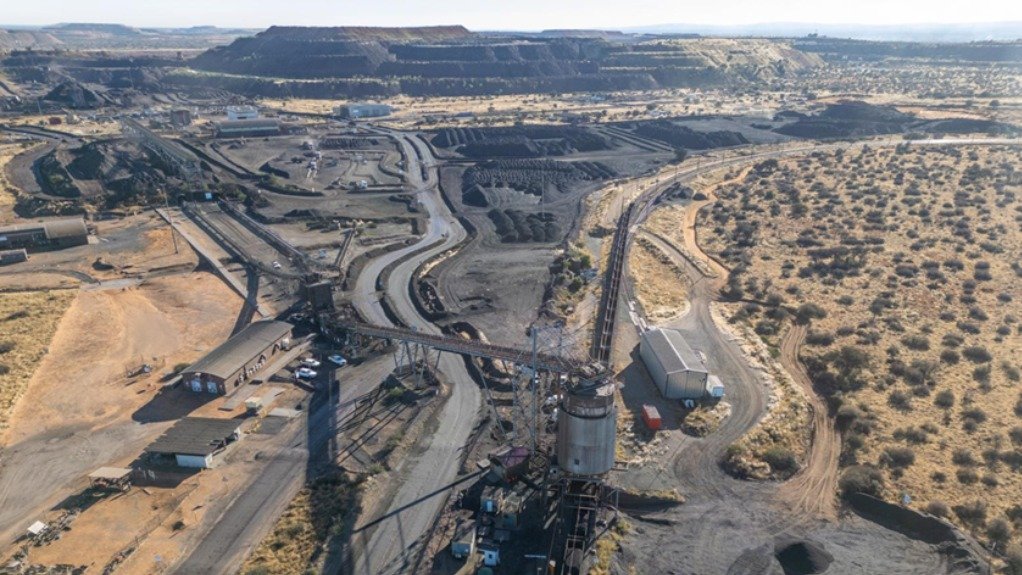
Jupiter Mines announced that its flagship Tshipi manganese operation in South Africa exceeded operational benchmarks across mining output, inland logistics, and export sales during the first quarter of the 2027 financial year, running counter to broader weakness across the international manganese sector. The Australian Securities Exchange-listed miner detailed the performance in its quarterly activities disclosure for the three-month period ending September 30, according to reporting by Sabrina Jardim, showing that the open-pit asset preserved operational stability despite widespread commercial headwinds confronting bulk commodity producers.
Key facts
What happened
In its quarterly activities report filed for the opening quarter of the 2027 fiscal year, Jupiter Mines outlined operational results across every stage of the mine-to-port supply chain at the Tshipi operation, according to reporting by Sabrina Jardim. Mining extraction rates, processing throughput, rail and road logistics, and final seaborne sales all finished ahead of the budgetary baselines the company had established for the three months running from July 1 through September 30.
Tshipi, formally known as Tshipi Borwa, is an open-cast manganese mine situated in the southern portion of the Kalahari basin. Operational execution during the quarter prioritized stripping efficiencies and plant utilization to ensure that run-of-mine ore was processed into export-grade lump and fines without logistical bottlenecks at the pithead.
Logistics performance proved critical during the quarter. Despite ongoing structural variability in southern African freight rail operations, Jupiter's distribution network secured sufficient capacity across rail allocations and supplemental road freight corridors to move product from the mine's loading loop to coastal export terminals. These logistics achievements allowed the commercial marketing desk to complete vessel loadings and offshore sales at volumes exceeding earlier projections, successfully clearing inventory despite softer demand fundamentals across primary destination markets in Asia.
Why it matters
Operating above planned volumes during a market slump serves as an essential defensive mechanism for bulk commodity producers. Manganese ore is an indispensable consumable in iron and steel manufacturing; roughly 90 percent of all mined manganese ore is consumed globally as an alloying agent and deoxidizer to produce carbon steel and high-strength alloys. Because manganese cannot be substituted in basic oxygen furnace or electric arc furnace steelmaking without compromising the tensile strength and malleability of the finished metal, global mine production is intimately linked to crude steel output.
When steel mill capacity utilization weakens—most notably in China, which accounts for more than half of worldwide steel production—manganese ore prices often compress rapidly toward the marginal cost curve. Under such compressed margin environments, mining companies that achieve higher-than-budgeted extraction, transport, and shipment rates can significantly lower their unit cash costs through operational economies of scale. High throughput dilutes fixed overhead expenses, including plant maintenance, operational labor, and mandatory logistics contracts.
Furthermore, outperforming delivery schedules protects valuable rail allocations and maritime shipping slots. In Southern Africa, logistics networks operate under stringent capacity-sharing arrangements. Demonstrating consistent volume delivery ensures that commercial producers preserve their allocated train paths and port berths with national freight authorities, protecting long-term market share against regional and seaborne competitors in Australia, Gabon, and Ghana.
The background
To understand Jupiter Mines' operational footing, it is necessary to examine the structure of the Tshipi asset and the geography of the Kalahari Manganese Field. Situated in the Northern Cape province of South Africa, approximately 30 kilometers south of Hotazel, the Kalahari basin holds an estimated 70 to 80 percent of the planet's identified economic manganese reserves. The Tshipi Borwa deposit was developed as an open-pit, shallow-depth operation that commenced commercial production in 2012, quickly rising to become one of the single largest manganese export mines in the world by annual output.
Jupiter Mines holds a 49.9 percent beneficial interest in Tshipi é Ntle Manganese Mining Proprietary Limited, an operating entity structured in accordance with South Africa's Broad-Based Black Economic Empowerment mining legislation. The remaining majority interest is held by local black-owned empowerment consortium Ntsimbintle Mining. This collaborative operating framework has historically given the mine an agile cost structure compared to older, deep-level underground operations located elsewhere in the basin, allowing Tshipi to operate as a low-cost swing producer throughout shifting commodity cycles.
The global manganese supply chain relies heavily on transport corridors linking the Northern Cape to marine terminals. Rail freight is managed primarily through state-owned Transnet Freight Rail, which transports bulk ore along specialized heavy-haul lines southward to the Port of Port Elizabeth and the Saldanha Bay terminal, with secondary routes running to Durban. Over the past decade, infrastructural disruptions, locomotive shortages, and cable theft across the Transnet network have frequently compelled manganese producers to deploy long-distance road trucking to move tonnage to alternative ports. Navigating these constraints requires continuous scheduling coordination between mine management, trucking contractors, and port operators.
Simultaneously, the broader manganese sector is undergoing long-term structural realignments. While conventional carbon steel remains the dominant demand driver, high-purity manganese sulphate monohydrate has emerged as a high-growth precursor material for nickel-manganese-cobalt lithium-ion battery chemistries used in electric vehicles. As major automotive original equipment manufacturers seek to reduce reliance on expensive cobalt, high-manganese cathode configurations are expanding the addressable market for long-life, low-cost manganese extractors capable of delivering steady feedstocks.
Reaction
Market observers and equity analysts tracking ASX-listed bulk miners typically monitor Jupiter's quarterly performance as an early health indicator for the broader Kalahari manganese corridor. Because Jupiter functions primarily as an investment vehicle reliant on cash dividends upstreamed from the Tshipi joint venture, production and sales figures above baseline expectations are seen by institutional shareholders as crucial support for cash flow stability.
Industry bodies and regional supply chain stakeholders are expected to examine whether Jupiter's sustained logistics throughput signals improved performance consistency along the southern rail corridors or reflects greater reliance on private road-haul solutions. Corporate executives, mining analysts, and institutional investors will review the company's full audited accounts and scheduled investor conference calls for detailed operational cost breakdowns, capital expenditure guidance, and commentary on current Chinese port stockpiles.
What we don't know yet
While the initial disclosures confirm operational outperformance across volume metrics, several critical financial and strategic data points remain unverified. The initial summary reported by Sabrina Jardim does not provide exact numerical totals for the metric tons mined, processed, or shipped during the quarter, nor does it specify the percentage variance against internal forecasts.
Crucially, the report does not state the average realized Free on Board or Cost, Insurance, and Freight price achieved per dry metric ton unit of manganese during the period, nor does it disclose the mine's achieved C1 cash cost per unit. In an environment where benchmark ore prices face downward pressure, sales volumes can run ahead of internal schedules while net operating margins contract if realized prices fall faster than operational savings. The extent to which freight rates, logistics surcharges, or road transport premiums affected unit netback margins remains an open question until full unit-cost reconciliations are released.
What to watch
Moving into subsequent reporting periods, market participants will track several key milestones to assess the sustainability of Tshipi's performance. First, stakeholders will look for the publication of Jupiter's complete quarterly financial tables, which will verify exact production tonnages, average grade percentages (typically around 36.5 to 37 percent manganese for Kalahari lump ore), and freight cost compositions.
Second, the state of manganese inventory stockpiles at major Chinese seaports—chiefly Tianjin and Qinzhou—will serve as a key barometer for seaborne price stability. Any accumulation of port inventories alongside lower blast furnace run rates in the Asian steel industry could compress import margins, testing whether Tshipi can sustain high-volume dispatches into the middle of the 2027 fiscal year.
Finally, industry watchers will monitor developments surrounding Jupiter Mines' strategic initiatives, including its previously announced evaluations of downstream electric vehicle battery materials processing. Investors will watch whether management channels operating cash flows from its outperforming core mining operations into high-purity manganese conversion studies or maintains historical patterns of returning surplus capital to equity holders via dividend distributions.
This account is based on reporting by Sabrina Jardim.
How this story was produced
This report was written by The Global Wire newsroom from reporting first published by Sabrina Jardim. We verify the core facts against the original report, write our own account, and add the background and consequences a short wire item leaves out. Drafting is AI-assisted inside an editor-supervised pipeline, and every story is checked for accuracy of attribution, structure and duplication before it appears — full detail in our AI and funding disclosure.
Spotted an error? Tell us at corrections@horizonglobalnews.com and read our corrections policy or editorial standards.




Reader comments
Loading comments…