

Eisenkot Handed Mandate to Form Israeli Government After Inconclusive Election
Israel's president tasked opposition candidate and former military chief Gadi Eisenkot with building a ruling coalition, dealing a direct setback to Prime Minister Benjamin Netanyahu.
By The Global Wire Newsroom · Reported from news.sky.com
Link preview · horizonglobalnews.com
Eisenkot Handed Mandate to Form Israeli Government After Inconclusive Election
Israel's president tasked opposition candidate and former military chief Gadi Eisenkot with building a ruling coalition, dealing a direct setback to Prime Minister Benjamin Netanyahu.
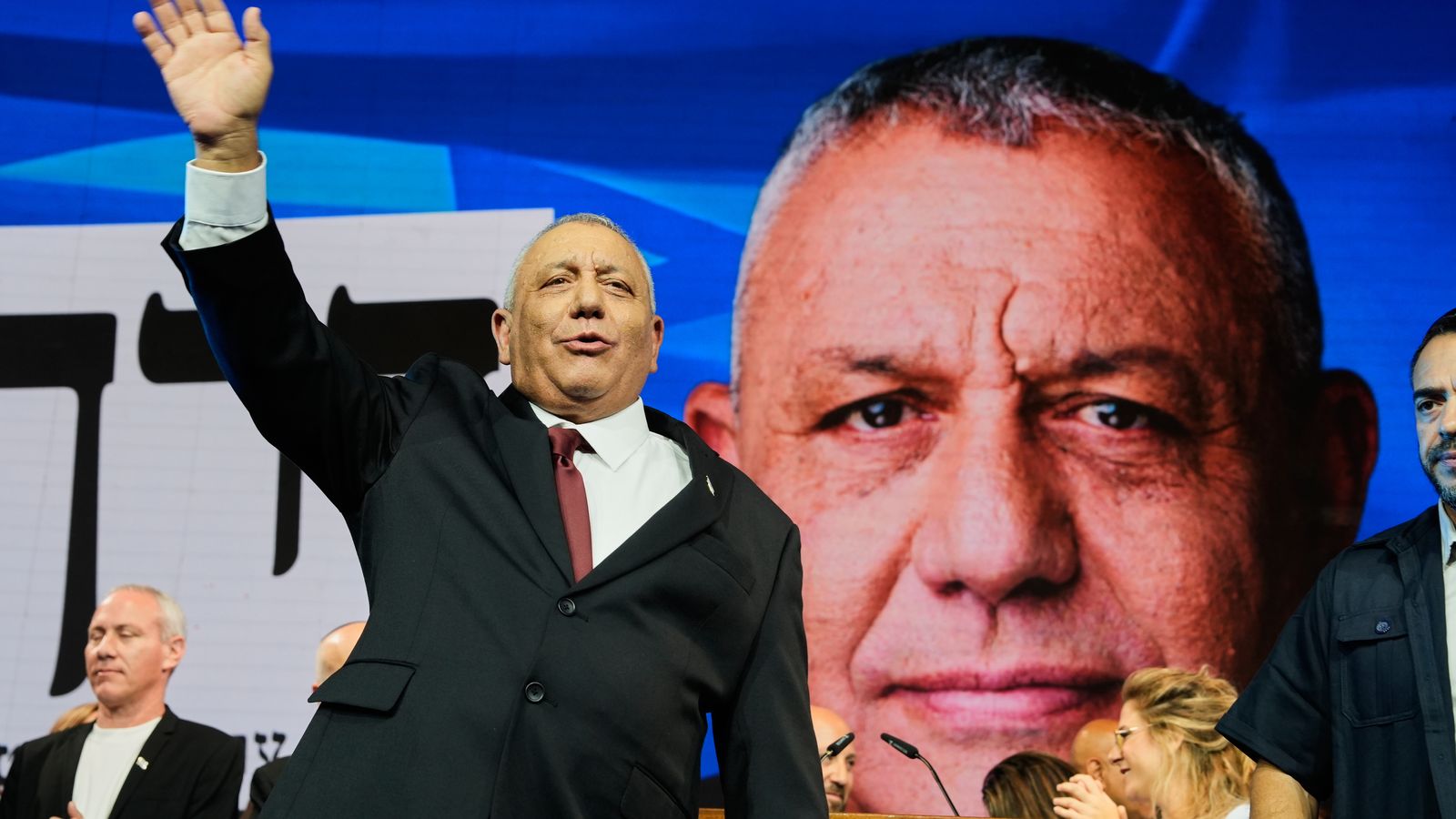
JERUSALEM — In a pivotal shift for Israel's fractured political landscape, the country's president on Saturday officially tasked opposition leader and former military chief of staff Gadi Eisenkot with attempting to form the next governing coalition. The formal conferral of the mandate followed an inconclusive national election held in October, in which neither Eisenkot nor long-serving Prime Minister Benjamin Netanyahu secured an outright parliamentary majority. The decision represents a major institutional blow to Netanyahu, who has fought across multiple election cycles to retain power, and places the responsibility of ending months of political deadlock into the hands of a retired general who campaigned as his principal rival.
Key facts
What happened
Following the nationwide vote in October, consultations between President Isaac Herzog and the factions elected to the Knesset concluded without either of the leading candidates commanding a locked-in majority of the 120 seats. With the parliamentary arithmetic evenly split and neither side holding an unbroken path to power, the presidency held the decisive constitutional prerogative of selecting which leader possessed the more plausible trajectory toward establishing a stable administration.
On November 7, the president opted to bypass Netanyahu and grant the initial mandate to Eisenkot, according to coverage by CBS News and Sky News. The announcement followed days of intense back-channel negotiations and factional interviews at the President’s Residence in Jerusalem, where party representatives submitted their formal recommendations. In choosing Eisenkot, the presidency acted on the assessment that the former military leader offered broader potential leverage to break the cross-factional deadlock that has repeatedly paralyzed the Knesset.
Eisenkot accepted the mandate with the immediate objective of convening cross-party talks. To translate the appointment into a functional executive, his negotiating team must assemble a coalition commanding at least 61 votes on the Knesset floor. Under statutory guidelines, Eisenkot holds a standard 28-day window to conduct talks, allocate ministerial portfolios, and agree upon a binding coalition agreement, with the statutory possibility of requesting a 14-day extension from the president if talks show progress but require additional time to finalize.
Why it matters
Transferring the coalition-building mandate away from Netanyahu carries far-reaching consequences for domestic Israeli governance, regional diplomacy, and national defense policy. For more than a decade, Israeli politics has revolved almost entirely around the question of Netanyahu’s continued tenure. By denying him the initial opportunity to form a government, the presidency has weakened his tactical leverage over allied factions on the political right and in the religious conservative camp. Parties that previously maintained rigid loyalty to the incumbent prime minister may now face institutional pressure to negotiate with the opposition to avoid another costly snap election or extended political paralysis.
For Eisenkot, the assignment represents an extraordinary stress test of his political maneuvering. A decorated former general who commanded the armed forces from 2015 to 2019, Eisenkot entered formal elective politics with a reputation centered on strategic discipline, national security credentials, and pragmatic governance. However, translating battlefield command into coalition management requires bridging deep ideological chasms. Eisenkot’s potential coalition must somehow reconcile secular centrists, center-left factions, right-wing nationalists alienated from Netanyahu, and potentially Arab-majority parties or ultra-Orthodox factions that hold sharply conflicting views on judicial oversight, civil marriage, military conscription exemptions, and the administration of the West Bank. If Eisenkot succeeds, his administration would mark a profound transition in Israeli executive leadership; if he fails, the political system risks sliding directly into another cycle of instability or another snap national ballot.
The background
Under Israel’s proportional representation electoral system, voters cast ballots for national party lists rather than individual local representatives. To enter the 120-seat Knesset, a party must cross an electoral threshold of 3.25 percent of the valid votes cast. Because no single political party has ever won an outright 61-seat majority in Israel's history, every administration since the founding of the state in 1948 has relied on multi-party coalitions negotiated after the election returns are certified.
Under the provisions of Basic Law: The Government, the state president—a largely ceremonial head of state whose powers become pivotal during government formation—meets with the leadership of every faction that entered parliament. Following these consultations, the president assigns the task of government formation to the member of Knesset deemed to have the best prospect of securing a working majority. In conventional circumstances, this mandate has historically gone to the head of the largest party or to an incumbent prime minister whose traditional ideological bloc appears closest to 61 seats. However, successive elections over recent years have produced repeated parliamentary impasses, with Netanyahu struggling to build durable majorities despite maintaining a solid core of supporters.
Eisenkot, who concluded a 41-year military career after serving as the IDF's 21st Chief of General Staff, stepped into national politics during the political realignments that followed years of electoral deadlock. During his tenure as military chief, he oversaw the implementation of the Gideon multi-year defense plan, emphasizing operational readiness, intelligence integration, and focused deterrence against regional adversaries. When he transitioned into parliament, his public profile was bolstered by his security record, allowing him to challenge Netanyahu on defense competence—traditionally the prime minister's strongest political calling card. The October election saw high turnout across competing blocs, but the resulting distribution of parliamentary seats left neither camp with a straightforward governing path, setting the stage for the president's historic intervention.
Reaction
Official political reactions inside the Knesset began taking shape immediately following the presidential announcement, as reported by CBS News. Figures aligned with Eisenkot's opposition camp praised the decision as an indispensable opportunity to restore institutional stability, rebuild public trust in executive offices, and prioritize long-term domestic and security reforms over narrow partisan interests.
Conversely, figures loyal to Netanyahu’s Likud party and its traditional right-wing and religious partners reacted with sharp skepticism, questioning whether an opposition leader without an ideological majority can assemble a coherent executive without making unacceptable compromises to disparate political factions. Netanyahu himself, who has consistently warned his supporters against any governing arrangement that excludes his core political allies, faces immediate internal questions regarding his strategy. While factional whips from several mid-sized parties refrained from closing doors to preliminary discussions, leaders across the spectrum indicated that any potential coalition agreements would depend entirely on written policy commitments regarding judicial authority, fiscal allocations, defense priorities, and the ongoing oversight of national security institutions.
International observers and allied diplomatic missions in Washington, Brussels, and regional capitals are expected to monitor the transition talks closely, as the composition of Israel’s cabinet directly influences regional defense coordination, defense industrial cooperation, and diplomatic initiatives across the Middle East.
What we don't know yet
While the mandate has been officially conferred upon Eisenkot, critical details regarding his negotiating posture remain unconfirmed in public reporting. The primary unknown is the exact blueprint Eisenkot intends to pursue to reach the 61-seat threshold. The news reports from Sky News and CBS News did not outline which specific parliamentary factions have formally agreed to join preliminary coalition negotiations or whether Eisenkot aims to establish a broad national-unity administration that includes elements of Netanyahu's current bloc.
Additionally, the reporting leaves open whether Netanyahu will actively attempt to peel away lawmakers from Eisenkot's allied parties during the 28-day window to mount a counter-bid, or whether his allies will maintain strict bloc discipline. It is also unclear what concessions Eisenkot is prepared to offer on controversial statutory questions—such as universal draft legislation for ultra-Orthodox seminary students, budgetary transfers to religious institutions, or institutional reforms to the judicial appointments committee. Whether potential coalition partners would insist on a rotating prime minister arrangement, a mechanism used in previous Israeli unity cabinets, also remains entirely unaddressed in the available reporting.
What to watch
The immediate focal point is the statutory 28-day clock, which began running the moment the president signed the mandate. Over the coming four weeks, Eisenkot must conduct formal negotiating rounds with faction chiefs, convene working groups to draft coalition guidelines, and resolve competing claims over key ministries, most notably the Defense, Finance, Foreign Affairs, and Justice portfolios. Watch closely for public statements from the heads of the ultra-Orthodox parties—Shas and United Torah Judaism—as well as right-leaning secular factions, whose willingness or refusal to negotiate with Eisenkot will determine whether his path to 61 seats is mathematically viable.
If Eisenkot makes measurable progress but exhausts the initial four weeks, President Herzog holds the legal discretion to grant a single 14-day extension. Should Eisenkot fail to assemble a majority by the conclusion of his allotted period, the president would face the choice of transferring the mandate to Netanyahu, offering it to another member of the Knesset, or informing the speaker of parliament that no lawmaker appears capable of forming a government. That final outcome would trigger a 21-day period where any 61 lawmakers could nominate a candidate, failing which the Knesset would automatically dissolve, precipitating yet another snap general election.
This article incorporates reporting originally published by Sky News and CBS News.
How this story was produced
This report was written by The Global Wire newsroom from reporting first published by news.sky.com. We verify the core facts against the original report, write our own account, and add the background and consequences a short wire item leaves out. Drafting is AI-assisted inside an editor-supervised pipeline, and every story is checked for accuracy of attribution, structure and duplication before it appears — full detail in our AI and funding disclosure.
Spotted an error? Tell us at corrections@horizonglobalnews.com and read our corrections policy or editorial standards.




Reader comments
Loading comments…