

Prince Harry and Co-Claimants Appeal High Court Dismissal of Daily Mail Privacy Suit
The Duke of Sussex and five fellow claimants have lodged a formal appeal against Associated Newspapers, arguing a July ruling rejecting their unlawful surveillance claims contained major errors.
By The Global Wire Newsroom · Reported from Gordon Rayner
Link preview · horizonglobalnews.com
Prince Harry and Co-Claimants Appeal High Court Dismissal of Daily Mail Privacy Suit
The Duke of Sussex and five fellow claimants have lodged a formal appeal against Associated Newspapers, arguing a July ruling rejecting their unlawful surveillance claims contained major errors.
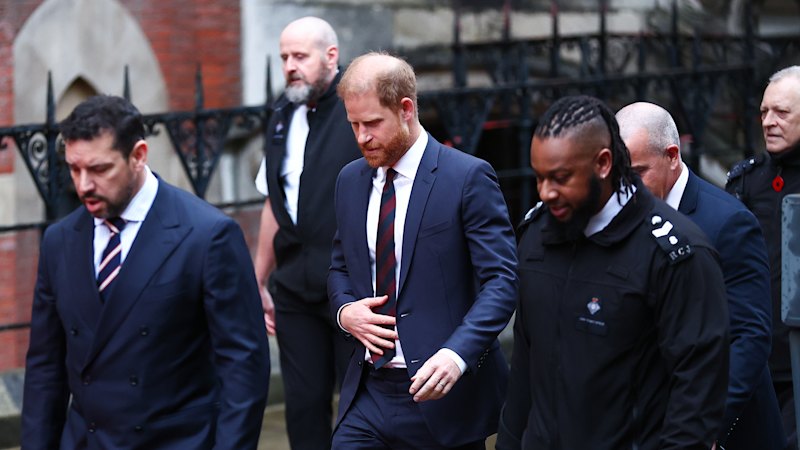
Prince Harry and five co-claimants have lodged an appeal seeking a fresh hearing in their civil privacy lawsuit against Associated Newspapers Limited, challenging a High Court ruling issued in July that dismissed their claims of unlawful information gathering. The Duke of Sussex and his fellow litigants contend that the first-instance determination in favor of the publisher of the Daily Mail and The Mail on Sunday was legally and factually flawed, reopening a high-stakes legal confrontation over decades of alleged press misconduct.
Key facts
What happened
According to reporting by Gordon Rayner, the Duke of Sussex and his five co-claimants have taken formal steps to overturn the High Court judgment handed down in July, which ruled against them in their privacy lawsuit against Associated Newspapers Limited. In their appellate filings, the group asserts that the trial court reached conclusions that were defective in both law and fact, justifying an order for a new hearing before a different judicial panel.
The underlying legal dispute centers on extensive allegations that journalists and third-party contractors working for Associated Newspapers engaged in unlawful information gathering over an extended timeframe. The civil claim, originally filed in the King's Bench Division of the High Court of Justice in London, alleged systematic breaches of privacy. These included the commissioning of private investigators to place covert audio surveillance devices inside private residences and vehicles, the interception and recording of private landline and mobile telephone communications, the illicit procurement of confidential medical documents, and the deception of financial institutions and public bodies—a practice known within the media industry as "blagging."
In July, the trial judge rejected the claimants' case, bringing what appeared to be a decisive victory for the publishing company. However, the claimants have now exercised their right under Part 52 of the Civil Procedure Rules to seek permission to appeal. Under English procedural law, an appeal against a final judgment of the High Court is not an automatic rehearing of evidence; rather, it requires the appellate court to determine whether the original decision was either wrong due to an error of law or fact, or unjust because of a serious procedural or other irregularity. In their filing, the Duke of Sussex and his fellow claimants contend that the lower court misdirected itself on core evidentiary thresholds and misapplied legal standards governing civil privacy claims, warranting a complete reopening of the proceedings.
Why it matters
This appeal carries profound ramifications for the British press, the regulation of media organizations, and the legal framework governing historical claims of corporate wrongdoing in England and Wales. Civil actions concerning unlawful information gathering have consumed tens of millions of pounds in legal fees across the British media sector over the past decade, but Associated Newspapers has consistently maintained that its titles never engaged in the systemic phone-hacking practices that previously engulfed competitors such as Mirror Group Newspapers and Rupert Murdoch's News Group Newspapers.
A successful appeal resulting in a new trial would force Associated Newspapers back into an extensive public evidentiary process, exposing editorial practices and internal management communications to rigorous cross-examination in open court. Conversely, if the appellate judges uphold the July dismissal, it will solidify a definitive legal shield for the publisher against broad historical privacy lawsuits and effectively foreclose one of Prince Harry's primary domestic legal challenges against British tabloid organizations.
Beyond the media sector, the case has significant implications for how English courts apply the Limitation Act 1980 in cases involving allegations of concealed fraud or intentional wrongdoing. Under Section 32 of the Act, claimants must show that they could not, with reasonable diligence, have discovered the alleged wrongdoing earlier. If the appellate court addresses how judges should assess a claimant's state of knowledge and the threshold for "reasonable diligence" against sophisticated commercial entities, the decision will set a binding precedent for civil litigation far beyond privacy and defamation disputes, extending to corporate fraud, banking malfeasance, and institutional abuse.
The background
The dispute formally entered the public sphere in October 2022, when a group of high-profile figures filed civil claims against Associated Newspapers. Alongside Prince Harry, the claimant cohort included Baroness Doreen Lawrence—the mother of murdered teenager Stephen Lawrence—as well as figures from the arts and entertainment industries, including Sir Elton John, David Furnish, Elizabeth Hurley, and Sadie Frost.
The litigation immediately encountered formidable procedural hurdles. In March 2023, the High Court heard preliminary arguments spanning four days before Mr Justice Nicklin at the Royal Courts of Justice. Associated Newspapers sought an immediate strike-out of the claims, advancing two principal arguments: first, that the claims were filed far outside the standard six-year limitation period prescribed by English law, arguing that the claimants possessed sufficient information years earlier to initiate inquiries; and second, that the claimants had unlawfully relied on confidential ledger documents submitted to the 2011–2012 Leveson Inquiry into press standards, which were protected by statutory confidentiality orders.
In November 2023, the High Court delivered a significant preliminary judgment. The court ruled that the claims could proceed toward trial, concluding that the factual questions surrounding when the claimants knew, or could reasonably have known, about the alleged surveillance were too complex to resolve without a full evidentiary examination. However, the judge also determined that the claimants could not rely on the restricted Leveson Inquiry documents without first securing formal clearance from the relevant government departments that held custody of the inquiry records.
Following that ruling, the litigation progressed through complex interlocutory stages, including extensive disputes over document disclosure, witness statements, and legal costs, culminating in the July trial proceedings where the claims were ultimately dismissed. Throughout the entire process, Associated Newspapers categorically denied all allegations of unlawful conduct, characterizing the lawsuit as an orchestrated attempt to drag its publications into historical scandals that occurred at other newspaper groups.
Reaction
While the claimants' formal court filings describe the July judgment as "legally and factually flawed," neither side has publicly released extensive supplementary commentary outside the courtroom framework. In previous stages of the litigation, legal representatives for the claimants—including media litigation specialists Hamlins and gunnercooke—have emphasized that the action was driven by a collective commitment to uncover institutional wrongdoing and establish an accurate public record regarding the surveillance of private citizens.
Associated Newspapers has historically met every development in the case with trenchant institutional denials. In previous corporate statements issued through its spokespeople, the publisher described the allegations as preposterous smears and unfounded slurs designed to damage the reputation of the Daily Mail and its sister titles. The company has repeatedly stated that its journalists operated within the boundaries of the law and industry regulations, and it expressed confidence that its position would be thoroughly vindicated by the civil courts.
Legal commentators and industry analysts in London are closely monitoring whether the Court of Appeal will grant permission to proceed. Given the prominence of the parties and the complexity of the legal issues raised, judicial observers anticipate that the respondent publisher will submit rigorous counter-arguments urging the appellate bench to refuse permission, arguing that the trial judge's findings were fully supported by the available evidence and consistent with settled law.
What we don't know yet
Several critical elements of the appellate action remain undisclosed. The precise grounds of appeal detailed in the legal skeleton arguments have not been made entirely public, leaving open the exact nature of the asserted legal errors—specifically whether the claimants are challenging the trial judge's assessment of witness credibility, the interpretation of the statutory limitation window, or the exclusion of specific categories of evidence.
It is also unconfirmed whether the application for permission to appeal was submitted directly to the trial judge at the time of the July ruling or whether it is being pursued as a renewed application before the Court of Appeal. Additionally, the full financial exposure of the claimants remains confidential. Under English civil justice rules, the unsuccessful party is generally ordered to pay the legal costs of the prevailing side; an appeal places millions of pounds in assessed costs in abeyance or at further risk, but the precise interim cost orders made following the July judgment have not been published.
What to watch
The immediate milestone to watch will be the procedural determination on permission to appeal. Under English practice, an appellate judge will review the written application and may either grant permission on the papers, refuse it, or list the application for an oral hearing to determine whether the appeal has a real prospect of success or raises some other compelling reason to be heard.
If permission is granted, the Civil Division of the Court of Appeal, seated at the Royal Courts of Justice on the Strand, will establish a timetable for the lodging of formal respondent notices, supplementary bundles, and written arguments, followed by a multi-day hearing before a panel of three Lord or Lady Justices of Appeal.
Stakeholders will also watch for any parallel developments in other phone-hacking litigations involving Prince Harry, notably his remaining actions against News Group Newspapers, as well as the eventual taxation and settlement of legal costs across his broader docket of media lawsuits in the High Court.
This report is based on original reporting by Gordon Rayner.
How this story was produced
This report was written by The Global Wire newsroom from reporting first published by Gordon Rayner. We verify the core facts against the original report, write our own account, and add the background and consequences a short wire item leaves out. Drafting is AI-assisted inside an editor-supervised pipeline, and every story is checked for accuracy of attribution, structure and duplication before it appears — full detail in our AI and funding disclosure.
Spotted an error? Tell us at corrections@horizonglobalnews.com and read our corrections policy or editorial standards.




Reader comments
Loading comments…