

New Zealand Polls Close in Tight Race Between Luxon and Hipkins as Tallies Begin
Voting has ended across New Zealand in a closely fought election between Christopher Luxon and Chris Hipkins, with early results expected to trigger complex coalition negotiations.
By The Global Wire Newsroom · Reported from SECTIONS New Zealand election ends; Hipkins battle; Early Results Awaited Ap
Link preview · horizonglobalnews.com
New Zealand Polls Close in Tight Race Between Luxon and Hipkins as Tallies Begin
Voting has ended across New Zealand in a closely fought election between Christopher Luxon and Chris Hipkins, with early results expected to trigger complex coalition negotiations.
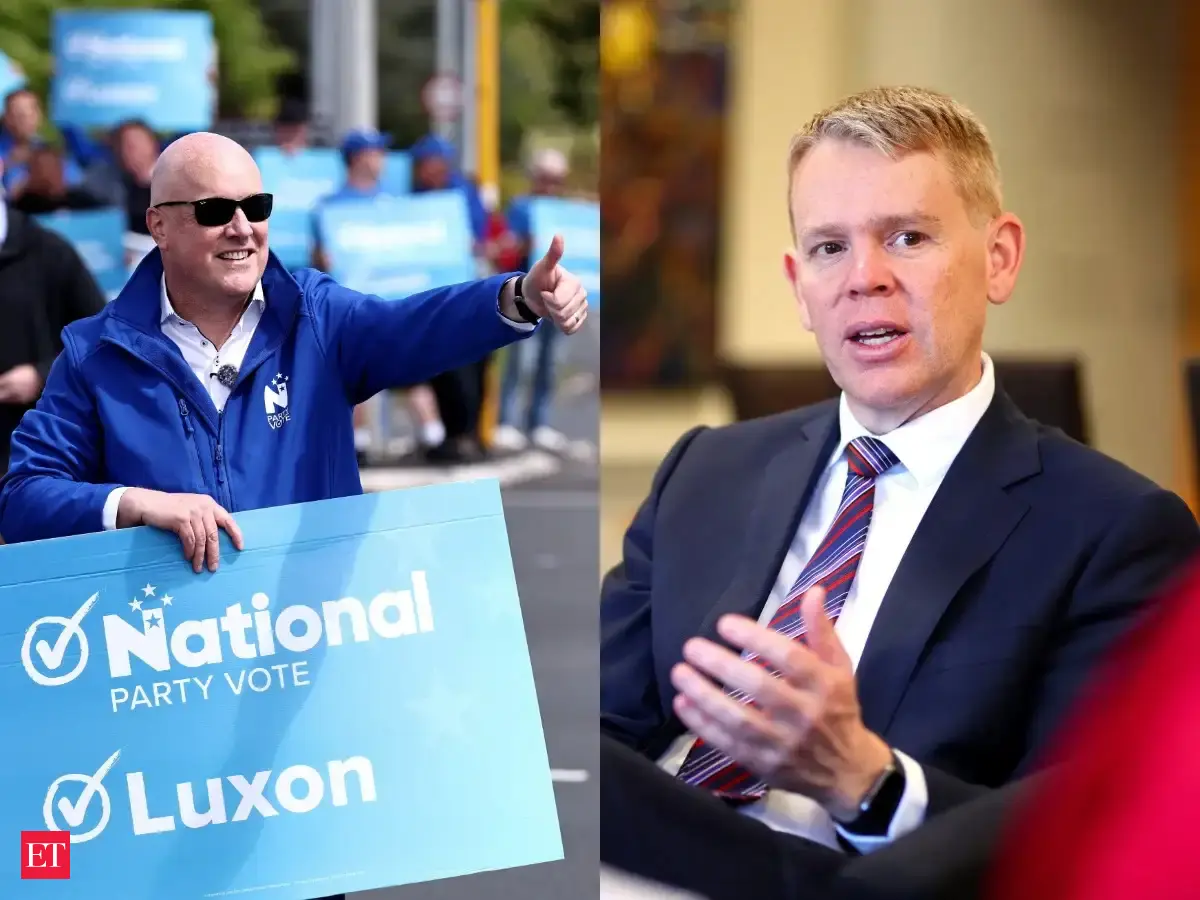
Polling stations across New Zealand closed on Saturday evening following an intensely fought parliamentary election campaign that placed the economic record of incumbent Prime Minister Christopher Luxon against the political comeback bid of Labour Party leader Chris Hipkins. With election officials commencing the count across dozens of electorates, preliminary figures began trickling in to determine whether the governing centre-right coalition retains its grip on power or if a centre-left alternative can secure the numbers necessary to form a government. Under the country's proportional voting rules, neither major party is anticipated to command an outright single-party majority in the House of Representatives, leaving the composition of the executive branch tied to the performance of minor parties.
Key facts
What happened
Election workers across New Zealand sealed ballot boxes at 7:00 p.m. local time on Saturday, shifting the nation into tallying mode across thousands of voting sites and central processing facilities. Advance voting, which opened two weeks prior to election day, drew hundreds of thousands of registered voters who took advantage of expanded early voting centers. In-person balloting concluded without significant administrative disruption, with the nonpartisan Electoral Commission deploying thousands of temporary workers to oversee the count and transmit data to the central operations center in Wellington.
The race pitted Christopher Luxon, who entered office following the 2023 general election, against Chris Hipkins, the former prime minister who assumed the Labour leadership in early 2023 following Jacinda Ardern's departure. Luxon centered his re-election pitch on fiscal discipline, reductions in government operational expenditure, regulatory simplification, and law-and-order policy adjustments. Conversely, Hipkins framed Labour's platform around addressing wealth disparity, reinforcing public healthcare and education funding, and mitigating persistent household financial pressures.
As election workers began sorting ordinary ballots, party faithful gathered at election night headquarters in Auckland, Wellington, and regional centers. Early counting focused primarily on early advance votes cast before polling day, which typically represent a substantial portion of the overall total. Because New Zealanders cast two votes—an electorate vote for a local member of Parliament and a party vote that determines overall seat shares—the focus quickly settled on the nationwide party vote percentages, which dictate whether minor parties cross the legal 5 percent party-vote threshold required for parliamentary representation in the absence of an electorate win.
Why it matters
This election carries direct ramifications for the management of New Zealand's export-oriented, multi-billion-dollar economy, which has grappled with high borrowing costs, sticky consumer price inflation, and fluctuating commodity prices for agricultural exports. The outcome will decide the path of fiscal policy for the coming three-year parliamentary term, particularly the balance between public service retrenchment and government investment in critical infrastructure, healthcare, and education.
Under Luxon’s premiership, the centre-right administration pursued broad public sector expenditure reductions, aimed at returning the government’s operational balance to surplus and curbing sovereign debt issuance. A renewed mandate for National would signal continued deregulation across primary industries, altered planning laws to facilitate private development, and potential revisions to natural resource frameworks. Conversely, a victory by Labour and its potential alignment partners would alter the trajectory of public spending, likely reversing planned reductions in government departments, restoring centralized environmental protections, and revisiting public health restructuring.
Beyond domestic accounts, the governance outcome influences regional diplomacy in the Indo-Pacific. While New Zealand maintains an established bipartisan foreign policy emphasizing rules-based international trade and constructive engagement with Pacific Island nations, subtle shifts in tone and defense spending priorities depend on the governing coalition. Luxon's tenure leaned toward deeper security alignment with traditional partners including Australia, the United States, and the United Kingdom, while exploring potential non-nuclear cooperation within the AUKUS pact. A centre-left government led by Hipkins would balance these security ties with a distinct emphasis on multilateral climate diplomacy and distinct Pacific developmental assistance programs.
The background
New Zealand has conducted its general elections under the Mixed Member Proportional (MMP) system since 1996, following public referendums in 1992 and 1993 that rejected the historic first-past-the-post electoral structure. Under MMP, each elector receives two votes: one for an individual local candidate representing an electorate district, and one for a political party list. The party vote dictates the overall proportion of seats each qualifying party receives in the House of Representatives, which nominally contains 120 seats, though overhang seats can occasionally expand the chamber’s size.
To enter Parliament, a party must either surpass 5 percent of the national party vote or win at least one single-member electorate seat. The system was designed to foster cross-party consensus and provide proportional representation to emerging political movements, but it practically guarantees that no single party secures an absolute majority of 61 seats. The sole exception occurred in 2020, when the Labour Party under Jacinda Ardern captured 65 seats amid the peak of public backing for the government's COVID-19 pandemic response. That single-party majority proved an anomaly; by the 2023 election, widespread voter weariness over pandemic-era inflation and public sector reorganization pushed Labour down to 34 seats.
Luxon subsequently formed an unprecedented three-party governing arrangement in late 2023, binding the National Party with the libertarian ACT Party, led by David Seymour, and the nationalist New Zealand First party, led by veteran political figure Winston Peters. That arrangement featured formalized coalition agreements with ACT and a separate coalition deal with New Zealand First, requiring daily policy coordination across differing ideological priorities. On the opposition benches, Labour maintained an alignment with the Green Party of Aotearoa New Zealand and Te Pāti Māori, creating two polarized political blocs that framed this campaign.
Reaction
Initial reactions from party war rooms on Saturday evening remained restrained, with both campaign leaders waiting for significant blocks of advance votes to be processed before addressing supporters. Party officials appearing on broadcast networks emphasized caution, noting that early vote returns from rural and regional electorates often reflect different political leanings than late-reporting urban districts in central Auckland and Wellington.
Campaign directors for both major blocs underscored that the true shape of the incoming executive will depend entirely on post-election discussions among party leaderships. Independent commentators on domestic news broadcasts noted that regardless of which major party finishes with the highest plurality of the party vote, minor party caucuses will hold deciding leverage in determining whether Luxon or Hipkins will be able to advise the Governor-General on the formation of a government.
What we don't know yet
Several critical elements remain unresolved as vote counting proceeds. The most immediate variable is the precise distribution of minor party percentages relative to the 5 percent threshold. The performance of parties such as ACT, New Zealand First, the Green Party, and Te Pāti Māori will decide which primary bloc has an arithmetic pathway to the requisite 61-seat threshold.
Furthermore, election night results in New Zealand are strictly preliminary. They exclude "special votes," which encompass ballots cast by voters outside their registered electorates, overseas voters, and people who enrolled on election day itself. Special votes regularly comprise between 15 and 20 percent of all ballots cast. Historically, special votes trend demonstrably toward left-leaning parties, including the Greens and Labour, and frequently shave one or two seats off centre-right election-night totals when the official count is certified two weeks later. Until those special votes are verified and included, any narrow majority on election night will remain provisional and subject to potential disruption.
What to watch
In the hours following the close of polls, preliminary counting across electorates will provide a baseline seat distribution. The key milestone occurs late Saturday night, when the Electoral Commission concludes the release of election-night tallies from advance and general votes.
Following preliminary results, attention will pivot to official post-election maneuvers starting Sunday. Caucuses of both major parties and their prospective partners will meet behind closed doors to assess seat counts and negotiate terms for confidence and supply or formal coalition cabinets. Winston Peters of New Zealand First, David Seymour of ACT, and the co-leaders of the Green Party and Te Pāti Māori will play pivotal roles depending on the final seat ratios.
The definitive checkpoint will be the release of the official certified election results by the Electoral Commission, typically scheduled roughly 14 days after election night. Once special votes are counted and any mandatory judicial recounts for narrow electorate races are completed, party leaders will formally communicate their governing arrangements to the Governor-General to initiate the swearing-in of the next executive.
Reporting from the Associated Press and SECTIONS provided the core factual developments regarding the close of voting and the contest between the National and Labour party leaders.
How this story was produced
This report was written by The Global Wire newsroom from reporting first published by SECTIONS New Zealand election ends; Hipkins battle; Early Results Awaited Ap. We verify the core facts against the original report, write our own account, and add the background and consequences a short wire item leaves out. Drafting is AI-assisted inside an editor-supervised pipeline, and every story is checked for accuracy of attribution, structure and duplication before it appears — full detail in our AI and funding disclosure.
Spotted an error? Tell us at corrections@horizonglobalnews.com and read our corrections policy or editorial standards.




Reader comments
Loading comments…