

Climate Issues Sidelined in French Presidential Race Despite Summer Extremes, Experts Warn
Following a summer of extreme weather, policy analysts criticize French presidential candidates for offering timid ecological platforms that fall short of public expectations and EU targets.
By The Global Wire Newsroom · Reported from Nathan Joubioux
Link preview · horizonglobalnews.com
Climate Issues Sidelined in French Presidential Race Despite Summer Extremes, Experts Warn
Following a summer of extreme weather, policy analysts criticize French presidential candidates for offering timid ecological platforms that fall short of public expectations and EU targets.
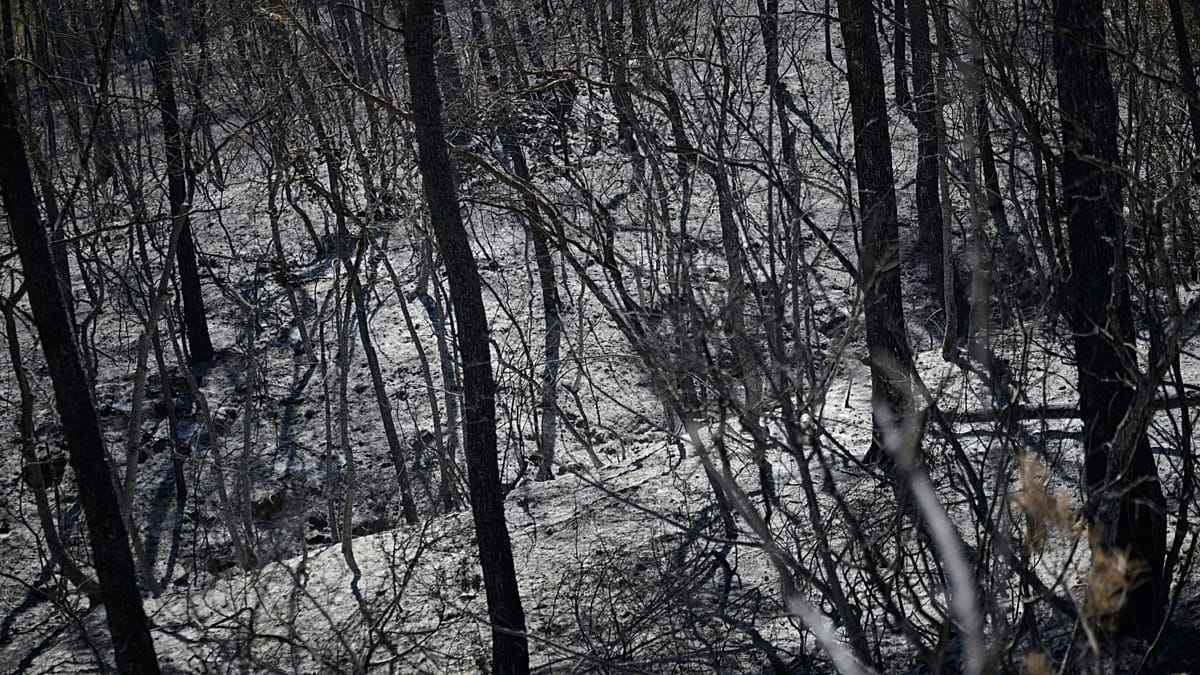
PARIS — Following a summer marked by severe heatwaves and climate anomalies across southern and western Europe, political analysts and climate specialists warn that ecological issues remain conspicuously absent from the forefront of the French presidential debate. According to reporting by Euronews, policy experts assess the response from major political parties and presidential contenders as remarkably timid, failing to match either the scale of environmental disruptions experienced across the country or the documented concern of French citizens. The gap between climate physical realities and national electoral discourse highlights a growing tension between long-term environmental commitments and short-term political strategy.
Key facts
What happened
In an assessment reported by Euronews journalist Nathan Joubioux on August 26, 2026, climate experts voiced deep concern over the understated role of ecological policy in France’s upcoming presidential contest. The critique emerged at the conclusion of a summer during which French municipalities faced compound environmental pressures, including record high temperatures, municipal water usage rationing, and severe strain on regional electricity grids and public health networks.
Despite these immediate threats, political candidates across the mainstream political spectrum have adopted muted positions regarding environmental transition policies. Rather than offering concrete plans to accelerate decarbonization or overhaul climate adaptation infrastructure, major party figures have largely focused on purchasing power, national security, and industrial re-shoring. Experts cited in the Euronews report indicated that political strategists view climate policy as a politically risky terrain, fearing that proposed regulatory constraints or green taxation could ignite public resentment among voters already concerned about inflation and living costs.
Analysts observe that even specialized environmental proposals presented by candidate camps tend to remain vague, relying on broad aspirational targets without outlining funding mechanisms, legislative timelines, or sector-specific enforcement measures. This cautious posture has drawn sharp criticism from academic researchers, non-governmental organizations, and policy institutes who argue that the upcoming presidential term will cover critical years required to meet mid-century decarbonization milestones.
Why it matters
The reluctance of political candidates to confront ecological challenges carries significant long-term consequences for public policy, economic stability, and international climate obligations. Under the European Union’s European Climate Law, France is legally obligated to contribute to the bloc's target of cutting net greenhouse gas emissions by 55 percent by 2030 and reaching net-zero emissions by 2050. Achieving these targets requires structural transformations in transportation, agriculture, industrial production, and residential heating—sectors that require explicit mandates and long-term funding commitments established at the highest level of government.
Delaying policy integration into national electoral platforms risks prolonging regulatory ambiguity for key economic sectors. Infrastructure investors, agricultural producers, and industrial operators require clear policy signals to allocate capital toward low-carbon technologies, renewable energy generation, and grid resilience. Furthermore, the economic toll of climate-related disasters in France—ranging from agricultural yield losses to coastal erosion and heat-induced health crises—continues to compound annual budgetary expenditures.
From a democratic standpoint, the marginalization of climate issues risks alienating substantial voter demographics. Opinion polling regularly indicates that environmental protection and climate mitigation rank among the top priorities for French citizens, particularly younger cohorts and urban voters. When electoral options appear disconnected from physical disruptions occurring nationwide, public trust in state institutions and democratic processes can erode further.
The background
Ecological politics in France has long been defined by a tension between ambitious global leadership rhetoric and complex domestic implementation. In 2017, President Emmanuel Macron gained international attention by pledging to "Make Our Planet Great Again" following the United States' initial withdrawal from the Paris Climate Agreement. However, domestic execution faced immediate political resistance. In late 2018, an intended increase in the national carbon tax on automotive fuels triggered the "Gilets Jaunes" (Yellow Vests) movement, a sustained wave of nationwide protests that forced the government to freeze the tax and demonstrated the acute political sensitivity of green fiscal policy.
To rebuild consensus, the French government convened the Citizens' Convention for Climate (Convention citoyenne pour le climat) in 2019, bringing together 150 randomly selected citizens to formulate measures designed to cut national emissions by 40 percent by 2030. While the convention produced 149 proposals, the resulting Climate and Resilience Law passed by the French Parliament in 2021 modified or excluded several core recommendations, leading to widespread criticism from environmental organizations that the legislative outcome was overly diluted.
France’s statutory framework is governed by its National Low-Carbon Strategy (Stratégie Nationale Bas-Carbone, or SNBC), which sets binding multi-year carbon budgets across key economic sectors. Concurrently, the independent High Council for the Climate (Haut Conseil pour le Climat, HCC), created in 2018, repeatedly issues evaluations warning that France's pace of emissions reduction remains insufficient to guarantee compliance with its own statutory targets.
Historically, political representation for green policies in France has rested heavily with Europe Écologie Les Verts (EELV), now rebranded as Les Écologistes. While the party achieved notable breakthroughs in the 2020 municipal elections by winning mayoralty positions in major cities such as Lyon, Bordeaux, and Strasbourg, its performance in presidential contests has remained modest. In the 2022 presidential election, green candidate Yannick Jadot secured under 5 percent of the first-round vote, highlighting the structural difficulty environmental parties face in translating local electoral success into national executive mandates.
Reaction
The muted political emphasis on ecology has drawn sharp reactions from environmental organizations, academic analysts, and civil society groups. Leaders of non-governmental organizations such as Greenpeace France, Oxfam France, and the Climate Action Network (Réseau Action Climat) have publicly criticized political candidates for treating climate change as a secondary political topic rather than a central structural crisis. Environmental advocates argue that political leaders are displaying a concerning lack of leadership by choosing political convenience over necessary structural reform.
In contrast, conservative and right-wing political figures have continued to warn against what they describe as "punitive ecology" (écologie punitive). Opponents of strict green mandates contend that rapid regulatory changes unfairly penalize working-class households in rural and suburban areas who depend on personal vehicles and fossil-fuel heating, while putting pressure on domestic farmers facing competition from non-EU imports. Agricultural unions, notably the FNSEA (Fédération Nationale des Syndicats d'Exploitants Agricoles), have actively lobbied against regulatory expansions, demanding longer transition periods and greater financial support before new environmental restrictions are enforced.
Centrist and mainstream candidates have attempted to navigate this divide by emphasizing technological solutions, nuclear energy expansion, and industrial re-shoring, positioning low-carbon technology as an engine for economic growth rather than a source of lifestyle restriction or fiscal burden.
What we don't know yet
Several critical uncertainties remain regarding how ecological policy will feature as the presidential campaign unfolds:
What to watch
In the coming months, several key political and regulatory milestones will clarify the role of climate policy in the French presidential race:
This report contains independent analysis grounded in reporting by Euronews, based on original reporting by Nathan Joubioux regarding expert assessments of climate policy in the French presidential race.
How this story was produced
This report was written by The Global Wire newsroom from reporting first published by Nathan Joubioux. We verify the core facts against the original report, write our own account, and add the background and consequences a short wire item leaves out. Drafting is AI-assisted inside an editor-supervised pipeline, and every story is checked for accuracy of attribution, structure and duplication before it appears — full detail in our AI and funding disclosure.
Spotted an error? Tell us at corrections@horizonglobalnews.com and read our corrections policy or editorial standards.


Reader comments
Loading comments…