

500-Year-Old Benin Brass Bust Highlights Legacy of Colonial-Era Looting
A 500-year-old brass head from the Kingdom of Benin underscores ongoing debates over museum restitution and the historic 1897 looting of Nigerian royal treasures.
By The Global Wire Newsroom · Reported from Kristina Killgrove
Link preview · horizonglobalnews.com
500-Year-Old Benin Brass Bust Highlights Legacy of Colonial-Era Looting
A 500-year-old brass head from the Kingdom of Benin underscores ongoing debates over museum restitution and the historic 1897 looting of Nigerian royal treasures.
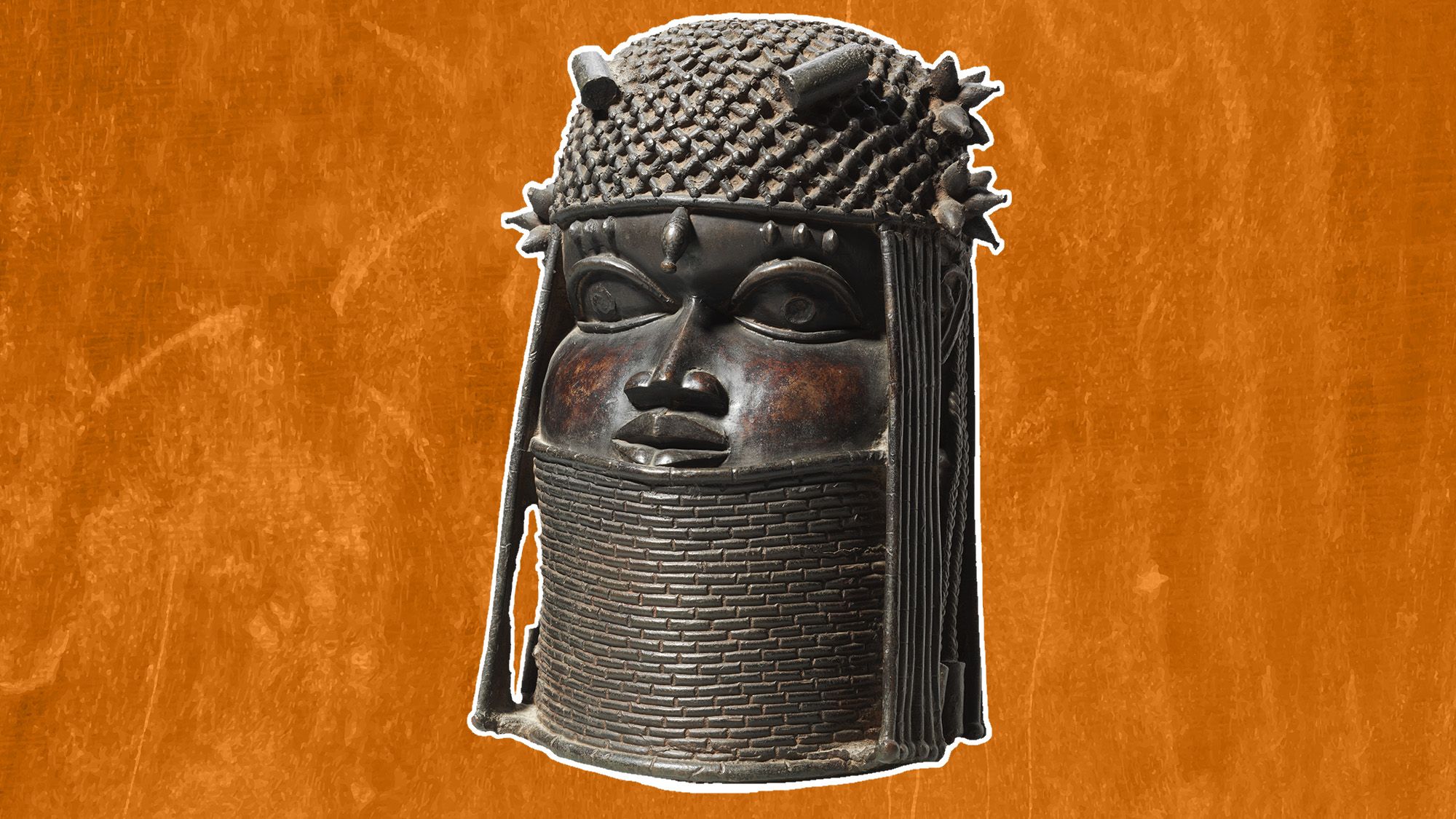
A 500-year-old brass commemorative bust depicting an ancestral African king adorned with coral bead necklaces and intricate braided hair stands as a prominent example of the historic Benin Bronzes, thousands of which were stolen by British forces during the military conquest of the Kingdom of Benin in 1897. The artifact, illustrating the metalworking artistry of West Africa’s historic Edo Kingdom in modern-day Nigeria, is central to ongoing global debates over colonial-era plunder, institutional ownership, and international museum restitution, according to reporting by Kristina Killgrove.
Key facts
What happened
In her analysis of the historical sculpture, Kristina Killgrove highlighted a 500-year-old brass head crafted to honor a royal ancestor from the Kingdom of Benin. The sculpture captures the formal attire of an Oba, or king, featuring a dense collar of royal coral beads stacked beneath the chin and detailed braided hair styled according to historical court traditions.
The piece is part of a vast treasury of royal and ceremonial objects seized during a British military campaign in West Africa. In February 1897, British forces mounted a punitive invasion of Benin City, during which troops burned the royal palace complex, exiled the reigning monarch, Oba Ovonramwen, and systematically looted the kingdom's religious shrines and administrative court. Among the stolen items were thousands of brass plaques, carved ivory tusks, and cast commemorative heads. Following the military action, the British Admiralty and colonial officials auctioned off the seized treasures across Europe to offset campaign costs, resulting in the dispersal of the items into public national museums, university collections, and private hands throughout Europe and North America.
Why it matters
The public examination and ongoing study of 500-year-old royal artifacts like this commemorative brass bust carry significant ethical, political, and cultural implications for international heritage management. Historically, Western institutions exhibited these items without contextualizing the violent military campaign through which they were acquired or recognizing the advanced technical mastery of their creators. Today, pieces like this brass head are recognized globally as monumental achievements in West African sculpture and irreplaceable historical records of the Edo Kingdom's royal dynastic history, religious practices, and social hierarchy.
For the modern Nigerian state and the Edo people, the displacement of these ancestral heads remains an ongoing cultural loss. Within traditional Edo statecraft and religious belief, commemorative heads were not decorative portraits but sacred vessels placed upon royal altars inside the palace complex. Serving as dynamic channels through which a sitting Oba communicated with royal predecessors, these objects were integral to state rituals and ancestral veneration. Their forced removal severed centuries-old lineage traditions and spiritual practices.
Furthermore, the legal status of artifacts from the 1897 invasion has become a central catalyst in international museum reform. As restitution requests gain global traction, major institutions face pressure to re-evaluate their acquisition histories. Precedents established by returns from various Western collections challenge longstanding arguments about universal museum ownership and force governments to re-examine national laws restricting the deaccessioning of contested foreign heritage.
The background
The Kingdom of Benin, located in the tropical forest region of present-day southern Nigeria, emerged as a prominent political and military power in West Africa beginning in the 13th century. The state was ruled by the Oba, an absolute monarch regarded as divine. By the late 15th century, the kingdom had established thriving diplomatic and commercial connections with European maritime powers, starting with Portuguese traders who arrived along the Bight of Benin.
During this period, royal artisan guilds operating under the direct authority of the Oba perfected the art of lost-wax brass casting (cire perdue). Although widely called the "Benin Bronzes," the vast majority of these objects—including the 500-year-old royal head—were cast using brass alloys consisting primarily of copper and zinc. Raw materials were frequently obtained through foreign commerce, where European merchants traded brass manillas (heavy metal armlets) for local goods such as palm oil, pepper, and ivory. Royal brass casters created commemorative heads to honor deceased Obas, placing them on court altars where successive rulers conducted annual rites. The height of the coral bead collar and the intricate detail of the hair braiding denoted the monarch's authority, spiritual standing, and historical achievements.
The kingdom's independence came to an end in 1897 following escalating trade disputes with British colonial administrators. In January of that year, an uninvited British delegation led by Acting Consul-General James Philips marched toward Benin City despite warnings that sacred ancestral rites were taking place. Local defenders intercepted the column, resulting in the deaths of Philips and several companions. In swift retaliation, the British government launched a heavily armed punitive expedition comprising over 1,200 soldiers in February 1897. British forces captured the capital, dismantled the state apparatus, and confiscated an estimated 3,000 to 10,000 ceremonial items.
Over the subsequent century, these works were acquired by major Western institutions, including the British Museum in London, the Ethnological Museum in Berlin, the Metropolitan Museum of Art in New York, and various university collections.
Reaction
While specific public statements regarding this individual report were not released, the broader issue of Benin Bronze restitution continues to generate significant official and public responses worldwide. Cultural authorities in Nigeria, including the National Commission for Museums and Monuments (NCMM) and the royal court of the current Oba of Benin, Ewuare II, have consistently advocated for the complete and unconditional return of all artifacts taken during the 1897 expedition. Oba Ewuare II has publicly emphasized that the royal court remains the rightful owner and custodian of these sacred ancestral treasures.
In recent years, several Western governments and cultural bodies have responded to these calls. In 2022, the German government executed a bilateral agreement transferring legal ownership of more than 1,000 Benin Bronzes from its national museums to Nigeria. Other institutions, including the Horniman Museum in London, the Smithsonian Institution in Washington, D.C., and Cambridge University's Museum of Archaeology and Anthropology, have similarly transferred titles or physically returned pieces from their holdings. Conversely, major national institutions such as the British Museum, which holds over 900 pieces from the 1897 raid, remain legally constrained by national statutes like the British Museum Act of 1963, which prohibits the permanent removal of objects from its collections without parliamentary approval.
What we don't know yet
Several critical details concerning this specific 500-year-old brass bust remain unconfirmed or omitted in public documentation. The account by Kristina Killgrove does not state the current location or institution holding this specific head, leaving it unclear whether the object is in a private collection, a European municipal museum, or a North American university repository. Additionally, the specific Oba depicted by the sculpture is not identified, as historical attribution of individual heads relies on stylistic categorization, coral bead typologies, and oral accounts rather than written inscriptions on the metal itself. It is also unknown whether this particular artifact is subject to an active formal repatriation claim, a loan agreement, or ongoing bilateral negotiations between holding entities and Nigerian authorities.
What to watch
Looking ahead, several key developments will shape the future handling and study of Benin Bronzes. A major point to watch is potential legislative movement in the United Kingdom regarding heritage laws, where proposed reform or exemptions to the British Museum Act of 1963 could enable legal returns by national collections. Observers should also track progress on museum infrastructure and cultural heritage initiatives in Edo State, Nigeria, including planned facilities designed to exhibit returned artifacts in Benin City. Furthermore, international diplomatic frameworks like the Benin Dialogue Group—a consortium uniting Nigerian representatives and European museum officials—will continue to serve as a key forum for negotiating future returns and collaborative loans. Finally, advancements in non-destructive metallurgical testing and isotopic analysis may yield new dates and compositional data, clarifying the precise manufacturing timeline of early West African brass works.
This report is based on original reporting published by Kristina Killgrove.
How this story was produced
This report was written by The Global Wire newsroom from reporting first published by Kristina Killgrove. We verify the core facts against the original report, write our own account, and add the background and consequences a short wire item leaves out. Drafting is AI-assisted inside an editor-supervised pipeline, and every story is checked for accuracy of attribution, structure and duplication before it appears — full detail in our AI and funding disclosure.
Spotted an error? Tell us at corrections@horizonglobalnews.com and read our corrections policy or editorial standards.


Reader comments
Loading comments…