

US Munition Bottlenecks and HIMARS Stockpiles Highlight Risks in Taiwan Strait Defense
Concerns over U.S. rocket artillery stockpiles and production speeds come as China expands its defense industrial capacity, underscoring vulnerabilities in potential Western Pacific contingencies.
By The Global Wire Newsroom · Reported from thestar.com.my
Link preview · horizonglobalnews.com
US Munition Bottlenecks and HIMARS Stockpiles Highlight Risks in Taiwan Strait Defense
Concerns over U.S. rocket artillery stockpiles and production speeds come as China expands its defense industrial capacity, underscoring vulnerabilities in potential Western Pacific contingencies.
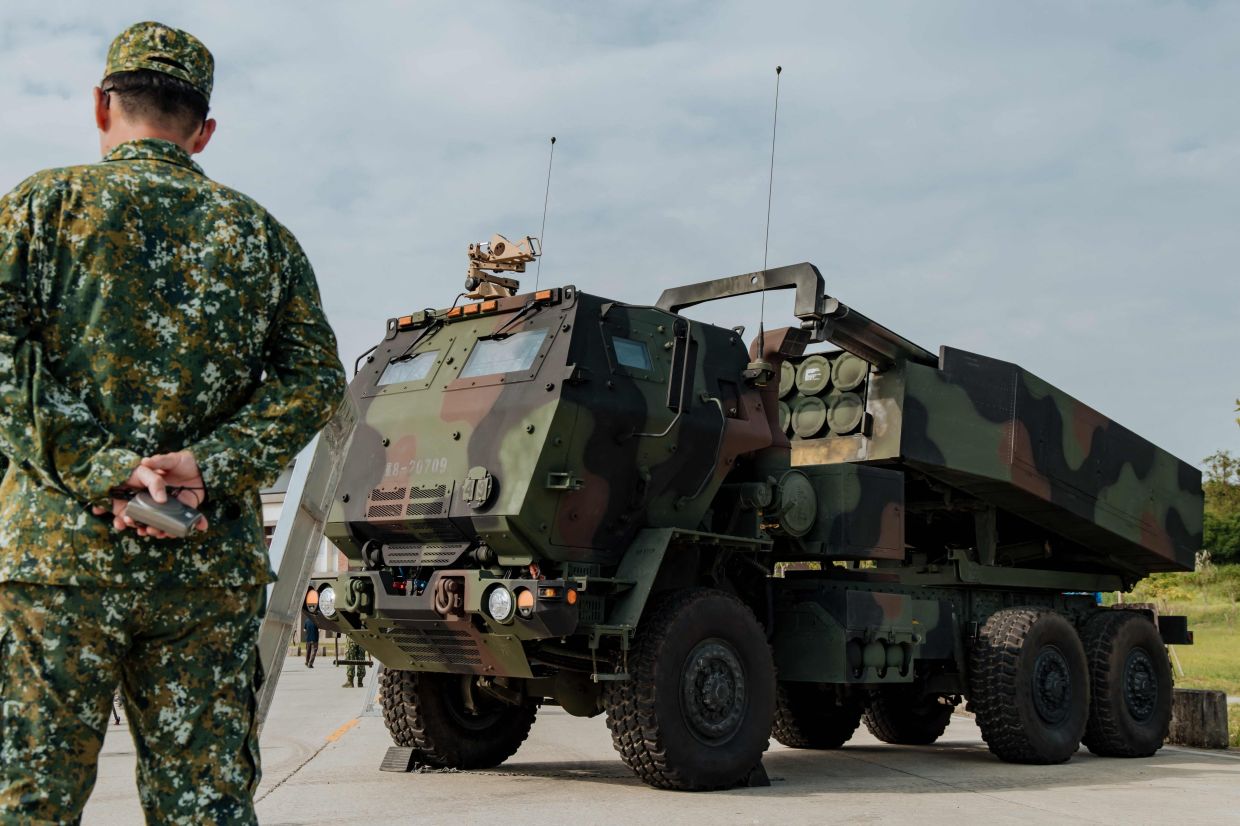
WASHINGTON — Persistent shortfalls in U.S. precision-guided munitions stockpiles—specifically ammunition for the M142 High Mobility Artillery Rocket System (HIMARS)—are drawing heightened scrutiny over Western deterrence capacity in the Taiwan Strait, according to reporting by The Star. The strain on defense manufacturing comes as mainland China accelerates its military-industrial output, raising concerns that ammunition availability could become a decisive factor in any future conflict across the 100-mile waterway separating Taiwan from the Asian mainland. As Washington balances military commitments across multiple theaters alongside foreign military sales backlogs to Taipei, defense analysts are increasingly evaluating whether Western production rates can keep pace with potential high-intensity combat demands in the Indo-Pacific.
Key facts
What happened
Assessments of U.S. military preparedness point to critical vulnerabilities regarding long-range precision fires, specifically the supply of rockets and missiles designed for the HIMARS platform, according to reporting published by The Star. While HIMARS launcher units have played a prominent role in Eastern Europe since Russia's full-scale invasion of Ukraine in 2022, the high consumption rate of precision munitions has drawn down U.S. stockpiles and placed significant strain on domestic defense supply lines.
At the same time, intelligence and defense evaluations show that mainland China's military-industrial complex is operating at an elevated operational tempo. Chinese defense enterprises are producing artillery systems, anti-ship ballistic missiles, surface-to-air systems, and naval vessels at rates that outpace Western manufacturing facilities. This growing industrial disparity has focused strategic attention on the logistical challenges the United States and its allies would face during a sustained high-intensity maritime and air campaign across the Taiwan Strait.
The backlog in U.S. defense exports to Taiwan further complicates regional deterrence. Although the U.S. Department of Defense and Department of State have authorized multiple military sales packages for Taipei—including HIMARS units, Harpoon anti-ship missile systems, and F-16 Block 70 fighter aircraft—supply chain bottlenecks, manufacturing capacity limits, and competing global defense commitments have delayed deliveries. As a result, analysts warn that long-term munition availability and replenishment capacity could emerge as primary determining factors in sustaining cross-strait deterrence.
Why it matters
The gap between Western industrial capacity and potential military requirements in the Indo-Pacific carries direct consequences for international security, regional trade, and economic stability. The Taiwan Strait is one of the world's most critical maritime transit corridors, handling nearly half of the global container ship fleet and serving as the primary hub for advanced semiconductor manufacturing led by Taiwan Semiconductor Manufacturing Company (TSMC). Any military escalation or naval blockade in the strait would disrupt global supply networks and generate multi-trillion-dollar economic losses worldwide.
From an operational standpoint, precision rocket artillery and long-range missiles form the cornerstone of defense strategies designed to counter amphibious operations and coastal staging areas. If U.S. and allied forces face inventory limits for systems like HIMARS, their ability to establish effective area-denial capabilities over extended operational timelines is significantly diminished.
Furthermore, these production limits impact alliance dynamics across the Indo-Pacific. Allied nations such as Japan, South Korea, Australia, and the Philippines rely heavily on U.S. security guarantees and defense export pipelines. If U.S. manufacturing capacity remains constrained while attempting to supply European allies, replenish domestic reserves, and fulfill Indo-Pacific sales, partner nations may face shifting assessments regarding regional balance of power and defense investment requirements.
The background
The M142 HIMARS, manufactured by defense contractor Lockheed Martin, is a highly mobile, wheeled artillery rocket system designed to launch precision-guided munitions including Guided Multiple Launch Rocket Systems (GMLRS) rockets, Army Tactical Missile System (ATACMS) missiles, and the newer Precision Strike Missile (PrSM). Introduced into U.S. military service in the early 2000s, the system gained widespread international prominence following its deployment in Ukraine, where Ukrainian forces utilized HIMARS to strike Russian logistics centers, command posts, and ammunition storage facilities.
However, the war in Ukraine demonstrated that high-intensity conflict against a major power consumes artillery and rocket munitions at rates far higher than peacetime industrial planning anticipated. Prior to 2022, annual U.S. production of GMLRS rockets stood at roughly 5,000 to 7,000 units per year. While the U.S. Department of Defense has allocated funds to increase production targets toward 14,000 units annually, achieving and sustaining those levels requires overcoming shortages in specialized components, including solid rocket motors, military-grade microelectronics, specialized steel casings, and energetic materials.
In contrast, mainland China has systematically expanded its defense manufacturing base over the past two decades under state-directed industrial policies and its military-civil fusion strategy. Major state-owned defense conglomerates, such as the China North Industries Group Corporation (NORINCO) and the Aviation Industry Corporation of China (AVIC), operate high-capacity production facilities backed by domestic raw material supply chains and heavy industrial infrastructure. The People's Liberation Army (PLA) has prioritized the mass production of long-range rocket artillery, anti-ship ballistic missiles, and strike drones designed specifically for anti-access and area-denial operations in the Western Pacific.
Tensions across the Taiwan Strait have intensified in recent years, marked by frequent PLA air and naval patrols surrounding Taiwan, live-fire drills, and simulated maritime blockades. Under the 1979 Taiwan Relations Act, the United States maintains an official policy of strategic ambiguity while legally committing to provide Taiwan with military defense equipment to support its self-defense. However, administrative delays and manufacturing backlogs have led to a multi-year backlog in equipment deliveries to Taipei, raising questions about the timeline for completing Taiwan's defense modernization efforts.
Reaction
While specific official responses to the latest HIMARS inventory assessments were not published in the reporting, U.S. defense officials and lawmakers have consistently highlighted military manufacturing limitations in public forums and Congressional hearings. Senior U.S. naval and defense leaders have publicly acknowledged the contrast between Western production timelines and China's rapid industrial expansion in shipbuilding and munition fabrication.
In the U.S. Congress, members of committees focused on national security and Indo-Pacific strategy have repeatedly called for accelerating arms deliveries to Taiwan and expanding multi-year munition procurement contracts to provide defense contractors with investment stability.
Taiwanese defense officials continue to advocate for asymmetric defense strategies—often described as the "porcupine strategy"—which emphasize mobile, land-based missile platforms, sea mines, and unmanned vehicles to deter potential amphibious actions. Authorities in Taipei have regularly urged Washington to prioritize the fulfillment of existing military contracts to enhance the island's defensive posture.
Spokespersons for China's Ministry of Foreign Affairs and Ministry of National Defense in Beijing maintain that foreign arms sales to Taiwan constitute interference in internal Chinese affairs and a violation of diplomatic agreements. Beijing reiterates its position that Taiwan is a province of China and warns that military assistance to Taipei increases the risk of regional conflict.
What we don't know yet
Key details regarding current munition stockpiles and industrial expansion schedules remain unverified due to national security classifications and operational privacy. The exact volume of HIMARS-compatible precision rockets remaining in active U.S. military stockpiles, prepositioned overseas depots, and Taiwanese armories is not publicly disclosed, making it difficult to determine precise operational endurance limits during a potential military crisis.
It is also unclear how quickly U.S. and allied defense manufacturers can resolve existing supply chain bottlenecks for critical inputs such as rocket propellant and specialized electronics. Although defense contractors have announced facility expansions, the procurement of heavy tooling, raw materials, and skilled labor often requires multi-year lead times.
Furthermore, the full operational depth and real-world performance of China's defense production lines remain difficult to assess independently. While public indicators show substantial industrial capacity, the operational reliability, maintenance overhead, and real-time replenishment speeds of PLA missile units during a sustained modern conflict remain untested in active warfare.
What to watch
Several critical milestones and policy decisions will indicate whether Western defense production can adapt to operational demands in the Western Pacific:
This report incorporates information originally reported by The Star.
How this story was produced
This report was written by The Global Wire newsroom from reporting first published by thestar.com.my. We verify the core facts against the original report, write our own account, and add the background and consequences a short wire item leaves out. Drafting is AI-assisted inside an editor-supervised pipeline, and every story is checked for accuracy of attribution, structure and duplication before it appears — full detail in our AI and funding disclosure.
Spotted an error? Tell us at corrections@horizonglobalnews.com and read our corrections policy or editorial standards.




Reader comments
Loading comments…