

Senate Panel Clashes Over Allegations of Dark Money and Fraud in Minnesota Programs
A Senate Homeland Security Committee hearing on state and federal program oversight turned contentious over allegations involving non-profit funding networks in Minnesota.
By The Global Wire Newsroom · Reported from ET Online
Link preview · horizonglobalnews.com
Senate Panel Clashes Over Allegations of Dark Money and Fraud in Minnesota Programs
A Senate Homeland Security Committee hearing on state and federal program oversight turned contentious over allegations involving non-profit funding networks in Minnesota.
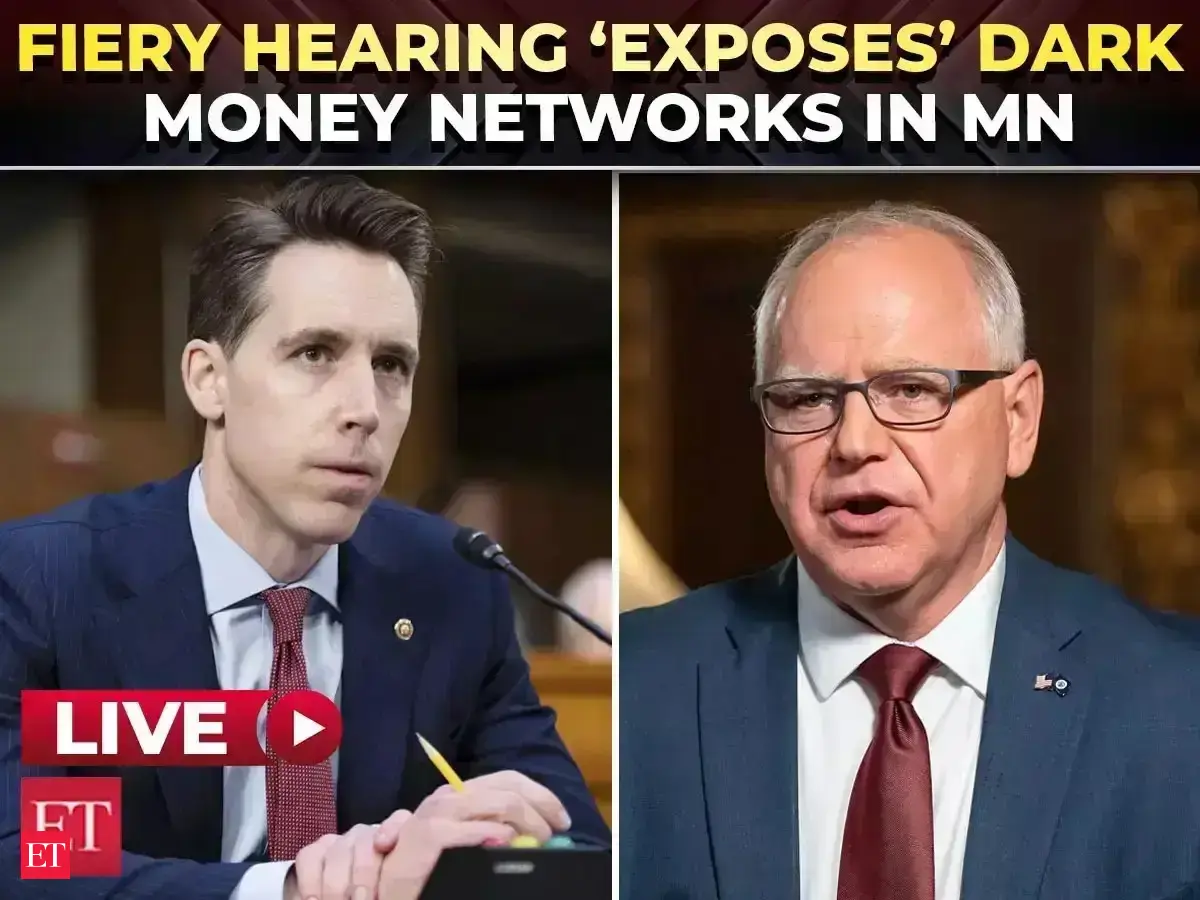
WASHINGTON — Tensions flared on Capitol Hill as members of the U.S. Senate Homeland Security and Governmental Affairs Committee engaged in a heated debate over allegations of financial fraud, foreign influence, and non-profit donor networks. The hearing, convened under the official title "Examining Fraud and Foreign Influence in State and Federal Programs," focused heavily on claims surrounding state-administered federal programs in Minnesota and the role of politically active non-governmental organizations. Lawmakers clashed sharply as testimony and questioning turned to the movement of capital through non-profit entities, the transparency of funding streams, and administrative vulnerabilities in public assistance frameworks. The hearing underscored escalating political and legislative scrutiny over how non-profit organizations interact with government grant systems and political advocacy networks.
Key facts
What happened
During the hearing, members of the Senate Homeland Security and Governmental Affairs Committee examined the mechanisms through which non-profit organizations and political advocacy groups interact with state and federal funding structures. According to reporting by ET Online, the session grew tumultuous as committee members engaged in sharp partisan exchanges regarding allegations of financial impropriety and opaque funding networks connected to programs in Minnesota.
The central focus of the debate revolved around allegations that dark money networks—entities that engage in political advocacy or social welfare activities without disclosing the identities of their underlying donors—had established significant influence over organizations involved in state-level program administration. During the exchanges, lawmakers raised allegations concerning financial allocations totaling approximately $60 million tied to non-profit networks affiliated with prominent philanthropic figures, including billionaire activist George Soros.
Senators questioned how state and federal agencies verify the financial integrity of non-profit recipients and whether existing disclosure rules are sufficient to detect potential conflicts of interest or foreign influence. Critics on the committee argued that loose oversight permitted non-profit groups to funnel financial resources across state lines with minimal accountability, potentially creating avenues for administrative fraud or political manipulation. Conversely, defenders of non-profit organizations cautioned against conflating legitimate political advocacy and philanthropic activity with criminal fraud, arguing that existing legal frameworks provide adequate separation between charitable operations and electoral activity.
The hearing devolved into chaotic exchanges as senators repeatedly interrupted one another and challenged the premises of the arguments presented. Committee members pressed for answers regarding how federal dollars passed through Minnesota state agencies to non-governmental organizations, questioning whether structural deficiencies allowed bad actors to exploit government aid programs for political or personal gain.
Why it matters
The proceedings before the Senate committee highlight critical policy and regulatory questions regarding the intersection of federal grant administration, state-level program implementation, and non-profit finance. For taxpayers and citizens relying on public assistance programs, allegations of systemic fraud or political interference raise significant concerns about the stewardship of public funds and the reliability of social safety net infrastructure.
From a regulatory standpoint, the hearing underscores an ongoing debate over the oversight of non-profit organizations classified under Section 501(c) of the Internal Revenue Code. While 501(c)(3) charities are strictly prohibited from participating in political campaigns and 501(c)(4) social welfare groups are permitted to engage in limited political advocacy, the boundaries between public program delivery and political messaging frequently overlap. When non-profit organizations receive federal or state grants while simultaneously operating within larger advocacy networks, assessing compliance with federal anti-fraud and anti-lobbying statutes becomes exceptionally complex.
Furthermore, the focus on Minnesota reflects broader national concerns regarding state-level capacity to monitor federal pass-through funds. State agencies are responsible for distributing hundreds of billions of dollars in federal grants annually across education, nutrition, healthcare, and social services. When oversight mechanisms fail at the state level, federal taxpayers bear the burden of lost resources, while intended beneficiaries face disrupted services. The sharp partisan divide displayed during the hearing suggests that future legislative efforts to address these oversight gaps will face significant political friction in Congress.
The background
The Senate Homeland Security and Governmental Affairs Committee serves as the primary oversight committee of the U.S. Senate, tasked with investigating the efficiency, economy, and effectiveness of all branches of government. Its jurisdiction includes federal grant management, government accountability, civil service operations, and national security matters related to foreign influence and domestic integrity.
Concerns over non-profit financing and dark money have intensified in American politics since the U.S. Supreme Court's landmark 2010 ruling in Citizens United v. Federal Election Commission. That decision established that independent political expenditures by corporations and labor unions are protected under the First Amendment, leading to a rapid expansion of 501(c)(4) social welfare organizations and Super PACs. Under federal tax law, 501(c)(4) groups are not required to publicly disclose their individual donors, earning them the moniker "dark money" groups among political transparency advocates.
The philanthropic networks associated with George Soros, primarily operating through the Open Society Foundations, have long been a subject of intense political debate. Open Society Foundations, founded by Soros in 1993, funds civil society organizations worldwide, focusing on human rights, democratic governance, criminal justice reform, and legal advocacy. Conservatives have frequently criticized Soros-funded entities for supporting progressive policy causes, while supporters maintain that the foundations operate legally within established tax and election guidelines.
The focus on Minnesota in federal fraud investigations has precedent in recent high-profile enforcement actions. In recent years, federal prosecutors in Minnesota uncovered one of the largest pandemic-era fraud schemes in the United States involving the non-profit organization Feeding Our Future. Federal prosecutors alleged that over $250 million in federal child nutrition funds, administered by the Minnesota Department of Education, were misappropriated through fake meal sites and shell companies. Dozens of individuals were indicted in connection with that scheme, leading to heightened federal scrutiny of Minnesota state agencies and non-profit grant administrators. While the current Senate hearing addressed broad allegations of dark money and foreign influence, it builds on established federal interest in the management of public funds within the state.
Reaction
During the hearing, partisan divisions were on full display as committee members presented sharply contrasting interpretations of the testimony and evidence. Conservative senators emphasized the need for aggressive oversight, arguing that federal dollars must be shielded from political advocacy groups and foreign influence. They urged stricter reporting requirements for non-profit entities receiving government contracts or sub-grants.
Progressive and moderate senators voiced concern that the hearing was being utilized to advance partisan narratives rather than constructive legislative solutions. They cautioned against mischaracterizing standard philanthropic donations as illegal foreign influence or fraud, warning that broad accusations could delegitimize lawful non-profit work and harm legitimate charitable operations.
Outside Congress, oversight bodies, state audit departments, and non-profit advocacy groups are expected to review the committee's findings. Representatives from non-profit ethics organizations frequently call for comprehensive campaign finance reform and donor transparency legislation, while defenders of donor privacy argue that forced disclosure exposes contributors to harassment and chills First Amendment rights. State officials in Minnesota are also anticipated to respond to specific assertions regarding agency oversight as legislative committees in Saint Paul review state administrative procedures.
What we don't know yet
Significant factual gaps remain regarding the specific details presented during the hearing. The supplied reporting from ET Online does not detail the exact evidentiary documents or testimony presented to support the assertion that $60 million in dark money was transferred through Soros-linked networks to Minnesota programs. It remains unverified whether any of the specific funds in question were derived from federal appropriations or whether they consisted entirely of private philanthropic donations.
Additionally, the reporting does not clarify whether the committee identified any formal violations of federal criminal law or tax codes, or if the allegations center on legal but controversial political advocacy practices. It is also unclear whether federal law enforcement agencies, such as the Department of Justice or federal inspectors general, have launched formal investigations based on the material discussed in the hearing.
Finally, the precise identities of all non-profit entities and state programs referenced during the hearing remain undisclosed in the immediate reporting. Determining whether these organizations operated as federal grant contractors, sub-recipients, or independent political advocacy groups is essential to evaluating the validity of the claims.
What to watch
In the coming weeks and months, several key developments will indicate the direction of congressional and regulatory action:
This news report is based on original reporting by ET Online.
How this story was produced
This report was written by The Global Wire newsroom from reporting first published by ET Online. We verify the core facts against the original report, write our own account, and add the background and consequences a short wire item leaves out. Drafting is AI-assisted inside an editor-supervised pipeline, and every story is checked for accuracy of attribution, structure and duplication before it appears — full detail in our AI and funding disclosure.
Spotted an error? Tell us at corrections@horizonglobalnews.com and read our corrections policy or editorial standards.

Reader comments
Loading comments…