

Trump Floats $90 Voter Payout Proposal, Drawing Fiscal Concerns Over $1 Trillion Cost
A proposal by Donald Trump to issue direct cash checks to voters would require congressional approval and add over $1 trillion to the federal deficit, according to reporting by AP and Fortune.
By The Global Wire Newsroom · Reported from Melissa Goldin; The Associated Press
Link preview · horizonglobalnews.com
Trump Floats $90 Voter Payout Proposal, Drawing Fiscal Concerns Over $1 Trillion Cost
A proposal by Donald Trump to issue direct cash checks to voters would require congressional approval and add over $1 trillion to the federal deficit, according to reporting by AP and Fortune.
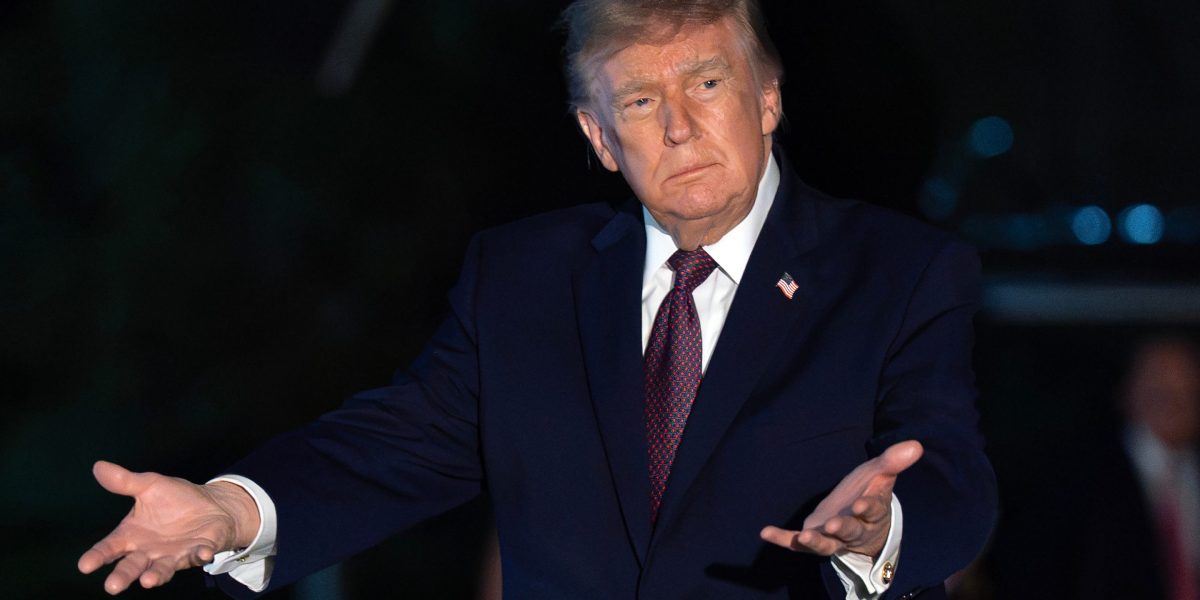
Donald Trump has raised the prospect of a new round of direct government payments to American voters ahead of the upcoming midterm elections, floating a $90 payout after previously referencing larger distributions of $500 and $5,000. According to reporting by The Associated Press, implementing any nationwide cash disbursement program would require explicit legislative authorization and budget appropriations from the United States Congress. Fiscal projections indicate that executing a broad direct payment scheme of this magnitude would carry an overall price tag exceeding $1 trillion, adding substantially to the national deficit during a period of sustained focus on federal debt levels and inflation.
Key facts
What happened
The proposal represents the latest iteration in a series of public statements regarding direct cash disbursements to the American public. In recent public appearances and statements leading into the midterm election cycle, Donald Trump floated varying figures for potential government payments, initially suggesting larger sums of $5,000 and $500 before specifying a $90 amount, according to reporting by The Associated Press.
Direct cash transfers on a national scale represent one of the most direct mechanisms available in public finance to deliver liquidity directly to households. However, executive proposals for direct cash distributions cannot be enacted through unilateral executive orders or administrative decrees. Under Article I of the United States Constitution, the power of the purse resides strictly within the legislative branch. Consequently, any plan to distribute money to individual citizens requires the drafting, passage, and enactment of statutory legislation by both the House of Representatives and the Senate, followed by signature into law.
Fiscal calculations regarding national cash disbursements demonstrate the scale of such programs. With more than 330 million residents in the United States and roughly 260 million adults, broad-based distribution programs quickly accumulate immense costs. Economic evaluations of broad payout mechanisms indicate that funding a nationwide check distribution program of the scale discussed would cost more than $1 trillion in federal outlays. Because the federal government operates under an annual fiscal deficit, funding a $1 trillion spending program would necessitate additional federal borrowing through the issuance of United States Treasury securities, expanding the overall national debt burden.
Why it matters
The proposal carries substantial implications for federal fiscal policy, national debt dynamics, and monetary policy stabilization efforts. Adding more than $1 trillion in un-offset federal spending directly expands the national budget deficit. When the Department of the Treasury issues additional bonds to cover debt-financed outlays, it increases total public debt service obligations, diverting a larger share of future federal tax receipts toward interest payments rather than discretionary public investments or statutory entitlement programs.
From a macroeconomic standpoint, direct cash transfers injected into a national economy influence aggregate demand. When households receive government disbursements, consumer spending increases on goods, services, and debt servicing. While direct payments during severe economic downturns can stabilize household balance sheets, injecting broad liquidity during periods of ongoing economic activity risks creating secondary inflationary pressures.
Financial markets and bond investors monitor federal spending proposals closely. Expanding the fiscal deficit by more than $1 trillion can exert upward pressure on United States Treasury yields. Higher benchmark Treasury yields ripple across the broader economy, raising borrowing costs for commercial mortgages, consumer auto loans, and corporate credit lines. Furthermore, monetary policymakers at the Federal Reserve rely on fiscal discipline to keep inflation aligned with their targeted 2 percent annual benchmark. Large-scale fiscal stimulus can force central bankers to maintain higher policy interest rates for longer periods to counteract demand-side inflationary pressures, potentially slowing broader private-sector investment and job growth.
The background
Direct government cash distributions to individual taxpayers and residents have a distinct modern precedent in United States economic policy, particularly as responses to acute financial crises. During the COVID-19 pandemic, Congress passed several major relief packages containing direct Economic Impact Payments administered by the Internal Revenue Service and the Department of the Treasury.
The initial wave of direct checks was authorized under the Coronavirus Aid, Relief, and Economic Security (CARES) Act in March 2020 during the Trump administration. That legislation provided direct payments of up to $1,200 per eligible adult, plus $500 per qualifying child. A second round of payments was enacted in December 2020 through the Consolidated Appropriations Act, providing up to $600 per individual. A third round of direct cash transfers followed in March 2021 under President Joe Biden through the American Rescue Plan Act, which authorized checks of up to $1,400 per eligible individual.
While those pandemic-era payments were designed to cushion households against catastrophic income losses caused by business closures, economists subsequently debated their role in contributing to domestic inflation that peaked in 2022. Economic studies highlighted how the combination of supply chain bottlenecks, elevated household savings, and massive federal fiscal stimulus generated excess consumer demand that outpaced goods availability, driving the Consumer Price Index to multi-decade highs.
The legal and administrative process for distributing direct cash payments is complex. Legislative proposals must clear both houses of Congress. The Congressional Budget Office, a nonpartisan agency tasked with providing economic analyses to lawmakers, must issue a formal cost estimate detailing how proposed legislation affects federal revenues and outlays over a ten-year budget window. Once authorized by law, the Department of the Treasury's Bureau of the Fiscal Service and the IRS handle the logistics of distributing funds via direct deposit or physical checks to millions of eligible individuals.
Reaction
Following the public statements detailing the payment proposals, reactions are expected across political, legislative, and economic sectors. In Congress, fiscal conservatives and budget hawks routinely oppose un-offset spending initiatives that expand national borrowing, pointing to the escalating cost of servicing the national debt. Members of both major political parties face complex calculations when evaluating direct transfer proposals, balancing the political appeal of direct checks against concerns over inflation and national deficit expansion.
Professional economists and financial analysts typically evaluate cash transfer plans through the lens of macroeconomic stability. Analysts on Wall Street and at economic think tanks assess whether proposed outlays are matched by revenue increases or offsetting spending reductions. Without clear revenue sources, market analysts warn that injecting large sums into the economy risks triggering price escalation in consumer goods and services.
Monetary policy observers also track such fiscal proposals closely. Federal Reserve officials consistently maintain that while fiscal policy decisions rest entirely with elected officials in Congress and the executive branch, large expansionary fiscal measures inevitably influence central bank decisions regarding benchmark interest rates. Elected officials in state capitals and municipal governments also monitor federal cash proposals, as changes in federal spending can alter local economic activity and state tax revenues.
What we don't know yet
Several critical details regarding the direct payment proposal remain unresolved in public reporting. The reporting by The Associated Press leaves open fundamental questions regarding the structure, eligibility criteria, and administrative delivery of the suggested $90 payments, as well as the prior $500 and $5,000 figures.
First, it is unknown whether the proposed payments are intended as universal transfers to all residents, targeted distributions subject to income cutoffs, or restricted to specific demographics such as registered voters or taxpayers. Income thresholds significantly alter both the aggregate cost of a disbursement program and its immediate economic impact.
Second, no formal legislative text or sponsored bill has been introduced in Congress to codify the proposal. Without draft legislation, it remains unclear whether the initiative includes proposed spending offsets—such as tax adjustments or discretionary budget cuts—or if it is designed entirely as deficit-funded spending.
Third, the technical rationale behind shifting the proposed amounts from $5,000 down to $500 and subsequently to $90 has not been detailed. It remains unverified whether these shifting amounts reflect evolving economic modeling within campaign policy teams or informal suggestions floated during public events.
What to watch
In the coming weeks and months, several key indicators and decision points will clarify whether the proposal advances from campaign commentary into formal policy deliberation:
This news report is based on original reporting by The Associated Press, as published in Fortune.
How this story was produced
This report was written by The Global Wire newsroom from reporting first published by Melissa Goldin; The Associated Press. We verify the core facts against the original report, write our own account, and add the background and consequences a short wire item leaves out. Drafting is AI-assisted inside an editor-supervised pipeline, and every story is checked for accuracy of attribution, structure and duplication before it appears — full detail in our AI and funding disclosure.
Spotted an error? Tell us at corrections@horizonglobalnews.com and read our corrections policy or editorial standards.






Reader comments
Loading comments…