

UK Prime Minister Burnham Open to Rejoining European Union in Post-Brexit Review
British Prime Minister Burnham signals willingness to consider full EU re-entry alongside other structural options for the UK's evolving relationship with Brussels.
By The Global Wire Newsroom · Reported from Mared Gwyn Jones
Link preview · horizonglobalnews.com
UK Prime Minister Burnham Open to Rejoining European Union in Post-Brexit Review
British Prime Minister Burnham signals willingness to consider full EU re-entry alongside other structural options for the UK's evolving relationship with Brussels.
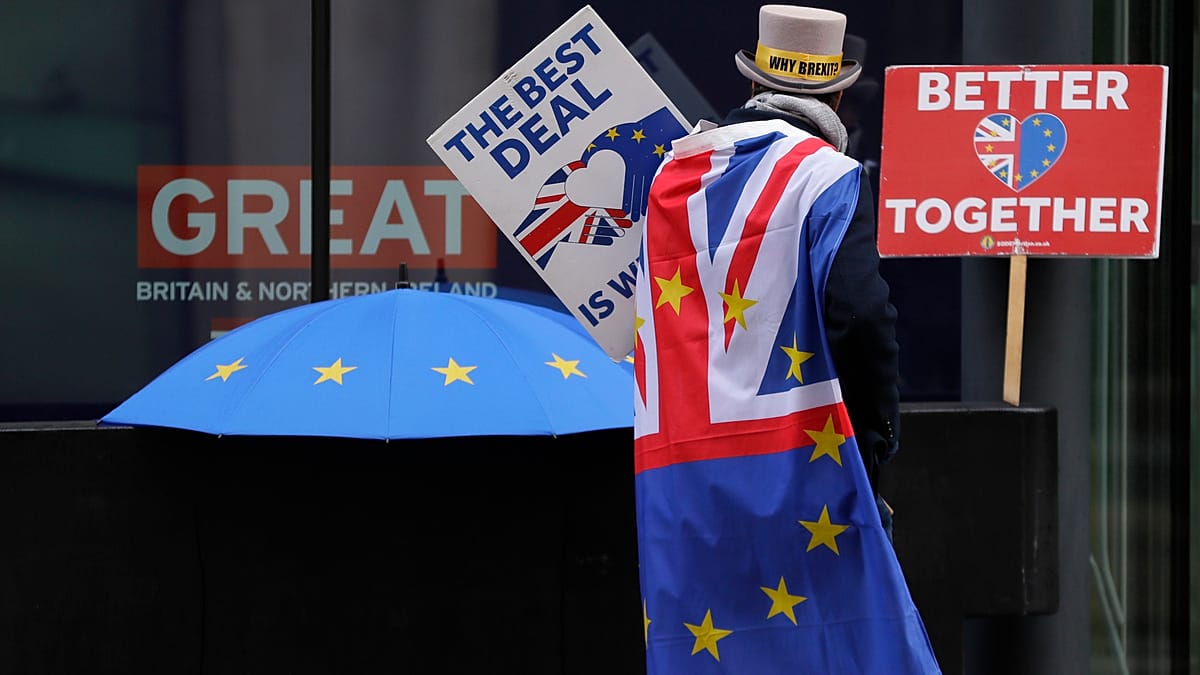
LONDON — British Prime Minister Burnham has publicly indicated that his government will examine a wide spectrum of options for the United Kingdom's future relationship with the European Union, including the prospect of full re-entry into the 27-member bloc. Speaking in late September 2026, the prime minister acknowledged that his administration plans to evaluate systemic models for long-term bilateral cooperation. The statement marks a notable moment in post-Brexit UK politics, officially opening executive consideration toward reversing the nation’s historic 2020 departure from the European Union and re-evaluating the trade and regulatory architecture that governs cross-Channel relations.
Key facts
What happened
According to reporting by Mared Gwyn Jones, Prime Minister Burnham stated that his administration will evaluate a broad spectrum of policy choices concerning the future relationship between the United Kingdom and the European Union. Within this review process, the prime minister specifically included the option of pursuing full membership in the European Union, describing a willing openness to consider going "all the way" back into the bloc.
The declaration indicates that the British government is preparing to review the existing framework of bilateral trade, regulatory alignment, and diplomatic arrangements. While the reporting did not detail specific legislative timetables or white paper release dates, Burnham’s explicit mention of re-joining the bloc represents a distinct political development. Previous post-Brexit British administrations maintained that the decision to leave the European Union was permanent, focusing public discourse primarily on fine-tuning specific regulatory provisions under existing bilateral treaties. Burnham's remarks broaden the scope of official policy debate to include structural re-integration.
Why it matters
The explicit inclusion of full European Union membership as a viable policy option by a sitting British prime minister fundamentally alters the political and economic landscape governing UK-EU relations. Since the implementation of the post-Brexit trade framework, economic analysis from institutions such as the Office for Budget Responsibility and commercial sector groups has highlighted persistent administrative friction in cross-border commerce, particularly affecting exporters, agricultural producers, and professional services firms. By publicly including re-entry on the table, the prime minister opens a policy channel through which long-term economic strategy can be re-examined.
From an economic perspective, returning to the European Union would mean restored access to the European Single Market and Customs Union. This move would eliminate non-tariff barriers, border customs controls, and sanitary inspections that were introduced following Britain's exit. It would also restore frictionless service delivery, which is vital given that services comprise roughly 80 percent of the UK domestic economy. However, full integration would also require the United Kingdom to re-adopt the fundamental principles of the EU, including the free movement of labor across national borders, financial contributions to the EU central budget, and the legal jurisdiction of the European Court of Justice over applicable European law.
Politically, reopening the question of EU membership risks reactivating the deep partisan and constitutional divisions that defined British public life between 2016 and 2020. For European policymakers in Brussels and key national capitals such as Paris and Berlin, a prospective UK application would present complex legal and strategic considerations. EU leaders would need to evaluate whether political consensus in Great Britain is sufficiently stable to prevent future policy reversals, and whether any rejoining process would occur under standard accession rules without the historic opt-outs Britain previously possessed.
The background
To understand the context surrounding Prime Minister Burnham's statement, it is helpful to examine the historical timeline of the United Kingdom's relationship with European integration. The UK originally joined the precursor to the modern European Union, the European Economic Community (EEC), on Jan. 1, 1973. That decision was confirmed by the public in a national referendum in 1975, where 67.2 percent of voters supported remaining in the community.
Over the subsequent four decades, the UK played a central role in shaping the European Single Market, which was formalized under the Single European Act of 1986. However, British involvement was characterized by periodic negotiation of unique exemptions. In 1984, Prime Minister Margaret Thatcher negotiated an annual financial rebate on Britain's budget contribution. Later, through the 1992 Maastricht Treaty and the 1997 Amsterdam Treaty, the UK secured formal opt-outs from adopting the euro single currency and participating in the Schengen border-free passport area.
Political debate over European integration culminated in the national referendum held on June 23, 2016. In that vote, 51.9 percent of voters (17.4 million people) voted to leave the European Union, while 48.1 percent (16.1 million people) voted to remain. On March 29, 2017, the UK formally invoked Article 50 of the Treaty on European Union, initiating a withdrawal process. After extensive domestic debate, the UK officially departed the EU on Jan. 31, 2020.
The post-exit transition period concluded on Dec. 31, 2020, and the bilateral relationship was restructured under the EU–UK Trade and Cooperation Agreement (TCA). The TCA provided zero-tariff trade in physical goods meeting designated rules of origin, but established separate regulatory and customs regimes. The treaty was provisionally applied starting Jan. 1, 2021, and officially entered into force on May 1, 2021.
Under international treaty law, any country seeking to join or rejoin the European Union must undergo the standard accession process outlined in Article 49 of the Treaty on European Union. Candidate states must satisfy the Copenhagen criteria, established in 1993, which mandate stable democratic institutions, adherence to the rule of law, and a functioning market economy. The process requires unanimous approval by the Council of the European Union, consent from the European Parliament, and formal ratification by the national parliaments of all 27 member states. Under current accession rules, new members commit to eventual adoption of the euro and entry into the Schengen Area, meaning a rejoining UK might not receive the special opt-outs it held prior to 2020.
Reaction
Following the report by Mared Gwyn Jones detailing Prime Minister Burnham's remarks, reaction across political, economic, and diplomatic sectors is expected to take shape across official venues. Within the UK Parliament, opposition leaders and backbench lawmakers are anticipated to call for formal clarification regarding whether the executive branch intends to launch an official inquiry, release a white paper, or hold parliamentary debates on future EU policy.
In Brussels and across European capitals, officials are expected to maintain a measured diplomatic position. European Union leaders have consistently affirmed that the choice to pursue EU membership resides entirely with sovereign nation-states through Article 49 procedures. However, diplomats from member states are expected to emphasize that any future discussions would adhere strictly to existing accession frameworks, requiring complete alignment with EU rules without restoring historical rebates or opt-outs. Representatives from business organizations, trade unions, and financial sector associations in both the UK and Europe are expected to monitor official announcements closely to gauge potential shifts in long-term regulatory structures and trade stability.
What we don't know yet
Several key details regarding Prime Minister Burnham's announcement remain undisclosed in the initial reporting. First, the specific mechanism through which the UK government intends to evaluate its options has not been specified. It is unclear whether this evaluation will take the form of an internal cabinet review, an independent commission, or a formal parliamentary green paper detailing distinct policy models.
Second, the concrete economic, legal, and political metrics that the administration will use to compare different relationship options have not been articulated. It remains unknown whether the government considers full EU re-entry as an immediate policy target for the current legislative session or as a broader long-term option to be presented to the electorate in a future general election platform or national referendum.
Finally, available reporting does not indicate whether preliminary informal consultations have taken place between British officials and representatives of the European Commission or individual EU member state governments regarding potential procedural timelines or legal requirements for re-entry.
What to watch
Determining how Prime Minister Burnham's comments translate into substantive policy will depend on several upcoming developments and key decision points:
This report is based on original news coverage by Mared Gwyn Jones.
How this story was produced
This report was written by The Global Wire newsroom from reporting first published by Mared Gwyn Jones. We verify the core facts against the original report, write our own account, and add the background and consequences a short wire item leaves out. Drafting is AI-assisted inside an editor-supervised pipeline, and every story is checked for accuracy of attribution, structure and duplication before it appears — full detail in our AI and funding disclosure.
Spotted an error? Tell us at corrections@horizonglobalnews.com and read our corrections policy or editorial standards.




Reader comments
Loading comments…