

India Meteorological Department Issues Heavy Rainfall and Thunderstorm Warnings Across States
The IMD has placed Uttarakhand, Karnataka, and island territories on heavy rain alerts while warning neighboring southern regions of high-velocity winds and severe lightning.
By The Global Wire Newsroom · Reported from economictimes.indiatimes.com
Link preview · horizonglobalnews.com
India Meteorological Department Issues Heavy Rainfall and Thunderstorm Warnings Across States
The IMD has placed Uttarakhand, Karnataka, and island territories on heavy rain alerts while warning neighboring southern regions of high-velocity winds and severe lightning.
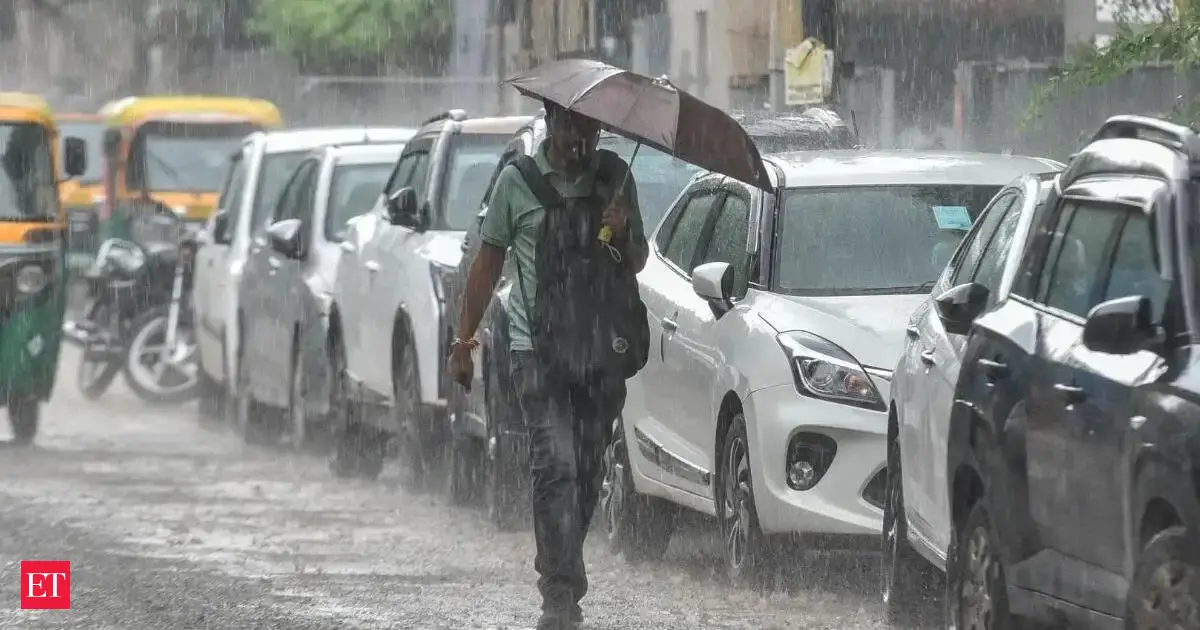
On September 28, the India Meteorological Department issued a series of weather advisories warning of heavy precipitation, severe lightning, and elevated wind speeds across multiple regions of India, according to reporting by Economic Times. Severe rainfall alerts were put in place for the northern mountain state of Uttarakhand, South Interior Karnataka in the south, and the Andaman and Nicobar Islands in the Bay of Bengal. Simultaneously, regional atmospheric instability led forecasters to issue explicit warnings for severe thunderstorms and strong gusty winds across Telangana and Andhra Pradesh, while a broader set of rain and wind advisories was applied to several other states across the country.
Key facts
What happened
On September 28, national weather forecasters at the India Meteorological Department updated their meteorological monitoring bulletins, identifying localized atmospheric hazards across distinct geographical zones, according to reporting by Economic Times. High-elevation districts in Uttarakhand were flagged for concentrated rainfall spells, raising immediate potential risks for fragile mountain catchments, steep sloped terrain, and local river basins. In southern India, South Interior Karnataka was designated for heavy rainfall alerts, posing operational challenges for both metropolitan civil infrastructure and rural agricultural sectors.
Concurrently, unstable weather conditions across the Bay of Bengal and surrounding coastal regions triggered advisories for island and coastal territories. The Andaman and Nicobar Islands, located in the southeastern Bay of Bengal, were placed under heavy rain alerts as convective weather systems intensified over the archipelago. Farther inland on the Deccan Plateau, the weather agency alerted emergency planners and residents in Telangana and Andhra Pradesh to prepare for localized thunderstorm activity, severe lightning hazards, and sudden bursts of gusty winds. The meteorology agency also extended generalized rain and wind advisories to various other states, reflecting broad atmospheric instability across multiple geographical sub-regions.
Why it matters
The convergence of heavy rainfall and severe thunderstorm advisories across widely separated regions of India carries direct consequences for public safety, civic infrastructure, transportation networks, and seasonal agricultural production. In high-relief mountainous regions like Uttarakhand, heavy rainfall significantly escalates the risk of sudden landslides, mudflows, and rockfalls. Such geological disruptions routinely block major highway corridors, cut off remote mountain settlements, and threaten communities situated along narrow river valleys and pilgrimage routes.
For South Interior Karnataka, which encompasses major urban centers such as Bengaluru alongside agricultural districts in the Kaveri river basin, concentrated precipitation frequently overwhelms municipal stormwater networks. This leads to severe urban waterlogging, prolonged traffic congestion on major arterial roads, localized electrical power outages, and potential operational slowdowns across technology parks and commercial districts. In the agricultural heartlands of Telangana and Andhra Pradesh, late-season thunderstorms pose serious physical risks to standing kharif crops, including cotton, paddy rice, maize, and pulses. High-speed gusty winds can cause crop lodging—where tall plant stalks are knocked down onto waterlogged soil—complicating mechanical harvesting and increasing the probability of crop rot. Furthermore, atmospheric lightning strikes during pre-harvest field operations present a severe safety risk to rural outdoor agricultural workers and livestock. In the Andaman and Nicobar Islands, heavy marine rainfall and squally wind conditions complicate inter-island ferry logistics, disrupt coastal fishing operations, and delay essential maritime cargo traffic connecting the island territory to the mainland.
The background
The India Meteorological Department, established in 1875 and operating under the Ministry of Earth Sciences, serves as the primary national agency for weather observations, short- and long-range forecasting, and official meteorological hazard dissemination. Headquartered in New Delhi, the institution maintains a network of regional meteorological centers in cities such as Chennai, Mumbai, Kolkata, Nagpur, and Guwahati. The agency evaluates daily rainfall using standardized quantitative criteria, categorizing precipitation levels from light rainfall up to extreme heavy rainfall exceeding 204.4 millimeters in a single 24-hour period. To communicate severe weather threats to regional emergency authorities and the public, the agency utilizes a standardized four-tier color-coded warning system: Green signifies no actionable hazard; Yellow indicates a watch to stay updated; Orange advises authorities and citizens to prepare for severe weather; and Red mandates immediate operational action to mitigate severe public safety risks.
Late September represents a critical meteorological inflection point across the Indian subcontinent, marking the formal conclusion of the four-month Southwest Monsoon season that spans June through September. During this late-season phase, the primary monsoon trough begins its gradual retreat from northwestern regions like Rajasthan toward the southern peninsula. As cooler, drier continental air masses moving from northern latitudes collide with warm, moisture-rich tropical maritime air over the Bay of Bengal and Arabian Sea, localized atmospheric instability rises sharply. This dynamic frequently manifests as intense convective storm cells, localized high-volume rain events, and heightened lightning activity across central, eastern, and southern India prior to the October onset of the Northeast Monsoon, which traditionally delivers significant rainfall to southeastern coastal territories.
Reaction
Following the publication of official IMD meteorological advisories, state and local emergency management agencies routinely activate established regional safety protocols. In vulnerable mountain zones like Uttarakhand, district disaster management authorities typically position heavy earth-moving equipment and specialized response personnel along vulnerable highway sectors to clear potential landslip debris. Urban municipal bodies in South Interior Karnataka, including civic agencies in Bengaluru, generally dispatch municipal field staff to clear drainage bottlenecks, deploy mobile pumping units, and monitor flooded underpasses.
Agricultural departments across Telangana and Andhra Pradesh are expected to issue regional farmer advisories urging agricultural workers to temporarily pause chemical spraying, postpone immediate crop harvesting where feasible, and seek secure shelter during active thunderstorm advisories. Coastal and maritime safety authorities in the Andaman and Nicobar Islands traditionally issue advisories cautioning small vessel operators, port workers, and local fishermen against venturing into open waters during periods of heightened squally winds and elevated sea conditions.
What we don't know yet
The reporting provided by Economic Times leaves several operational details unconfirmed. The dispatch does not specify district-level numerical precipitation forecasts or exact millimeter accumulation estimates for Uttarakhand or South Interior Karnataka. Furthermore, the report does not detail the specific color-coded hazard classification—Yellow, Orange, or Red—assigned by IMD forecasters to each alerted region, making it difficult to assess the exact severity rating specified by the agency for individual jurisdictions. The precise duration of the alert window beyond September 28 is also omitted, as are details regarding specific emergency deployments, reported infrastructural damage, or documented agricultural losses across the affected states.
What to watch
Key indicators to monitor following these advisories include subsequent weather bulletin updates from the India Meteorological Department regarding the trajectory, intensity, and persistence of the active weather systems. Observers should track whether municipal corporations in South Interior Karnataka publish official urban flood advisories or implement temporary school closures in response to localized inundation. In Uttarakhand, traffic management logs along major national transport routes will reveal whether localized landslips cause prolonged structural road blockages. Furthermore, official damage reports from state agricultural departments in Telangana and Andhra Pradesh will show whether high winds and severe weather altered overall kharif crop harvest yields. Finally, meteorologists will monitor whether these widespread atmospheric disturbances alter the official timeline for the Southwest Monsoon's seasonal withdrawal across central and southern India.
This account is based on news reporting provided by Economic Times.
How this story was produced
This report was written by The Global Wire newsroom from reporting first published by economictimes.indiatimes.com. We verify the core facts against the original report, write our own account, and add the background and consequences a short wire item leaves out. Drafting is AI-assisted inside an editor-supervised pipeline, and every story is checked for accuracy of attribution, structure and duplication before it appears — full detail in our AI and funding disclosure.
Spotted an error? Tell us at corrections@horizonglobalnews.com and read our corrections policy or editorial standards.






Reader comments
Loading comments…