

Gold Sustains Downside as Energy Rally and Strong U.S. Data Fuel Fed Rate Expectations
Gold prices extended recent losses as rising crude oil costs and resilient U.S. economic data prompted investors to price in higher Federal Reserve interest rates.
By The Global Wire Newsroom · Reported from The Business Times
Link preview · horizonglobalnews.com
Gold Sustains Downside as Energy Rally and Strong U.S. Data Fuel Fed Rate Expectations
Gold prices extended recent losses as rising crude oil costs and resilient U.S. economic data prompted investors to price in higher Federal Reserve interest rates.
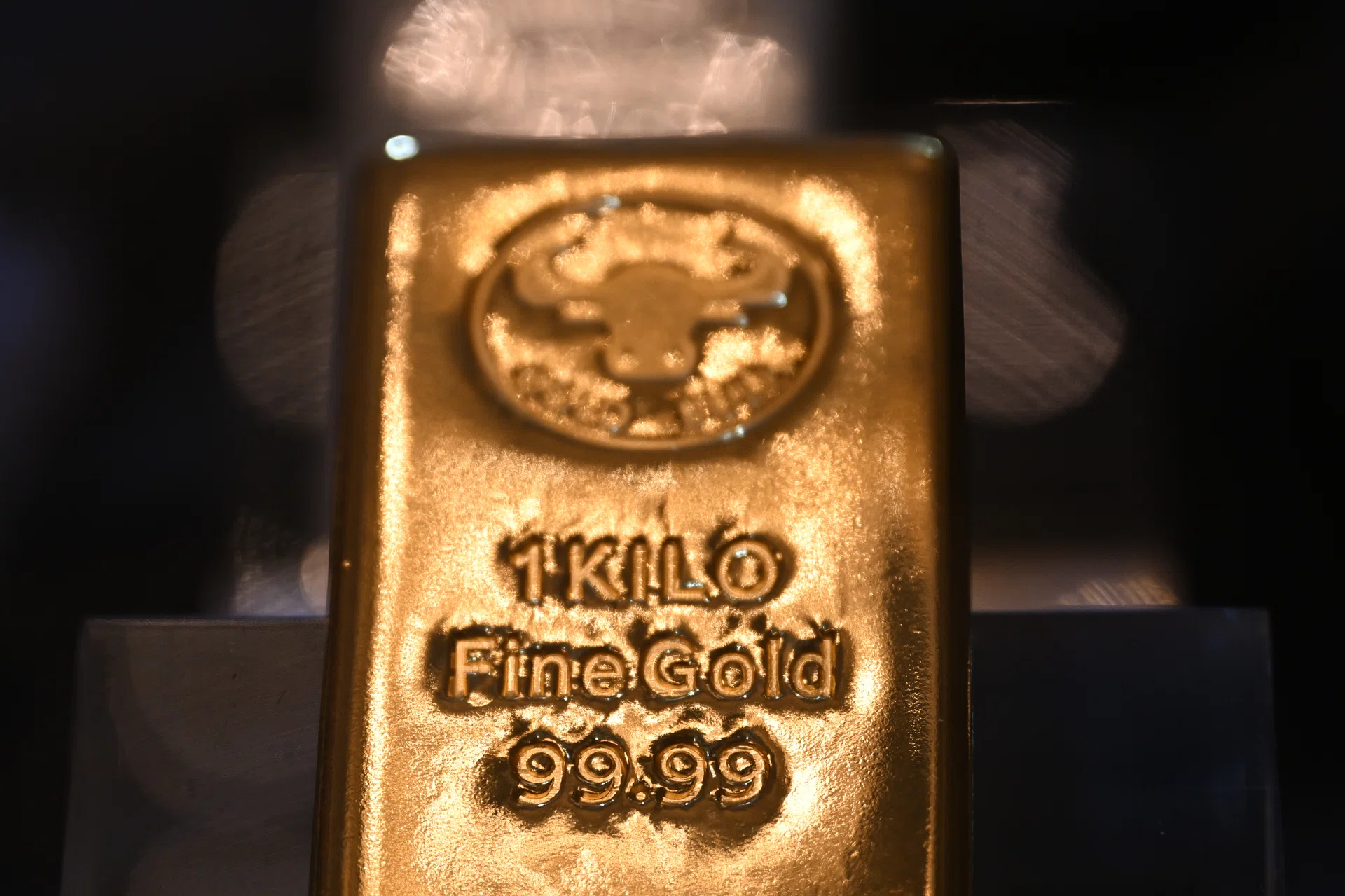
Gold prices remained under pressure on Sept. 24, 2026, holding onto recent losses as rising crude oil prices and robust U.S. economic indicators fueled market expectations of tighter Federal Reserve monetary policy. According to reporting by The Business Times, the precious metal's valuation has been dictated primarily by shifts in the U.S. central bank's interest rate outlook over recent weeks. Energy market gains have heightened concerns that inflation could remain stubborn, while stronger-than-anticipated macroeconomic metrics reduce the immediate necessity for monetary easing. The combination of persistent price pressures and economic resilience has bolstered interest rate expectations, reducing investor demand for non-yielding bullion relative to yield-bearing dollar assets.
Key facts
What happened
The recent weakness in spot gold reflects a reassessment by financial markets regarding the path of U.S. monetary policy. According to reporting by The Business Times, gold extended its price drop as two distinct macroeconomic factors converged to push U.S. interest rate expectations higher: a surge in international crude oil prices and a series of robust U.S. economic data releases.
When crude oil prices increase, energy costs propagate across supply chains, raising transport, manufacturing, and consumer expenses. This dynamic threatens to stall progress on controlling aggregate inflation, compelling market participants to re-evaluate the likelihood of further interest rate hikes by the Federal Reserve, or at minimum, an extended period of high policy rates.
Concurrently, stronger-than-expected economic indicators from the United States demonstrated that consumer spending, business activity, or labor market conditions remain resilient despite previous interest rate increases. When economic activity runs hot, central banks face less pressure to ease policy and greater incentive to maintain restrictive conditions to prevent overheating.
These developments triggered a repricing across fixed-income and currency markets. As interest rate expectations climbed, yields on U.S. Treasury securities rose, strengthening the U.S. dollar. Because gold is priced internationally in U.S. dollars and pays no income yield, higher risk-free bond yields increase the opportunity cost of holding physical bullion. Consequently, institutional and retail investors rotated capital out of precious metals and into yield-bearing dollar-denominated assets, keeping gold prices suppressed.
Why it matters
The interaction between rising energy prices, resilient economic activity, and gold valuations carries substantial implications across global financial markets, consumer sentiment, and macroeconomic policy. Gold has historically served as a prime hedging instrument against long-term inflation and systemic geopolitical uncertainty. However, in environments driven by aggressive central bank tightening, the asset's traditional inflation-hedging qualities are frequently overshadowed by rising real interest rates—the nominal yield on government bonds minus expected inflation.
When real yields rise, non-yielding assets face immediate capital outflows. For institutional portfolio managers, a higher interest rate environment alters baseline asset allocation models, raising the hurdle rate that non-income-generating commodities must clear to justify inclusion in portfolio strategies.
From a broader macroeconomic perspective, elevated crude oil prices function as an involuntary tax on both household disposable income and corporate profit margins. If higher energy costs coincide with sustained high interest rates, corporate capital expenditure may slow, and consumer borrowing costs for mortgages, auto loans, and credit cards will remain elevated.
For commodity markets, the prolonged dependence of gold prices on Federal Reserve communications underscores the dominance of macroeconomic liquidity factors over physical supply and demand dynamics. Precious metal miners and refining operations face double pressure: rising operational energy costs alongside constrained revenues from suppressed spot metal prices.
The background
To understand current movements in precious metals, it is necessary to examine the historical inverse relationship between gold prices, U.S. dollar strength, and real interest rates. Gold was formally unpegged from the U.S. dollar in August 1971, when U.S. President Richard Nixon ended the convertibility of dollars into gold at a fixed rate of $35 per troy ounce, terminating the post-World War II Bretton Woods monetary system. Since transitioning to a floating exchange rate regime, gold has functioned both as a global monetary reserve asset and a market-driven commodity.
The U.S. Federal Reserve operates under a dual mandate established by the U.S. Congress: achieving maximum employment and maintaining stable prices, targeting a 2 percent long-run inflation rate. To achieve price stability, the Federal Open Market Committee (FOMC)—the central bank's policy-making body—sets the target range for the federal funds rate across eight scheduled meetings each year. The federal funds rate determines the cost at which commercial banks lend uncollateralized reserves to one another overnight, influencing short-term borrowing costs throughout the global economy.
When the Fed raises interest rates or signals a prolonged period of monetary restriction, short-term and medium-term U.S. Treasury yields typically rise. Because U.S. Treasury bonds are backed by the U.S. government, they offer investors a guaranteed nominal yield. Gold, by contrast, incurs holding and storage costs without generating cash flows. Therefore, whenever real interest rates increase, the opportunity cost of holding physical gold rises, leading to downward pressure on spot prices. Conversely, during periods of rapid rate cuts or uncompensated inflation, gold historically experiences strong capital inflows.
Reaction
Financial market participants and commodity strategists have actively adjusted positions in response to the shift in interest rate expectations. Analysts tracking precious metals note that speculative long positions in gold futures have moderated as traders reduce exposure to non-yielding commodities in anticipation of persistent central bank firmness.
Macroeconomic commentators and institutional research desks have highlighted the challenge presented by rebounding energy prices. While central banks typically focus on core inflation metrics—which strip out volatile food and energy costs—sustained increases in crude oil prices inevitably bleed into core measures through higher transportation and production overheads.
While official policy statements from Federal Reserve leadership were not included in the immediate reporting, central bank officials scheduled to speak at public forums or upcoming academic conferences are widely expected to address how recent energy trends and economic resilience factor into upcoming policy decisions. Similarly, energy market analysts are evaluating whether crude oil supply management by key producing nations will continue to exert upward pressure on baseline inflation.
What we don't know yet
Several critical details remain unspecified in available reports, creating key uncertainties for investors and policymakers:
What to watch
Investors and economic observers should monitor several key indicators and scheduled events to determine the future trajectory of gold prices and interest rate expectations:
This report is based on original news coverage published by The Business Times on Sept. 24, 2026.
How this story was produced
This report was written by The Global Wire newsroom from reporting first published by The Business Times. We verify the core facts against the original report, write our own account, and add the background and consequences a short wire item leaves out. Drafting is AI-assisted inside an editor-supervised pipeline, and every story is checked for accuracy of attribution, structure and duplication before it appears — full detail in our AI and funding disclosure.
Spotted an error? Tell us at corrections@horizonglobalnews.com and read our corrections policy or editorial standards.






Reader comments
Loading comments…