

Rohit Sharma Focuses on 2027 World Cup After Retiring From Tests and T20Is
Indian cricketer Rohit Sharma has targeted the 2027 One Day International World Cup in Africa as his primary career objective after stepping down from red-ball and T20 international formats.
By The Global Wire Newsroom · Reported from SECTIONS Rohit Sharma has
Link preview · horizonglobalnews.com
Rohit Sharma Focuses on 2027 World Cup After Retiring From Tests and T20Is
Indian cricketer Rohit Sharma has targeted the 2027 One Day International World Cup in Africa as his primary career objective after stepping down from red-ball and T20 international formats.
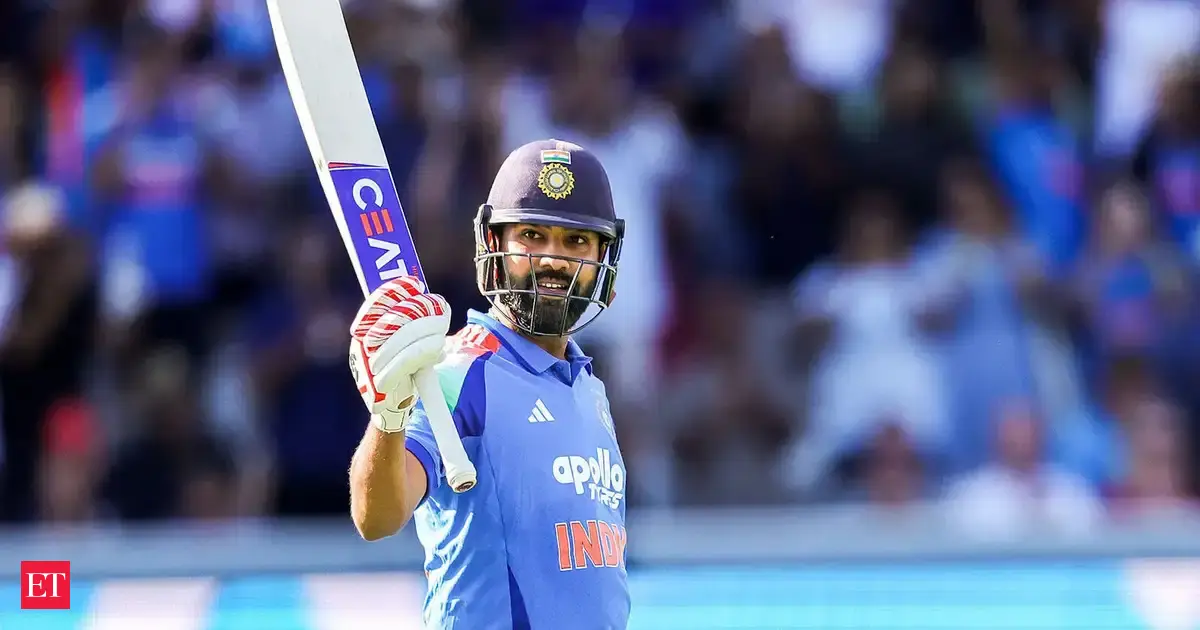
Indian international cricketer Rohit Sharma has declared his intention to continue playing One Day Internationals with the explicit objective of competing in the 2027 ICC Men’s Cricket World Cup. Describing his remaining ambitions in the 50-over format as "unfinished business," the veteran top-order batter confirmed that he remains committed to national selection for ODIs despite having retired from both Test cricket and Twenty20 Internationals. The 2027 tournament, which will be jointly hosted by South Africa, Zimbabwe, and Namibia, represents the next major quadrennial world championship in 50-over cricket, and Sharma's decision outlines a focused trajectory for the final phase of his international career.
Key facts
What happened
According to reporting by SECTIONS, Rohit Sharma expressed strong enthusiasm for participating in the 2027 ICC Men's Cricket World Cup, identifying the tournament as a central milestone for his remaining active playing career. His decision comes after stepping down from international competition in red-ball Test cricket and the shortest international format, Twenty20 Internationals.
By stepping away from two of cricket's three primary international formats, Sharma has concentrated his international duties exclusively on 50-over matches. In modern international cricket, single-format focus presents a distinct operational reality: international ODI series are far less frequent on the global calendar than T20Is or domestic franchise leagues, requiring players to maintain peak competition rhythm through limited international windows and domestic or franchise appearances.
Sharma's announcement formalizes his personal roadmap for the national selection committee. While many senior players phase out international commitments sequentially, focusing entirely on a single international format to reach a specific world tournament four years after a prior campaign requires deliberate planning regarding match frequency, conditioning, and competitive workload management.
Why it matters
A single-format commitment by a marquee player carries structural consequences for national team selection, roster balance, and strategic planning. In contemporary international cricket, players who retire from Test matches and T20Is while retaining single-format international status are rare, particularly in India, where squad competition across all formats is exceptionally high.
From a selection perspective, keeping an opening batting slot dedicated to a single-format veteran limits the exposure available to younger multi-format top-order batters. Young talent competing across domestic tournaments, Test series, and T20Is require consistent ODI opportunities to build experience in pacing 50-over innings. If a veteran holds one of the primary top-order positions through 2027, national selectors must balance long-term development with the short-term tactical advantages provided by an experienced campaigner.
Furthermore, single-format players face significant practical hurdles in maintaining match sharpness. Unlike multi-format cricketers who log regular international overs and innings throughout the calendar year, single-format specialists must rely heavily on domestic competitions like the Indian Premier League and regional 50-over tournaments to preserve their timing and match fitness. This operational dynamic puts additional pressure on national training camps and bilateral ODI series to serve as primary preparation grounds.
The background
To fully contextualize Sharma's goal of reaching the 2027 World Cup, it is necessary to examine recent developments in global cricket administration and India's performance in major international tournaments.
In November 2023, India hosted the ICC Men's Cricket World Cup, delivering a dominant campaign in which the national team won ten consecutive matches to reach the final at the Narendra Modi Stadium in Ahmedabad. However, India suffered a defeat against Australia in the final match on November 19, 2023, leaving the squad as tournament runners-up despite dominating the group and semifinal stages. Sharma served as team captain during that campaign, establishing an aggressive top-order batting approach during early powerplay overs that defined India's tactical blueprint.
Following the 2023 ODI tournament, India achieved success in the shortest format by winning the ICC Men's T20 World Cup in June 2024, held in the United States and the West Indies. Following that victory in Barbados, Sharma formally stepped away from T20 Internationals, initiating a phased transition out of multi-format international representation. His subsequent retirement from Test cricket further narrow-focused his international career to 50-over matches.
The 2027 ICC Men's Cricket World Cup will mark the return of the tournament to the African continent for the first time since 2003, when South Africa, Zimbabwe, and Kenya served as joint hosts. The 2027 edition expands hosting duties to Namibia alongside South Africa and Zimbabwe, expanding the geographic distribution of ICC global events in southern Africa.
Age and longevity are central factors in international cricket history. Born in April 1987, Sharma will be 40 years old when the 2027 tournament takes place in October and November 2027. Historically, few top-order batters have competed at the highest international level past the age of 39. Notable historical precedents include Sachin Tendulkar, who won the 2011 Cricket World Cup with India at age 37, Imran Khan, who captained Pakistan to World Cup victory in 1992 at age 39, and Misbah-ul-Haq, who represented Pakistan at the 2015 tournament at age 40. Competing at age 40 requires exceptional physical conditioning, injury management, and sustained hand-eye coordination against elite fast bowling.
Reaction
While formal public responses from the Board of Control for Cricket in India selection panel have not been detailed in the reporting, statements regarding long-term player intentions typically trigger internal evaluations by national selectors and team management.
Cricket analysts and former international players frequently discuss the trade-offs involved when senior players target specific future tournaments. Commentators generally acknowledge that Sharma’s leadership experience and proven track record in global events offer invaluable stability to the team. However, commentators also note that selectors must continuously assess player form and physical fitness rather than granting early guarantees of selection years in advance.
Within the fan base and domestic cricket ecosystem, Sharma's desire to address his "unfinished business" in ODIs resonates strongly due to the emotional impact of India's loss in the 2023 final. Supporters view his pursuit as a final opportunity to cap a distinguished career with an ODI World Cup trophy, while critics caution against holding open key selection slots without requiring continuous performance benchmarks in domestic or international competition.
What we don't know yet
Several critical operational details remain unconfirmed regarding Sharma's path to the 2027 tournament.
First, it is unknown how the national selection committee will handle squad selection for intermediate bilateral ODI series and regional tournaments, such as the ICC Champions Trophy. Selectors have not explicitly stated whether Sharma will play in every scheduled bilateral ODI or if he will be selectively rested to manage workload and avoid injury.
Second, the question of leadership remains open. The reporting does not clarify whether Sharma intends to continue as ODI captain through 2027 or if he plans to transition the captaincy to a successor while remaining purely as a specialist opening batter. A change in leadership during the cycle could alter team dynamics and tactical planning.
Third, it remains unverified how Sharma will maintain optimal match sharpness during long stretches between international ODI fixtures, specifically whether he will participate in domestic 50-over competitions like the Vijay Hazare Trophy alongside his franchise commitments in the Indian Premier League.
What to watch
Key milestones over the coming seasons will determine the feasibility and success of Sharma's push toward 2027.
Reporting for this story was provided by SECTIONS.
How this story was produced
This report was written by The Global Wire newsroom from reporting first published by SECTIONS Rohit Sharma has. We verify the core facts against the original report, write our own account, and add the background and consequences a short wire item leaves out. Drafting is AI-assisted inside an editor-supervised pipeline, and every story is checked for accuracy of attribution, structure and duplication before it appears — full detail in our AI and funding disclosure.
Spotted an error? Tell us at corrections@horizonglobalnews.com and read our corrections policy or editorial standards.






Reader comments
Loading comments…