

Sensex Advances 126 Points as Broader Market Strength Offsets Metal and Financial Drag
Indian equity benchmarks opened higher on September 30, with the Nifty holding above 22,700 as gains in midcap, smallcap, and select banking shares absorbed selling in metals and financial services.
By The Global Wire Newsroom · Reported from Mohammad Haris; Business Desk
Link preview · horizonglobalnews.com
Sensex Advances 126 Points as Broader Market Strength Offsets Metal and Financial Drag
Indian equity benchmarks opened higher on September 30, with the Nifty holding above 22,700 as gains in midcap, smallcap, and select banking shares absorbed selling in metals and financial services.
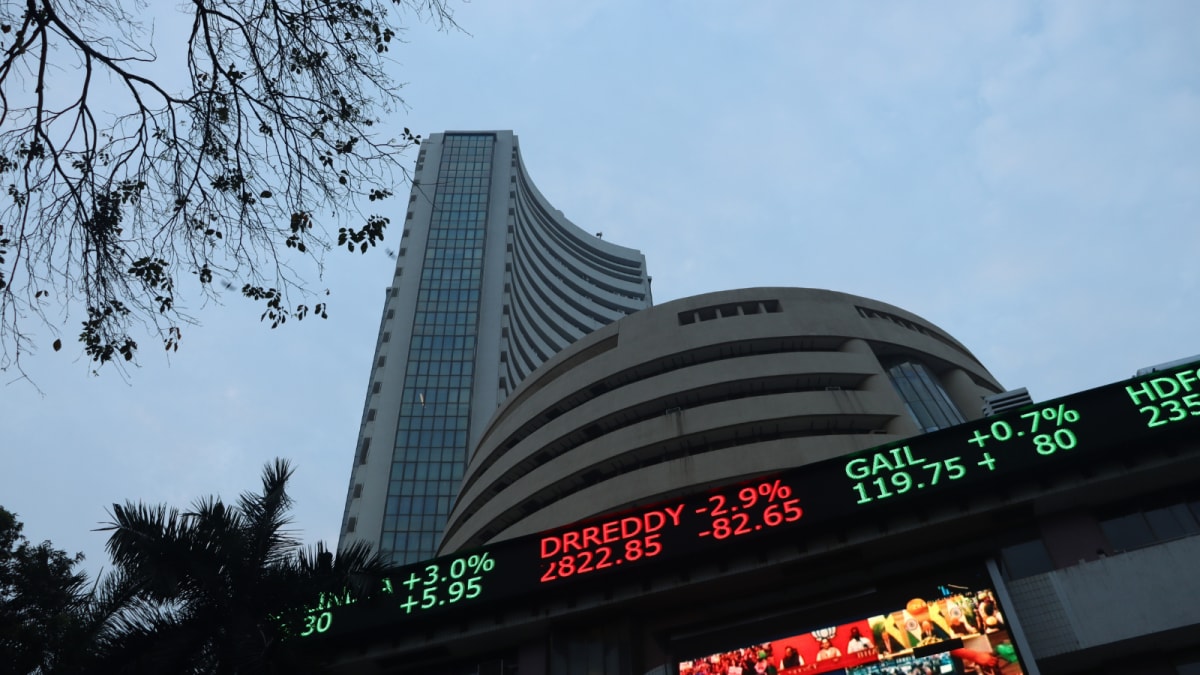
Indian equity benchmarks registered modest gains during morning trade on September 30, 2026, anchored by relative strength in broader market segments and select banking equities. The 30-share BSE Sensex climbed 126 points shortly after trading commenced, while the broader 50-share NSE Nifty held above the key psychological threshold of 22,700. Despite positive sentiment across midcap and smallcap capitalization tiers, persistent profit-booking in metal producers and non-bank financial services counters limited the upward trajectory of the headline indices, according to reporting by Business Desk.
Key facts
What happened
During early trading on September 30, 2026, Indian stock exchanges exhibited a distinct divergence across capitalization tiers and industrial sectors. The BSE Sensex moved higher by 126 points, while the NSE Nifty established an early footing above 22,700 points. The opening gains were primarily propelled by buying interest in mid-capitalization and small-capitalization companies, which reflected sustained retail and domestic fund participation across secondary market equities.
In sectoral terms, trading activity demonstrated notable variation. Select banking equities recorded early buying support, helping cushion the headline benchmarks against deeper retreats. However, broader financial services firms—which include non-banking financial companies, housing finance entities, insurance providers, and asset management companies—faced targeted selling pressure. Simultaneously, metal sector stocks dragged on overall index performance as investors pared exposure to industrial commodity and steel-making enterprises.
According to reporting by Business Desk, this divergence created a balanced trading environment where midcap and smallcap strength absorbed profit-taking in heavy metal and financial stocks, enabling the flagship indices to maintain positive territory during the opening hours of the market session.
Why it matters
The early session performance on September 30 carries significant implications for institutional asset allocation, retail investor confidence, and index sentiment across Indian capital markets. The ability of the Nifty 50 to open and sustain levels above 22,700 serves as an important operational baseline for technical market analysts, options traders, and automated algorithmic trading systems. Maintaining key technical levels often influences derivative market positioning, particularly around options expiry cycles and monthly settlement periods on domestic exchanges.
The divergence between broader market gains and targeted selling in benchmark heavyweights underscores an ongoing structural shift in investor behavior. Strong performance in midcap and smallcap indices indicates robust domestic liquidity, supported by continuous retail participation through Systematic Investment Plans and domestic mutual fund inflows. When midcap and smallcap categories advance even as large-cap financial and metal stocks experience downward pressure, it suggests that broad-based market participation remains healthy despite selective institutional profit-taking in index heavyweights.
Furthermore, the split between commercial banking stocks and financial services reflects distinct fundamental driver assessments by market participants. Commercial banks benefit from expanding credit growth, asset quality stabilization, and interest rate margins, whereas non-bank financial companies and metal producers are more sensitive to short-term liquidity costs, regulatory capital adjustments, and international commodity market fluctuations. For global investors evaluating emerging market equity allocations, Indian markets demonstrate resilience when broader indices absorb localized weakness in capital-intensive sectors without triggering market-wide sell-offs.
The background
India's equity market ecosystem is structured around two primary stock exchanges: the BSE (formerly the Bombay Stock Exchange), established in 1875 as Asia's oldest stock exchange, and the National Stock Exchange of India (NSE), founded in 1992 and operationalized in 1994. The BSE Sensex comprises 30 financially sound, large-cap companies representative of major industrial sectors, calculated using a free-float market capitalization methodology. The NSE Nifty 50 encompasses 50 liquid large-cap stocks listed on the NSE, serving as the benchmark for domestic equity performance and international derivatives trading.
Beyond the flagship indices, Indian exchanges divide securities into capitalization categories overseen by the market regulator, the Securities and Exchange Board of India (SEBI). Under SEBI classification guidelines, the top 100 companies by market capitalization constitute large-cap stocks, companies ranked 101 to 250 form mid-cap stocks, and those ranked 251 onward are categorized as small-cap stocks. Midcap and smallcap indices typically offer higher structural growth potential but carry higher volatility compared to mature large-cap enterprises.
The financial sector forms the largest weighted component of both the Sensex and the Nifty 50, frequently accounting for over 30 percent of index composition. This sector encompasses state-owned public sector banks, private commercial banks, non-banking financial companies, housing finance institutions, insurance companies, and financial technology providers. Performance in this segment is closely tied to monetary policy stances adopted by the Reserve Bank of India (RBI), which regulates systemic liquidity, benchmark repurchase (repo) rates, and cash reserve ratios.
The metal sector, represented by major steel, aluminum, copper, and zinc producers, operates under different dynamics. Indian metal equities are heavily influenced by international commodity price benchmarks, Chinese economic recovery indicators, global capital expenditure cycles, and domestic infrastructure spending schedules. Sharp shifts in raw material costs, export tariffs, or international demand patterns frequently generate sector-specific volatility that can weigh heavily on flagship equity benchmarks.
Reaction
Market reactions during early morning equity sessions reflect real-time order matching, institutional portfolio rebalancing, and domestic retail participation across trading networks. Equity strategists, wealth managers, and floor traders monitor early benchmark movements to gauge daily risk appetite and liquidity distribution.
While formal public statements from corporate executives or regulatory authorities are rarely issued during routine session opens, market participants actively track order books for indications of institutional net activity. Domestic institutional investors, including mutual fund houses and insurance corporations, often provide structural buying support during market pullbacks, while Foreign Portfolio Investors adjust positions based on global bond yields, foreign exchange movements, and emerging market risk allocations.
Brokerage firms and portfolio advisory outfits routinely issue morning commentary analyzing sector rotations, comparing relative valuation multiples between large-cap banking heavyweights and elevated midcap valuation levels. Financial reporting published during morning trade, such as the account by Business Desk, provides essential context for retail traders and market observers assessing early momentum across benchmark levels and broader capitalization indices.
What we don't know yet
Several critical details regarding the market session remain unconfirmed during early morning trading reports. The reporting by Business Desk does not provide specific stock-by-stock performance data, leaving open which individual banking majors drove the morning index gains or which specific metal producers and financial services firms experienced the sharpest selling pressure.
Additionally, early session gains of 126 points on the Sensex and the Nifty's standing above 22,700 do not guarantee afternoon stability. Intraday volatility, driven by European market openings, foreign exchange fluctuations, or unexpected corporate news, can alter index trajectories prior to the standard 3:30 PM IST market close.
Furthermore, cumulative daily institutional flow figures remain unknown until post-market processing. End-of-day data published by the BSE and NSE detailing net buying or selling by Foreign Portfolio Investors and Domestic Institutional Investors is required to determine whether early morning broader market gains were driven by institutional capital deployment or retail order flow.
What to watch
Investors and market observers will monitor several specific metrics and milestone dates following the morning opening:
This account incorporates news reporting published by Mohammad Haris at Business Desk.
How this story was produced
This report was written by The Global Wire newsroom from reporting first published by Mohammad Haris; Business Desk. We verify the core facts against the original report, write our own account, and add the background and consequences a short wire item leaves out. Drafting is AI-assisted inside an editor-supervised pipeline, and every story is checked for accuracy of attribution, structure and duplication before it appears — full detail in our AI and funding disclosure.
Spotted an error? Tell us at corrections@horizonglobalnews.com and read our corrections policy or editorial standards.





Reader comments
Loading comments…