

Prime Minister Burnham to Outline UK Policy Options on European Union Relations
Prime Minister Burnham plans to present options later this year on the UK's future relationship with the European Union amid growing calls within the Labour Party to rejoin the bloc.
By The Global Wire Newsroom · Reported from Nathan Rennolds
Link preview · horizonglobalnews.com
Prime Minister Burnham to Outline UK Policy Options on European Union Relations
Prime Minister Burnham plans to present options later this year on the UK's future relationship with the European Union amid growing calls within the Labour Party to rejoin the bloc.
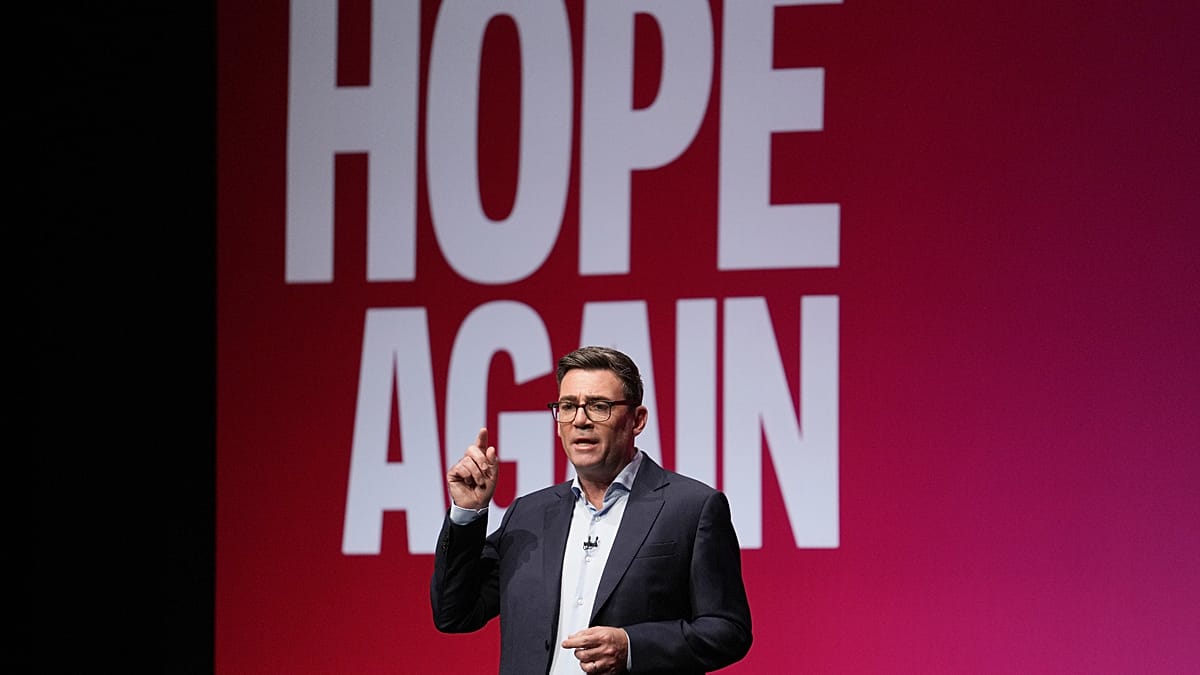
LONDON — British Prime Minister Burnham is set to present a series of options later this year regarding the United Kingdom’s future relationship with the European Union, following a resurgence of political debate over the nation’s post-Brexit policy stance. The announcement comes as prominent figures within the governing Labour Party increasingly press for a re-examination of Britain’s ties to Brussels, including potential pathways toward re-entering the European trading bloc. Ten years after the landmark 2016 referendum, the question of European integration has returned to the forefront of Westminster politics, requiring the administration to assess how best to manage economic and trade friction across the English Channel.
Key facts
What happened
The political agenda in Westminster has shifted back toward European policy following indications that Prime Minister Burnham will unveil a set of options regarding Britain's relationship with the European Union before the end of the year, according to reporting by Nathan Rennolds.
The move follows growing discussion within the governing Labour Party, where leading figures have publicly urged the government to consider re-establishing formal ties with the European bloc. While previous government efforts centered on targeted technical adjustments to existing bilateral arrangements, mounting pressure from influential party factions has created momentum for a formal review of broader strategic options.
According to reporting by Nathan Rennolds, the upcoming government presentation will outline options for how the United Kingdom might structure its future economic, legal, and institutional ties with Brussels. The decision places the nation's post-Brexit framework back under active political examination, reviving debates that have persisted since the 2016 vote to leave the European Union.
Why it matters
The government's plan to outline strategic options for European Union relations carries substantial economic, regulatory, and political implications for both the United Kingdom and its European trading partners. Since the UK departed the EU single market and customs union, trade in goods and services has operated under new regulatory boundaries, introducing administrative overhead, border compliance checks, and non-tariff barriers across supply chains.
For key economic sectors such as automotive manufacturing, aerospace, financial services, and pharmaceuticals, any potential movement toward regulatory alignment or closer integration could alter market access, compliance costs, and long-term investment planning. Re-establishing entry into the EU Single Market would reduce trade barriers but would also require accepting European regulations without voting rights unless full membership is achieved.
Politically, reopening the debate on EU relations tests the cohesion of the governing Labour Party. The leadership must balance the expectations of pro-European urban constituencies with those of voters in industrial regions who supported leaving the EU in 2016. Furthermore, changes to European policy could impact relations with devolved governments in Scotland and Northern Ireland, both of which recorded majority votes to remain in the EU during the 2016 referendum.
Internationally, European leaders in Brussels and across member state capitals will evaluate whether London is proposing limited operational revisions or a fundamental shift in political engagement. Any modification to the current framework will require negotiations, unanimous consent across EU member states, and strict adherence to European treaty mechanisms.
The background
The United Kingdom's exit from the European Union represents one of the most significant structural shifts in modern European politics. On June 23, 2016, the British public voted in a national referendum on EU membership, resulting in a 51.89% to 48.11% decision to leave, representing 17.4 million votes cast for Leave and 16.1 million for Remain.
Following extensive parliamentary debates and negotiations, the UK formally invoked Article 50 of the Treaty on European Union in March 2017. The country officially withdrew from the EU on January 31, 2020, entering a transition period that concluded on December 31, 2020. On January 1, 2021, the EU–UK Trade and Cooperation Agreement (TCA) came into force, establishing a zero-tariff, zero-quota trade arrangement for goods while ending free movement of people and frictionless cross-border services trade.
Historically, the Labour Party's stance on European integration has evolved over several decades. During the 1975 referendum on remaining in the European Economic Community (EEC), Labour was internally divided. By the late 1980s and 1990s, the party adopted a pro-European platform highlighting the benefits of the Single Market and social protections. In the 2016 referendum, Labour officially backed remaining in the EU. Following its return to government in 2024 under Keir Starmer, Labour adopted a policy of seeking pragmatic improvements to post-Brexit trade arrangements while explicitly ruling out rejoining the Single Market or Customs Union. However, ongoing debate among party members has maintained attention on long-term European policy options.
Under European treaty law, any sovereign state seeking EU membership must follow the formal accession process set out in Article 49 of the Treaty on European Union. Applicants must satisfy the Copenhagen criteria, established in 1993, requiring stable democratic institutions, a functioning market economy, and legal alignment with EU law. Accession requires unanimous approval by the Council of the European Union, consent from the European Parliament, and ratification by all 27 member states.
Reaction
The prospect of new policy options on EU relations has drawn varied reactions across the British political spectrum. While formal responses will depend on the details presented later this year, initial reactions reflect existing divisions over European policy.
Pro-European factions within the Labour Party and external advocacy groups have welcomed the government's willingness to re-examine relations, contending that trade barriers have impaired economic performance and restricted international cooperation. Proponents argue that setting out clear policy pathways is essential for reducing trade friction and restoring closer partnerships in defense, research, and environmental policy.
Conversely, opposition parties and pro-Brexit campaign organizations are expected to oppose measures that suggest re-entering the EU or accepting European regulatory oversight. Critics argue that revisiting European integration risks undermining the outcome of the 2016 referendum and placing British businesses under foreign regulations. Lawmakers advocating regulatory independence are likely to scrutinize any proposals that alter existing arrangements.
Within the European Union, officials in Brussels and national representatives have consistently emphasized that while constructive dialogue is welcome, the integrity of the Single Market and its four fundamental freedoms—goods, services, capital, and labor—remains non-negotiable. European diplomats will examine any options put forward by London to assess whether they represent feasible proposals within the framework of existing treaties.
What we don't know yet
Key elements regarding the scope and implementation of the government's policy review remain unconfirmed:
What to watch
Several critical milestones will determine the outcome of the government's European policy review:
This report is based on original reporting by Nathan Rennolds.
How this story was produced
This report was written by The Global Wire newsroom from reporting first published by Nathan Rennolds. We verify the core facts against the original report, write our own account, and add the background and consequences a short wire item leaves out. Drafting is AI-assisted inside an editor-supervised pipeline, and every story is checked for accuracy of attribution, structure and duplication before it appears — full detail in our AI and funding disclosure.
Spotted an error? Tell us at corrections@horizonglobalnews.com and read our corrections policy or editorial standards.




Reader comments
Loading comments…