

Baku Security Forum Assembles Intelligence Leaders to Address Transnational Threats
International intelligence and security officials met in Baku to bolster counterterrorism measures, strengthen cross-border intelligence sharing, and counter emerging global security risks.
By The Global Wire Newsroom · Reported from euronews.com
Link preview · horizonglobalnews.com
Baku Security Forum Assembles Intelligence Leaders to Address Transnational Threats
International intelligence and security officials met in Baku to bolster counterterrorism measures, strengthen cross-border intelligence sharing, and counter emerging global security risks.
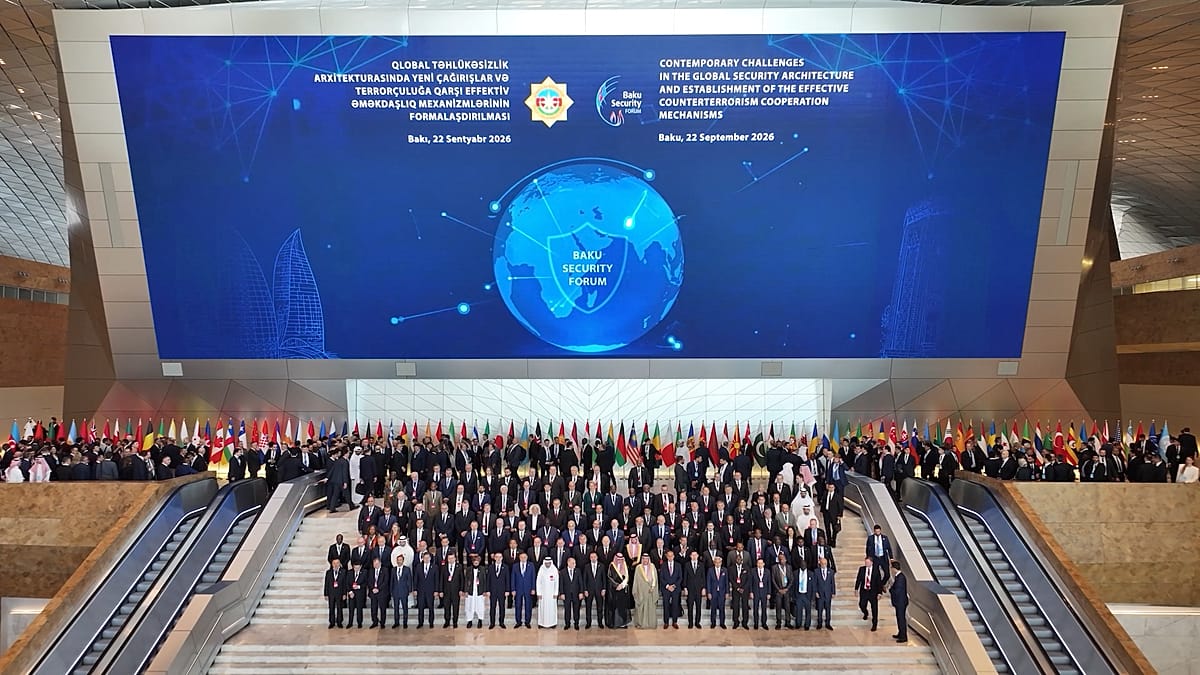
Security officials, intelligence leaders, and counterterrorism experts gathered in the Azerbaijani capital of Baku in late September 2026 for the Baku Security Forum, a high-level summit dedicated to coordinating international responses to cross-border security challenges. The conference brought together multi-national delegations to examine evolving security risks, evaluate state and non-state threats, and foster deeper institutional cooperation among global intelligence agencies. According to reporting by Euronews, the forum focused on building robust counterterrorism frameworks, facilitating real-time information exchange, and mitigating emerging security vulnerabilities that bypass traditional national boundaries.
Key facts
What happened
The Baku Security Forum provided a structured platform for senior representatives from foreign intelligence services, national security councils, and law enforcement agencies to assess current threat environments. The agenda was organized around key operational domains, with primary emphasis placed on transnational counterterrorism mechanisms and the interception of cross-border threat networks.
Delegates engaged in working sessions designed to analyze how violent extremist groups, organized criminal syndicates, and hostile actors exploit regulatory gaps, open transit routes, and digital infrastructure to execute cross-border operations. Discussions highlighted the need for improved intelligence interoperability—the technical and procedural ability of different national security agencies to rapidly aggregate, verify, and share threat data across borders before attacks materialize.
In addition to traditional counterterrorism protocols, the forum addressed emerging security threats that modern state and non-state actors increasingly deploy. These include hybrid warfare tactics, advanced cyber capabilities targeting critical national infrastructure, automated surveillance evasion, and the weaponization of commercial technology. Intelligence officials reviewed existing international protocols to identify operational friction points that delay security cooperation during acute crises.
While plenary sessions focused on macro-level security policy, the forum also facilitated bilateral and restricted multilateral side meetings. These private exchanges allowed intelligence chiefs to discuss specific regional security concerns, evaluate shared border security protocols, and explore bilateral information-sharing arrangements tailored to sensitive operational environments.
Why it matters
The convergence of global intelligence officials in Baku reflects a growing recognition among security planners that contemporary security threats are fundamentally borderless and cannot be contained through isolated national defenses. Modern extremist organizations, cybercrime rings, and state-backed hybrid threat networks operate across multiple jurisdictions simultaneously, taking advantage of asymmetrical legal frameworks, encrypted communications, and complex trade networks.
For intelligence services, establishing functional, low-friction channels of cross-border communication is essential. When threat vectors move across sovereign frontiers—whether as foreign fighters, illicit financing, weapons smuggling, or disruptive cyberattacks—delay in intelligence sharing can severely impair prevention efforts. Formats like the Baku Security Forum aim to establish pre-existing relationships among security leadership, reducing bureaucratic friction when urgent intelligence must be acted upon.
Geopolitically, hosting the forum reinforces Azerbaijan's strategic position in Eurasia. Situated at the intersection of Eastern Europe, Western Asia, and the Middle East, Azerbaijan occupies a crucial geographic crossroads. Security stability in the South Caucasus directly impacts international energy corridors—including gas pipelines delivering energy to Europe—and global trade infrastructure such as the Trans-Caspian International Transport Route, also known as the Middle Corridor. Ensuring robust cross-border security protocols in this region is vital for maintaining trade continuity, energy security, and regional stability.
Furthermore, as emerging technologies lower the barrier to entry for non-state actors seeking to conduct destabilizing operations, intelligence agencies face pressure to continuously adapt their defensive frameworks. By bringing together diverse intelligence perspectives, the forum offers participants a platform to benchmark operational strategies against rapidly evolving threat vectors.
The background
The South Caucasus and the broader Eurasian region have long served as a vital arena for regional security management and counterterrorism oversight. Azerbaijan has systematically developed its profile as an international summit host, leveraging its geographic position, energy resources, and non-aligned diplomatic posture. In November 2024, Baku hosted the United Nations Climate Change Conference (COP29), highlighting its capacity to organize complex international events requiring extensive security coordination and international diplomacy.
Historically, security architecture in Eurasia has operated through a mix of bilateral agreements, regional multilateral bodies, and ad hoc intelligence coalitions. The region's security environment is shaped by complex historical conflicts, proximity to volatile zones in the Middle East, and ongoing shifts in global power dynamics involving neighboring powers such as Russia, Turkey, and Iran. Consequently, intelligence agencies operating around the Caspian basin navigate delicate political balances while maintaining cooperation against shared threats like international terrorism, drug trafficking, and organized crime.
Counterterrorism strategies have evolved dramatically over the past two decades. Early international frameworks focused heavily on physical border controls, financial tracking through conventional banking networks, and military interventions. However, the rapid digitalization of global communications, the proliferation of decentralized finance, and low-cost autonomous technologies have fundamentally altered threat dynamics. Modern counterterrorism demands real-time digital intelligence integration, cross-jurisdictional cyber forensics, and agile inter-agency coordination.
Events like the Baku Security Forum are positioned within this wider institutional landscape, providing an informal yet authoritative space where intelligence professionals can engage beyond the rigid parameters of formal treaty organizations. Similar security dialogues across Western Europe, Asia, and the Gulf regions have shown that off-the-record multilateral gatherings often yield practical operational channels that formal diplomatic summits cannot easily establish.
Reaction
Following the conclusion of the forum's sessions, host authorities and participating delegations emphasized the value of sustained international dialogue in safeguarding global and regional stability. Public messaging from security conferences of this nature typically emphasizes mutual commitment to international law, national sovereignty, and collective action against non-state threat networks.
Participating intelligence services are expected to brief their national security executive bodies regarding the findings and alignment achieved during the Baku sessions. While intelligence agencies rarely issue detailed public statements about classified discussions, regional defense and foreign policy analysts anticipate that discussions from the forum will inform upcoming intergovernmental reviews on border management, counterterrorism readiness, and joint security monitoring along vital trade routes.
International bodies specializing in security and crime prevention, such as Interpol and the United Nations Office of Counter-Terrorism (UNOCT), regularly monitor regional intelligence gatherings like the Baku forum to assess how regional initiatives align with global counterterrorism conventions and multilateral intelligence databases.
What we don't know yet
Despite the announcement of the summit, several critical details remain unconfirmed due to the confidential nature of international intelligence proceedings.
First, the complete roster of participating nations and specific intelligence agencies has not been publicly released. It remains unclear whether delegations from major Western intelligence alliances, Middle Eastern partner states, or regional neighbors like Russia and Iran participated in the discussions simultaneously, or whether attendance was structured through selective bilateral tracks.
Second, the specific operational outcomes of the forum—such as whether formal intelligence-sharing memoranda of understanding, joint counterterrorism task forces, or standardized cyber-threat reporting protocols were signed—have not been disclosed. Intelligence forums frequently yield classified administrative or technical agreements that remain undisclosed to the public.
Finally, available reports do not detail how participants addressed sensitive regional political tensions, including security dynamics in the South Caucasus following past conflict resolutions, or how the forum navigated differing national definitions of threat actors. The precise balance between discussions on physical counterterrorism and emerging digital or hybrid threats also remains unspecified in publicly released summaries.
What to watch
In the coming months, several key developments will indicate the tangible impact of the Baku Security Forum on international security cooperation:
Credit
This report synthesizes information originally reported by Euronews on September 29, 2026, alongside established geopolitical context regarding international intelligence cooperation, regional security dynamics in the South Caucasus, and global counterterrorism mechanisms.
How this story was produced
This report was written by The Global Wire newsroom from reporting first published by euronews.com. We verify the core facts against the original report, write our own account, and add the background and consequences a short wire item leaves out. Drafting is AI-assisted inside an editor-supervised pipeline, and every story is checked for accuracy of attribution, structure and duplication before it appears — full detail in our AI and funding disclosure.
Spotted an error? Tell us at corrections@horizonglobalnews.com and read our corrections policy or editorial standards.





Reader comments
Loading comments…