

Artificial Beaver Dams Drive Fourfold Surge in Bat Activity and Restore Amphibian Breeding
Structures designed to imitate natural beaver dams substantially boost bat activity and allow amphibians to return to degraded stream habitats, according to new research.
By The Global Wire Newsroom · Reported from TOI Science Desk
Link preview · horizonglobalnews.com
Artificial Beaver Dams Drive Fourfold Surge in Bat Activity and Restore Amphibian Breeding
Structures designed to imitate natural beaver dams substantially boost bat activity and allow amphibians to return to degraded stream habitats, according to new research.
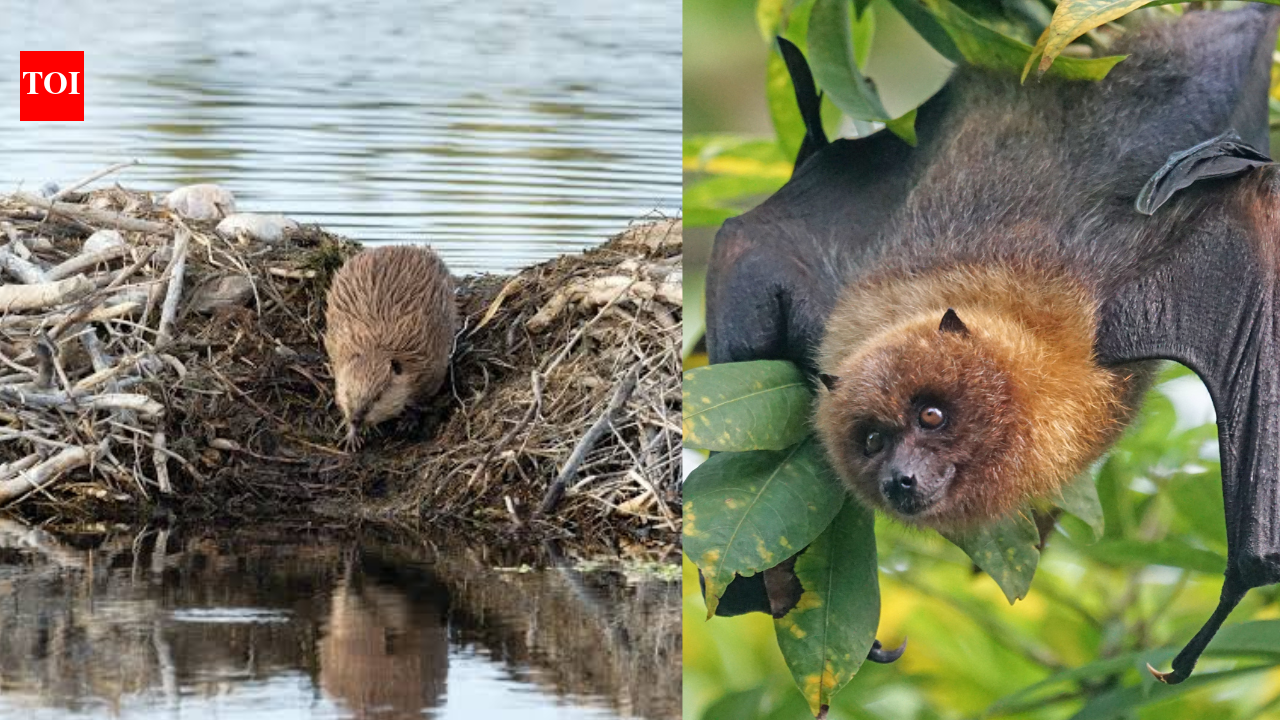
Scientists evaluating stream restoration methods have found that human-built structures engineered to mimic natural beaver dams can dramatically increase animal activity and restore lost breeding grounds along degraded waterways. According to reporting by TOI Science Desk on September 29, 2026, installing artificial beaver dams along impaired streams fundamentally altered local wildlife utilization patterns, resulting in a 3.9-fold increase in bat activity and enabling amphibian species to breed in aquatic environments where they were previously absent. The results highlight how low-tech, bio-inspired infrastructure can successfully replicate the key hydrological functions of natural ecosystems to aid biodiversity recovery.
Key facts
What happened
According to reporting by TOI Science Desk, researchers conducted field experiments on ecologically impaired stream channels using artificial structures built to replicate the physical characteristics of beaver dams. In natural settings, Eurasian and North American beavers construct dams out of mud, stone, and woody debris, converting steep, fast-flowing watercourses into broad, slow-moving wetland networks. Where natural beaver populations are missing, scientists installed human-engineered equivalents designed to produce identical hydraulic effects.
These man-made barriers—commonly referred to in ecological restoration as Beaver Dam Analogs—were positioned across targeted stream channels to interrupt the direct downstream movement of water. By obstructing the current, the structures backed up water, reduced flow velocity, and created localized ponds and saturated margins along the stream corridor. The structural transformation changed linear, deeply incised stream channels into complex aquatic environments featuring standing water and expanded surface area.
Following the installation, monitoring equipment and field surveys revealed rapid ecological responses across multiple animal groups. Bat activity within the restored stream sections increased 3.9 times compared to pre-installation levels or untreated reference segments. The expansion of open, slow-moving water provided enriched foraging habitat for bats, which rely on calm water surfaces to hunt emerging insects and drink. Concurrently, field researchers observed successful breeding activity among local amphibian populations within the artificial impoundments, marking the return of reproductive behavior in stream stretches where amphibians had been completely absent prior to the intervention.
Why it matters
The documented wildlife responses provide strong empirical support for low-tech stream restoration strategies aimed at reversing widespread watershed degradation. Over the past two centuries, agricultural drainage, timber harvesting, cattle grazing, urban development, and direct beaver eradication have severely altered river networks worldwide. Unstable, incised streams channel water rapidly downstream, lowering groundwater tables, eroding riverbanks, and destroying the calm aquatic habitats required by sensitive species.
The nearly fourfold surge in bat activity highlighted in the TOI Science Desk report underscores the role of hydraulic complexity in sustaining regional food webs. Aquatic insects such as midges, mosquitoes, and mayflies lay eggs in still water and emerge as adults, providing a primary food source for nocturnal insectivorous bats. By quadrupling bat activity, artificial impoundments support bat populations that serve as vital biological controllers of agricultural pests and insect vectors in surrounding landscapes.
Simultaneously, the return of amphibian breeding addresses one of the most pressing challenges in global conservation biology. Amphibians are among the most imperiled animal classes globally, facing severe declines driven by habitat loss, fungal disease, and aquatic degradation. Many amphibians require slow-moving or static water bodies free from swift currents and predatory fish to lay eggs and complete larval development. Demonstrating that artificial beaver structures can quickly recreate functional breeding habitat gives land managers an actionable tool to support vulnerable frog, toad, and salamander populations without waiting decades for natural beaver recolonization.
The background
Understanding the significance of the artificial dam intervention requires examining the historic ecological role of wild beavers and the development of modern river restoration sciences. Before extensive European fur trapping in the 17th through 19th centuries, tens of millions of beavers inhabited waterways across North America and Eurasia. Their dam-building activities maintained extensive wetland mosaics that trapped sediment, buffered watersheds against seasonal droughts and severe floods, raised local water tables, and created diverse ecological niches for thousands of plant and animal species.
The near-total removal of beavers from many watersheds caused streams to straighten and cut deeply into their beds, creating steep, ditch-like channels separated from their natural floodplains. Traditional civil engineering approaches to river restoration often relied on heavy machinery to reshape channels or reinforce banks with large boulders and concrete. However, these high-cost methods frequently failed to restore self-sustaining ecosystem processes and were financially unfeasible across expansive rural watersheds.
In response, restoration ecologists developed Low-Tech Process-Based Restoration (LTPBR) techniques in the early 2000s, centered on the construction of Beaver Dam Analogs (BDAs). Built using simple, natural materials such as wooden fence posts driven into the stream bed woven with native willow branches and packed with turf or mud, BDAs mimic natural dam architecture at a fraction of the cost of heavy engineering projects. These structures are intended to jumpstart natural stream processes by trapping fine sediment, elevating water tables, encouraging side-channel development, and eventually attracting wild beavers to maintain the structures permanently. While prior studies demonstrated the hydrological and geomorphic benefits of BDAs—such as groundwater recharge and flow attenuation—the findings reported by TOI Science Desk deliver clear biological validation by quantifying direct improvements in mammal activity and amphibian reproduction.
Reaction
Although specific formal statements from environmental regulators or government agencies were not included in the TOI Science Desk report, the study's findings are expected to resonate strongly among conservation biologists, forestry officers, and watershed management teams. Quantitative metrics showing a 3.9-fold increase in bat activity alongside documented amphibian breeding provide concrete evidence that land managers can use to justify restoration grants and permit applications.
Agricultural stakeholders and private landowners may also monitor these results closely. While wild beaver reintroduction can sometimes trigger friction with agricultural landowners due to concerns over unplanned flooding of crops or timberland, artificial beaver dams offer a controlled alternative. Engineered structures can be designed with specific crest heights and emergency spillways, allowing natural resource managers to achieve target ecological benefits while maintaining control over localized water levels.
What we don't know yet
While the reported metrics demonstrate clear initial biological benefits, several critical questions remain unaddressed in the available coverage. The TOI Science Desk report does not specify the precise geographical region, climate classification, or stream order where the research took place, leaving it uncertain how readily these exact findings can be generalized to arid, tropical, or high-altitude environments.
Furthermore, the reporting omits details regarding the specific bat and amphibian species involved. It remains unknown whether the surge in bat activity represents a net increase in regional bat populations over time or a spatial reallocation of existing bats congregating around newly created foraging hotspots. Additionally, the study's timeframe and long-term structural resilience of the artificial dams were not detailed. It is unclear how long the engineered barriers remain effective without ongoing human maintenance or whether wild beavers eventually moved in to colonize and maintain the sites naturally.
What to watch
In the coming months and years, several key developments will indicate the broader impact of this research on environmental policy and conservation practice. Natural resource agencies and regional conservation districts may update low-tech stream restoration guidelines to prioritize BDA installations in catchments with declining amphibian numbers or designated bat conservation zones.
Researchers are expected to present full datasets, including multi-year trends, insect emergence rates, and taxonomic breakdowns, at upcoming ecological restoration conferences and in peer-reviewed journals. Observers should also watch whether state or national environmental agencies streamline environmental permitting procedures for non-permanent, low-tech stream structures, which currently face regulatory hurdles in certain jurisdictions due to legacy rules governing artificial stream obstructions.
This account is based on reporting published by the TOI Science Desk on September 29, 2026.
How this story was produced
This report was written by The Global Wire newsroom from reporting first published by TOI Science Desk. We verify the core facts against the original report, write our own account, and add the background and consequences a short wire item leaves out. Drafting is AI-assisted inside an editor-supervised pipeline, and every story is checked for accuracy of attribution, structure and duplication before it appears — full detail in our AI and funding disclosure.
Spotted an error? Tell us at corrections@horizonglobalnews.com and read our corrections policy or editorial standards.

Reader comments
Loading comments…