

Project Launched to Save Rare Moss Carder Bumblebee Across Three Key UK Regions
A new conservation initiative focuses on Cornwall, Kent, and the North Pennines to protect the endangered Moss carder bumblebee and rebuild declining grassland habitats.
By The Global Wire Newsroom · Reported from Chloe Parkman
Link preview · horizonglobalnews.com
Project Launched to Save Rare Moss Carder Bumblebee Across Three Key UK Regions
A new conservation initiative focuses on Cornwall, Kent, and the North Pennines to protect the endangered Moss carder bumblebee and rebuild declining grassland habitats.

A nationwide environmental initiative aimed at saving one of the United Kingdom's most threatened insect species has been established across three crucial geographic corridors. According to reporting by Chloe Parkman, the new conservation project focuses on protecting and restoring populations of the Moss carder bumblebee, targeting key regions in Cornwall, Kent, and the North Pennines. The initiative seeks to reverse decades of habitat destruction and population contraction for the rare species, which relies heavily on flower-rich grasslands, coastal marshes, and upland meadows that have become increasingly fragmented across Great Britain.
Key facts
What happened
The newly announced initiative brings structured conservation action to three ecologically distinct areas of the United Kingdom where remnant populations of the Moss carder bee (*Bombus muscorum*) still survive. According to reporting by Chloe Parkman, the project focuses specifically on Cornwall in South West England, Kent in South East England, and the North Pennines, an expanse of upland country spanning parts of County Durham, Northumberland, and Cumbria in Northern England.
The initiative aims to implement targeted habitat management and restoration practices tailored to the distinct topography of each region. In Cornwall, conservation efforts concentrate on coastal cliffs, maritime grasslands, and unimproved pasture networks where mild maritime conditions offer shelter. In Kent, work centers on coastal wetland corridors, estuarine marshes, and vegetated shingle landscapes, such as those along the Thames Estuary and Romney Marsh. In the North Pennines, the focus shifts to traditional, flower-rich upland hay meadows and wet pastures located in high-altitude valley bottoms.
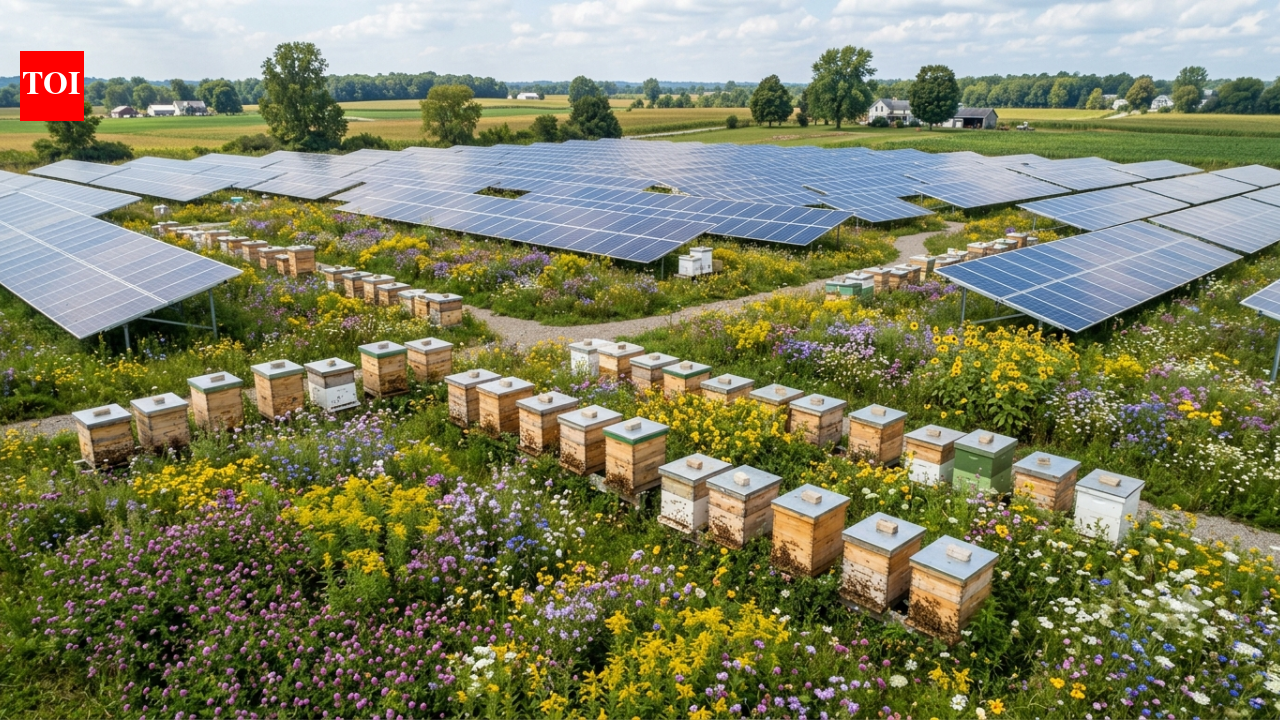
Practical measures within these designated focus zones are designed to increase forage availability and nesting opportunities for the species. Project activities include working with local agricultural landowners to establish wildlife corridors, adjusting seasonal mowing and grazing schedules to prevent nest destruction, and sowing native floral species essential for queen and worker nutrition throughout the active flight season.
Why it matters
The protection of the Moss carder bee carries significant ecological implications for British biodiversity and agricultural health. Bumblebees are among the most efficient native pollinators in temperate climates, facilitating the reproduction of both wild plants and commercial crops, including soft fruits, beans, and seed crops. The decline of specialist pollinators like the Moss carder bee threatens the functional stability of surrounding ecosystems, as many native wildflower species depend on specific long-tongued bumblebee species for cross-pollination.
Furthermore, *Bombus muscorum* serves as a critical indicator species for landscape health. Because the species builds shallow nests directly on the ground surface using moss, dried grass, and leaf litter, it is exceptionally sensitive to agricultural disturbance, intensive field management, and habitat fragmentation. A landscape capable of supporting viable populations of Moss carder bees typically possesses high botanical diversity, low chemical toxicity, and structural habitat complexity. Reestablishing stable populations of the bee in Cornwall, Kent, and the North Pennines directly benefits wider terrestrial ecosystems, supporting other declining invertebrates, ground-nesting birds, and rare grassland plants.
From a regulatory and policy perspective, the success of targeted recovery programs is crucial for meeting statutory biodiversity objectives. Under the UK's Environment Act 2021, the government is legally obligated to halt the decline of species abundance in England by 2030. Landscape-scale interventions targeting highly vulnerable species like the Moss carder bee represent a key test of whether regional habitat management can meet national environmental mandates.
The background
Great Britain is home to 24 native species of bumblebees, but the group has experienced widespread declines over the past century. Two native species—the Apple bumblebee (*Bombus pomerorum*) and the Short-haired bumblebee (*Bombus subterraneus*)—were declared extinct in Britain during the 20th century. Several other species, including the Moss carder bee, the Shrill carder bee (*Bombus sylvarum*), and the Great yellow bumblebee (*Bombus distinguendus*), have suffered severe territorial contractions, disappearing from large swathes of their former ranges across Central and Southern England.
The primary driver of this decline has been the comprehensive transformation of the British landscape following the Second World War. Changes in agricultural policy, industrialization, and urban expansion resulted in the loss of more than 97 percent of Britain's species-rich wildflower meadows between the 1930s and the late 20th century. Modern agricultural practices, characterized by high synthetic fertilizer inputs, early silage cutting, heavy livestock stocking densities, and the removal of hedgerows, eliminated the continuous sequence of nectar- and pollen-rich flowers required to sustain bumblebee colonies from spring through autumn.
The Moss carder bee is particularly vulnerable to these environmental changes due to its specific nesting biology and limited foraging range. Unlike mining bees or underground-nesting bumblebees, the Moss carder queen collects surface vegetation to weave a protective moss canopy over her comb on top of the soil or within thick grass tussocks. Early summer silage cuts or heavy cattle trampling can destroy entire colonies before new queens are produced in late summer. Additionally, worker bees generally forage within a relatively small radius—often less than 500 meters from the nest—making the species exceptionally dependent on dense, interconnected patches of flower-rich habitat containing legumes like red clover, meadow vetchling, and bird's-foot trefoil.
The selection of Cornwall, Kent, and the North Pennines highlights the isolated strongholds to which the species has been reduced on the British mainland:
Reaction
Although detailed public statements from involved organizations were not included in the initial report, regional conservation groups and agricultural bodies are expected to play primary roles in execution. Organizations such as the Bumblebee Conservation Trust, Buglife, and county-level Wildlife Trusts in Cornwall, Kent, Cumbria, Northumberland, and County Durham have historically championed targeted habitat creation for endangered hymenoptera.
Landowners, farmers, and estate managers across the three target regions represent key operational partners. Successful implementation will require active participation from land managers willing to adapt grazing regimes, leave uncut grassy margins, and reduce chemical applications. Farmers are expected to utilize UK agri-environment funding programs, such as Countryside Stewardship and Sustainable Farming Incentive schemes within the Environmental Land Management framework, to offset potential economic losses associated with lower livestock stocking rates or delayed hay cuts. Local naturalists, biological recorders, and community volunteers are also expected to contribute to field surveys to map surviving nest sites and monitor population responses.
What we don't know yet
Several specific operational details regarding the conservation programme remain unconfirmed. The initial reporting by Chloe Parkman did not detail the total financial budget allocated to the project, the precise sources of funding, or the intended duration of the active management phase. It is currently unclear whether funding stems from public natural capital grants, private conservation trusts, corporate biodiversity offsetting, or developer-funded biodiversity net gain mechanisms.
Additionally, specific numerical targets for habitat restoration have not been publicly detailed. The exact acreage or square kilometrage of grassland targeted for management in Cornwall, Kent, and the North Pennines remains unstated, as does the baseline population count of Moss carder colonies currently present in each region. Furthermore, the reporting did not specify which organization is acting as the primary lead administrative entity overseeing cross-regional management, or how monitoring protocols will be standardized across geographically separated regions.
What to watch
Over the coming months, several key milestones will clarify the scope and efficacy of the conservation initiative:
Reporting for this article was based on original coverage published by Chloe Parkman.
How this story was produced
This report was written by The Global Wire newsroom from reporting first published by Chloe Parkman. We verify the core facts against the original report, write our own account, and add the background and consequences a short wire item leaves out. Drafting is AI-assisted inside an editor-supervised pipeline, and every story is checked for accuracy of attribution, structure and duplication before it appears — full detail in our AI and funding disclosure.
Spotted an error? Tell us at corrections@horizonglobalnews.com and read our corrections policy or editorial standards.


Reader comments
Loading comments…