

NSW Treasurer Refers Building Commissioner Allegations to ICAC Following Lawyer Meeting
NSW Treasurer Daniel Mookhey has referred allegations regarding Building Commissioner David Chandler to the state's anti-corruption watchdog following a meeting with lawyer Sharangan Maheswaran.
By The Global Wire Newsroom · Reported from Alexandra Smith; Jessica McSweeney
Link preview · horizonglobalnews.com
NSW Treasurer Refers Building Commissioner Allegations to ICAC Following Lawyer Meeting
NSW Treasurer Daniel Mookhey has referred allegations regarding Building Commissioner David Chandler to the state's anti-corruption watchdog following a meeting with lawyer Sharangan Maheswaran.
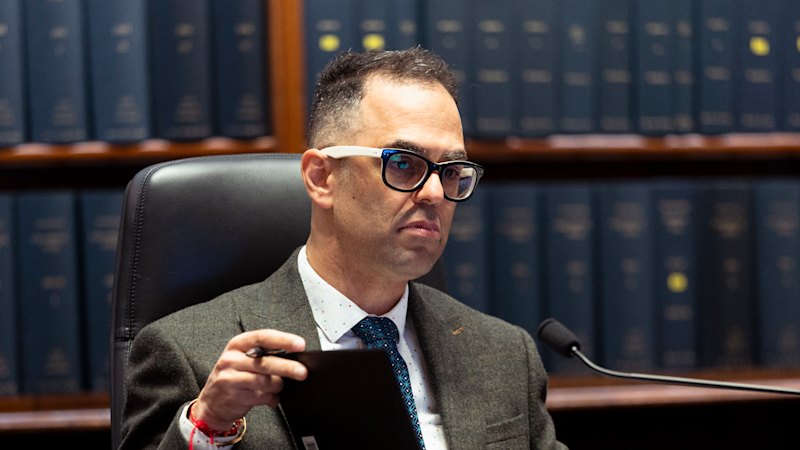
New South Wales Treasurer Daniel Mookhey has referred allegations concerning the state's Building Commissioner, David Chandler, to the Independent Commission Against Corruption following a private meeting with Labor-aligned lawyer Sharangan Maheswaran. The referral delivers a sensitive matter involving the state's top building regulator directly to the statutory body charged with investigating public sector misconduct in New South Wales. The step, taken after Maheswaran presented allegations regarding Chandler to the treasurer, sets in motion a formal evaluation by the anti-corruption agency to determine whether any preliminary or full investigation into the matter is warranted under state integrity laws.
Key facts
What happened
According to reporting by Alexandra Smith and Jessica McSweeney, New South Wales Treasurer Daniel Mookhey met directly with lawyer Sharangan Maheswaran to discuss allegations involving New South Wales Building Commissioner David Chandler. During the meeting, Maheswaran presented specific claims concerning Chandler's conduct in his official capacity.
Following the discussion, Mookhey decided to refer the allegations directly to the Independent Commission Against Corruption (ICAC). In New South Wales administrative practice, government ministers and principal officers who receive information indicating potential corrupt conduct or official impropriety frequently forward such material to the anti-graft oversight agency.
The reporting indicates that the claims were brought to the treasurer's attention by Maheswaran, a legal practitioner associated with the Labor Party. The precise timing of the meeting and the specific mechanics of the submission were not detailed in the immediate reporting, but the central action—Mookhey transmitting the allegations to ICAC—marks an official referral that triggers standard evaluation protocols by the watchdog.
Under statutory protocols governing ICAC, upon receiving a referral or complaint from a minister or public official, the commission initiates an internal assessment process. Officers within the agency review the submitted details to determine whether the subject matter falls within the commission's jurisdiction, whether the threshold for corrupt conduct is met, and whether further inquiry is justified.
Why it matters
The referral of claims against the Building Commissioner carries significant administrative, regulatory, and political implications across New South Wales. The position of Building Commissioner is among the most visible public oversight roles in the state, holding broad powers to order structural remediations, freeze apartment sales, and halt construction on defect-plagued developments.
For the residential property market and the broader construction industry in Sydney and regional New South Wales, any potential uncertainty surrounding the leadership of the building regulator creates operational sensitivity. Developers, builder associations, and apartment buyers rely on the stability and perceived integrity of the regulator to enforce standards and restore confidence in off-plan residential developments.
Politically, the handling of the allegations underscores the strict administrative protocols required of cabinet ministers in New South Wales when presented with allegations involving public figures. Under state integrity frameworks, ministers are expected to handle allegations of potential wrongdoing by referring them directly to independent integrity bodies rather than conducting internal political inquiries. Mookhey's action reflects an adherence to this operational standard, seeking to insulate the executive government from conflict-of-interest concerns while allowing the statutory watchdog to conduct an independent review.
Furthermore, the involvement of a Labor-aligned lawyer bringing claims to a Labor treasurer regarding an official whose role spans multiple state administrations adds a layer of scrutiny to how internal communications and integrity complaints are managed within state governance structures.
The background
To understand the context of this referral, it is necessary to examine the history of the Office of the Building Commissioner, the administrative history of New South Wales building regulation, and the operating framework of the Independent Commission Against Corruption.
The post of New South Wales Building Commissioner was established in late 2019 by the state government following a series of high-profile structural failures in recently constructed residential high-rise buildings across Sydney. The most prominent incidents included the evacuation of the 34-storey Opal Tower in Sydney Olympic Park in December 2018 due to cracked concrete panels, followed by the evacuation of Mascot Towers in June 2019 due to severe structural movement. These events severely eroded public confidence in the multi-billion-dollar residential apartment construction sector.
In response, the state government appointed David Chandler, a construction industry veteran with decades of experience in major project management, as the inaugural Building Commissioner in August 2019. Chandler was charged with overhauling building regulation, strengthening inspection regimes, and enforcing compliance across the residential building sector. His mandate was expanded through major legislative reforms, including the Residential Apartment Buildings (Compliance and Enforcement Powers) Act 2020 and the Design and Building Practitioners Act 2020. These statutes granted the commissioner unprecedented statutory powers to inspect construction sites prior to the issuance of occupation certificates, issue prohibition orders delaying building handovers, and require developers to rectify structural defects at their own expense.
Chandler's tenure as commissioner has previously been a focal point of state political attention. In July 2022, Chandler submitted a letter of resignation citing concerns regarding working relationships and developer interactions under the former Coalition government, an issue that subsequently triggered parliamentary inquiries and administrative reviews before he ultimately agreed to remain in his post and extend his contract under the incoming Minns Labor administration following the March 2023 state election.
The entity evaluating the referral, the Independent Commission Against Corruption (ICAC), was established under the Independent Commission Against Corruption Act 1988 as an independent statutory body. ICAC possesses broad powers to investigate alleged corrupt conduct involving public officials, departments, and statutory authorities in New South Wales. Under Section 11 of the ICAC Act, designated public officials and ministers have a statutory duty to report to the commission any matter that they suspect on reasonable grounds concerns or may concern corrupt conduct. Once a matter is referred, ICAC operates under strict confidentiality protocols during its assessment phase to determine whether to dismiss the matter, refer it back to a relevant department for internal handling, or commence a formal investigation involving coercive hearings or public inquiries.
Reaction
The public reporting on the referral has not included direct public quotes or formal press statements from Treasurer Daniel Mookhey, Building Commissioner David Chandler, lawyer Sharangan Maheswaran, or representatives of the Independent Commission Against Corruption.
Under established procedures in New South Wales, ICAC routinely maintains a policy of neither confirming nor denying the receipt of specific referrals or the existence of preliminary assessments, unless a decision is made to hold public hearings or issue an official report. Consequently, public statements from integrity agencies during initial referral phases are typically withheld to preserve procedural fairness and protect the integrity of potential investigations.
Ministers and public officials in New South Wales generally decline to comment publicly on active referrals submitted to ICAC to avoid jeopardizing prospective watchdog inquiries or breaching statutory secrecy provisions outlined in state anti-corruption legislation. Expected responses from legal representatives or government departments involved usually await formal communications from ICAC regarding whether the commission intends to pursue the matter further.
What we don't know yet
While the occurrence of the meeting and subsequent referral has been established, several fundamental details remain undisclosed. The specific nature, substance, and factual basis of the claims presented by Sharangan Maheswaran to Treasurer Daniel Mookhey have not been made public. It is unclear whether the allegations concern operational regulatory decisions, administrative oversight, personnel matters, or potential conflicts of interest.
Additionally, the timeline under which ICAC will complete its preliminary evaluation remains unknown. The commission operates without fixed statutory deadlines for preliminary assessments, meaning the length of time taken to assess referrals can vary from several weeks to several months depending on the complexity of the material provided.
It is also currently unknown whether Building Commissioner David Chandler was formally notified of the referral prior to or following Mookhey's submission, and whether his daily duties or regulatory oversight responsibilities as commissioner are affected while ICAC evaluates the material.
What to watch
This account is based on original reporting published by Alexandra Smith and Jessica McSweeney.
How this story was produced
This report was written by The Global Wire newsroom from reporting first published by Alexandra Smith; Jessica McSweeney. We verify the core facts against the original report, write our own account, and add the background and consequences a short wire item leaves out. Drafting is AI-assisted inside an editor-supervised pipeline, and every story is checked for accuracy of attribution, structure and duplication before it appears — full detail in our AI and funding disclosure.
Spotted an error? Tell us at corrections@horizonglobalnews.com and read our corrections policy or editorial standards.





Reader comments
Loading comments…