

Indian MMA Medallist Suchika Tariyal Alleges Weight Rules Denied Her Asian Games Gold
Following her historic bronze win at the 2026 Asian Games, Indian fighter Suchika Tariyal claims restrictive weight regulations prevented her from contending for gold.
By The Global Wire Newsroom · Reported from PTI
Link preview · horizonglobalnews.com
Indian MMA Medallist Suchika Tariyal Alleges Weight Rules Denied Her Asian Games Gold
Following her historic bronze win at the 2026 Asian Games, Indian fighter Suchika Tariyal claims restrictive weight regulations prevented her from contending for gold.
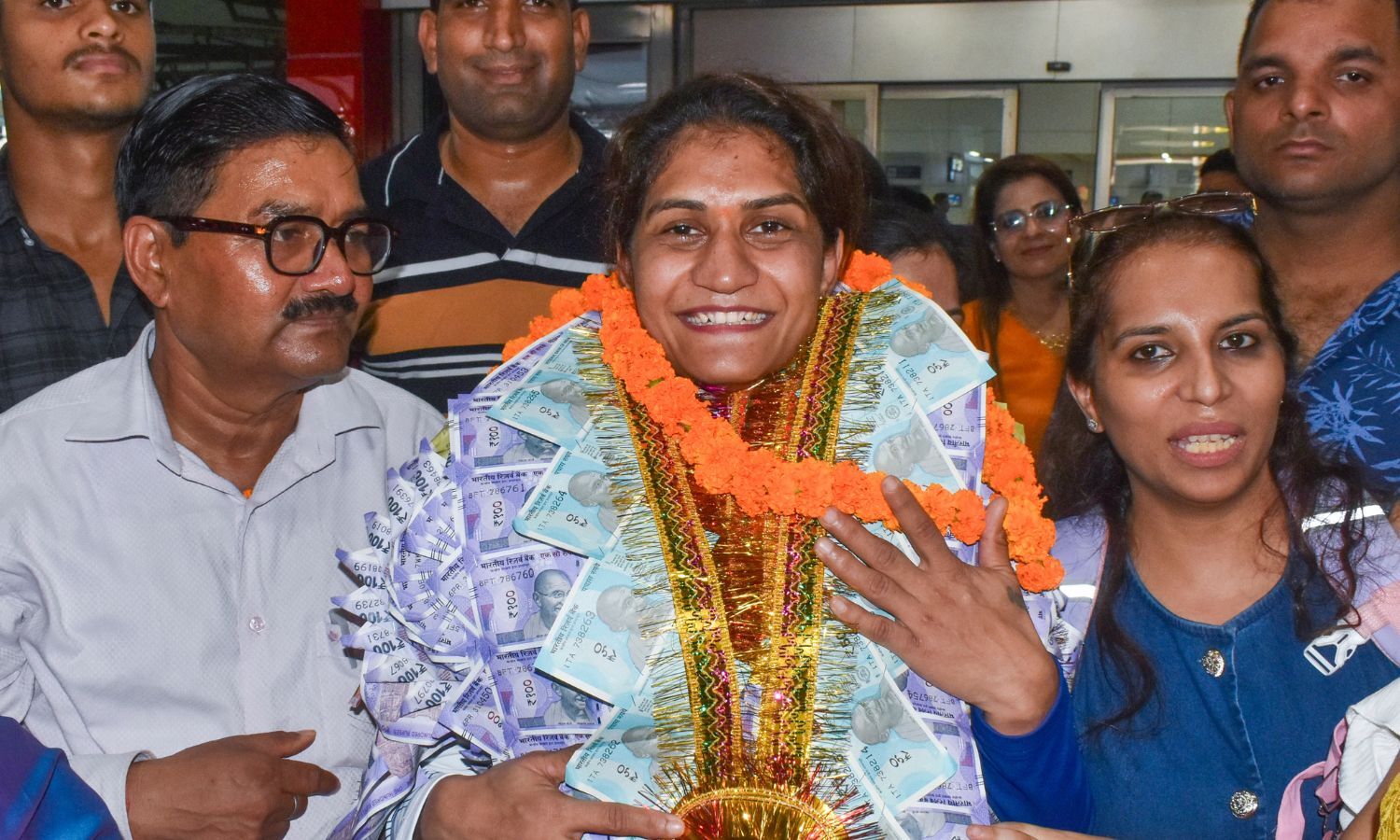
Indian martial artist Suchika Tariyal, who secured the country's inaugural podium finish in mixed martial arts at the Asian Games, publicly disputed the integrity of her competition outcome on Thursday. Days after capturing a bronze medal during the sport's landmark inclusion at the 2026 Asian Games in Aichi-Nagoya, Japan, Tariyal declared that she was improperly denied an opportunity to compete for a gold medal due to what she characterized as unusual weight compliance rules. The grievance underscores lingering friction between traditional combat sports protocols and the stringent technical regulations enforced during continental multi-sport competitions.
Key facts
What happened
Suchika Tariyal entered the record books as India's premier mixed martial arts medallist after navigating the early rounds of the women's competition at the 2026 Asian Games in Aichi-Nagoya, Japan. Her bronze medal performance marked a historic milestone for Indian combat sports in an official continental multi-sport event.
However, the achievement was swiftly overshadowed by procedural controversy. Speaking publicly several days after the conclusion of her bout, Tariyal voiced severe dissatisfaction regarding the technical administration of her weight class, according to reporting by Press Trust of India.
Tariyal asserted that she was robbed of a deserving gold medal win as a direct result of what she described as weird weight rules enforced during the tournament. While the athlete did not publicly detail the full technical mechanics of the rule in question, competitive disputes of this nature at major games typically center on strict same-day morning weigh-ins, hydration testing thresholds, or caps on allowable body mass fluctuation between preliminary rounds and final matches.
Tariyal contended that the stringent enforcement of these weight parameters compromised her physical conditioning and competitive status, effectively thwarting her progression toward the top step of the podium. Despite her dissatisfaction with the administrative process, her bronze medal stands as India's first official podium finish in Asian Games mixed martial arts history.
Why it matters
The controversy surrounding Tariyal's bronze medal performance highlights a foundational challenge in modern combat sports: balancing athlete safety, competitive fairness, and regulatory standardization. In professional mixed martial arts, rapid weight cutting—a process where fighters severely dehydrate themselves to meet weight thresholds before rehydrating prior to combat—is widely practiced. However, international governing bodies and multi-sport organizations have increasingly introduced strict regulations to eliminate extreme dehydration due to severe health risks, including acute renal strain, heat stroke, and cardiovascular distress.
For mixed martial arts as an emerging multi-sport discipline, how governing bodies enforce weigh-in procedures is critical to the sport's institutional legitimacy. Organizations such as the Asian Mixed Martial Arts Association and the Olympic Council of Asia must reconcile traditional martial arts regulations with Olympic-style governance standards. If technical rules are perceived as ambiguous or inadequately communicated to national federations, it threatens the credibility of the sport during its foundational integration into major multi-sport events.
From a national perspective, Tariyal's achievement represents a landmark moment for Indian combat sports. India has historically built its continental presence around boxing, wrestling, and judo. The introduction of mixed martial arts to the Asian Games provides a vital platform for Indian fighters seeking global recognition. Technical rule disputes could impact athlete preparation, state support, and administrative alignment between national governing bodies and international technical committees.
The background
To understand the context of Tariyal's grievance, it is necessary to examine her athletic background and the institutional evolution of combat sports within the Asian Games. Tariyal originally established her competitive footprint in traditional judo, earning accolades in national championships and representing India in international competition before transitioning to mixed martial arts. Her trajectory reflects a broader regional trend in which elite practitioners of grappling and striking disciplines—such as judo, wushu, kurash, and wrestling—cross over into amateur and professional MMA circuits.
The Asian Games, governed by the Olympic Council of Asia since 1982, has systematically expanded its combat sports portfolio. While Olympic disciplines like boxing, judo, taekwondo, and karate have long been staples, recent editions introduced non-Olympic martial arts such as jujutsu, kurash, and pencak silat. The inclusion of mixed martial arts as an official medal sport at the 2026 Games in Aichi-Nagoya marked a major milestone, supervised under the auspices of the Asian Mixed Martial Arts Association.
A central operational challenge in bringing mixed martial arts into multi-sport games lies in the disparity between professional and amateur technical regulations. Professional promotion systems, including major international circuits, typically hold official weigh-ins 24 hours prior to competition, allowing athletes a day to rehydrate before entering the cage. Conversely, amateur multi-sport events governed under Olympic-style guidelines often enforce same-day morning weigh-ins on every competition day, strict weight maintenance limits, or biological hydration checks (such as urine specific gravity tests). When elite fighters accustomed to professional weigh-in windows compete under multi-day, same-day weigh-in structures, procedural friction frequently arises.
Reaction
Tariyal's public claims have drawn immediate attention across the Indian sporting community. While her statements detailing her dissatisfaction were reported by Press Trust of India, official responses from continental sports bodies remain pending.
The Olympic Council of Asia and the Asian Mixed Martial Arts Association have not issued a public rebuttal or released the official weigh-in logs for Tariyal's division. Standard international sports administration protocols require technical protests or weight disputes to be formally submitted by national Olympic committees within strict post-bout time windows during the event itself.
Within India, combat sports coaches and national martial arts federations are expected to review the official match reports and weigh-in records from Aichi-Nagoya. Analysts and former competitors have emphasized the importance of comprehensive technical briefings for national contingents prior to international multi-sport games to ensure full familiarity with weigh-in regulations.
What we don't know yet
Several critical technical details regarding the controversy remain unconfirmed by event officials and national sports authorities:
What to watch
This report incorporates original news coverage published by Press Trust of India.
How this story was produced
This report was written by The Global Wire newsroom from reporting first published by PTI. We verify the core facts against the original report, write our own account, and add the background and consequences a short wire item leaves out. Drafting is AI-assisted inside an editor-supervised pipeline, and every story is checked for accuracy of attribution, structure and duplication before it appears — full detail in our AI and funding disclosure.
Spotted an error? Tell us at corrections@horizonglobalnews.com and read our corrections policy or editorial standards.





Reader comments
Loading comments…