

Nepali Laborer Escapes Inundated Hydropower Tunnel Near Chinese Border
Dhan Bahadur Tamang navigated pitch-black, flooded underground tunnels to survive a sudden inundation at the Upper Trishuli 1 hydroelectric site in northern Nepal.
By The Global Wire Newsroom · Reported from thestar.com.my
Link preview · horizonglobalnews.com
Nepali Laborer Escapes Inundated Hydropower Tunnel Near Chinese Border
Dhan Bahadur Tamang navigated pitch-black, flooded underground tunnels to survive a sudden inundation at the Upper Trishuli 1 hydroelectric site in northern Nepal.
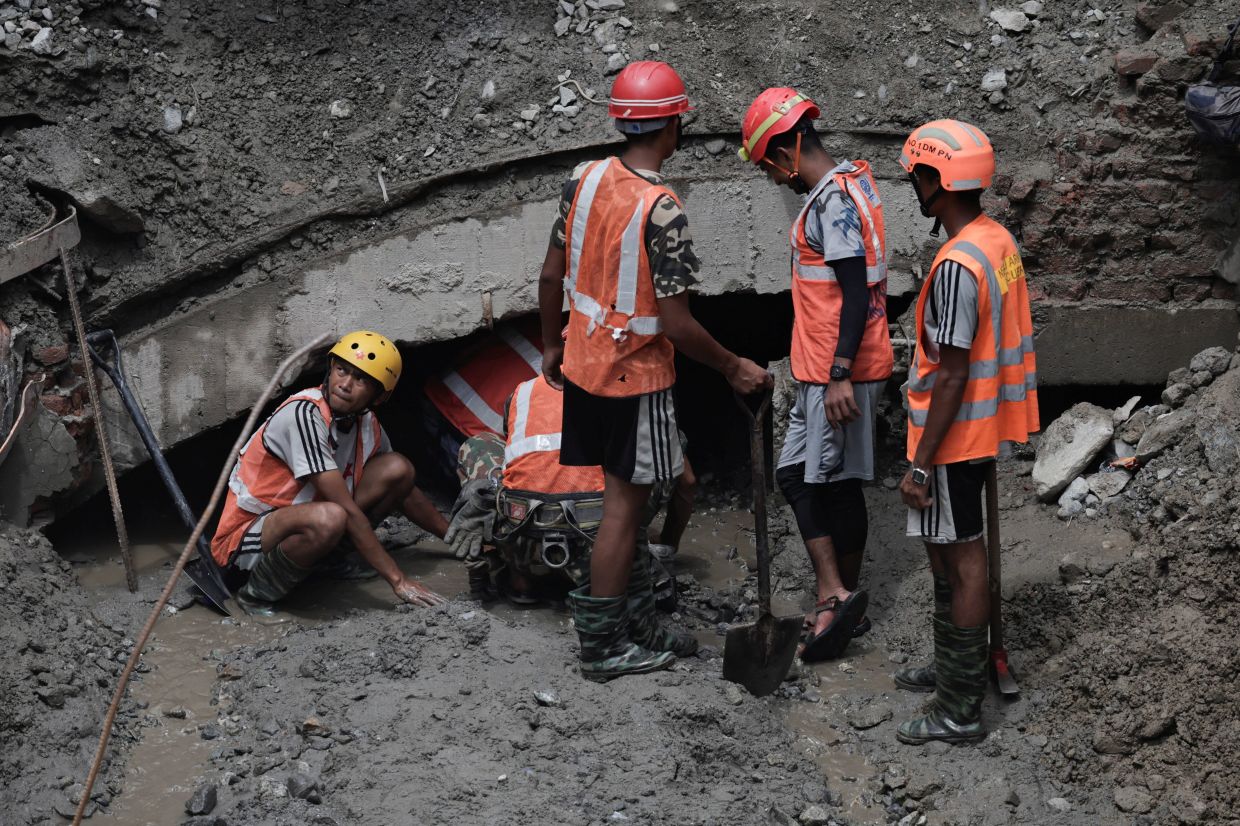
An underground construction laborer at a major hydroelectric development near Nepal's northern border with China managed a perilous escape after sensing a sudden atmospheric shift inside a mountain tunnel shortly before floodwaters overwhelmed the site. Dhan Bahadur Tamang, who was on duty inside a subterranean cavern at the Upper Trishuli 1 hydropower project, described navigating through pitch-black, water-filled passages to reach daylight as the facility was engulfed, according to reporting by The Star. The incident underscores the extreme hazards confronting construction crews and engineering teams building large-scale renewable energy infrastructure deep within the geologically active and weather-vulnerable Himalayan mountain range.
Key facts
What happened
Subterranean construction work at the Upper Trishuli 1 hydroelectric project turned into an emergency struggle for survival when floodwaters rapidly inundated the subterranean tunnel complex where personnel were stationed. Dhan Bahadur Tamang was actively working inside the underground facility, located in the mountain terrain of northern Nepal near the Chinese border, when he experienced a sharp and sudden shift in ambient air pressure.
In underground tunneling operations, sudden air pressure oscillations often serve as an immediate physical precursor to catastrophic fluid or material movement. As incoming water, displaced rock, or collapsing air pockets fill subterranean voids, air is rapidly compressed and pushed through open shafts ahead of the advancing flood surge. Seconds after Tamang registered the atmospheric pressure change, water breached the workspace, extinguishing localized illumination and filling the subterranean channels.
Deprived of visibility, Tamang and his fellow workers were forced to navigate through the flooded, pitch-black tunnel system by touch and instinct. Surging water levels increased the physical risk of hypothermia, drowning, and mechanical impact from floating debris or dislodged construction tools. Tamang managed to maintain his footing and fight his way toward an exit portal, ultimately reaching safety on the surface above the inundated complex.
Why it matters
The life-threatening incident at Upper Trishuli 1 highlights the volatile working conditions inherent to major civil infrastructure development across the Himalayas. Nepal relies almost entirely on hydroelectricity to meet its domestic power requirements and fuel its economic growth objectives, with the national grid heavily dependent on run-of-river generation stations constructed along fast-flowing, glacier-fed river corridors. To shield generating turbines and water conveyances from surface landslides, avalanches, and extreme winter temperatures, project designs frequently place heavy infrastructure—including headrace tunnels, surge tanks, and powerhouse caverns—deep underground within mountain ridges.
However, subterranean construction in high-altitude environments carries exceptional risk profiles. The Himalayan arc is among the most seismically active and meteorologically volatile regions on Earth. Subterranean workers routinely encounter high water ingress rates, unstable rock mass conditions, and unannounced surge events triggered by heavy monsoonal rainstorms, glacial lake outbursts, or localized landslide dams upstream.
When flooding strikes deep inside a narrow tunnel, standard escape routes can become impassable within minutes. Emergency response times in remote districts near the Chinese frontier are frequently hampered by damaged access roads, mountain terrain, and severe weather. The incident raises crucial questions regarding the adequacy of real-time early warning systems, air-pressure monitoring protocols, auxiliary lighting systems, and emergency evacuation shafts within major hydroelectric sites operating in isolated border zones.
The background
Nepal's central government has long prioritized the development of its vast hydroelectric potential, estimated theoretically at over 80,000 megawatts, with roughly 42,000 megawatts considered economically viable. The Trishuli River basin, originating in the high Tibetan plateau of China and flowing southward through Nepal's Rasuwa and Nuwakot districts, forms a central pillar of this energy strategy. The Upper Trishuli 1 hydroelectric project was designed as a flagship 216-megawatt run-of-river facility intended to deliver clean energy directly into the national grid, serving millions of industrial and residential consumers in the Kathmandu Valley and beyond.
Developing mega-projects in the Trishuli valley has historically proved complex and capital-intensive. The region suffered extensive devastation during the magnitude 7.8 Gorkha earthquake in April 2015, which triggered widespread mountain collapses, destroyed access roads, and disrupted ongoing civil engineering work across multiple hydroelectric sites. The terrain remains highly fractured, making slopes susceptible to rockslides during Nepal's annual monsoon season, which typically extends from June through September.
The Upper Trishuli 1 site is managed under international engineering and financial frameworks, involving consortium partners from South Korea alongside major multilateral development institutions such as the International Finance Corporation and the Asian Development Bank. Project plans include a concrete diversion dam, a headrace tunnel spanning several kilometers through solid rock, and an underground powerhouse cavern housing generating turbines.
Subterranean construction techniques rely on heavy drilling, blasting, and tunnel boring machinery to carve deep into the mountain. While these underground structures are engineered to withstand high static pressures once completed and concrete-lined, the construction phase leaves open excavations vulnerable to sudden groundwater inflows or flash floods breaching intake portals before water control gates are operational.
Similar incidents across the broader Himalayan region have previously demonstrated the extreme dangers of subterranean flooding. In February 2021, a sudden glacial outburst flood in the Chamoli district of Uttarakhand, India, swept down the Rishiganga and Dhauliganga river valleys, trapping dozens of construction laborers inside deep hydroelectric tunnels and causing massive casualties. In November 2023, forty-one workers were trapped for 17 days inside the collapsing Silkyara Bend–Barkot tunnel in Uttarakhand before rescue teams successfully drilled a manual escape pipe. These events have catalyzed growing regional scrutiny regarding labor safety protocols, geological site assessments, and real-time hydrological monitoring systems in high-mountain construction zones.
Reaction
Following the escape of survivors from the flooded Upper Trishuli 1 tunnel, local labor representatives and construction worker advocacy organizations are expected to demand comprehensive safety audits of all subterranean worksites operating along the Trishuli River basin. Site safety protocols inside high-altitude tunnels typically require redundant secondary lighting systems, self-contained atmospheric breathing apparatuses, atmospheric pressure warning sensors, and clear evacuation pathways maintained free of construction obstructions.
Government regulatory authorities, including Nepal's Ministry of Energy, Water Resources and Irrigation and the Department of Electricity Development, face pressure to inspect civil engineering sites to ensure compliance with occupational safety regulations. Overseas financial sponsors and equity investors in the Upper Trishuli 1 development are also expected to request technical briefings from main civil contractors to verify structural integrity, assess project delay risks, and ensure that emergency response mechanisms align with international environmental and social safety standards.
What we don't know yet
Several critical details surrounding the subterranean flooding event at Upper Trishuli 1 remain unconfirmed in available reports. The precise total number of personnel present inside the underground tunnel network when the air pressure shift occurred has not been publicly specified, leaving it unclear whether all workers successfully exited the complex or if search-and-rescue operations are ongoing for missing individuals.
Furthermore, the specific physical catalyst for the sudden water ingress remains unverified. It is not yet clear whether the inundation resulted from a sudden monsoonal flash flood along the main stem of the Trishuli River, an upstream landslide dam breach, a glacial lake outburst event, or a structural failure of temporary cofferdams or water diversion barriers at the tunnel intake portal. The total financial cost and physical extent of damage to underground machinery, structural concrete linings, and electrical systems inside the cavern also remain to be evaluated by technical survey teams.
What to watch
Key developments to monitor in the coming days and weeks include official statements from the project developers and civil engineering contractors regarding worker headcounts and safety status reports. Detailed engineering inspections will determine the structural condition of the headrace tunnel and powerhouse cavern, establishing whether water pumping operations can clear the submerged shafts without triggering secondary wall collapses or ground instability.
Observers will also track official updates regarding the overall construction schedule and commercial operation timeline for the 216-megawatt facility, as major flooding damage to underground powerhouses frequently delays grid synchronization by months or years. Additionally, weather patterns across the high-altitude Trishuli River catchment area along the Nepal-China border will remain critical, as lingering monsoonal rain systems continue to dictate river discharge rates and dictate conditions for surface recovery and remediation operations.
This report is based on original news coverage provided by the Malaysian publication The Star.
How this story was produced
This report was written by The Global Wire newsroom from reporting first published by thestar.com.my. We verify the core facts against the original report, write our own account, and add the background and consequences a short wire item leaves out. Drafting is AI-assisted inside an editor-supervised pipeline, and every story is checked for accuracy of attribution, structure and duplication before it appears — full detail in our AI and funding disclosure.
Spotted an error? Tell us at corrections@horizonglobalnews.com and read our corrections policy or editorial standards.





Reader comments
Loading comments…