

Mute Swan Expansion in 1970s Montana Raised Early Yellowstone Invasive Species Alarms
An ornamental pair of mute swans introduced to a private Montana pond in the 1960s grew into a 120-bird flock by the late 1970s, alarming Yellowstone National Park managers.
By The Global Wire Newsroom · Reported from TOI Science Desk
Link preview · horizonglobalnews.com
Mute Swan Expansion in 1970s Montana Raised Early Yellowstone Invasive Species Alarms
An ornamental pair of mute swans introduced to a private Montana pond in the 1960s grew into a 120-bird flock by the late 1970s, alarming Yellowstone National Park managers.
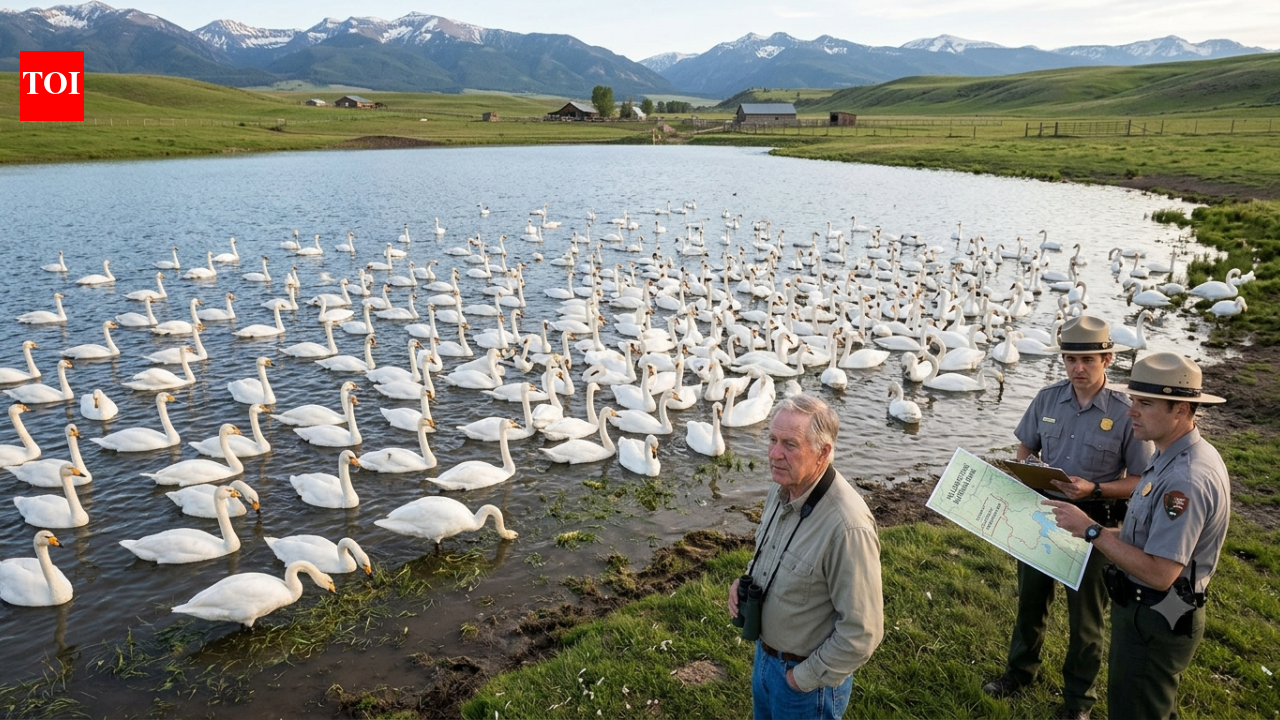
A historical introduction of captive waterfowl in Montana's Paradise Valley has re-emerged as a landmark case study in invasive species management and ecosystem preservation. In the 1960s, a private landowner acquired two mute swans (Cygnus olor) to decorate a pond on his property along the Yellowstone River corridor. Over the course of less than two decades, those two non-native birds bred and established a feral flock numbering approximately 120 individuals by the late 1970s. The rapid growth of the invasive population situated just north of Yellowstone National Park triggered significant concern among park authorities and regional wildlife biologists, who recognized the threat these aggressive, habitat-altering birds posed to fragile high-altitude wetlands and native avian species.
Key facts
What happened
The trajectory of the Paradise Valley swan population demonstrates how rapidly non-native species can establish self-sustaining populations when introduced into suitable habitats. In the 1960s, a property owner in Montana's Paradise Valley brought two imported mute swans to a private pond for aesthetic enhancement. Unconstrained by physical barriers or native predators, the pair successfully nested and fledged offspring.
As the years progressed, the birds began expanding their range beyond the confines of the initial private enclosure into adjacent aquatic habitats along the upper Yellowstone River drainage basin. By the late 1970s, biological monitoring confirmed that the original pair had given rise to a local flock of approximately 120 mute swans residing in Paradise Valley.
The arrival and exponential growth of a feral mute swan flock so close to Yellowstone National Park created an immediate management challenge for wildlife officials. Park biologists and federal researchers tracked the population closely as the birds began establishing territory in the critical corridors leading directly into the park's northern gateway. Mute swans are known for their territorial defense, year-round occupancy of open water, and heavy consumption of submerged aquatic vegetation, which disrupted the delicate balance of local aquatic systems.
Why it matters
The expansion of non-native mute swans near Yellowstone National Park carries profound ecological and management implications for North American waterfowl conservation. Mute swans are among the largest and most aggressive species of waterfowl in the world. An adult male can weigh up to 30 pounds and possess a wingspan exceeding seven feet. Unlike native migratory swans, mute swans frequently remain in their established territories throughout the year if open water persists, aggressively driving away native bird species during nesting seasons.
In wetland ecosystems, mute swans consume vast amounts of submerged aquatic vegetation—up to eight pounds per bird per day. They often uproot plants entirely rather than merely grazing the foliage, which destroys submerged meadows that provide critical shelter, nursery habitat, and food sources for fish, macroinvertebrates, and native ducks. This destructive feeding behavior drastically alters the structure of freshwater wetlands, accelerating erosion and reducing overall biodiversity.
Furthermore, the presence of an uncontrolled mute swan flock directly jeopardizes recovery programs for the trumpeter swan (Cygnus buccinator), North America's largest native waterfowl species. Trumpeter swans were pushed to near-extinction across the contiguous United States by the early 20th century, surviving primarily in a small, isolated population within the Greater Yellowstone Ecosystem. Because mute swans occupy the exact ecological niche required by trumpeter swans, the establishment of a 120-swan feral flock in Paradise Valley represented a direct competitive obstacle to the restoration of native trumpeter swan nesting territories.
The background
To fully grasp the significance of the Paradise Valley mute swan expansion, it is necessary to examine the broader history of mute swan introductions across North America and the vulnerability of the Greater Yellowstone Ecosystem. Native to Eurasia, mute swans were repeatedly imported into North America starting in the late 19th and early 20th centuries. Wealthy estate owners, city park departments, and private aviculturists acquired the birds for ornamental display on landscaped ponds across the Atlantic seaboard, the Midwest, and western states.
Over time, escaped and released birds established feral populations across several major flyways, most notably around the Chesapeake Bay, the Great Lakes region, and localized pockets of the American West. In many jurisdictions, early wildlife regulations failed to classify non-native swans as potentially invasive, allowing private sales and unclipped individuals to persist without federal oversight.
In contrast, North America's native trumpeter swan faced catastrophic declines due to commercial hunting for feathers and meat, habitat loss, and lead poisoning. By 1933, fewer than 70 wild trumpeter swans were known to exist in the contiguous United States, concentrated in the remote thermal areas and high-altitude lakes of Yellowstone National Park and the surrounding Red Rock Lakes region in southwestern Montana. Decades of intensive federal and state conservation efforts, including the establishment of Red Rock Lakes National Wildlife Refuge in 1935, aimed to rebuild the native trumpeter population.
When the mute swan flock in Paradise Valley expanded to 120 individuals in the late 1970s, Yellowstone officials recognized that allowing an invasive species to colonize the gateway to the park threatened to undo decades of painstaking trumpeter swan recovery work. Under federal frameworks, including the Migratory Bird Treaty Act and state wildlife management codes, managing feral mute swan populations has historically involved complex legal and political negotiations, balancing public affection for the birds with the ecological necessity of invasive species removal.
Reaction
The discovery of a self-sustaining flock of 120 mute swans in Paradise Valley prompted serious concern among Yellowstone National Park administrators, wildlife biologists, and regional conservation organizations. Public reaction to mute swan management generally splits between animal welfare advocates who oppose lethal control or egg oiling and wildlife management professionals who argue that complete eradication of non-native species is mandatory to safeguard native biodiversity.
While specific official statements from the late 1970s management teams were not detailed in the initial reporting by TOI Science Desk, federal and state wildlife agencies in the Intermountain West have consistently maintained zero-tolerance policies regarding feral mute swan establishment near critical habitat zones. Resource managers facing similar invasive swan outbreaks in other states have routinely utilized public education, egg addling, capture-and-relocation programs, and lethal removal to prevent feral flocks from expanding into vulnerable ecological reserves.
Environmental groups focused on Yellowstone conservation have historically supported aggressive invasive species control, stressing that the integrity of the Greater Yellowstone Ecosystem depends on prioritizing indigenous wildlife like the trumpeter swan over introduced ornamental species.
What we don't know yet
Several historical details regarding the Paradise Valley mute swan flock remain unspecified in the initial report provided by TOI Science Desk. The reporting does not detail the exact legal actions or removal protocols implemented by Yellowstone National Park officials and Montana wildlife authorities after the flock reached 120 birds in the late 1970s. It remains unclear whether the flock was completely eradicated, relocated to private preserves, or reduced through ongoing management actions.
Additionally, the original identity of the Montana landowner who acquired the initial pair in the 1960s is not specified, nor is there documentation on whether local regulations at the time required pinioning—the practice of clipping a bird's wing joint to prevent flight. Furthermore, long-term scientific data on the precise degree of interspecific conflict between the Paradise Valley mute swans and local trumpeter swan nesting pairs during that specific decade are omitted from the summary. Understanding these missing operational details is essential for evaluating the long-term historical outcome of this specific invasion.
What to watch
In evaluating the ongoing legacy of invasive waterfowl introductions near protected lands, several key markers will determine future conservation outcomes:
This report is based on original reporting published by TOI Science Desk.
How this story was produced
This report was written by The Global Wire newsroom from reporting first published by TOI Science Desk. We verify the core facts against the original report, write our own account, and add the background and consequences a short wire item leaves out. Drafting is AI-assisted inside an editor-supervised pipeline, and every story is checked for accuracy of attribution, structure and duplication before it appears — full detail in our AI and funding disclosure.
Spotted an error? Tell us at corrections@horizonglobalnews.com and read our corrections policy or editorial standards.


Reader comments
Loading comments…