

Kathmandu Hospitals Overwhelmed as Border Floods Claim at Least 180 Lives
Families gather at medical centers in Nepal's capital searching for relatives after lethal flooding along the Tibetan border leaves at least 180 dead.
By The Global Wire Newsroom · Reported from thestar.com.my
Link preview · horizonglobalnews.com
Kathmandu Hospitals Overwhelmed as Border Floods Claim at Least 180 Lives
Families gather at medical centers in Nepal's capital searching for relatives after lethal flooding along the Tibetan border leaves at least 180 dead.
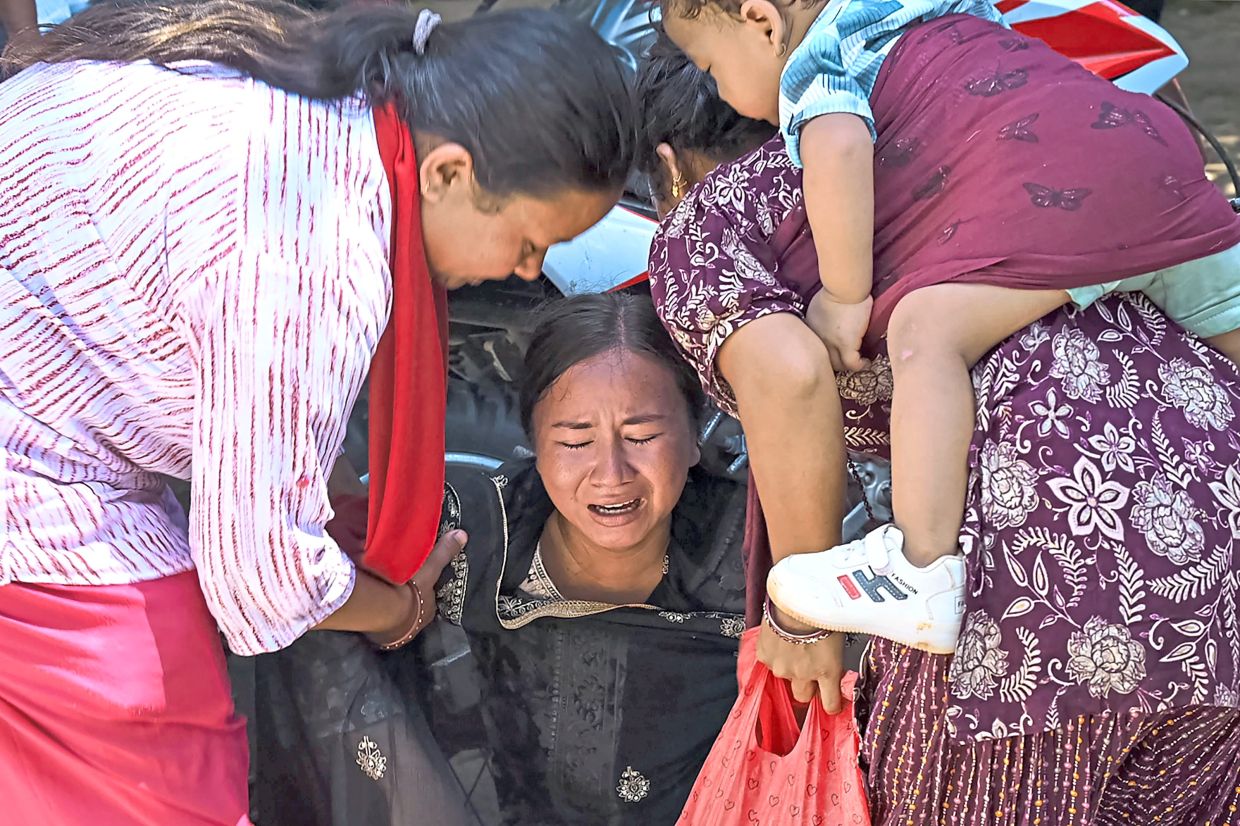
A major flooding disaster along the mountainous border between Nepal and Tibet has left at least 180 people dead, triggering emergency response operations and driving frantic family members into the halls of medical facilities in Kathmandu to locate missing relatives. The catastrophic inundation struck remote cross-border settlements, destroying localized infrastructure and disrupting communication links across the high-altitude trans-Himalayan corridor.
Key facts
What happened
catastrophic flooding swept through northern border areas connecting Nepal with the Tibet Autonomous Region of China, washing away homes, damaging bridges, and inundating low-lying mountain valleys. Rapidly rising waters cut off access to several remote border communities, making immediate ground rescue extremely difficult.
As emergency workers and survivors began transferring injured individuals and bodies from the affected border zone to major urban hubs, main medical centers in Kathmandu became focal points for grieving and anxious families. Relatives filled the corridors of hospitals in the capital, searching casualty logs, conferring with healthcare personnel, and attempting to locate family members who had gone missing in the immediate aftermath of the deluge, according to reporting by The Star.
First responders and regional security personnel faced major obstacles in reaching the core flood zones. Damaged mountain roads, ongoing rainfall, and localized landslips disrupted overland transport routes, requiring specialized rescue teams to navigate difficult terrain to assist stranded populations and transport critical patients toward central hospitals.
Why it matters
The death toll of at least 180 individuals underscores the acute vulnerability of mountain communities along the trans-Himalayan frontier to extreme hydrological events. Beyond the catastrophic human loss, severe flooding in this specific geographic zone disrupts vital economic and logistical links between Nepal and China. Cross-border trade routes through the high Himalayas carry essential commodities, food supplies, fuel, and manufactured goods; any prolonged closure of border infrastructure damages local commercial networks and supply chains in northern Nepal.
The disaster also places intense pressure on Nepal's healthcare and emergency response systems. Central hospitals in Kathmandu frequently bear the brunt of regional crises due to the limited capacity of district-level health centers in remote mountain zones. When high-casualty events occur in isolated areas, urban trauma centers must rapidly absorb large volumes of severely injured patients while managing forensic identification for families seeking missing relatives. Furthermore, the destruction of homes, small-scale farming plots, and localized electrical generation assets leaves surviving residents facing acute displacement and economic distress during an already challenging monsoon period.
The background
Nepal and the adjacent Tibetan plateau possess some of the most complex and hazardous terrain in the world. The country's geography features severe elevation shifts, transitioning from low-altitude plains to Himalayan peaks within very short horizontal distances. This steep topography makes the region uniquely susceptible to water-related disasters, particularly during the annual South Asian monsoon, which typically runs from June through September. Monsoon moisture moving north from the Bay of Bengal encounters the barrier of the Great Himalaya range, resulting in intense, concentrated precipitation across mountain catchments.
High-altitude floods in the trans-Himalayan region generally stem from one of three distinct mechanisms: intense localized rainstorms known as cloudbursts, landslide dam outburst floods (LDOFs) caused by river blockages, or Glacial Lake Outburst Floods (GLOFs). As Himalayan glaciers melt and retreat due to broader climatic changes, thousands of glacial lakes have formed across Nepal and Tibet behind unstable natural dams composed of loose rock and ice. When these natural barriers fail, millions of cubic meters of water can surge downstream with little warning, crushing settlements and infrastructure across international boundaries.
Nepal has experienced multiple devastating hydrological disasters in recent history. In June 2021, rapid flooding and debris flows along the Melamchi River in central Nepal killed dozens, buried villages under meters of silt, and severely damaged major municipal water supply infrastructure. Previous disaster events, such as the massive 2014 Jure landslide along the Sun Kosi river and recurring transboundary floods in the Koshi and Gandaki river basins, have repeatedly demonstrated how mountain slope instability can transform heavy rainfall into long-term humanitarian and economic crises.
Reaction
Following the influx of flood victims into Kathmandu, local humanitarian networks and hospital support staff mobilized to assist waiting families and coordinate emergency supplies. While formal policy responses from state authorities continue to develop, government disaster management agencies in Nepal typically deploy joint units from the Nepal Army, the Armed Police Force, and the Nepal Police to execute emergency search, rescue, and body recovery missions in hard-hit mountain sectors.
International humanitarian organizations and aid agencies operating within Nepal are expected to coordinate with the Ministry of Home Affairs and the National Disaster Risk Reduction and Management Authority (NDRRMA) to deploy emergency shelters, clean drinking water, and food rations to displaced border residents. Bilateral communications between Nepali and Chinese border officials are also anticipated to focus on cross-border infrastructure repair, casualty verification, and joint hydrological monitoring along shared river basins.
What we don't know yet
Several critical aspects of the disaster remain unverified due to ongoing communication blockages and access constraints in the remote border region. A complete accounting of the missing has not yet been established, making it likely that the confirmed fatality count could change as search teams reach isolated hamlets.
Official technical assessments have not yet publicly identified the precise physical cause of the flooding—specifically whether the surge was generated by an upstream Glacial Lake Outburst Flood (GLOF) within Tibet, a landslide dam failure, or an extreme localized cloudburst event. Additionally, the full extent of damage to major cross-border transport corridors, such as the Araniko Highway or the Rasuwagadhi border access roads, remains unconfirmed, leaving the timeline for restoring transboundary freight and travel uncertain.
What to watch
Key indicators will determine the direction of recovery and emergency response over the coming days:
This report contains information originally reported by the Malaysian daily newspaper *The Star* (thestar.com.my).
How this story was produced
This report was written by The Global Wire newsroom from reporting first published by thestar.com.my. We verify the core facts against the original report, write our own account, and add the background and consequences a short wire item leaves out. Drafting is AI-assisted inside an editor-supervised pipeline, and every story is checked for accuracy of attribution, structure and duplication before it appears — full detail in our AI and funding disclosure.
Spotted an error? Tell us at corrections@horizonglobalnews.com and read our corrections policy or editorial standards.





Reader comments
Loading comments…