

Israel Faces Ecological Policy Void Regardless of Netanyahu's Political Future
Center-left opposition parties continue to neglect environmental priorities, leaving climate advocacy groups without strong legislative partners, according to political analysis.
By The Global Wire Newsroom · Reported from Nir Hasson
Link preview · horizonglobalnews.com
Israel Faces Ecological Policy Void Regardless of Netanyahu's Political Future
Center-left opposition parties continue to neglect environmental priorities, leaving climate advocacy groups without strong legislative partners, according to political analysis.
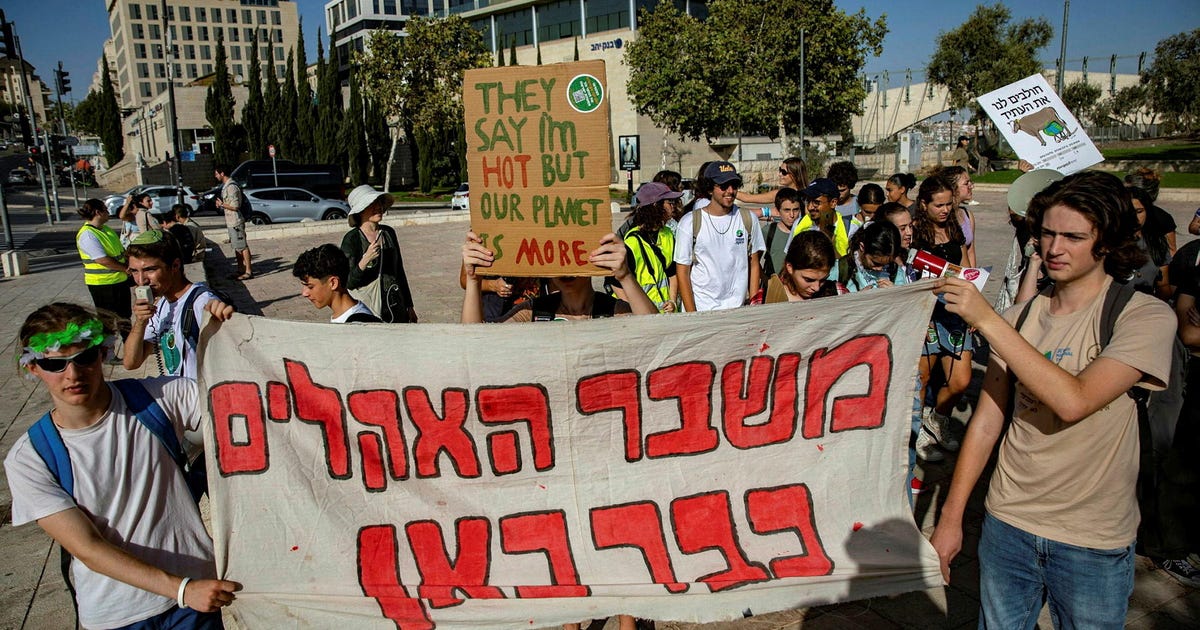
JERUSALEM — An analysis of political platforms across Israel's parliamentary spectrum indicates that environmental policy and climate change mitigation remain severely neglected priorities, even within opposition center-left factions seeking to displace the government of Prime Minister Benjamin Netanyahu. According to reporting published by Israeli journalist Nir Hasson on September 27, 2026, center-left party leaders have systematically deprioritized ecological issues in their campaign platforms and public rhetoric, addressing environmental challenges infrequently and with minimal technical detail. As a result, non-governmental climate organizations and environmental advocates face a persistent policy vacuum across the political landscape, leaving the country without a clear legislative framework to address pressing ecological vulnerabilities regardless of whether the governing coalition remains in power or is replaced.
Key facts
What happened
According to analysis by Nir Hasson on September 27, 2026, political strategists and party heads within Israel's center-left opposition have largely treated environmental policy as an afterthought. Amid prolonged political instability, security crises, ongoing regional conflict, and debates over judicial governance, ecological concerns have been consistently pushed off leadership agendas.
When opposition figures do address environmental topics, their statements tend to be generalized, lacking specific commitments to carbon reduction, clean energy transitions, or natural resource preservation. Hasson notes that climate action groups—which have spent years attempting to build cross-party caucuses in the Knesset—are finding themselves largely stranded. Rather than finding ready partners in center-left blocs that traditionally presented themselves as progressive alternatives, non-governmental organizations are forced to search diligently for individual lawmakers willing to sponsor basic environmental legislation or host parliamentary committee hearings on climate resilience.
This dynamic has created frustration among ecological researchers, urban planners, and environmental advocates who had anticipated that an alternative governing bloc would offer a stark policy contrast to the incumbent coalition's regulatory rollbacks and focus on fossil fuel exploitation. Instead, the lack of comprehensive environmental messaging from center-left figures leaves climate policy without a major institutional champion in Israeli electoral politics.
Why it matters
The absence of robust environmental commitments from major political parties carries severe long-term consequences for Israel’s public health, economic resilience, and national infrastructure. Situated in the climate-vulnerable Eastern Mediterranean, Israel confronts accelerated warming trends, rising sea levels along its coastline, extreme heat events, and severe urban heat island impacts in densely populated metro areas like Tel Aviv and Haifa. Without aggressive state-level mitigation and adaptation plans, urban centers risk suffering prolonged infrastructure strain, energy grid overload during peak summer demand, and heightened public health risks for vulnerable populations.
From an economic perspective, Israel's failure to enact binding climate legislation creates friction with international trade partners, particularly the European Union. Under the EU’s Carbon Border Adjustment Mechanism (CBAM), goods imported into the European market from nations lacking equivalent carbon pricing or strict emission reduction standards could face tariffs, potentially harming Israeli exporters in technology, agriculture, and industrial manufacturing. Furthermore, delaying the expansion of renewable energy capacity threatens Israel's national goal of producing 30 percent of its electricity from renewable sources by 2030. Continued political inertia keeps the nation heavily dependent on domestic natural gas production, increasing long-term carbon intensity and stalling investment in solar storage infrastructure, grid modernization, and microgrid development.
Failure to enforce environmental standards also exacerbates local pollution hazards, including toxic industrial emissions in the Haifa Bay area, inadequate municipal solid waste management, and untreated sewage runoff affecting shared aquifers and coastal waters. When political parties treat environmental governance as optional, public institutions lack the legislative mandates and budgetary backing required to inspect industrial polluters, enforce clean air statutes, or preserve biodiversity hotspots across the country.
The background
Israel's history of environmental governance reflects a tension between rapid population growth, security imperatives, economic development, and ecological preservation. The Ministry of the Environment was formally established in 1988—later renamed the Ministry of Environmental Protection—to consolidate authority over air quality, waste management, and nature conservation. However, the ministry has historically operated as a minor political portfolio, often assigned to junior coalition partners or used as leverage in political negotiations rather than served by leaders with broad statutory mandates.
Over the past decade, climate policy in Israel has lagged behind European and North American standards. In 2015, Israel signed the Paris Agreement, committing to cut national greenhouse gas emissions by 27 percent by 2030 relative to a 2015 baseline, with an ultimate ambition of reaching net-zero emissions by 2050. However, successive governments have struggled to codify these commitments into legally binding statutes. Drafts of a comprehensive national Climate Law have repeatedly stalled in the Knesset Ministerial Committee for Legislation due to opposition from the Ministry of Finance, the Ministry of Energy and Infrastructure, and industrial interest groups concerned about regulatory costs and fossil fuel revenues derived from offshore gas fields like Leviathan and Tamar.
Historically, environmental advocacy in the Knesset relied on smaller left-leaning or liberal parties, most notably Meretz, whose leaders such as former Environmental Protection Minister Tamar Zandberg sought to advance green building standards and phase out single-use plastics during the 36th government between 2021 and 2022. However, recent political realignments—including the merger of Labor and Meretz into The Democrats under former deputy chief of staff Yair Golan—have shifted center-left priorities heavily toward security, constitutional governance, and economic relief. Concurrently, within the 37th government under Prime Minister Benjamin Netanyahu, Environmental Protection Minister Idit Silman has faced constraints in enacting statutory climate controls, reflecting broader coalition resistance to environmental regulation. Consequently, climate advocacy has become increasingly isolated from the core political agendas of both governing and opposition leadership.
Reaction
Environmental non-governmental organizations and policy researchers in Israel have voiced concern over the persistent political omission of ecological priorities. Advocacy coalitions such as Life & Environment—the umbrella organization representing dozens of Israeli environmental groups—alongside organizations like Adam Teva V'Din (Israel Union for Environmental Defense) and Greenpeace Israel, have repeatedly called on party leaders across the spectrum to integrate environmental stability into their national security platforms.
Civil society leaders argue that ecological management is not a luxury item to be addressed only during periods of geopolitical calm, but rather an essential component of national resilience. Experts point out that water management, regional environmental cooperation, and clean energy security directly intersect with Israel's long-term defense and economic stability. Environmental advocates are expected to pressure opposition lawmakers during upcoming legislative sessions and party conference rollouts, urging party heads to appoint dedicated environmental spokespersons and publish explicit ecological manifestos.
What we don't know yet
Significant uncertainties remain regarding how environmental issues will feature in future legislative sessions and electoral campaigns:
What to watch
Several key milestones and indicators will determine whether Israel's environmental policy void persists or begins to narrow:
This article incorporates reporting and political analysis originally published by Israeli journalist Nir Hasson on September 27, 2026.
How this story was produced
This report was written by The Global Wire newsroom from reporting first published by Nir Hasson. We verify the core facts against the original report, write our own account, and add the background and consequences a short wire item leaves out. Drafting is AI-assisted inside an editor-supervised pipeline, and every story is checked for accuracy of attribution, structure and duplication before it appears — full detail in our AI and funding disclosure.
Spotted an error? Tell us at corrections@horizonglobalnews.com and read our corrections policy or editorial standards.


Reader comments
Loading comments…