

Algae Bloom Off Israeli Coast Recedes, but Desalination Facilities Remain Throttled
Coastal algae levels near Israeli desalination plants dropped significantly after a major bloom, though facilities remain at partial capacity while scientists investigate Gaza sewage as a cause.
By The Global Wire Newsroom · Reported from Zafrir Rinat
Link preview · horizonglobalnews.com
Algae Bloom Off Israeli Coast Recedes, but Desalination Facilities Remain Throttled
Coastal algae levels near Israeli desalination plants dropped significantly after a major bloom, though facilities remain at partial capacity while scientists investigate Gaza sewage as a cause.
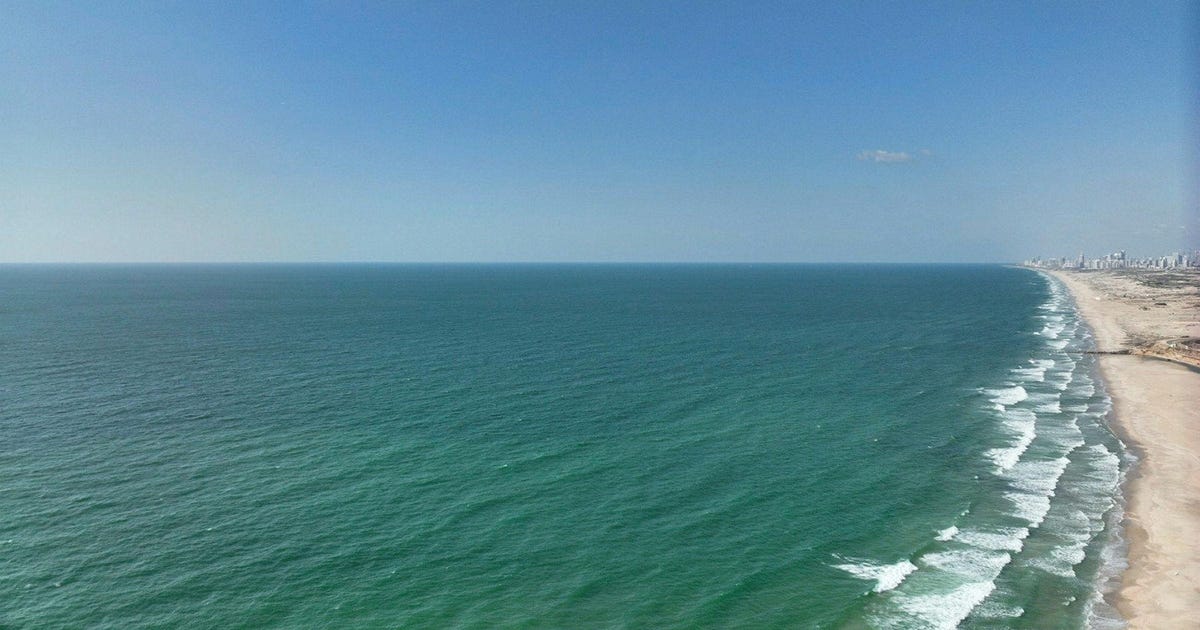
Microscopic algal concentrations off the coast of Israel experienced a significant drop late in September 2026, according to environmental monitoring reports, yet major seawater desalination facilities across the country remain operating under partial shutdowns. Although marine measurements indicate that microalgae densities near most plant intake sites fell by tens of percentage points over a seven-day period, utility operators have kept processing volumes constrained while authorities evaluate raw water conditions. Environmental researchers investigating the event noted that elevated coastal pollution, including untreated wastewater originating from the Gaza Strip, likely exacerbated the massive marine bloom, though multidisciplinary scientific studies into the primary trigger mechanisms remain ongoing.
Key facts
What happened
During the third week of September 2026, environmental monitoring stations along Israel’s Mediterranean shoreline detected a sudden surge in microalgae populations. The rapid proliferation of these microscopic marine organisms created dense algal blooms in the immediate vicinity of intake structures feeding several of the country's main seawater reverse osmosis plants. In response to the elevated organic load, facility managers implemented emergency operational protocols, curbing raw seawater intake and putting processing trains into partial shutdown mode to avoid severe membrane contamination.
By September 27, 2026, scientific monitoring revealed a notable shift in coastal water chemistry, with microalgae concentrations near most facility intake zones falling by tens of percentage points compared to peak levels measured the previous week. Despite this measurable improvement in water clarity, plant managers opted against immediately restoring operations to maximum throughput. Intake gates remained throttled as engineers and technicians evaluated water metrics, monitored filter differential pressures, and verified that organic foulants had subsided to safe operational limits.
Concurrently, environmental scientists analyzing the event flagged coastal pollution as a major factor behind the biological surge. Researchers highlighted that raw wastewater released into the Mediterranean Sea from damaged sanitation infrastructure in the Gaza Strip introduced high levels of organic nutrients into local marine currents. These excess nutrients, combined with late-summer water temperatures, created prime conditions for explosive algal growth along the Levant coast. While preliminary assessments pointed to land-based pollution as a critical driver, marine institutes and state environmental agencies confirmed that formal inquiries into the exact environmental triggers were still underway.
Why it matters
The operational curtailment of Israel's desalination network underscores the acute vulnerability of advanced municipal infrastructure to marine environmental disruptions. Seawater reverse osmosis technology forms the backbone of Israel’s domestic water supply, generating approximately 80 percent of the water flowing through municipal taps nationwide. Facilities located at strategic coastal points—including Ashkelon, Ashdod, Palmahim, Sorek, and Hadera—collectively convert hundreds of millions of cubic meters of ocean water annually into high-purity drinking water.
When dense algal blooms form near offshore intake heads, they pose both physical and operational threats to desalination facilities. Microalgae and their extracellular organic substances rapidly clog fine intake screens and pre-filtration media, such as dual-media sand filters and ultrafiltration membranes. If microalgae bypass early filtration stages, they cause severe biofouling on reverse osmosis membranes, leading to rapid pressure drops, increased energy consumption, premature membrane degradation, and potential chemical contamination of finished water. To prevent catastrophic equipment failure and costly membrane replacements, plant concessionaires must preemptively reduce processing volumes or halt intake entirely during heavy bloom events.
Furthermore, the event illustrates how regional environmental degradation directly impacts regional critical infrastructure. The dispersion of untreated sewage from Gaza into shared Mediterranean marine waters demonstrates that public health and environmental crises cross political borders. High nutrient loads in coastal currents threaten not only marine ecosystems but also the industrial water security of neighboring territories, emphasizing the practical necessity of regional sanitation infrastructure management.
The background
Over the past two decades, Israel transformed its national water economy from reliance on traditional freshwater sources—such as Lake Kinneret, also known as the Sea of Galilee, and coastal aquifers—to reliance on industrial-scale seawater desalination. Beginning with the commissioning of the Ashkelon plant in 2005, Israel systematically constructed a grid of major coastal facilities, including Palmahim in 2007, Hadera in 2009, Sorek I in 2013, Ashdod in 2015, and Sorek II in 2023. Together with planned facilities such as the Western Galilee plant, this network renders Israel one of the most desalination-dependent nations globally, enabling the country to survive severe multi-year droughts and even export surplus water to neighboring Jordan.
However, seawater reverse osmosis facilities operate under strict raw water quality requirements. The Eastern Mediterranean Sea is naturally oligotrophic, meaning it historically featured low nutrient levels and high water clarity. In recent years, seasonal shifts, rising sea surface temperatures, coastal development, and pollutant discharges have altered the marine environment, making harmful algal blooms more frequent and intense.
The sanitation situation in the Gaza Strip has long presented severe ecological risks to the Levant basin. Ongoing conflict, severe power deficits, and damaged wastewater treatment infrastructure have repeatedly forced municipalities in Gaza to dump tens of millions of liters of untreated or partially treated sewage directly into the Mediterranean Sea each day. Northward coastal currents carry these nutrient-dense waters—packed with nitrogen and phosphorus—along the Israeli coastline toward major desalination intakes near Ashkelon, Ashdod, and Palmahim. When high nutrient concentrations encounter warm, sunny late-summer conditions, explosive microalgae growth routinely follows, creating complex operational challenges for coastal industrial infrastructure.
Reaction
Environmental researchers and marine biologists involved in coastal monitoring have publicly noted that land-based marine pollution, specifically municipal sewage effluent, played a direct role in fueling the recent algal bloom along the Israeli coastline. Scientific experts emphasized that unresolved wastewater management failures in nearby coastal zones continue to generate recurring environmental hazards for shared marine resources.
While formal public statements from plant concessionaires remain limited, technical teams at major facilities have maintained constant coordination with the Governmental Water Authority and the Ministry of Environmental Protection. The Water Authority is responsible for managing the national water grid and reallocating supply from inland reservoirs, underground aquifers, and unaffected plants when coastal facilities suffer operational drawdowns. Concurrently, environmental authorities are conducting water sampling routines to determine whether the bloom contains toxin-producing cyanobacteria or dinoflagellates that could pose broader ecological or public health concerns.
What we don't know yet
Significant operational and scientific details surrounding the bloom remain unverified. It is currently unclear precisely which microalgae species comprised the dominant strains in this specific event, and laboratory analyses have not yet definitively established whether the bloom produced organic toxins or taste-and-odor compounds like methylisoborneol and geosmin, which require specialized powder activated carbon treatment.
Additionally, official reports have not quantified the exact economic losses or drop in cubic-meter production across the affected plants during the shutdown period. While scientists point to Gaza sewage as a primary catalyst, the exact mathematical proportion of nutrient loading attributable to Gaza wastewater versus regional agricultural runoff, thermal power plant discharges, or natural oceanographic upwelling has not been fully determined. Finally, facility operators have not released a definitive timetable for when intake gates will fully reopen and restore plant output to 100 percent of baseline capacity.
What to watch
In the coming days, observers should monitor official water quality bulletins issued by the Israeli Ministry of Environmental Protection and marine research organizations tracking microalgae cell counts off the coast. Key indicators will include whether microalgae levels continue their downward trajectory or experience a secondary flare-up under late-summer thermal conditions.
A critical decision point will be the announcement by the Governmental Water Authority and private concessionaires regarding the full restoration of normal intake operations at major facilities like Sorek, Ashkelon, and Ashdod. Observers should also track national water grid management updates, specifically whether increased pumping from Lake Kinneret or regional aquifer storage is required to offset shortfalls. On a regional level, developments regarding emergency wastewater management and infrastructure repair in the Gaza Strip will be vital to assessing long-term biofouling risks for Mediterranean desalination operations.
This account is based on original reporting by Zafrir Rinat.
How this story was produced
This report was written by The Global Wire newsroom from reporting first published by Zafrir Rinat. We verify the core facts against the original report, write our own account, and add the background and consequences a short wire item leaves out. Drafting is AI-assisted inside an editor-supervised pipeline, and every story is checked for accuracy of attribution, structure and duplication before it appears — full detail in our AI and funding disclosure.
Spotted an error? Tell us at corrections@horizonglobalnews.com and read our corrections policy or editorial standards.



Reader comments
Loading comments…