

Hedge Fund Founder Phil King to Exit Regal Funds Management After Two Decades
Phil King is stepping down from Regal, concluding a 20-year era during which the Australian alternative investment manager expanded from zero to $21 billion in assets under management.
By The Global Wire Newsroom · Reported from Elizabeth Knight
Link preview · horizonglobalnews.com
Hedge Fund Founder Phil King to Exit Regal Funds Management After Two Decades
Phil King is stepping down from Regal, concluding a 20-year era during which the Australian alternative investment manager expanded from zero to $21 billion in assets under management.
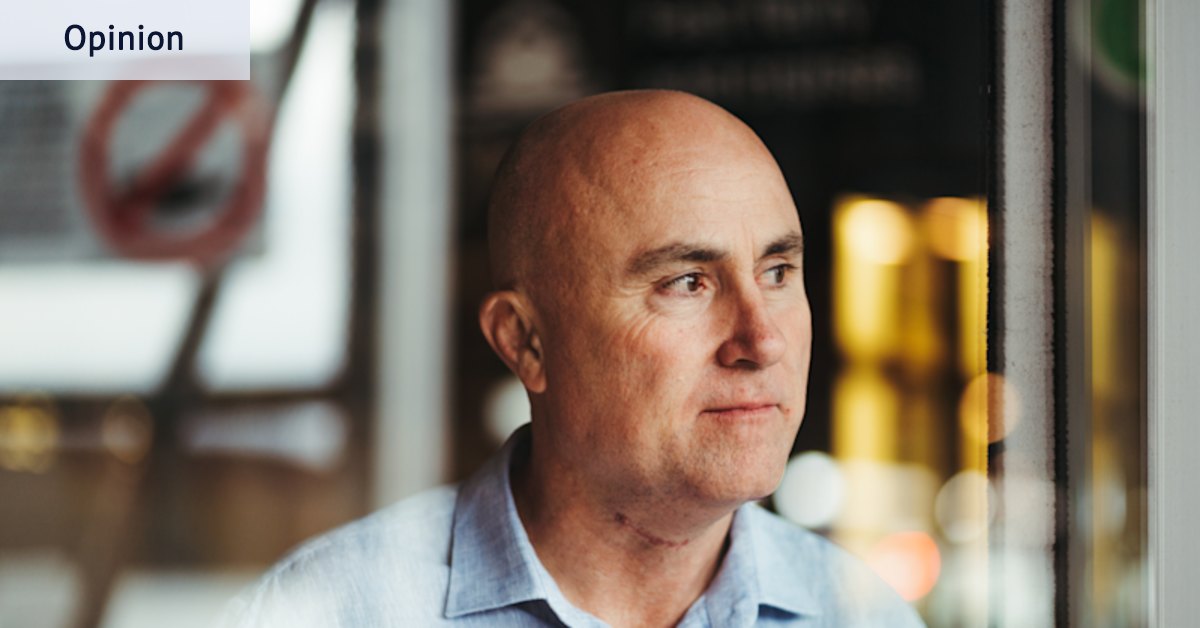
Phil King, the high-profile fund manager who co-founded Australian investment manager Regal Funds Management two decades ago, is stepping down from his executive role at the business, marking the end of a pivotal chapter in the domestic financial services landscape. Originally establishing the venture twenty years ago as a private vehicle without the immediate intention of running third-party money, King rapidly expanded the firm's operations as external investor demand built up. Over the subsequent two decades, Regal transformed from a small boutique alternative investment shop into a major financial institution managing $21 billion in client capital, making King's departure one of the most prominent leadership transitions in Australian fund management history.
Key facts
What happened
The genesis of Regal Funds Management traces back twenty years when Phil King set out to deploy capital in domestic equity markets. According to analysis by financial commentator Elizabeth Knight, King did not originally set up the entity with a mandate to build a large commercial fund management corporate structure or solicit external client money. Instead, the firm was established as a vehicle to execute equity trades and market strategies using internal capital.
However, early investment returns and King's reputation as an aggressive, agile trader quickly attracted interest from third-party investors seeking exposure to high-conviction hedge fund strategies. As institutional and high-net-worth investors sought allocations, Regal opened its doors to client inflows, launching a series of specialized investment funds focused primarily on Australian long-short equities, market-neutral strategies, and small-cap opportunities.
Over the ensuing two decades, King oversaw the steady accumulation of client mandates, navigating major market cycles including the 2008 Global Financial Crisis, post-crisis regulatory shifts, and the market volatility associated with the global pandemic. Regal expanded its scope beyond classic hedge fund strategies, engaging in private equity, resources funding, pre-initial public offering (IPO) investments, and opportunistic credit facilities.
The growth trajectory culminated in the firm expanding into Regal Partners through corporate mergers and public market listings, taking total assets under management from zero at inception to approximately $21 billion. King’s announced departure concludes his two-decade tenure overseeing portfolio decisions, execution of core trades, and the strategic direction of the group's flagship investment strategies.
Why it matters
The departure of a high-profile founder from a $21 billion asset manager highlights the structural risks associated with key-person dependence in boutique and alternative fund management. In hedge funds and active equity management, investment performance and client confidence are frequently tied to the reputation, trading acumen, and strategic oversight of individual portfolio managers. For institutional allocators, including superannuation funds, sovereign wealth entities, and private wealth advisory groups, a founder's exit often triggers formal contract reviews under key-person clauses.
From an industry perspective, King’s career reflects the evolution of Australia's active fund management ecosystem over the past twenty years. During an era dominated by passive index investing and fee compression across traditional long-only products, Regal managed to command premium performance fees by focusing on market inefficiencies, short selling, and opportunistic capital deployment. The transition tests whether an institution built around a charismatic founder can maintain its investment performance, fee power, and client retention once that founder exits daily operations.
Furthermore, the broader Australian wealth management sector relies heavily on local asset managers to deliver uncorrelated returns to offset public market downturns. Regal’s growth to $21 billion demonstrates the substantial pool of capital seeking alternative strategies within Australia's superannuation system. How the firm manages this executive transition will serve as an industry case study for other high-performing hedge fund boutiques seeking to institutionalize their businesses and sustain multi-billion-dollar scale beyond their founding partners.
The background
Australia boasts one of the largest pension asset pools in the world, driven by its compulsory superannuation guarantee system established in the early 1990s. By mid-2020s standards, Australian superannuation funds hold more than $3.5 trillion in assets, creating immense capital flows searching for risk-adjusted returns across domestic equities, global public markets, infrastructure, and alternative strategies.
Within this system, long-short hedge funds emerged in the early 2000s as a specialized asset class designed to generate alpha regardless of whether broad share markets rose or fell. Unlike traditional long-only fund managers, who profit solely when share prices appreciate, long-short equity funds hold long positions in undervalued stocks while taking short positions—borrowing shares to sell them with the expectation of buying them back at a lower price—in overvalued or vulnerable companies.
Regal Funds Management carved out a distinct niche within this landscape. Launched two decades ago during an era of expanding market liquidity, the firm became known for its aggressive approach to short selling, corporate recapitalizations, and participate-in-block trades. Over time, the Australian regulatory environment grew increasingly complex, with the Australian Securities and Investments Commission (ASIC) and the Australian Securities Exchange (ASX) introducing stricter oversight regarding short-selling disclosure, market conduct, and capital raising rules.
To institutionalize its platform and diversify revenue streams beyond volatile performance fees, Regal pursued strategic expansion. This culminated in corporate consolidation that created Regal Partners, a listed investment management corporate entity holding multiple specialized investment teams across long-short equities, private markets, real assets, and private credit. Expanding total assets under management to $21 billion placed Regal among the largest independent alternative investment management institutions in the Southern Hemisphere.
Reaction
Market participants and institutional clients typically respond to major executive exits at fund management firms with heightened scrutiny and risk assessment. Institutional asset consultants, who advise large superannuation funds and institutional mandates, are expected to place Regal’s flagship strategies under formal review while assessing the depth and capability of the remaining investment team.
Within the Australian financial sector, analysts and rival fund managers view King’s retirement as a watershed moment for the local hedge fund industry. Founders of mid-2000s hedge fund startups are increasingly reaching points of retirement or transition, raising questions about succession planning across the sector.
While existing investors evaluate whether to maintain their allocations during the operational transition, market observers note that listed asset management entities often prepare extensively for founder exits by establishing co-portfolio manager models and long-term equity incentive programs for key staff to prevent capital flight and preserve operational continuity.
What we don't know yet
Several critical operational details regarding King's exit remain undisclosed in the initial announcements. It is currently unclear whether King will retain an advisory role, serve on corporate or strategy boards, or retain a significant equity stake in Regal Partners following his step-down from portfolio management duties.
Additionally, the exact timeline for the handover of specific portfolio management responsibilities across individual hedge fund mandates has not been fully detailed. It remains to be seen how much third-party client capital, if any, might be subject to redemption notices as a result of key-person clauses being activated by institutional allocators. The precise division of future performance fee arrangements among successor portfolio managers also remains unconfirmed.
What to watch
Key milestones in the coming months will reveal the impact of this executive change on Regal's market standing. Investors will closely track formal disclosures filed with the Australian Securities Exchange (ASX) outlining transition schedules, director holdings, and executive remuneration adjustments.
Subsequent quarterly updates on assets under management and net fund flows will provide concrete data on whether institutional allocators are redeeming funds or maintaining their capital commitments. Furthermore, industry observers will monitor the ongoing investment performance of Regal’s core long-short equity funds under the updated portfolio management structure to judge whether the firm can sustain its historical returns without its founding investment leader.
This report is based on reporting and financial analysis by Elizabeth Knight.
How this story was produced
This report was written by The Global Wire newsroom from reporting first published by Elizabeth Knight. We verify the core facts against the original report, write our own account, and add the background and consequences a short wire item leaves out. Drafting is AI-assisted inside an editor-supervised pipeline, and every story is checked for accuracy of attribution, structure and duplication before it appears — full detail in our AI and funding disclosure.
Spotted an error? Tell us at corrections@horizonglobalnews.com and read our corrections policy or editorial standards.



Reader comments
Loading comments…