

Devolved Leaders Gather in Cardiff to Sign Self-Determination Declaration
Leaders from Scotland, Wales, and Northern Ireland are meeting in Cardiff to demand referendum powers and challenge Westminster's control over constitutional change.
By The Global Wire Newsroom · Reported from India Today World Desk
Link preview · horizonglobalnews.com
Devolved Leaders Gather in Cardiff to Sign Self-Determination Declaration
Leaders from Scotland, Wales, and Northern Ireland are meeting in Cardiff to demand referendum powers and challenge Westminster's control over constitutional change.
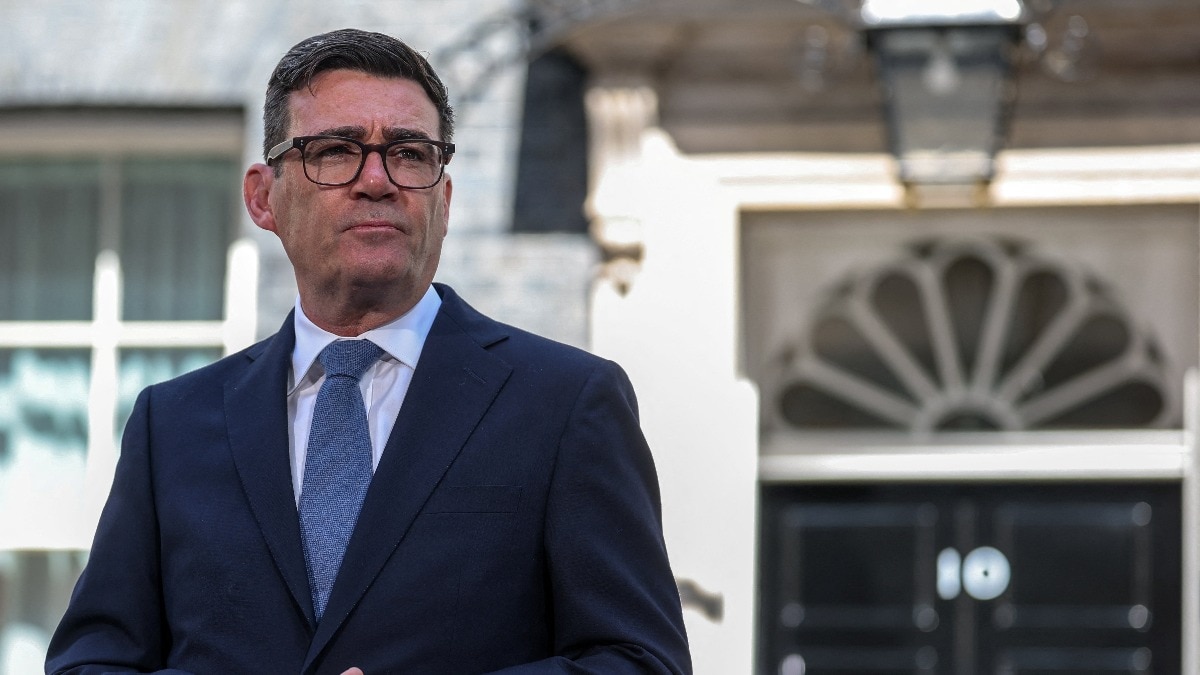
Political leaders representing Scotland, Wales, and Northern Ireland are convening in Cardiff for a high-level summit aimed at challenging the central authority of the United Kingdom government in London. The meeting features leaders from the devolved administrations alongside Mary Lou McDonald, president of the Irish republican party Sinn Féin, who are gathering to sign a joint declaration affirming the right of constituent nations to self-determination. The unprecedented multi-national initiative puts fresh institutional pressure on the UK Cabinet in Westminster, signaling an alignment among independence and constitutional reform movements across the British Isles as questions regarding Scottish independence, Welsh autonomy, and Irish reunification move back to the forefront of national politics.
Key facts
What happened
Political leaders from the devolved administration of Scotland, Wales, and Northern Ireland, joined by Sinn Féin President Mary Lou McDonald, have assembled in Cardiff to sign a joint summit declaration asserting their territories' inherent right to self-determination. The meeting represents a concerted effort by regional nationalist and autonomist leaders to present a united front against central authority in London, according to reporting by India Today.
The central feature of the gathering is the signing of a shared manifesto designed to pressure the UK Parliament at Westminster to respect constitutional pathways toward self-governance. While specific legislative priorities vary across the participating regions, the core objective of the summit is to establish a collective political principle: decisions regarding constitutional destiny—including the right to hold referendums on independence or territorial unity—belong to the populations of the respective nations rather than to ministers in Whitehall.
The inclusion of Mary Lou McDonald underscores the increasingly cross-border nature of the constitutional debate. As leader of Sinn Féin, the largest party in the Northern Ireland Assembly and the main parliamentary opposition in the Republic of Ireland, McDonald's presence ties the Northern Irish debate over a potential border poll directly to the constitutional aspirations of Scottish and Welsh political leaders. The Cardiff gathering focuses on establishing a shared strategy to navigate Westminster's long-standing refusal to transfer powers for secondary constitutional plebiscites.
Why it matters
The coordinated action in Cardiff highlights structural tension within the constitutional framework of the United Kingdom. Since the establishment of devolved legislatures in Edinburgh, Cardiff, and Belfast in the late 1990s, governance within the UK has relied on a delicate balance between regional administrative authority and the absolute parliamentary sovereignty of Westminster. By coming together in an explicit pact on self-determination, regional political leaders are directly challenging the assumption that London holds an indefinite veto over constitutional change.
For financial markets and corporate strategy, prolonged constitutional uncertainty across the UK introduces specific regulatory and economic considerations. International investors closely monitor regional political stability, as changes to the UK's territorial integrity could alter trade arrangements, tax jurisdictions, currency regimes, and sovereign debt allocations. Scotland’s energy sector, Wales’s agricultural sector, and Northern Ireland’s unique status within the European single market for goods under post-Brexit trade arrangements each represent distinct economic structures that would be reshaped by structural political shifts.
Furthermore, the summit indicates that regional nationalist movements are increasingly looking past traditional bilateral negotiations with London in favor of horizontal alliances among the devolved nations. This collective approach increases political leverage against the UK government, making it harder for central authorities to treat independence demands or border poll requests as isolated regional disputes.
The background
The constitutional architecture of the United Kingdom underwent fundamental changes following devolution referendums held in 1997 and 1998 under Prime Minister Tony Blair's administration. These votes led to the establishment of the Scottish Parliament and the National Assembly for Wales (now the Senedd) in 1999, alongside the creation of the Northern Ireland Assembly under the terms of the 1998 Good Friday Agreement.
However, devolution granted legislative power over domestic areas such as health, education, and transport while explicitly retaining constitutional matters—such as the integrity of the Union, defense, and foreign affairs—as reserved powers under the exclusive jurisdiction of the UK Parliament. In Scotland, the legal mechanism for a binding independence vote was established during the September 18, 2014 referendum, when the UK government granted a temporary Section 30 order under the Scotland Act 1998, enabling the Scottish Parliament to hold a legally recognized plebiscite. That vote resulted in a 55 percent to 45 percent majority in favor of remaining within the United Kingdom. Following the 2016 Brexit referendum, in which Scotland and Northern Ireland voted to remain in the European Union while England and Wales voted to leave, Scottish national leaders repeatedly requested a second Section 30 order, which successive UK Prime Ministers declined to grant. The UK Supreme Court subsequently ruled in November 2022 that the Scottish Parliament does not possess the legal authority to legislate for an independence referendum without Westminster's consent.
In Northern Ireland, the statutory mechanism for constitutional change is defined by the Northern Ireland Act 1998, which operationalizes the Good Friday Agreement. Under the statute, the Secretary of State for Northern Ireland is required to order a border poll on Irish unification if it appears likely that a majority of those voting would express a wish to form a united Ireland. Determining when that threshold has been reached remains at the discretion of the UK government minister, creating ongoing friction over the criteria used to evaluate public opinion.
In Wales, support for full independence has historically lagged behind that in Scotland, but political discourse within the Senedd has increasingly focused on expanding devolved powers, securing fiscal autonomy, and exploring constitutional protections against legislative overreach by London.
Reaction
The summit in Cardiff is expected to draw immediate pushback from unionist political parties and central government officials in London. The UK government in Whitehall has consistently maintained that the priority for all parts of the United Kingdom should be economic growth, public service delivery, and national security, rather than renewed debates over constitutional separation. Unionist politicians in Scotland, Wales, and Northern Ireland typically argue that regional leaders are focusing on constitutional maneuvers to distract from domestic policy challenges in healthcare and education.
Conversely, supporters of self-determination across the three regions view the declaration as a necessary joint defense against centralizing policies enacted by Westminster in the post-Brexit era. Nationalist advocates argue that democratic mandates achieved in regional elections must be respected by central authorities.
What we don't know yet
Several critical elements regarding the long-term impact of the Cardiff declaration remain unresolved in available reporting. First, the precise wording and legal commitments contained within the joint declaration have not been fully published, leaving open questions about whether the signatories intend to pursue legal challenges, parliamentary blockades, or purely political campaigning strategies.
Second, it remains unconfirmed whether the UK government will formally respond to the summit with political concessions or maintain its strict policy of declining referendum requests. Third, the exact timeline for any prospective referendum pushes—whether in Scotland, Wales, or Northern Ireland—remains uncertain, as regional leaders face differing domestic political schedules and legal constraints. Finally, public opinion within each region continues to fluctuate, and it is unclear whether joint declarations of this nature will shift broader voter attitudes toward independence or reunification.
What to watch
In the coming months, several key indicators will determine the impact of the Cardiff summit. Observers will monitor whether the Scottish Government attempts new legislative avenues or international diplomatic appeals to test the legal boundary established by the Supreme Court’s 2022 ruling. In Northern Ireland, political tracking will center on demographic trends, polling data, and statements from the Northern Ireland Office regarding the statutory criteria for calling a border poll under the Good Friday Agreement.
In Wales, attention will turn to debates within the Senedd regarding recommendations from constitutional commissions examining the future of Welsh governance. Additionally, upcoming parliamentary debates in Westminster will reveal how major UK-wide political parties adjust their constitutional platforms in response to the growing coordination among devolved political leaders.
This report is based on coverage originally published by India Today.
How this story was produced
This report was written by The Global Wire newsroom from reporting first published by India Today World Desk. We verify the core facts against the original report, write our own account, and add the background and consequences a short wire item leaves out. Drafting is AI-assisted inside an editor-supervised pipeline, and every story is checked for accuracy of attribution, structure and duplication before it appears — full detail in our AI and funding disclosure.
Spotted an error? Tell us at corrections@horizonglobalnews.com and read our corrections policy or editorial standards.





Reader comments
Loading comments…