

First Mammal Death from Avian Influenza Confirmed in Australia
The fatality of a long-nosed fur seal marks a significant advance for bird flu in Australia, raising ecological and biosecurity concerns.
By The Global Wire Newsroom · Reported from smh.com.au
Link preview · horizonglobalnews.com
First Mammal Death from Avian Influenza Confirmed in Australia
The fatality of a long-nosed fur seal marks a significant advance for bird flu in Australia, raising ecological and biosecurity concerns.
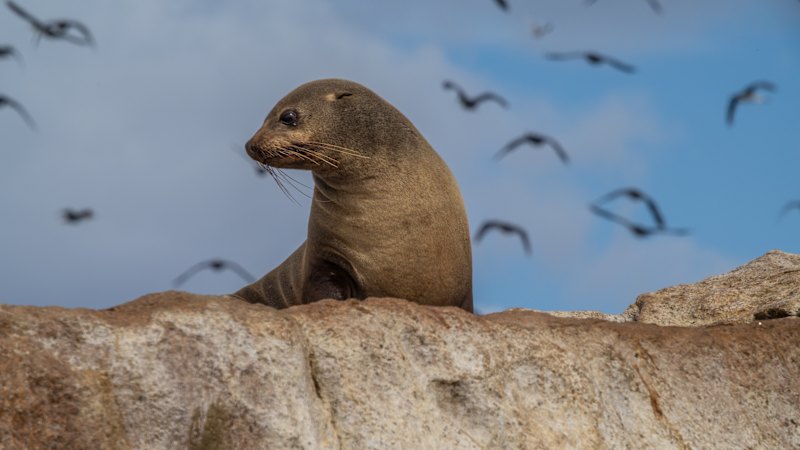
Australian biosecurity authorities have confirmed the country's first recorded death of a mammal from avian influenza following diagnostic testing on a long-nosed fur seal, marking a troubling new phase in the virus's domestic trajectory. The milestone, reported on August 23, 2026, indicates that the avian influenza pathogen currently circulating among Australian wild bird populations has successfully breached species barriers to infect native marine fauna.
Key facts
What happened
The confirmation came after specialized veterinary pathology laboratories conducted diagnostic testing on the carcass of a long-nosed fur seal. Australian wildlife management and biosecurity authorities had retrieved the specimen as part of expanded surveillance programs monitoring wild animal health amidst elevated avian flu activity across the country, according to reporting by smh.com.au.
Subsequent laboratory analysis confirmed that the seal had contracted avian influenza, rendering it the first documented mammalian mortality associated with the virus in Australia. While avian influenza has been spreading through domestic wild bird populations and agricultural settings, the crossover into a wild marine mammal underscores the dynamic nature of the virus's environmental distribution.
Following the laboratory result, state and federal biosecurity entities initiated updated protocols to assess whether the case represents an isolated spillover or an indicator of broader transmission within coastal wildlife populations. Specialized response teams have been deployed to survey surrounding coastal habitats, haul-out areas, and seabird rookeries to check for additional sick or dead animals.
Why it matters
The confirmation of an avian influenza fatality in an Australian mammal carries serious ecological and biosecurity implications for the region. Long-nosed fur seals are colonial animals, often aggregating by the thousands on narrow beaches, rocky ledges, and offshore islands during breeding and haul-out seasons. These high-density social structures create ideal conditions for infectious disease transmission. If avian flu establishes sustained transmission within fur seal colonies, the impact on local pinniped populations could be severe.
In addition to ecological risks, the transmission of avian influenza to mammals represents a constant focus for global health authorities due to the evolutionary potential of influenza viruses. When avian viruses infect mammalian hosts, they face selection pressures that can favor mutations adapted to mammalian biology. While avian flu viruses primarily bind to sialic acid receptors predominant in the upper respiratory tract of birds, mammalian adaptation can alter receptor specificity, potentially enhancing replication efficiency in mammals.
For Australia's biosecurity framework, a multi-species wildlife outbreak presents complex management challenges. Unlike commercial poultry facilities, where biosecurity can be enforced through quarantines, movement controls, and controlled culling, wild marine mammal populations cannot be contained or vaccinated on a large scale. Consequently, a widespread outbreak in coastal ecosystems could create an enduring wild reservoir for the virus, posing persistent spillover risks to other native predators, scavengers, domestic pets, and agricultural operations operating in proximity to coastal zones.
The background
Avian influenza, caused by type A influenza viruses, is classified into low pathogenicity and high pathogenicity strains based on its severity in poultry. High-pathogenicity avian influenza (HPAI) strains have historically caused high mortality in domesticated birds and variable levels of illness in wild bird species. Since 2020, a global panzootic driven predominantly by the H5N1 clade 2.3.4.4b virus has spread across Europe, North America, South America, and into sub-Antarctic regions, causing unprecedented mortality in wild birds and wildlife.
Throughout this global panzootic, mammalian infections have been documented with increasing frequency across the globe. Between 2022 and 2024, South America experienced devastating mass mortality events among marine mammals. In Peru and Chile, more than 10,000 South American sea lions (*Otaria flavescens*) died from H5N1, while Argentina reported thousands of dead southern elephant seal (*Mirounga leonina*) pups along the Valdés Peninsula. Beyond marine mammals, H5N1 has demonstrated an ability to infect terrestrial carnivores such as foxes, skunks, black bears, and farmed mink, as well as domestic species like cats and, notably, dairy cattle in the United States.
Australia long occupied a unique position in global biosecurity, remaining free from the panzootic H5N1 clade 2.3.4.4b due to its geographical isolation and migration pathways that do not align directly with the major flyways of waterfowl from northern Eurasia or the Americas. However, Australia has historically experienced localized outbreaks of native high-pathogenicity H7 strains, such as H7N3, H7N8, and H7N9, which have periodically affected commercial poultry operations in Victoria, New South Wales, and Western Australia.
The long-nosed fur seal (*Arctocephalus forsteri*), also known as the New Zealand fur seal, is a native marine mammal species protected under the Australian Environment Protection and Biodiversity Conservation Act 1999. The species ranges from Western Australia across the southern coastline to Victoria, Tasmania, and New South Wales. They frequently share haul-out sites with coastal seabirds, such as gulls, terns, and cormorants, establishing direct environmental pathways for cross-species viral exposure.
Reaction
Following the confirmation, environmental management bodies, wildlife care organizations, and agricultural authorities began updating operational guidelines. Wildlife health networks across southern Australian states are issuing revised health and safety protocols for field researchers, park rangers, and marine rescue volunteers. Personnel interacting with stranded or deceased marine mammals are being required to wear full personal protective equipment, including N95 respirators, eye protection, and protective coveralls, to mitigate transmission risks.
State departments of primary industries and environmental protection agencies are appealing to the public to report sightings of sick, lethargic, or dead seals and wild birds to dedicated biosecurity hotlines rather than approaching the animals directly. Pet owners are also being advised to keep dogs on leashes along coastal beaches where stranded marine life or bird carcasses might be present.
Public health agencies continue to emphasize that the immediate risk to the general public remains low. However, infectious disease specialists and epidemiologists are calling for enhanced genomic monitoring of isolated viral samples to immediately identify any genetic changes associated with increased mammalian adaptation or resistance to antiviral treatments.
What we don't know yet
Despite the confirmation of the fatality, several critical details remain unverified in the initial reporting. A primary open question involves the exact strain and lineage of the avian influenza virus isolated from the long-nosed fur seal. It has not yet been specified whether the infection was caused by a high-pathogenicity H5 strain or a mutated native H7 strain circulating within local bird populations.
Furthermore, authorities have not published the precise location where the infected seal was retrieved, nor the exact date of its recovery. It remains unknown whether the animal died directly from acute viral pneumonia or if secondary factors contributed to its death. Crucially, diagnostic testing has not yet determined whether this case was a solitary spillover resulting from direct contact with an infected wild bird—such as scavenging on a bird carcass—or if it represents ongoing horizontal transmission between individual fur seals within a colony.
What to watch
In the coming weeks and months, biosecurity officials and researchers will monitor several key benchmarks to determine the path of the outbreak:
This report is based on primary reporting published by smh.com.au.
How this story was produced
This report was written by The Global Wire newsroom from reporting first published by smh.com.au. We verify the core facts against the original report, write our own account, and add the background and consequences a short wire item leaves out. Drafting is AI-assisted inside an editor-supervised pipeline, and every story is checked for accuracy of attribution, structure and duplication before it appears — full detail in our AI and funding disclosure.
Spotted an error? Tell us at corrections@horizonglobalnews.com and read our corrections policy or editorial standards.





Reader comments
Loading comments…